
Close Menu
    Facebook X (Twitter) Instagram
    SciTechDaily
    • Biology
    • Chemistry
    • Earth
    • Health
    • Physics
    • Science
    • Space
    • Technology
    Facebook X (Twitter) Pinterest YouTube RSS
    SciTechDaily
    Home»Health»Yale Scientists “Supercharge” Tumor-Attacking T Cells To Improve Cancer Immunotherapy
    Health

    Yale Scientists “Supercharge” Tumor-Attacking T Cells To Improve Cancer Immunotherapy

    By Yale UniversityMarch 14, 2022No Comments3 Mins Read
    Facebook Twitter Pinterest Telegram LinkedIn WhatsApp Email Reddit
    Share
    Facebook Twitter LinkedIn Pinterest Telegram Email Reddit
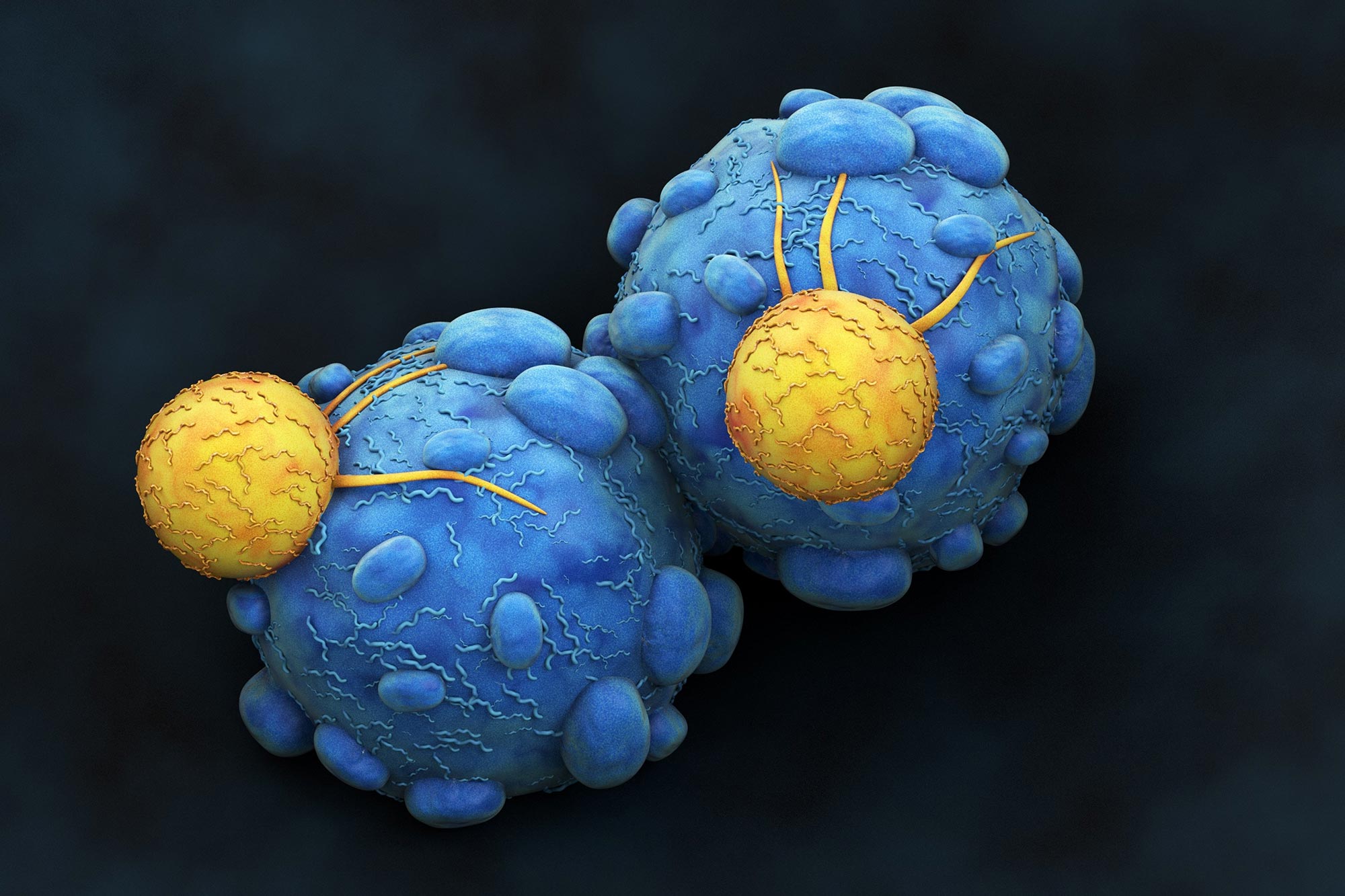
    Cancer Cells Attacked by Killer T-Lymphocytes
    Illustration of cancer cells attacked by T cells.

    Yale researchers have found a way to enhance the effectiveness of CAR-T cell therapy by identifying genes that increase T cell metabolic activity. Their study suggests this approach could improve cancer treatment, particularly for solid tumors, which currently lack effective CAR-T therapies.

    Yale scientists have identified a way to “supercharge” tumor-attacking T cells, a finding that may not only improve the effectiveness of a promising type of cell-based cancer immunotherapy but also expand the number of cancers it can treat.

    Their findings were published on March 10, 2022, in the journal Cell Metabolism.

    The discovery can advance CAR-T cell therapy, which harnesses the immune response of T cells to cancers by introducing tumor-detecting molecules into the cells. In the last decade, the U.S. Food and Drug Administration has approved six CAR-T cell therapies to treat B cell lymphomas and multiple myeloma. But despite early successes, the effectiveness of the treatment tends to diminish over time, which has launched a search for ways to boost function of T cells.

    Also, there are currently no approved CAR-T cell therapies to treat solid tumors.

    For the new study, researchers in the lab of Sidi Chen, associate professor of genetics at Yale and senior author of the paper, devised an ingenious way to efficiently scan the genome of CD8 T cells for specific genes that might enhance the cells’ ability to attack cancer cells.

    “We developed a new kind of genome-wide gain of function screen to find a molecular enzyme that acts like a foot on a gas pedal to increase metabolic activity in T cells,” Chen said.

    The Role of PRODH2

    They found high levels of activity in several genes, including PRODH2, a gene involved in cell metabolism, stimulate increased CAR-T cell activity in mouse models used to study three different types of cancers, including solid-tumor breast cancer. The findings show it is possible to produce hyper-metabolic CAR-T cells that outperform existing cell therapies, researchers say.

    Using these systems and findings, future studies can test the newly identified types of metabolically enhanced CAR-Ts in clinical settings, to identify other T cell super-chargers, and to extend cell-based immunotherapy to different cancer types, especially solid tumors, Chen said.

    Reference: “A genome-scale gain-of-function CRISPR screen in CD8 T cells identifies proline metabolism as a means to enhance CAR-T therapy” by Lupeng Ye, Jonathan J. Park, Lei Peng, Quanjun Yang, Ryan D. Chow, Matthew B. Dong, Stanley Z. Lam, Jianjian Guo, Erting Tang, Yueqi Zhang, Guangchuan Wang, Xiaoyun Dai, Yaying Du, Hyunu R. Kim, Hanbing Cao, Youssef Errami, Paul Clark, Alexey Bersenev, Ruth R. Montgomery and Sidi Chen, 10 March 2022, Cell Metabolism.
    DOI: 10.1016/j.cmet.2022.02.009

    Chen is affiliated with the Yale Cancer Center, the Yale Stem Cell Center, the Yale Center for Biomedical Data Science, and the Systems Biology Institute and Center for Cancer Systems Biology at Yale’s West Campus.

    Yale’s Lupeng Ye, Jonathan Park, Lei Peng, and Quanjun Yang are co-first authors of the paper.

    The research was primarily funded by the National Institutes of Health and the U.S. Department of Defense.

    Never miss a breakthrough: Join the SciTechDaily newsletter.
    Follow us on Google and Google News.

    Cancer Cell Biology Immunotherapy Popular Yale University
    Share. Facebook Twitter Pinterest LinkedIn Email Reddit

    Related Articles

    Scientists Find Way to Turn Tumor-Protecting Cells Into Cancer Killers

    Scientists Crack 30-Year Cancer Mystery: New Discovery Could Revolutionize Radiotherapy

    Supercharging Chemotherapy: Eliminating “Zombie” Cells To Beat Cancer

    New Yale Research Reveals Why Immunotherapy Doesn’t Work for Everybody

    New Immunotherapy Agents Stimulate the Immune System to Attack Tumor Cells

    Biologists Identify a New Approach to Cancer Immunotherapy

    Lysosomes May Contribute to Alzheimer’s Disease

    Neurologists Discover New Method to Fight Glioblastomas

    Combination of Immune Stimulating Antibodies Shows Promising Results Against Advanced Melanoma

    Leave A Reply Cancel Reply

    • Facebook
    • Twitter
    • Pinterest
    • YouTube

    Don't Miss a Discovery

    Subscribe for the Latest in Science & Tech!

    Trending News

    Scientists Warn That This Common Pet Fish Can Wreck Entire Ecosystems

    Scientists Make Breakthrough in Turning Plastic Trash Into Clean Fuel Using Sunlight

    This Popular Supplement May Interfere With Cancer Treatment, Scientists Warn

    Scientists Finally Solved One of Water’s Biggest Mysteries

    Could This New Weight-Loss Pill Disrupt the Entire Market? Here’s What You Should Know About Orforglipron

    Earth’s Crust Is Tearing Open in Africa, and It Could Form a New Ocean

    Breakthrough Bowel Cancer Trial Leaves Patients Cancer-Free for Nearly 3 Years

    Natural Compound Shows Powerful Potential Against Rheumatoid Arthritis

    Follow SciTechDaily
    • Facebook
    • Twitter
    • YouTube
    • Pinterest
    • Newsletter
    • RSS
    SciTech News
    • Biology News
    • Chemistry News
    • Earth News
    • Health News
    • Physics News
    • Science News
    • Space News
    • Technology News
    Recent Posts
    • Kratom Use Explodes in the US, With Life-Changing Consequences
    • Scientists Uncover Fatal Weakness in “Zombie Cells” Linked to Cancer
    • World-First Study Reveals Human Hearts Can Regenerate After a Heart Attack
    • Why Your Dreams Feel So Real Sometimes and So Strange Other Times
    • Scientists Debunk 100-Year-Old Belief About Brain Cells, Rewriting Textbooks
    Copyright © 1998 - 2026 SciTechDaily. All Rights Reserved.
    • Science News
    • About
    • Contact
    • Editorial Board
    • Privacy Policy
    • Terms of Use

    Type above and press Enter to search. Press Esc to cancel.