
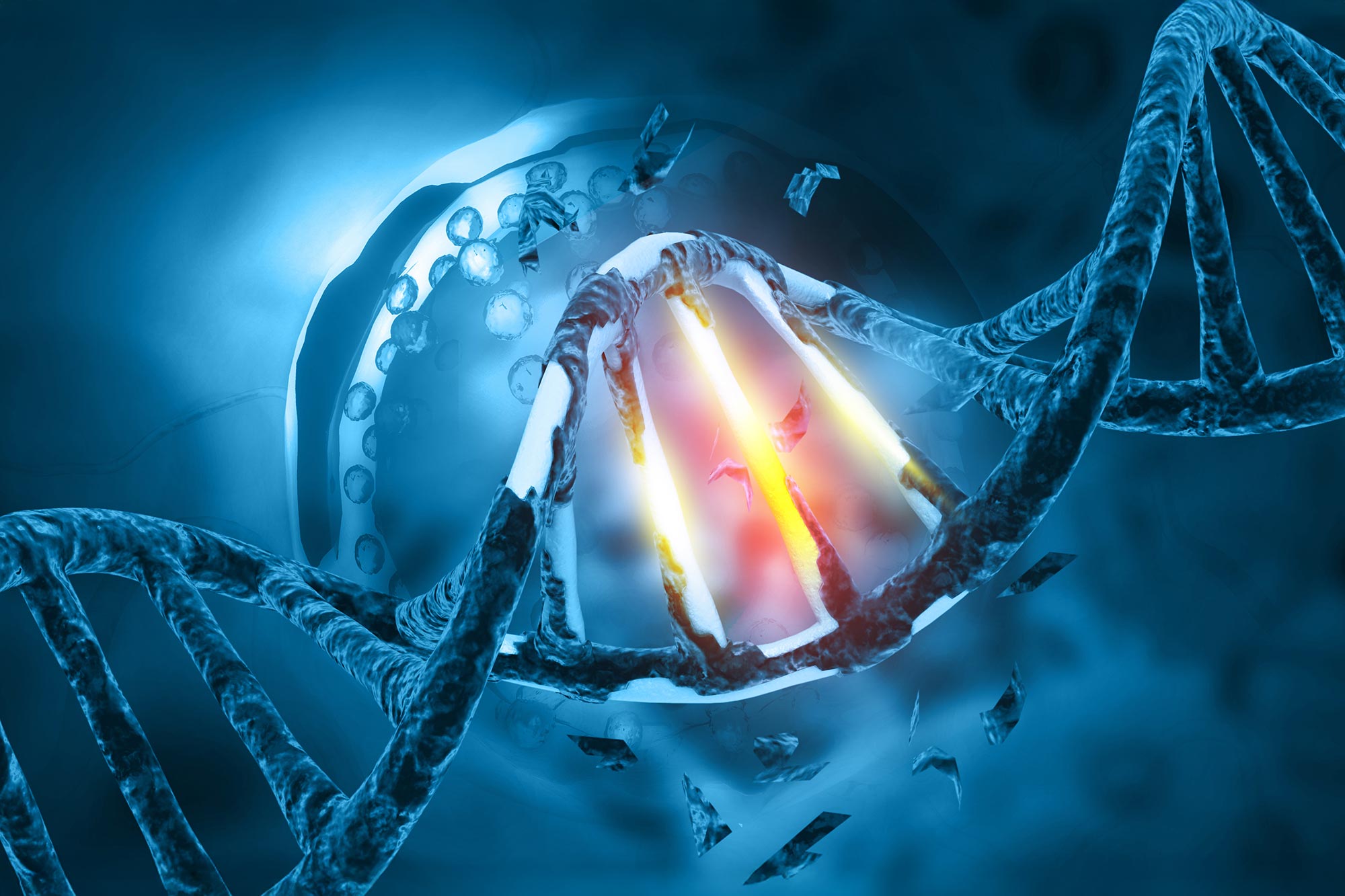
A jumping gene was directly observed moving from predator to prey through circular RNA.
Dead cells are usually molecular dead ends: their fragile RNA messages rapidly disappear, and no new genetic activity is expected. But when Jens Harder and his colleagues examined the remains of a methane-producing archaeon, they found an unusually persistent ring of RNA—apparently released by a predatory bacterium and caught in the act of trying to propagate inside its victim.
The finding, made by researchers at the Max Planck Institute for Marine Microbiology in Bremen, shows that genes are not always inherited only from parent to offspring. Some genes can move, and in this case, the researchers directly observed evidence that a jumping gene can pass between species, from predator to prey.
Jumping genes accelerate evolution
Jumping genes are genetic parasites found in bacteria, plants, animals, and humans. They can be released inside cells as small RNA molecules from ribonucleic acid (RNA), then use specialized mechanisms to insert themselves into other parts of the genome. When they land in a new place, they can sometimes give a cell new traits, which can speed up evolutionary change.
One special type of jumping gene is known as a self-splicing intron. These introns use an RNA enzyme, called a ribozyme, to cut themselves free from RNA. That ability makes them unusually independent within the cell.
Moving within one cell is one thing. Moving into a different cell or another species is much harder. Evolutionary family tree studies have long suggested that such jumps have happened, but researchers assumed these mobile genes usually traveled as passengers inside plasmids or viruses. Jens Harder and his colleagues have now observed a different route.
An anaerobic community on the scent of oranges
The discovery began in a slow-growing microbial community that produces methane (biogas) without oxygen. This community of bacteria and archaea contained an unexpected dominant member: a tiny predatory bacterium called Candidatus Velamenicoccus archaeovorus.
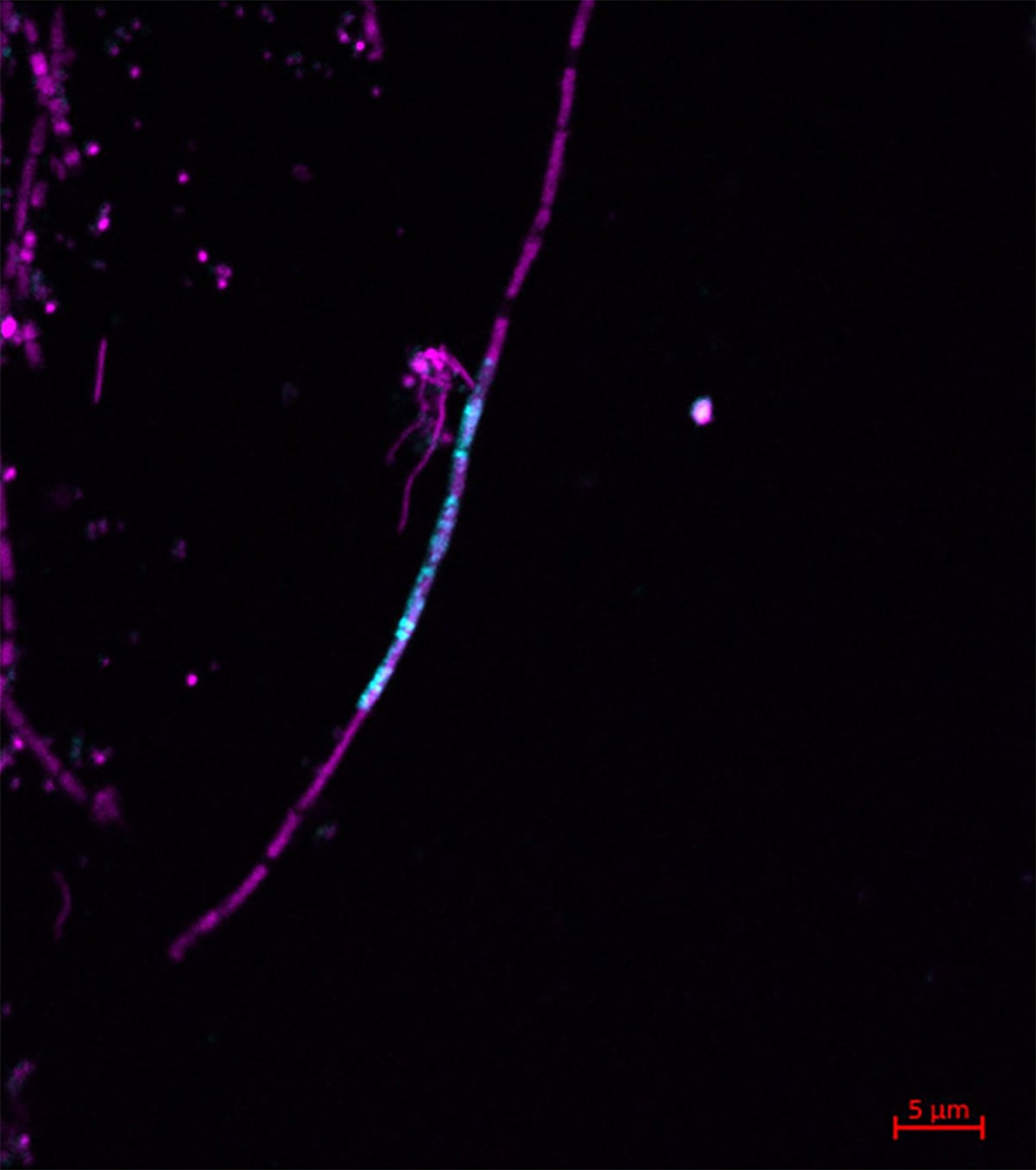
Its prey were microorganisms that break down limonene, the compound responsible for the scent of oranges, into methane and carbon dioxide. Among them was Methanothrix soehngenii, one of Earth’s most important methane producers. When Harder and colleagues examined its filaments, they found that some individual cells were dead.
That raised the key question. Was Ca. Velamenicoccus archaeovorus killing them? To find out, the researchers needed to detect molecules from the predator inside the dead prey cells.
In Search of Intron RNA
While analyzing the genome of Ca. Velamenicoccus archaeovorus, Jens Harder found an intron, one of these mobile genetic elements. Intron RNA had never been seen outside a cell before. That made the search risky, but also worthwhile. If the intron appeared inside the prey, it could reveal direct evidence of transfer between species.
Researchers at the Max Planck Institute for Marine Microbiology had developed methods sensitive enough to detect tiny amounts of RNA in bacterial cells. After designing specific nucleic acid probes, they used microscopy to look for the intron. The images showed intron RNA inside living Ca. Velamenicoccus archaeovorus cells and inside dead Methanothrix soehngenii cells.
The mobile gene had effectively been caught in the act of trying to replicate. The problem was that its carrier, Ca.Velamenicoccus archaeovorus, had already killed the new host. The jump had landed in an empty cell.
Stable RNA
Ribonucleic acids are the working messages of living cells. These long-chain molecules carry instructions from the genetic material to the cell’s protein factories, and they are normally broken down quickly from their ends. Dead cells usually do not retain ribonucleic acids.
In this case, the intron RNA could survive because it forms a circle. With no open ends, the ring-shaped RNA resists the enzymes that would normally break it apart.
“The stability of intron RNA in its ring form is a distinctive feature. In humans, circular RNA molecules influence many metabolic processes, and their role in tumor development is currently the subject of intensive research. Applications in RNA vaccines, for example, against the Covid virus and certain forms of cancer, are also in the pipeline. Our study has shown that in microorganisms jumping genes can be transferred to other species via their circular RNA,” says Jens Harder.
Reference: “Mobile intron RNA from a bacterial predator accumulates in dead archaeal cells” by Jana Kizina, Almud Lonsing and Jens Harder, 7 May 2026, Scientific Reports.
DOI: 10.1038/s41598-026-51721-6
Never miss a breakthrough: Join the SciTechDaily newsletter.
Follow us on Google and Google News.