
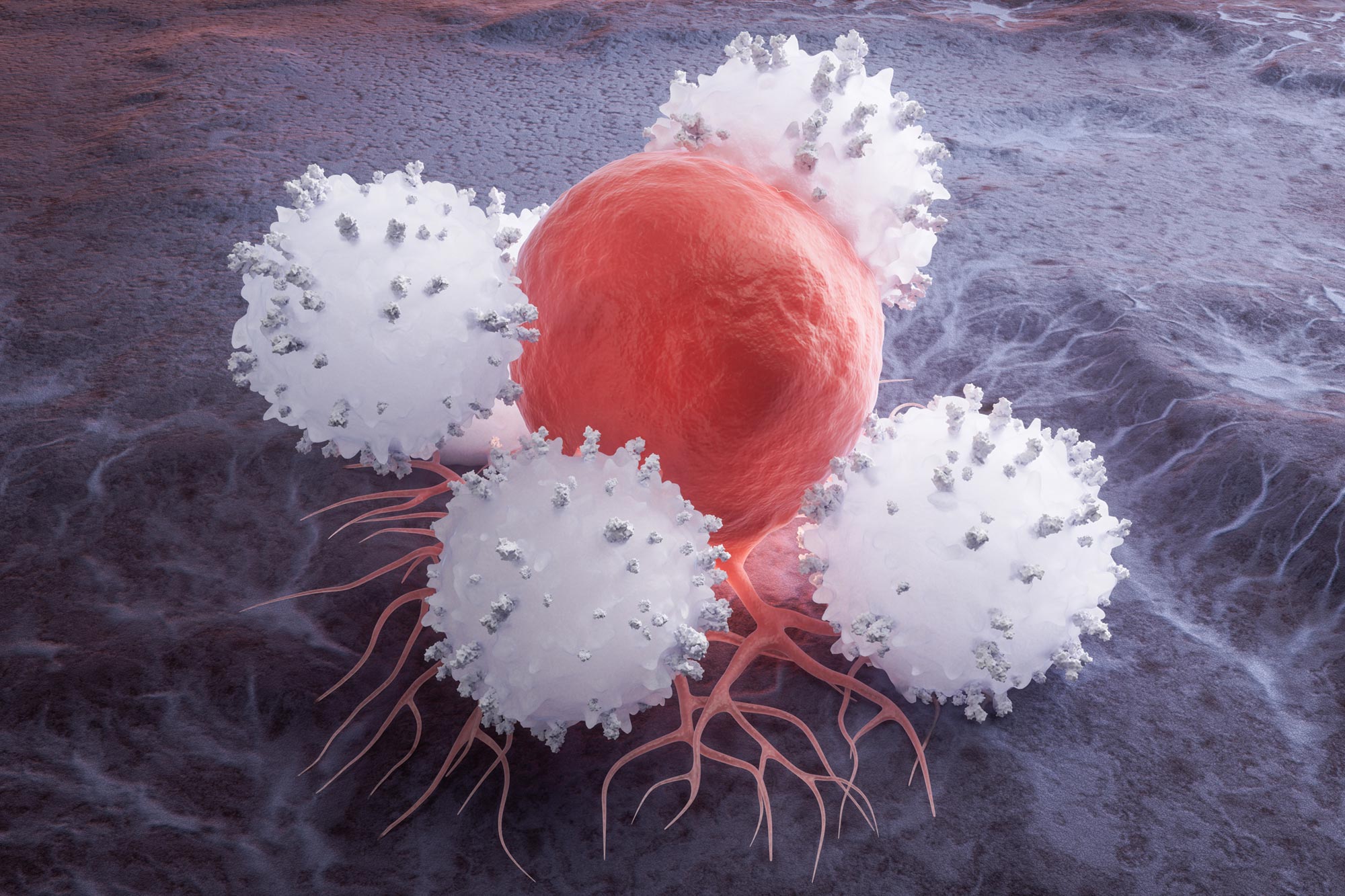
A protein and signaling pathway may help overcome the developmental block that keeps some leukemia cells immature.
Inside the bone marrow, immature blood cells normally pass through a tightly controlled sequence of development before taking on specialized roles. In aggressive forms of leukemia, some of these precursor cells become trapped partway through that process. Instead of maturing, they continue accumulating until they crowd out the bone marrow that produces hundreds of billions of healthy blood cells each day.
“They never finish. They never become what they should be. Because they are progenitor cells, they don’t really have a function and just expand and collapse our bone marrow,” said Raquel Espin Palazon, an associate professor of genetics, development, and cell biology at Iowa State University.
A research group led by Espin Palazon has now identified two components that certain immature blood cells need to complete their development: a widely distributed protein and an important cellular communication pathway. The findings point toward a possible method for pushing some leukemia cells past the immature state that allows them to persist.
A common protein becomes the key clue
The study, published in Cell Reports, began with an unresolved question about progranulin. This protein is present throughout most plants and animals and participates in cell growth, inflammation, and tissue repair. Yet progranulin is also the most highly expressed gene in human macrophages, the large white blood cells that surround and consume pathogens.
“Nobody had linked a function in macrophages with this protein. But there must be some reason it’s so highly expressed,” Espin Palazon said.
Determining that function is difficult in mammals because a single gene produces progranulin throughout the body. Turning off that gene affects many tissues and biological processes at once, making it difficult to isolate what the protein does specifically in blood cells.
Zebrafish offered the researchers a way around that obstacle. Unlike mammals, they have two forms of progranulin, and Espin Palazon and other Iowa State researchers commonly use the animals to investigate questions relevant to human health.
In a study published in 2021, Espin Palazon’s group showed that one zebrafish progranulin gene is active only in blood cells. The protein it produces is necessary for myeloid progenitors, immature cells that give rise to several blood cell types, to develop into macrophages and neutrophils.
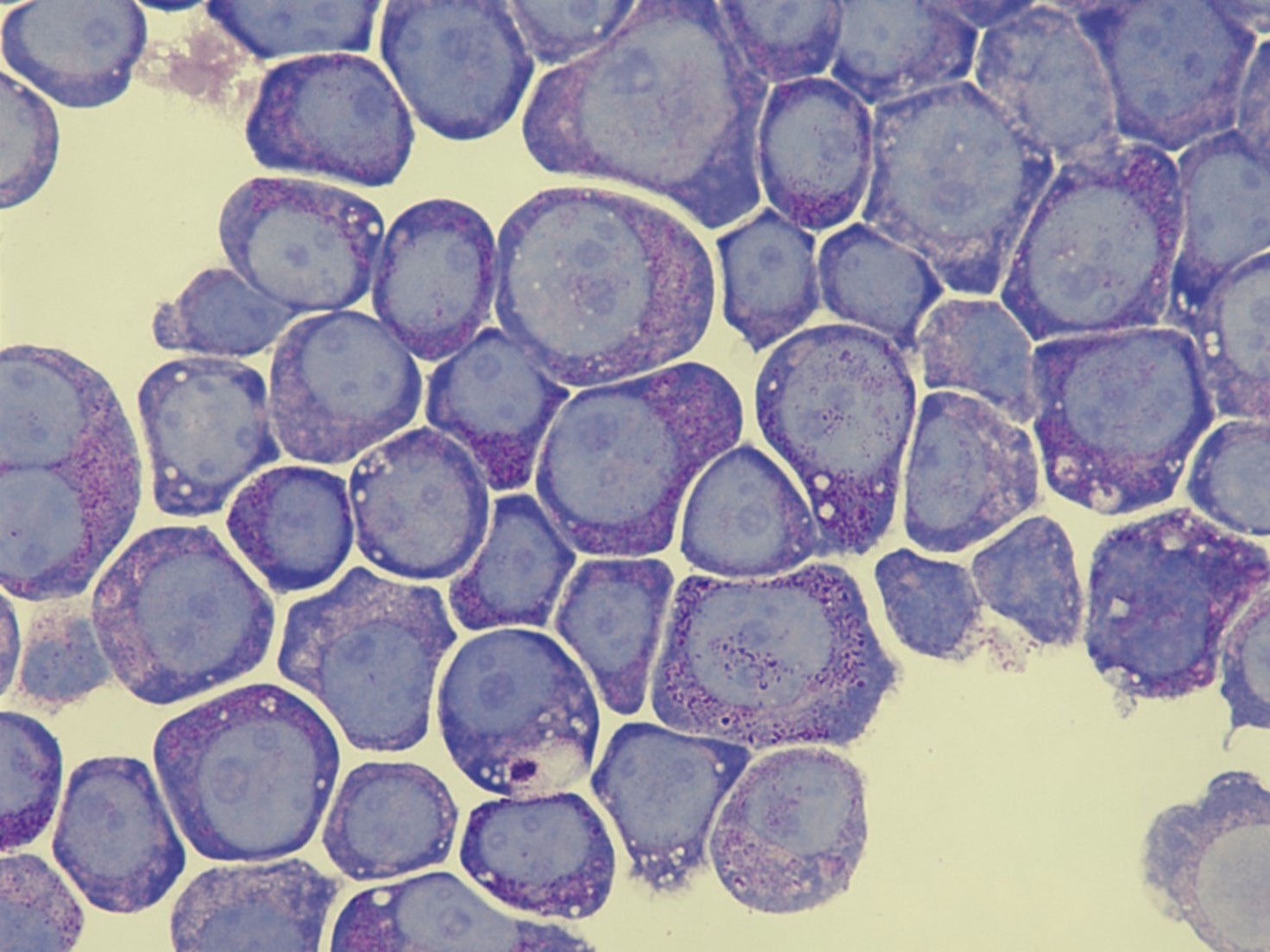
The researchers next tested whether progranulin could produce the same effect in human cells. They added it to human leukemia cells in several ways, hoping it would drive the immature myeloid cells to differentiate into functional white blood cells. If successful, the approach might eventually provide a way to treat leukemia by forcing malignant cells to mature.
A failed test exposes the missing pathway
Searching for an explanation, the researchers returned to zebrafish engineered without the blood cell form of progranulin. They examined the animals for additional defects that appeared when the protein was missing.
One of the clearest disruptions involved JAK2/STAT3, a signaling pathway that carries chemical information from outside a cell to the DNA inside its nucleus. The experiments showed that both progranulin and JAK2/STAT3 were required for myeloid progenitors to become macrophages.
That connection provided the missing condition in the earlier leukemia experiments. The JAK2/STAT3 pathway is unusually active in several cancers, including leukemia. When the researchers added progranulin to leukemia cells with active JAK2/STAT3 signaling, the cells began to mature. This allowed them to continue through their normally brief life cycle and eventually die, according to Espin Palazon.
“It was super exciting to see the differentiation, that blockage in the human leukemia line being overcome,” she said. “Adding progranulin, the missing component, could be a potential therapeutic target.”
Identifying the two factors needed for myeloid maturation also demonstrated the value of studying biological processes in living animals rather than relying entirely on isolated cells, Espin Palazon said. The zebrafish experiments revealed interactions that were not apparent when progranulin was first tested directly in the leukemia cell line.
“Animal models are sometimes essential to drive discovery because they allow us to understand biology within the complexity of an intact organism—something that laboratory-generated systems cannot yet fully reproduce,” she said.
Two macrophage lineages serve different roles
The study produced another finding that may prove useful for human health research.
Some macrophages form during embryonic development and settle permanently in major organs such as the brain or heart. Once established, these specialized cells can renew themselves throughout life.
Espin Palazon and her colleagues identified two distinct types of embryonic macrophages. Only one requires both progranulin and the JAK2/STAT3 pathway to develop. According to Espin Palazon, the macrophages that depend on these two components are also more effective at regenerating damaged tissue and supporting injury repair.
“This opens up possibilities for studying and dissecting the two different types of embryonic macrophages,” she said. “How else are they different? Does one population specifically colonize specific organs but not others?”
Recognizing these separate macrophage populations could also inform efforts to manufacture the cells for medical treatment. Researchers can already produce macrophages in laboratories, although these cells are not yet widely used in clinical care. The technology could eventually support therapies aimed at tissue repair and regeneration.
The distinction between the two embryonic macrophage types may therefore be important. If only one population is especially effective at repairing tissue, researchers seeking to produce therapeutic macrophages may need to recreate that specific type rather than treating all macrophages as interchangeable.
Any leukemia treatment based on progranulin and JAK2/STAT3 remains far from clinical use. Espin Palazon said years of additional work would be required, and progress toward a therapy would likely depend on interest and investment from pharmaceutical companies.
“It usually takes a decade or more to go from the discovery side to clinical treatment, but you need to determine how our cells are doing what they are doing before you know what to manipulate to cure devastating diseases like leukemia. Otherwise, how are you going to know what to target?” she said.
Reference: “Synergistic cooperation between progranulin and Jak2/Stat3 signaling determines definitive myeloid cell fate” by Abbigail McCune, Masuma Khatun Usha, Inga Baldus, C.J. Willett, Noemi Ferrito, Radwa Barakat, Emilee Clemensen, Elizabeth Snella, Mark Morton, Jesus Lacal, Giulia Pavani, Clyde A. Campbell and Raquel Espin-Palazon, 10 June 2026, Cell Reports.
DOI: 10.1016/j.celrep.2026.117477
Support for the research included grants from the Roy J. Carver Charitable Trust and the National Institute of Diabetes and Digestive and Kidney Diseases, one of the National Institutes of Health.
Never miss a breakthrough: Join the SciTechDaily newsletter.
Follow us on Google and Google News.