
Vermont scientists were surprised to discover a melanoma that spreads from one catfish to another like a parasite, marking the first known transmissible cancer in a freshwater animal.
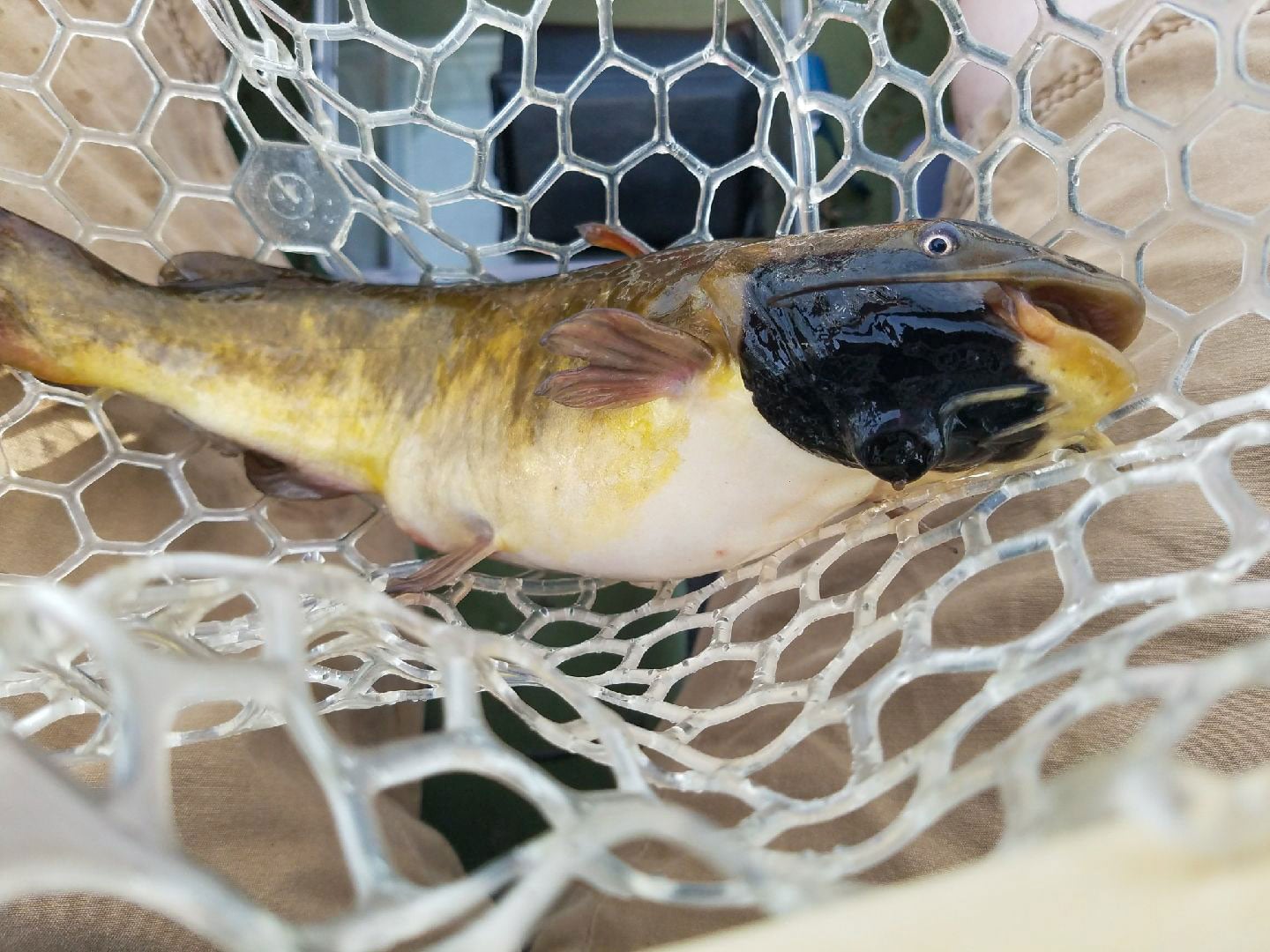
Raised black lesions have appeared on brown bullhead catfish across Lake Memphremagog and other waters in New England and Canada. What initially looked like pollution or infection turned out to be something far more unusual: a melanoma whose living cancer cells can move directly from one fish to another.
Researchers in Vermont identified it as the first transmissible cancer ever found in a freshwater fish species. Unlike ordinary tumors, which arise from an animal’s own cells, these cancer cells behave like parasites that pass between hosts.
The discovery, published in Nature, offers a rare view of how cancer can spread through wildlife. It also raises unresolved questions about where the disease began, how it could affect catfish populations, and what it may reveal about the limits that normally keep cancers confined to one animal.
Genetic evidence reveals an infectious cancer
Anglers and biologists began reporting a sharp increase in affected brown bullhead catfish (Ameiurus nebulosus) in 2012. The sightings came from Lake Memphremagog, a cross-border lake shared by Vermont and Quebec. By 2014, raised black patches were visible on nearly one-third of the fish examined.
“At first, we thought this disease might be a virus, but that wasn’t panning out,” said Julie Dragon, a scientist at the University of Vermont and co-leader of the new study.
Because brown bullhead are used as indicators of environmental quality, the researchers initially suspected pollution, a contaminant, or an infectious pathogen. Analysis instead showed that the lesions were melanoma, a form of skin cancer.
“This was surprising,” Dragon said, “and we wanted to know how a bottom-dwelling fish was getting a cancer we associate with exposure to too much sunlight.”
Dragon, a researcher at the UVM Cancer Center in the Larner College of Medicine, and her colleagues then took a “deep dive,” she says, into the genetics of the tumors. They expected to find a mutation that made individual fish vulnerable to developing cancer from their own cells.
The genetic evidence revealed something much stranger.
Using whole-genome sequencing, the researchers compared DNA from tumors with healthy tissue taken from affected fish. The cancer cells were far more closely related to one another than they were to the catfish carrying them.
That pattern is the defining sign of a clonally transmissible cancer. In these rare diseases, living tumor cells escape their original host and spread between animals as infectious agents.
“Hundreds of thousands of genetic variants are shared among tumor samples but absent from host fish, vastly exceeding levels seen in conventional cancers,” the study reports.
The finding represents only the fourth recognized type of transmissible cancer in the animal kingdom. It is also the first identified in any fish or freshwater species.
Other known examples include facial tumor disease in Tasmanian devils, a transmissible venereal tumor in dogs, and leukemia-like cancers that pass among clams, mussels, and other bivalve mollusks.
Spawning behavior may enable transmission
The researchers have not yet determined exactly how the melanoma moves between catfish.
“It seems to only happen in larger fish that are of spawning age,” said Mark Henderson, a fish biologist and study co-leader in UVM’s Rubenstein School of Environment and Natural Resources. “Maybe some part of spawning behavior leads to the spreading of the cancer between animals.”
Brown bullhead gather in close groups in shallow water while spawning. That physical contact could allow tumor cells to pass directly between fish.
Their biology may create another possible route. Bullhead lack scales and spend much of their time near the lake bottom, where they frequently contact sediment that might contain free-floating cancer cells.
The study also suggests that pollutants or hormonal changes could weaken the fishes’ immune systems, making them more susceptible to infection by foreign cancer cells.
Naturally occurring arsenic may also play a role, although the researchers have not established whether it contributes to the disease.
Population effects remain unknown
The long-term ecological consequences remain unclear. Some transmissible cancers devastate their hosts. Facial tumor disease has eliminated as much as 90% of certain Tasmanian devil populations.
Other transmissible tumors persist without destroying their host species. The cancer found in dogs, for example, has circulated for thousands of years.
Brown bullhead with severe disease in Lake Memphremagog can survive for years. Researchers still do not know how the cancer affects reproduction, overall survival, or population numbers over longer periods.
Lake Memphremagog supplies drinking water to more than 175,000 people, but the researchers emphasize that the disease poses no known threat to humans. The cancer cells cannot infect or survive in another species, and the fish are safe to handle and study.
The discovery nevertheless raises broader questions about whether pollution, habitat stress, and climate change can influence the evolution and spread of disease in wildlife. “And, personally, I wouldn’t eat the ones with tumors,” says Henderson, who notes that about 30% of the lake’s brown bullhead appear to be afflicted.
Some environmental advocates have questioned whether toxins from the nearby Coventry Landfill could be causing the cancer. The research team found no evidence supporting that explanation.
Affected fish occur throughout the 32-mile-long lake, including in reproductively isolated populations. Cases are not concentrated in South Bay near the landfill, as would be expected if contamination from that site were responsible.
Water quality testing also found similarly low pollutant levels in Lake Memphremagog and several nearby waterbodies. These include Lake Champlain, where no transmissible melanoma is known to occur.
The cancer reaches beyond one lake
Sampling outside Lake Memphremagog has shown that the cancer is not confined to one body of water. Researchers examined catfish from Vermont, New Hampshire, Maine, and New Brunswick.
They detected the disease in “a few other ponds and lakes in this region,” said Peter Emerson, a biologist for the State of Vermont and co-leader on the new study.
Many of those locations have pristine water and are far from landfills, toxic discharges, or other obvious sources of industrial pollution.
The researchers did, however, find elevated arsenic levels inside the fish cancer cells. The geographic distribution of the disease also appears to correlate with arsenic concentrations in soil surrounding the affected lakes.
Arsenic is both highly toxic and carcinogenic, but the evidence does not yet show whether it causes the cancer, makes fish more vulnerable to infection, or has some other connection to the disease.
“Arsenic is found naturally throughout New England, and there’s really high concentrations of it in the Vermont’s Northeast Kingdom as well as up through Maine, which is where we’ve also seen evidence of this cancer,” says Henderson.
The scientists are now investigating how long the transmissible melanoma has existed and whether similar cancers are more common than current records suggest.
“Our contention is that maybe it’s not as rare as everyone thinks. We’re just not seeing it,” says Dragon. “In the case of transmissible cancers, it may be that we don’t see many simply because we aren’t looking for them.”
A possible early record appears in the journals of Henry David Thoreau. While traveling on the Concord River in Massachusetts in July 1852, he described a catfish with a large dark lesion.
Thoreau wrote, “one of these large pouts [catfish] had a very large velvet-black spot, which included the right pectoral fin; a kind of disease I have often observed on them.”
Six years later, he recorded another affected fish: “I see a pout this afternoon in the Assabet”—a tributary of the Concord River— “lying on the bottom, near the shore, evidently diseased. He permits the boat to come within two feet of him. Nearly half the head, from the snout backward diagonally, is covered with an inky-black kind of leprosy, like a crustaceous lichen.”
Researchers are now surveying ponds and rivers in Massachusetts to map the cancer’s distribution and determine whether it may have originated there.
Julie Dragon emphasized that the disease could provide broader insight into cancer biology. “By studying how cancers survive and spread outside their original host, we can learn a great deal about what keeps cancers contained—and what happens when those boundaries break down,” she said. “These fish provide an opportunity to look at evolution of cancer.
Reference: “Brown bullhead catfish melanoma represents a novel transmissible cancer” by Emily E. Curd, Samuel F. M. Hart, James Lubkowitz, Kirsten M. Tracy, Lucas Milazzo, Matthew Bodnar, Tom Jones, Mark J. Henderson, Peter Emerson and Julie A. Dragon, 22 July 2026, Nature.
DOI: 10.1038/s41586-026-10828-6
Funding: U.S. Department of the Interior, U.S. Geological Survey, Great Lakes Fishery Commission, Vermont Fish and Wildlife Department, Larner College of Medicine
Never miss a breakthrough: Join the SciTechDaily newsletter.
Follow us on Google and Google News.