
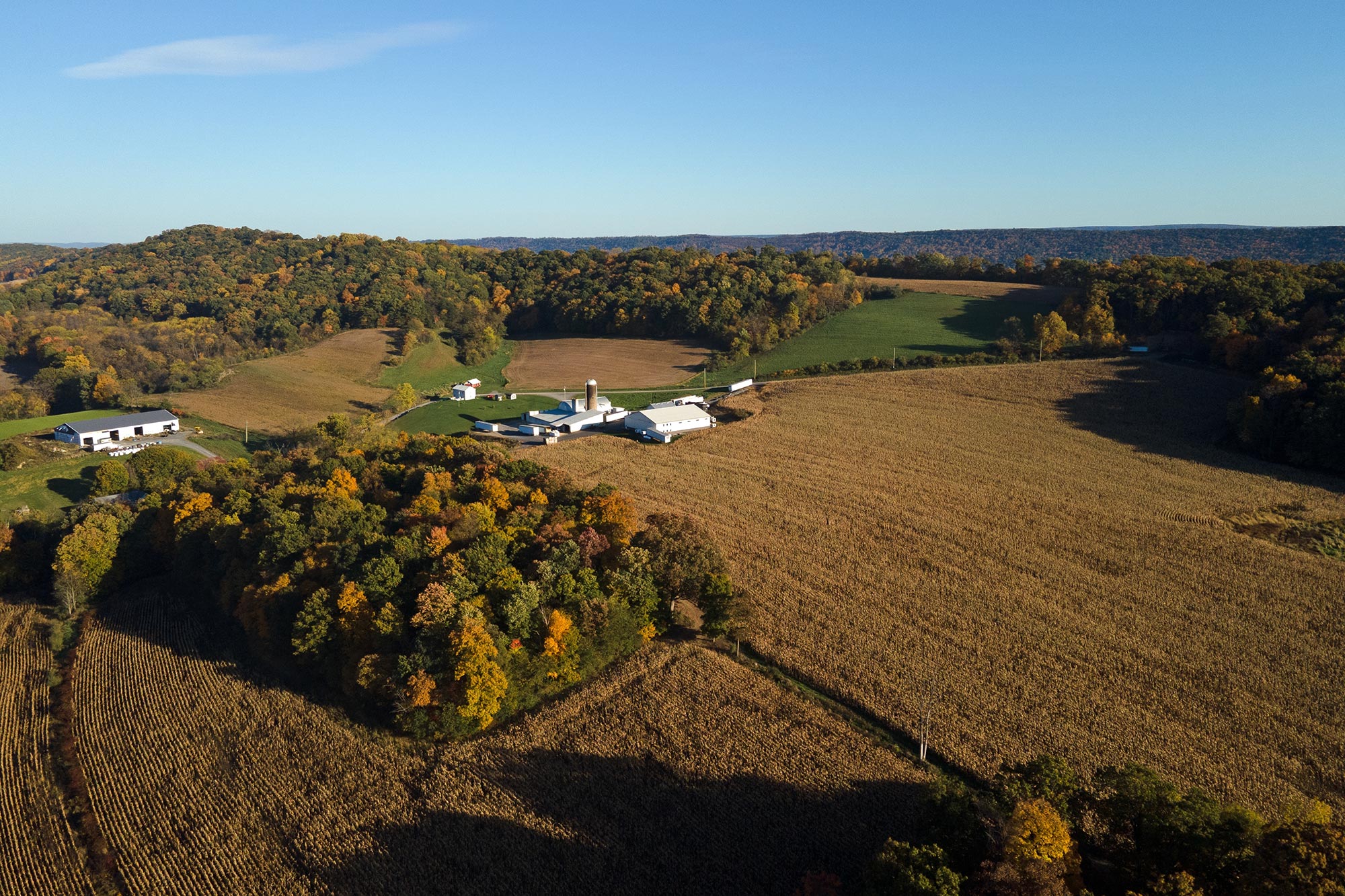
Scientists discovered a striking melanoma hotspot in agricultural counties of Pennsylvania, where cropland and herbicide use appear closely tied to higher cancer rates.
The link persisted even when sunlight exposure and socioeconomic factors were considered. Researchers warn that chemical drift means nearby residents may face hidden exposure risks.
High Melanoma Rates Linked to Agricultural Counties
Counties in Pennsylvania that include or border active cropland showed notably higher melanoma rates than other parts of the state, according to new research from Penn State scientists.
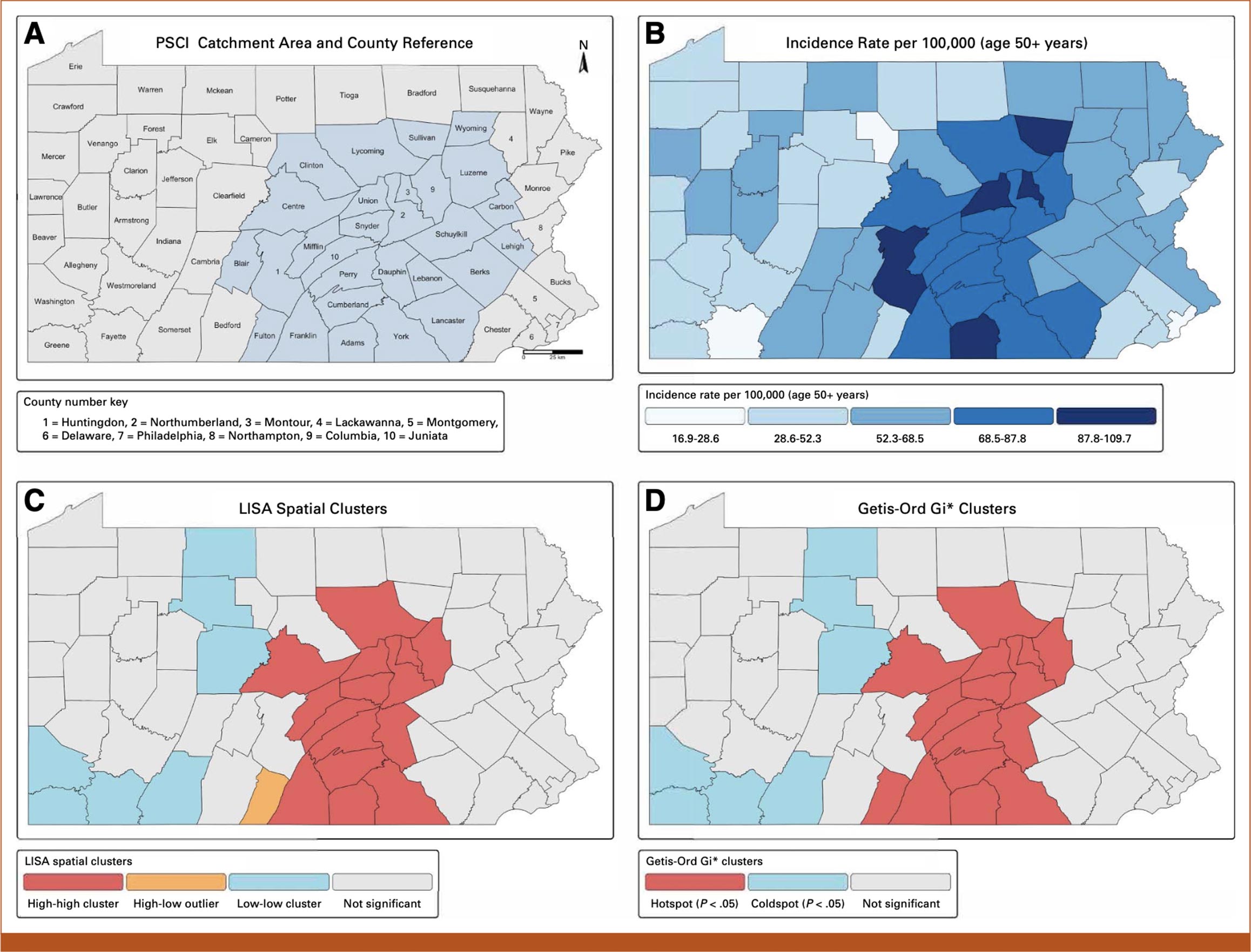
A team at the Penn State Cancer Institute examined cancer registry data from 2017 through 2021 and reported that adults over 50 living in a 15-county area of South Central Pennsylvania were 57% more likely to be diagnosed with melanoma, the deadliest form of skin cancer, than residents in the rest of Pennsylvania. The study was published today (November 14) in the journal JCO Clinical Cancer Informatics.
Charlene Lam, associate professor of dermatology at Penn State Health and a co-author of the study, noted that the affected region includes both rural and urban counties. She explained that the elevated risk is not limited to people in remote locations or those who spend long hours outdoors.
Agricultural Environments as Hidden Risk Zones
“Melanoma is often associated with beaches and sunbathing, but our findings suggest that agricultural environments may also play a role,” she said. “And this isn’t just about farmers. Entire communities living near agriculture, people who never set foot in a field, may still be at risk.”
Although sunlight is often blamed for melanoma, researchers carefully evaluated this factor. Even after considering Pennsylvania’s ultraviolet radiation levels and socioeconomic conditions, two clear associations remained. Counties with more cropland and those using larger amounts of herbicides consistently showed higher melanoma rates.
Sunlight Considered, But Agriculture Signals Stand Out
“Pesticides and herbicides are designed to alter biological systems,” said Eugene Lengerich, emeritus professor of public health sciences at Penn State and senior author on the paper. “Some of those same mechanisms, like increasing photosensitivity or causing oxidative stress, could theoretically contribute to melanoma development.”
The analysis showed that a 10% rise in cultivated land was linked to a 14% increase in melanoma diagnoses across the region. A similar pattern appeared for herbicides: a 9% increase in treated acreage corresponded to a 13% rise in cases.
Chemical Drift Extending Risk Beyond Farm Workers
Lam emphasized that chemical exposure can reach far beyond the workers who apply these products. She explained that such substances can drift through the air, accumulate in household dust, and contaminate water sources.
“Our findings suggest that melanoma risk could extend beyond occupational settings to entire communities,” she said. “This is relevant for people living near farmland. You don’t have to be a farmer to face environmental exposure.”
In the paper, the researchers cited other studies that previously linked pesticide and herbicide use with melanoma risk due to the fact that the chemicals have been found to heighten sensitivity to sunlight, disrupt immune function and damage DNA in non-human animals and plants.
Previous Research Points to Photosensitivity and DNA Damage
Benjamin Marks, first author on the paper who is pursuing a medical degree and a master of public health degree at the Penn State College of Medicine, pointed out that while cropland and increased herbicide use seem to go hand in hand with higher melanoma rates, that doesn’t prove that chemicals commonly used on crops like corn, soybeans and grains cause cancer, but rather the numbers show a link worth investigating.
He explained that studies like this are valuable for identifying patterns, but can’t necessarily pinpoint individual risk.
“Think of this as a signal, not a verdict,” Marks said. “The data suggest that areas with more cultivated land and herbicide use tend to have higher melanoma rates, but many other factors could be at play like genetics, behavior or access to health care. Understanding these patterns helps us protect not just farmers, but entire communities living near farmland.”
Environmental Exposure Risks Reach Global Agricultural Regions
Lam said her hope is to better understand the relationship between agricultural practices and public health, as the study’s implications extend beyond Pennsylvania. Similar patterns have been reported in agricultural regions of Utah, Poland and Italy, the researchers noted in the paper.
She encouraged those concerned about their risk to perform regular skin checks, wear sun-protective clothing, and sunscreen outdoors. As a next step, Lam is leading follow-up research in the rural communities within the study area to learn more about practices adopted by farmers and understand where exposure risks could be coming from.
Next Steps: Community Research and One-Health Prevention Strategies
“Cancer prevention can’t happen in isolation,” Lengerich said. “This study demonstrates the importance of a ‘One Health’ approach, an understanding that human health is deeply connected to our environment and agricultural systems. If herbicides and farming practices are contributing to melanoma risk, then solutions must involve not just doctors, but farmers, environmental scientists, policymakers, and communities working together.”
Reference: “Harvesting Risk: An Ecologic Study of Agricultural Practices and Patterns and Melanoma Incidence in Pennsylvania” by Benjamin J. Marks, BS, Jiangang Liao, PhD, Charlene Lam, MD, MPH, Camille Moeckel, BA, and Eugene J. Lengerich, VMD, MS, 14 November 2025, JCO Clinical Cancer Informatics.
DOI: 10.1200/CCI-25-00160
Other co-authors include Jiangang Liao, professor of public health sciences at Penn State College of Medicine; and Camille Moeckel, fourth-year medical student and research associate at Penn State College of Medicine.
The research was supported by the MPH Capstone Program and the Medical Student Research Project at the Penn State College of Medicine, as well as the University’s Algin B. Garrett Professorship.
Never miss a breakthrough: Join the SciTechDaily newsletter.
Follow us on Google and Google News.
8 Comments
I have stage 4 melanoma and live in Franklin county in the center of two farms that farm corn every year. Is this why I got my melanoma.
Was there not a near nuclear meltdown at Three Mile Island in this region?
Yes, there was a nuclear meltdown at Three Mile Island in Dauphin county in 1979. Dauphin county is in the middle of this region.
Three Mile Island, in Dauphin County, was a more dangerous disaster than commonly known. My husband back then was working for a nuclear engineering company that didn’t build it, but helped with clean-up. Cancer rates are high in the area.
Roger, that:
Pale skin plus sunshine plus herbicides plus radiation exposure plus/minus additional genetic susceptibility…
There was a nuclear meltdown at Three Mile Island in Dauphin county in 1979. Dauphin county is in the middle of this region. It was the impetus for a song by Dan Fogelberg called “Face the fire.”
No…. really? Farmers being in the sun getting skin cancer? Who knew? It has nothing to do with chemicals, and everything to to do with the Sun. Wow, you guys are amazingly smart. Btw lawn care guys, linemen and road crew guys get it too. Crazy isn’t it?
Penn State advocates chemical sprays for agriculture.Typical capitalism ,create a problem to to make money off of.Where are the locations of Penn State hospitals?Maybe overlay that on the map.