
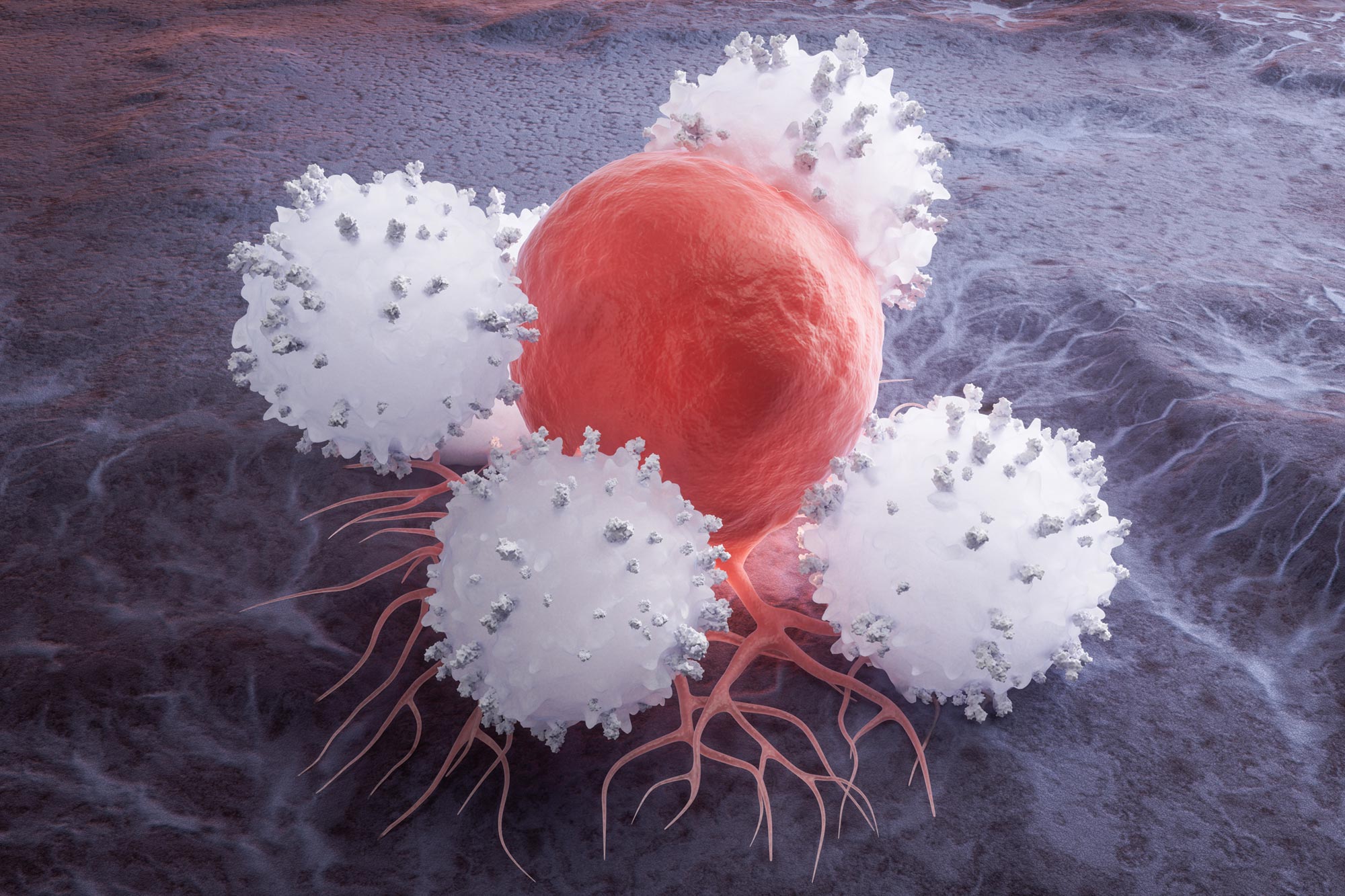
Scientists discovered and filmed macrophages actively destroying live melanoma cells, a finding that could improve immunotherapy and inspire new cancer treatments.
Scientists at the Garvan Institute of Medical Research have, for the first time, recorded immune cells known as the body’s “housekeepers” actively attacking and consuming live melanoma cells. The discovery could reshape how researchers approach treatment for melanoma, one of Australia’s most common and deadliest cancers.
The study, published in the Journal of Experimental Medicine, identifies a previously underappreciated group of immune cells called macrophages. These cells gather around the edges of melanoma tumors, where they continuously engulf cancer cells and help slow tumor growth.
“This is the first time anyone has captured a macrophage attacking and engulfing a live cancer cell in real time,” says Dr. Yuki Keith, first author of the research. “We always suspected macrophages were doing more than we gave them credit for – now we have the video footage to prove it. Studying this in a living system is crucial because it is more representative of what happens in real life, showing the complexity of the immune system and paving the way for the treatments of the future.”
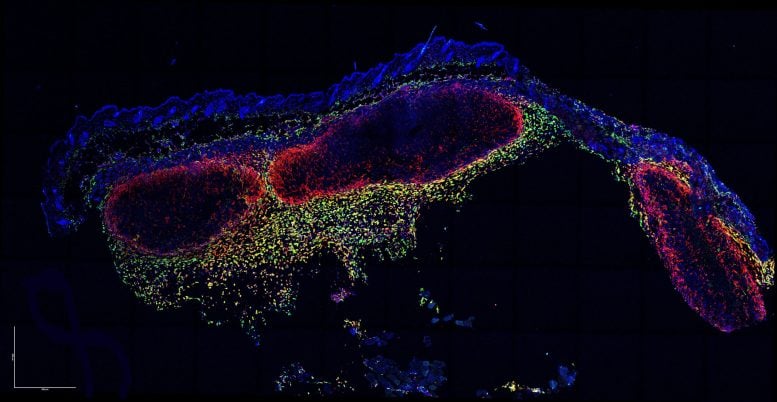
Macrophages are immune cells that can account for up to 30 percent of the cells within a melanoma tumor. Although scientists have long known they are involved in cancer, their exact role in either promoting or suppressing tumor growth has remained unclear.
CD169 Macrophages Suppress Tumor Growth
Previous research often examined macrophages by removing them broadly throughout the body and observing how tumors responded.
Dr. Keith and colleagues discovered that skin macrophages are not all alike. They identified a specific subgroup that produces a protein called CD169. When the researchers selectively removed these CD169-positive macrophages, melanoma tumors became larger, indicating that this population helps keep tumor growth in check.
Microscopy showing a macrophage engulfing a melanoma cell. Credit: Phan Lab, Garvan Institute
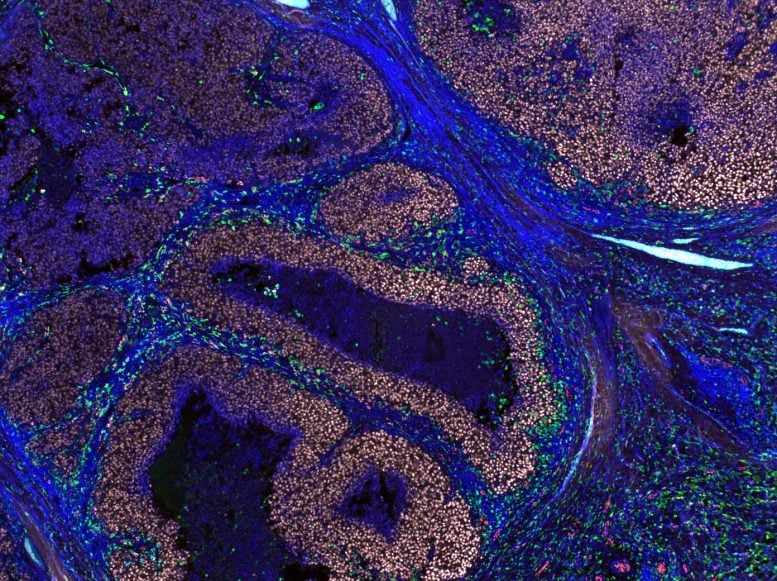
To study the cells in action, the team used intravital two-photon microscopy, an advanced imaging method that allows biological activity to be observed at the cellular level in living organisms. In mice, they directly witnessed CD169-positive macrophages engulfing live melanoma cells. To determine whether the findings were relevant to humans, researchers at Melanoma Institute Australia examined human tissue samples and found the same macrophages in healthy skin and concentrated around the edges of melanoma tumors.
“Macrophages have always been known as the body’s housekeepers – they clear away dead cells and debris,” explains Professor Tri Phan, senior author on the paper. “What Dr. Keith caught on camera was these cells actively nibbling away and engulfing live cancer cells, constraining tumor growth. Critically, this attack appears to occur independently of T cells and B cells – the immune players most commonly credited with fighting cancer – which made the discovery unexpected, and genuinely exciting.”

Implications for Immunotherapy and Cold Tumors
The findings could have important implications for cancer immunotherapy. Immune checkpoint blockade therapy depends on T cells to identify and destroy cancer cells and has transformed treatment for advanced melanoma. However, only about half of patients respond to these therapies, highlighting the need for better options. One major challenge is the presence of so-called “cold tumors,” which prevent T cells from entering and attacking the cancer.
“While macrophages are known as the body’s housekeepers, they also have a second job: acting as immune informants,” Dr. Keith explains. “Once they consume a threat, they chew it up and display a piece of it on their surface, like a biological ‘red flag’. We suspect that these CD169-positive macrophages are doing exactly this with the live cancer cells, which means they could hold the key to calling the T cell cavalry into the tumor to finish the job.”
Future Cancer Treatments Targeting Macrophages
The researchers now aim to determine precisely how CD169-positive macrophages interact with T cells.
“If we can harness this population of macrophages, we potentially have an immune army already in place, ready to be mobilized,” says Professor Phan. “Future treatments could involve developing targeted drugs that boost their numbers, or make them ‘hungrier’ or better at tagging cancer cells for killing. By combining this approach with existing therapies, we could potentially make immunotherapy work for a much larger group of patients. This could also apply to many cancers beyond melanoma, as macrophages are highly abundant in most solid tumors.”
Reference: “CSF1R-dependent CD169-positive macrophages locally constrain melanoma growth in the skin” by Yuki Honda Keith, Emily Duchini, Xufeng Lin, Wunna Kyaw, Felix G.P. Weninger, Rama Dhenni, Aiden Josiah Telfser, Abigail K. Grootveld, Deborah Barkauskas, Angela Fontaine-Titley, Shweta Tikoo, Rohit Jain, Wolfgang Weninger, John W. Frew, Elissa K. Deenick, Robert Brink, Linda K. Martin, Tatyana Chtanova, Leonard D. Goldstein, Richard A. Scolyer, Georgina V. Long, Umaimainthan Palendira and Tri Giang Phan, 21 May 2026, Journal of Experimental Medicine.
DOI:10.1084/jem.20252239
This research was supported by Australia’s National Health and Medical Research Council, the Australian Cancer Research Foundation, Cancer Institute New South Wales, The Angles Family Foundation, Tour de Cure and the 2025 Jacqueline Goodnow & Hartley Prize. The melanoma biopsy samples were provided and analyzed by Melanoma Institute Australia.
Never miss a breakthrough: Join the SciTechDaily newsletter.
Follow us on Google and Google News.
1 Comment
BADASSES 😎 For real ! I have been scouring the web for answers for my husbands melanoma. This is absolutely a miracle. Thank you all so much for your never-ending efforts !!!