
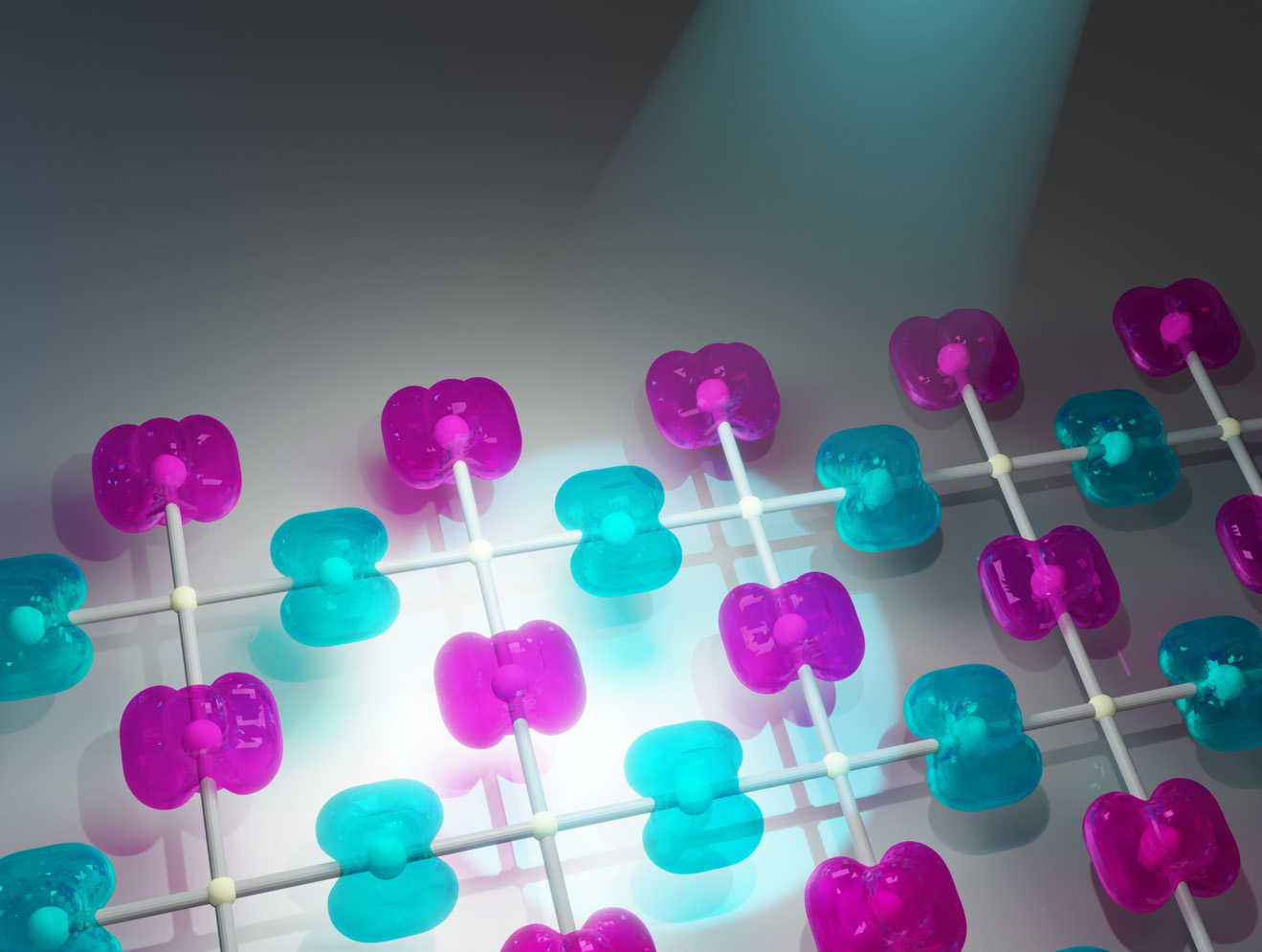
A previously overlooked set of spin symmetries has revealed that magnetism does not fit neatly into just two categories.
For more than a century, physicists divided collinear magnets into two basic types. The discovery of altermagnetism has added a third, earning Professor Jairo Sinova of Johannes Gutenberg University Mainz (JGU), Dr. Libor Šmejkal and Professor Tomas Jungwirth the 2026 Europhysics Prize from the European Physical Society (EPS) Condensed Matter Division.
One of Europe’s leading honors in condensed matter physics, the prize recognizes their work establishing altermagnetism as a previously unknown fundamental form of magnetic order alongside ferromagnetism and antiferromagnetism. The finding has challenged a long-accepted picture of magnetism and created a research field with potential consequences for quantum materials, condensed matter physics and future information technologies.
“This award recognizes a fundamental discovery that challenged one of the most established paradigms in condensed matter physics,” said Professor Jairo Sinova, Director of the Spin Phenomena Interdisciplinary Center (SPICE) at Mainz University. “Discovering that an entirely new magnetic phase had remained hidden for more than one hundred years demonstrates that even the most mature scientific fields can still hold fundamental surprises.”
A partnership uncovered hidden magnetic order
Altermagnetism emerged through a longstanding collaboration between Sinova’s group at Johannes Gutenberg University Mainz and Jungwirth’s team at the Institute of Physics of the Czech Academy of Sciences in Prague.
Šmejkal, who also held an affiliation in Prague, worked at Mainz from 2016 to 2024. He first joined Sinova’s group as a doctoral researcher and later continued as a postdoctoral scientist. During those eight years at JGU, Šmejkal led the development of many of the theoretical ideas that ultimately supported the discovery.
The researchers combined modern symmetry theory with spintronics, a field that uses the spin of electrons to process and store information, to identify a fundamentally different kind of magnetic organization. Their predictions quickly prompted experimental groups worldwide to search for the effect. Spectroscopic and electrical transport measurements subsequently provided evidence of altermagnetism in several materials.
Research on altermagnetism now extends across Europe, North America and Asia, making it one of the most rapidly expanding areas of condensed matter physics.
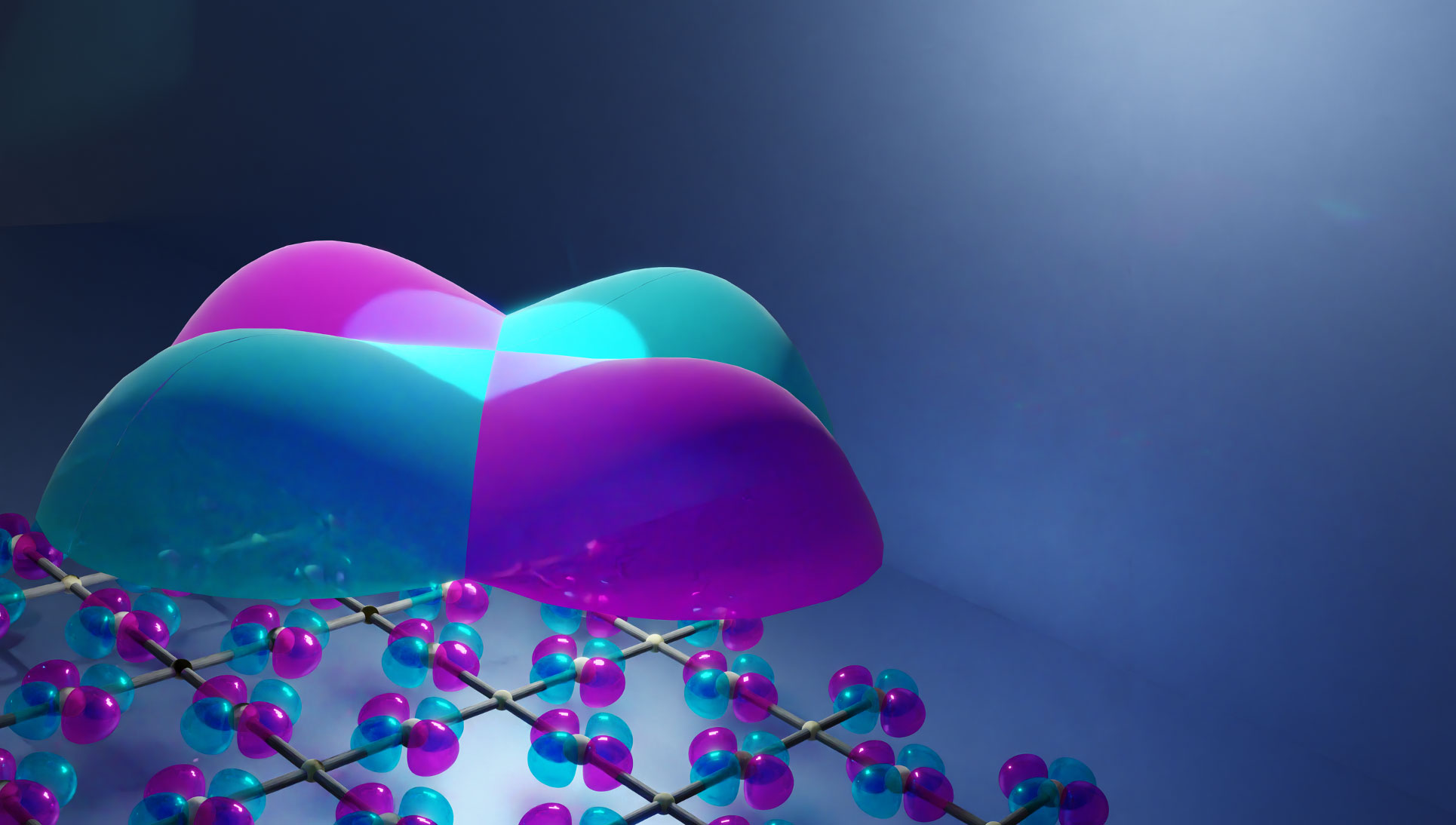
Magnetism no longer fits two categories
For decades, the standard framework placed every collinear magnet into one of two groups. Ferromagnets have a net magnetization, making them central to conventional magnetic memory. Antiferromagnets are magnetically compensated, with opposing magnetic moments that cancel one another, and display very different electronic behavior.
Altermagnets reveal that those categories do not cover every possibility. Like antiferromagnets, they have no overall magnetization. At the same time, they possess electronic properties that were previously associated only with ferromagnets.
This combination can support highly spin-polarized electrical currents and extremely fast magnetic dynamics. Those characteristics make altermagnets promising candidates for future spintronics technologies, which aim to manipulate electron spin rather than relying only on electrical charge.
The implications extend beyond possible devices. Altermagnetism defines a new symmetry class of matter and creates unexpected links with topological physics, unconventional superconductivity and strongly correlated quantum materials.
Overlooked symmetries revealed a new phase
The path toward altermagnetism began with theoretical investigations of unusual magnetic transport effects, including the prediction of the crystal anomalous Hall effect. At first, these properties could have appeared to be isolated features of particular materials.
Further analysis revealed a broader explanation. The unusual behavior arose from a distinct magnetic phase controlled by spin symmetries that earlier classifications had overlooked.
In 2022, the researchers presented a complete symmetry-based classification of altermagnetism and identified hundreds of materials that could potentially display it. Experimental scientists have since confirmed altermagnetic behavior through several independent methods, including angle-resolved photoemission spectroscopy (ARPES), which maps the energy and motion of electrons inside materials, and electrical transport measurements.
A new field gains major recognition
Within only a few years, altermagnetism has generated hundreds of scientific papers and become a prominent subject at international physics conferences.
The EPS Europhysics Prize has honored major advances in condensed matter physics since 1975. It recognizes discoveries that have substantially moved the field forward, with a significant share of the contributing research conducted in Europe.
Sinova, Šmejkal and Jungwirth will receive the award at the 32nd General Conference of the European Physical Society Condensed Matter Division (CMD32), scheduled for September 2026 in Graz, Austria.
Reference: “Altermagnetic lifting of Kramers spin degeneracy” by J. Krempaský, L. Šmejkal, S. W. D’Souza, M. Hajlaoui, G. Springholz, K. Uhlířová, F. Alarab, P. C. Constantinou, V. Strocov, D. Usanov, W. R. Pudelko, R. González-Hernández, A. Birk Hellenes, Z. Jansa, H. Reichlová, Z. Šobáň, R. D. Gonzalez Betancourt, P. Wadley, J. Sinova, D. Kriegner, J. Minár, J. H. Dil and T. Jungwirth, 14 February 2024, Nature.
DOI: 10.1038/s41586-023-06907-7
Never miss a breakthrough: Join the SciTechDaily newsletter.
Follow us on Google and Google News.