
Archived radio observations could open new frequencies to SETI while showing that past searches covered millions more stars than previously estimated.
A potential extraterrestrial signal could be hiding in radio frequencies that modern searches for intelligent life have barely examined.
Most radio SETI (Search for Extraterrestrial Intelligence) projects concentrate on frequencies from 1.42 to 1.66 GHz. Astronomers call this region the ‘water hole’ because it falls between the natural radio emissions of hydrogen and hydroxyl, which combine to form water.
This relatively quiet stretch of the spectrum has long seemed like a sensible meeting place for communication. Researchers reason that an advanced civilization might understand the importance of hydrogen and hydroxyl and choose those frequencies for both transmitting and listening.
New research, however, indicates that higher frequencies could open another path in the search for technological signals from distant civilizations. The work was recently presented at the Royal Astronomical Society’s National Astronomy Meeting in Birmingham.
Archived data opens a new search range
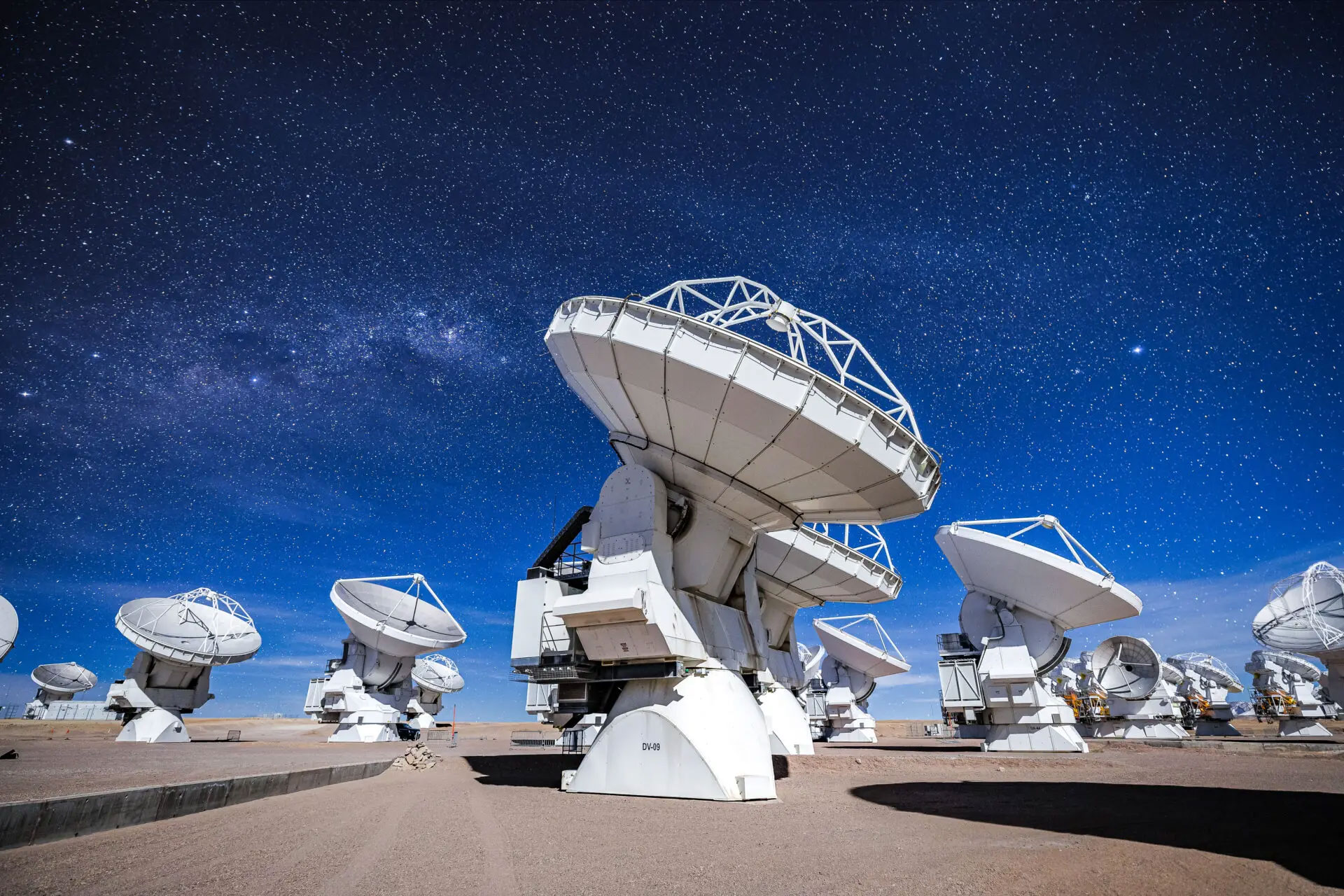
Louisa Mason, an astronomer and PhD researcher at the University of Manchester, conducted the first SETI survey with the Atacama Large Millimeter/submillimeter Array (ALMA) in Chile. Instead of requesting fresh telescope time, she examined archived observations originally gathered for unrelated astronomical studies.
Her search targeted narrowband radio signals, which could point to technology rather than naturally occurring processes in space.
“For decades, SETI searches have concentrated on a relatively small part of the radio spectrum. We wanted to ask what might happen if we looked somewhere very different,” Mason said.
“The millimeter and submillimeter radio bands remain almost completely unexplored for SETI, so this is really about opening up a new area of parameter space to search.”
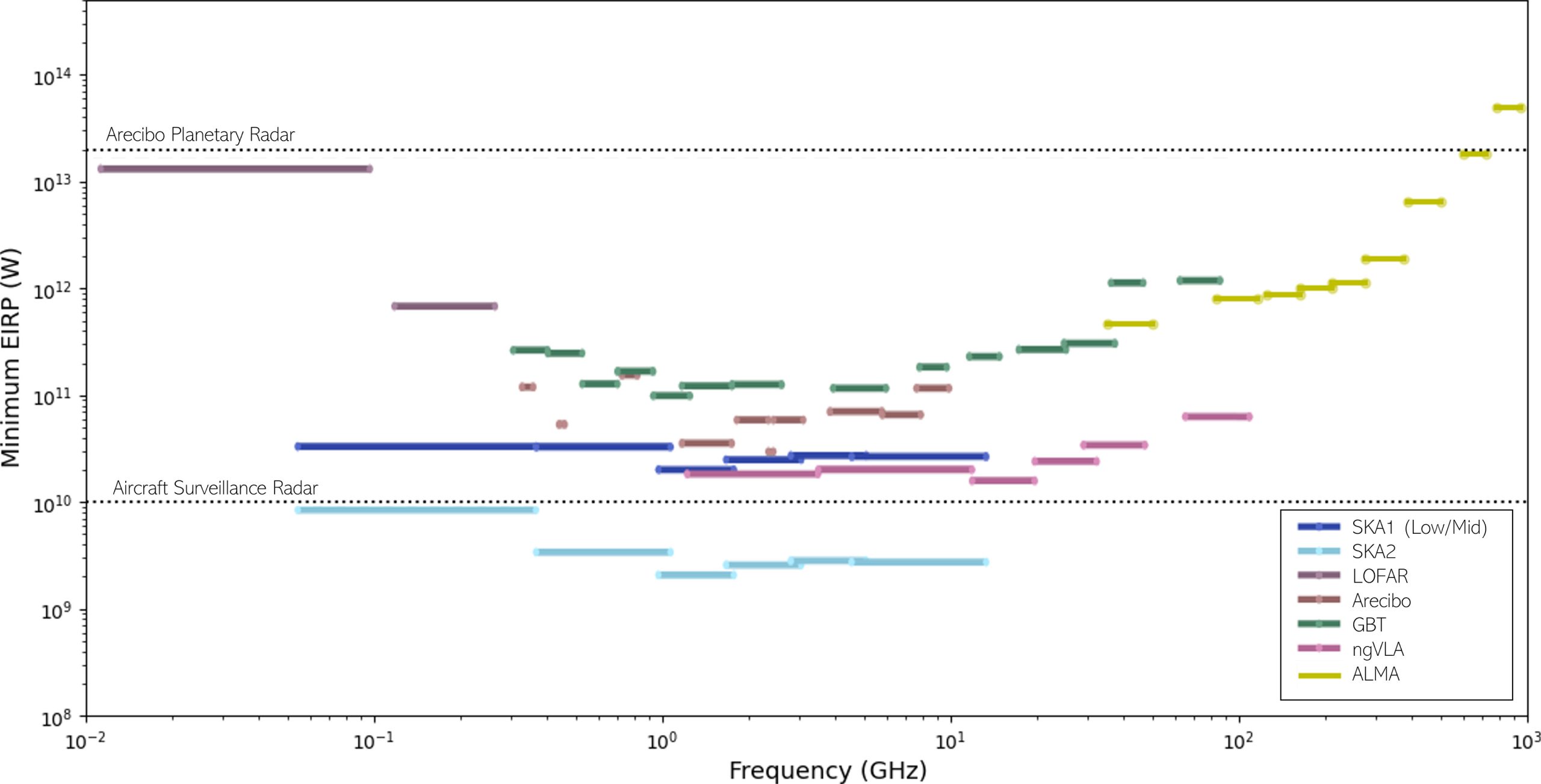
Mason examined two narrow frequency windows in ALMA’s Band 3 data. No candidate technosignatures (alien signals) exceeded the survey’s detection thresholds.
The analysis covered only four archived ALMA observations, but Mason says it shows how high-frequency radio telescopes could contribute to future SETI programs.
Hidden stars greatly expand the survey
The work also draws attention to a largely overlooked feature of radio astronomy. When a telescope observes one chosen target, its field of view simultaneously includes many additional stars.
Researchers have generally estimated this ‘stellar bycatch’ with catalogs such as Gaia. Mason instead applied the Besançon Galactic Model to calculate the wider population of stars inside each observation, including objects that are too distant, faint, or difficult to identify reliably in available catalogs.
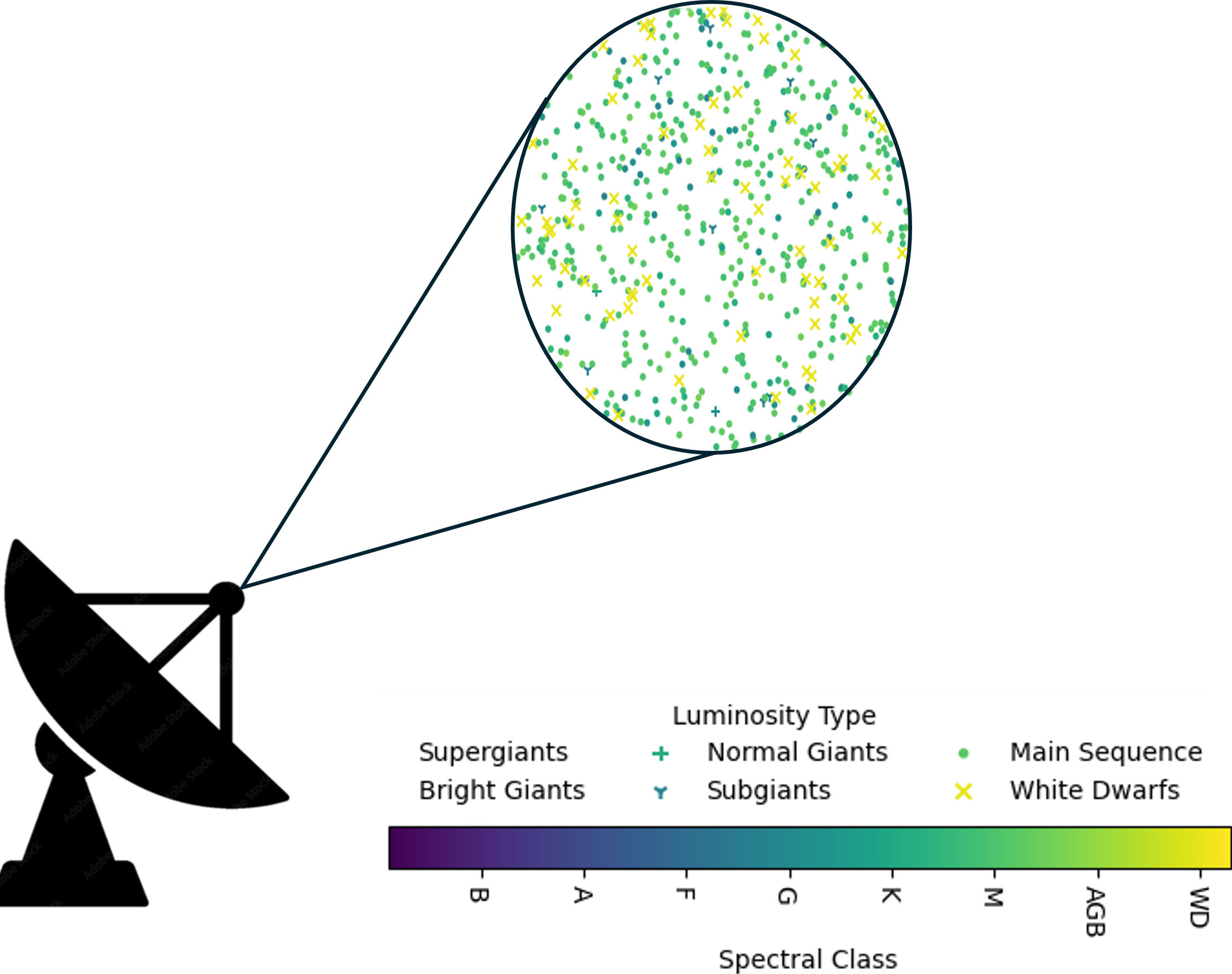
When she applied this approach to an earlier SETI survey containing 1,327 telescope pointings, the estimated number of stars covered rose from roughly 288,000 in the Gaia catalog to more than 6.1 million in the galactic model.
According to Mason, the result offers a more accurate estimate of how much of the Milky Way has already been examined for technosignatures.
“One of the most exciting things about this work is realizing that we’ve surveyed many more stars than initially thought,” she said.
“Even a very small observation can contain a huge number and diversity of stars that we might never have intended to study. By combining high-frequency observations with galactic simulations, we can better understand exactly what we’ve searched and where we should look next.”
No detection leaves the question open
Mason stresses that finding no signal does not rule out the existence of intelligent life. It means only that the study detected no candidate signal within the two small frequency ranges it examined.
She hopes the results will encourage SETI researchers to explore a broader portion of the radio spectrum while extracting more value from astronomical data that already exist.
Meeting: National Astronomy Meeting 2026
References:
“Simulating the stellar bycatch: constraining the prevalence of extraterrestrial transmitters within radio SETI surveys” by Louisa A Mason, Michael A Garrett and Andrew P V Siemion, 27 November 2025, Monthly Notices of the Royal Astronomical Society.
DOI: 10.1093/mnras/staf2112
“Conducting high-frequency radio SETI searches using ALMA” by Louisa A Mason, Michael A Garrett, Kelvin Wandia and Andrew P V Siemion, 10 December 2024, Monthly Notices of the Royal Astronomical Society.
DOI: 10.1093/mnras/stae2714
Never miss a breakthrough: Join the SciTechDaily newsletter.
Follow us on Google and Google News.
4 Comments
Again it is assumes ET life thinks as we do, acts as we do, communicates as we do.
An EM wave that observes relativistic laws is USELESS for space communication for speed, time, square law, etc.Radio waves by nature cannot be quantum displaced.
It may be a good idea to check as many spectra as possible while looking in one or two most likely directions. May also be possible to focus a wide spectrum of directions into a single receptor. That said, I am sure that multiple teams of experts will come up with better ideas than I ever could. I wish them luck.
We can see about 10^24 stars and the universe seems to have just one table of elements at the temperatures and pressures of geology and biology. Our galaxy formed late. It seems unlikely that Earth is unique. But it is unique enough that we need to be doing a better job of protecting the variety of life that is here.
Cheers – Wig
Well said, Wig!
SETI wastes scientific and economic resources. After years of such studies there is still no evidence that ETs use radiocommunication or any activities that would emit radiofrequency energy, while the evidence base continues to mount that they have engaged with human beings for decades or even centuries. See the work of Preston Dennett for example.