
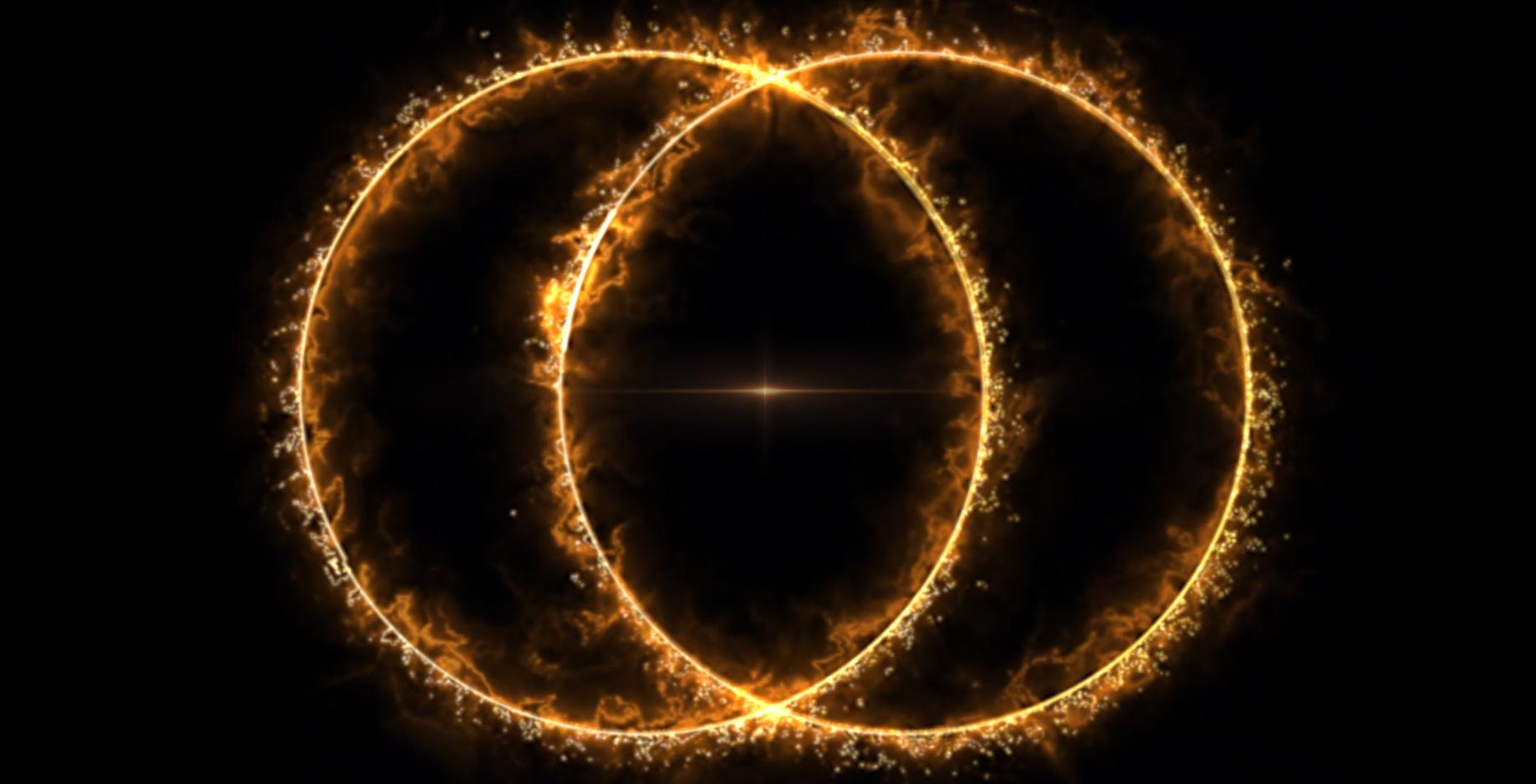
Astronomers have discovered an enormous double-ringed radio structure billions of light-years away.
The find challenges theories of black hole activity and hints that galactic winds may shape the universe’s rarest cosmic rings.
The Discovery of the Most Distant ORC
Astronomers have identified the most distant and powerful “odd radio circle” (ORC) ever observed.
These strange circular structures are a fairly recent cosmic mystery, first detected only six years ago. So far, scientists have confirmed just a few examples, most of them colossal—spanning 10 to 20 times the diameter of our Milky Way galaxy.
ORCs are vast, faint rings of radio energy that surround galaxies and can be detected only in radio wavelengths of the electromagnetic spectrum. They are made up of fast-moving, magnetized plasma. Earlier studies suggested they might form when supermassive black holes or entire galaxies collide, creating immense shockwaves.
New Clues: Superwinds From Spiral Galaxies
A new paper published in Monthly Notices of the Royal Astronomical Society now points to a different explanation. The research team proposes that these ghostly rings of radio light could be linked to powerful “superwinds.” These massive outflows of charged particles are driven by activity within spiral host radio galaxies.
The discovery was led by scientists from the University of Mumbai using the RAD@home Astronomy Collaboratory, a citizen science initiative, along with the Low-Frequency Array (LOFAR), the world’s largest and most sensitive low-frequency radio telescope (10 to 240 megahertz).
A Double-Ringed Cosmic Giant
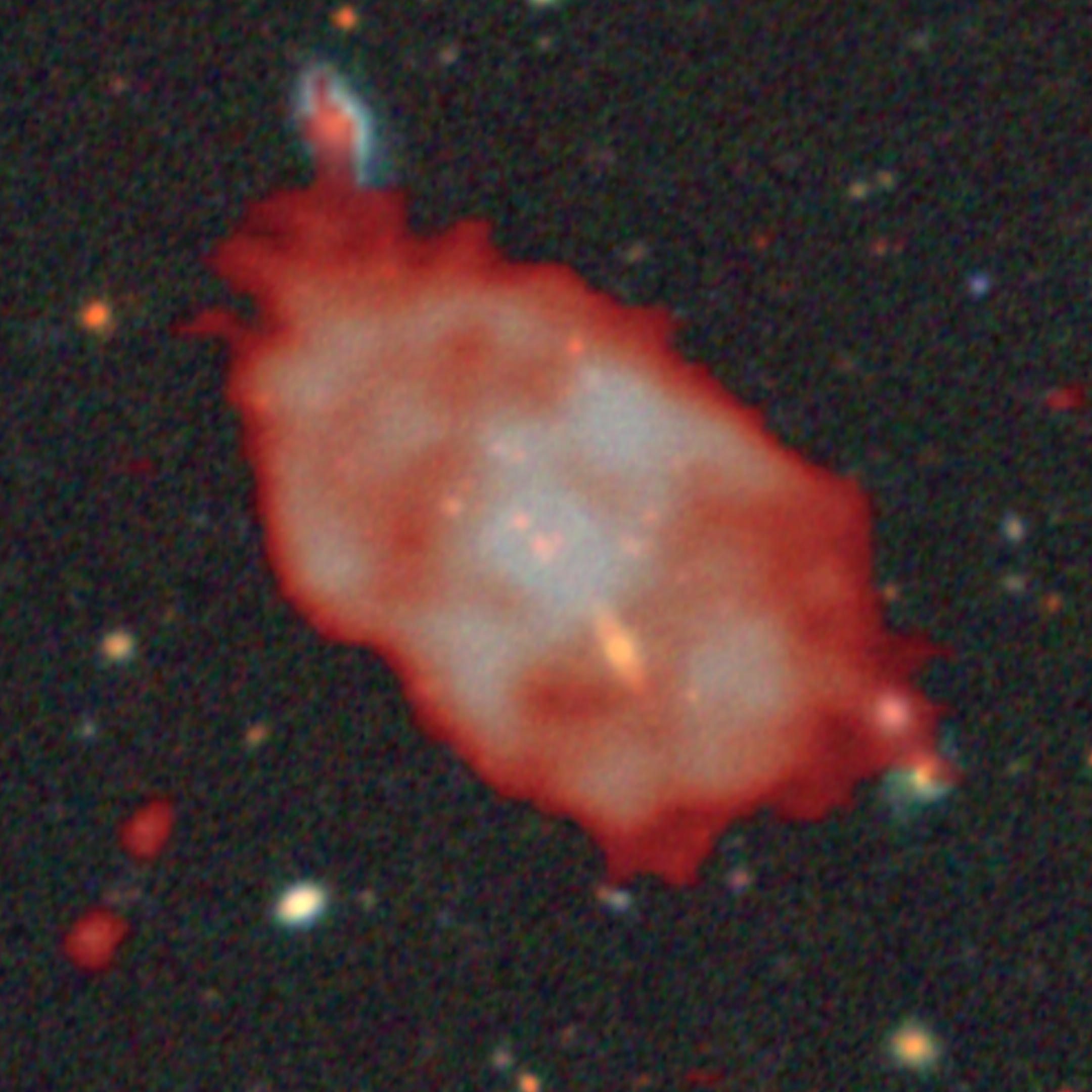
The source, designated RAD J131346.9+500320, lies nearly at redshift ~0.94 (when the universe was half its current age), making it both the most distant and the most powerful ORC known to date.
It also has not one but two intersecting rings – only the second such example with this feature – sparking more questions than answers.
Dr. Ananda Hota, founder of the RAD@home Astronomy Collaboratory for citizen science research, said: “This work shows how professional astronomers and citizen scientists together can push the boundaries of scientific discovery.
“ORCs are among the most bizarre and beautiful cosmic structures we’ve ever seen – and they may hold vital clues about how galaxies and black holes co-evolve, hand-in-hand.”
RAD J131346.9+500320 is the first ORC discovered through citizen science and the first identified with the help of LOFAR.
Power of LOFAR: A Window Into the Ancient Universe
LOFAR is a cutting-edge pan-European radio telescope, with hundreds of thousands of simple antennas spread across the Netherlands and partner stations in many European countries. Working together as one giant interferometer, it provides an exceptionally sharp and sensitive view of the sky at low radio frequencies.
It enables astronomers to look back billions of years to a time before the first stars and galaxies formed by surveying vast areas of the low-frequency radio sky.
Enormous Radio Rings and Bent Jets
In addition to the newly identified ORC, the RAD@home Astronomy Collaboratory uncovered two other remarkable cosmic giants.
The first object, known as RAD J122622.6+640622, spans nearly three million light-years—over 25 times the diameter of the Milky Way. One of its powerful jets abruptly veers sideways, as though deflected by an external force, before forming a dazzling ring of radio emission roughly 100,000 light-years wide.
The second galaxy, RAD J142004.0+621715, measures about 1.4 million light-years across. It features a similar ring of radio energy at the end of one jet, while a narrower jet extends in the opposite direction from the host galaxy.
Both of these galaxies lie within densely populated galaxy clusters, regions filled with extremely hot gas at temperatures of millions of degrees. The interaction between their high-speed jets and this surrounding plasma likely sculpts the dramatic radio shapes seen in these systems.
All three of the newly studied objects inhabit galaxy clusters with masses of roughly 100 trillion Suns, suggesting that encounters between relativistic, magnetized plasma jets and the surrounding hot material may play a key role in forming these rare and intricate cosmic rings.
A Family of Exotic Plasma Structures
Co-author Dr. Pratik Dabhade, of the National Centre for Nuclear Research in Warsaw, Poland, said: “These discoveries show that ORCs and radio rings are not isolated curiosities – they are part of a broader family of exotic plasma structures shaped by black hole jets, winds, and their environments.
“The fact that citizen scientists uncovered them highlights the continued importance of human pattern recognition, even in the age of machine learning.”
The Future: SKA and LSST to Unlock More Cosmic Rings
With upcoming facilities such as the Square Kilometre Array (SKA), astronomers expect many more ORCs to be uncovered.
At the same time, new optical surveys such as the Dark Energy Spectroscopic Instrument (DESI) and the Vera C. Rubin Observatory’s Large Synoptic Survey Telescope (LSST) will provide the redshifts and environments of their host galaxies, helping to piece together how these mysterious rings form and evolve.
For now, the three new cosmic rings – discovered not by automated software but by sharp-eyed citizen scientists – represent an important step toward unlocking the secrets of these vast, puzzling structures.
Reference: “RAD@home discovery of extragalactic radio rings and odd radio circles: clues to their origins” by Ananda Hota, Pratik Dabhade, Prasun Machado, Joydeep Das, Aarti Muley and Arundhati Purohit, 2 October 2025, Monthly Notices of the Royal Astronomical Society.
DOI: 10.1093/mnras/staf1531
Never miss a breakthrough: Join the SciTechDaily newsletter.
Follow us on Google and Google News.
4 Comments
who saved this in my phone and on us now ok I am here to us renting for now this foul
B Memo 2510121415_Source 1. Reinterpretation Summary []
Source 1.
https://scitechdaily.com/astronomers-uncover-hidden-rings-of-light-in-the-deep-universe/
1.
Astronomers Discover Hidden Rings of Light in Deep Space
Royal Astronomical Society October 10, 2025
RAD J131346.9+500320
_Astronomers have discovered a massive double-ring radio structure billions of light-years away.
_This discovery challenges theories about black hole activity and suggests that galactic winds could form the rarest cosmic rings in the universe.
1-1. Discovery of the Most Distant ORC
_Astronomers have discovered the most distant and powerful “strange radio source” (ORC) ever observed.
【If the ring size is constant and there are hundreds of billions of them, it’s a thick electromagnetic wave magic sum with msbase.sphare.big_value.】
>>>Of course, if the ring is thin, it’s qpeoms.sph_val.ms. This is the shape of a quantum galaxy.
>>>>If it has an elliptical shape, the dark energy qpms could be a microgravity cloud with two or more foci. Oh, my.
ㅡ[_This strange circular structure is a relatively recent cosmic mystery, first discovered just six years ago. So far, scientists have only identified a few examples, most of which are massive, 10 to 20 times the diameter of our galaxy.]
>>>>>And since these rings are also a type of side.energy_galaxy, the “ORC” (Orbital Radio Source) would be a slightly compressed version of our galaxy, 100 billion times its size. Ugh.
]
1-2.
_ORCs are giant, faint rings of radio energy surrounding galaxies, observable only in the radio wavelengths of the electromagnetic spectrum.
_ORCs are composed of fast-moving magnetized plasma. Previous research suggests that ORCs can be formed when supermassive black holes or entire galaxies collide, generating a massive shockwave.
[If the “ORC” is a spacetime region of msbase that has been subjected to a shockwave by pqms.nqvixer.ab.2lenz, then the generation of an electromagnetic ORC is a natural phenomenon. Hmm.
ㅡ[1-3. New Clue: Superwinds in Spiral Galaxies
A new paper published in the Monthly Notices of the Royal Astronomical Society now offers a different explanation.
The research team suggests that these ghostly radio rings could be linked to powerful “superwinds.” These massive streams of charged particles are driven by activity within spiral galaxies.]
>>>>> During this qqcell.bigbang event, a linear dark energy jet, nqvixer, is generated, which is considered a superwind.nqvixer.nova. The explosive power of the massive star explosion (*) is expressed as a high-energy gamma-ray burst in qpms.nqvixer dark energy.
>>>Anyway, what’s the story so far? My memo puzzle is starting to fit together well. Hehe.
】
2. Double-Ringed Cosmic Giant
_Designated RAD J131346.9+500320, this object has a redshift of approximately 0.94 (when the universe was half its current age), making it the most distant and yet most powerful known ORC.
_Furthermore, it has not one but two intersecting rings, making it only the second such example. This raises more questions than answers.
【The reason primordial objects in the early universe have so many rings is because dark energy (qpms) was the dominant factor in generating qqcell.nbang.
>>>sample1.oms12.nvixer.ain suggests that six black hole vixers likely triggered at least three supernova rings (vixx.orc).
ㅡ[2-1. _ORCs are among the most bizarre and beautiful cosmic structures we’ve ever seen, and they may hold important clues to how galaxies and black holes collaborate and coevolve.]
ㅡ[_RAD J131346.9+500320 is the first ORC discovered through citizen science and the first ORC identified with the help of LOFAR.]
>>>>I’m also an amateur astronomy editor. For a long time, I’ve been interpreting the mass-pile universe using numbers. My cosmological predictions come from four samples: 1, 2, 3, and 4. So far, those predictions have been roughly 90 percent accurate. Wow.
】
3. Massive Radio Rings and Curved Jets
In addition to the newly discovered ORC, the RAD@home astronomy collaboration has discovered two other remarkable cosmic giants.
The first object, known as RAD J122622.6+640622, spans approximately 3 million light-years, more than 25 times the diameter of our Milky Way Galaxy. One of its powerful jets suddenly tilts sideways, as if deflected by an external force, forming a dazzling ring of radio emission approximately 100,000 light-years across.
3-1.
The second galaxy, RAD J142004.0+621715, is approximately 1.4 million light-years across. Its jet stream has a similar ring of radio energy at its tip, while a narrower jet extends in the opposite direction from its parent galaxy.
Both galaxies are located within dense galaxy clusters filled with extremely hot gas, reaching temperatures of millions of degrees. The interaction of the high-speed jets with the surrounding plasma appears to produce the dramatic radio patterns seen in these galaxies.
All three newly studied objects are located in galaxy clusters with a mass of approximately 100 trillion times the mass of the Sun, suggesting that collisions between relativistically magnetized plasma jets and surrounding hot matter could play a key role in forming these rare and complex cosmic rings.
Galaxy clusters are proportional to the number of aligned arrays synchronized to the magicsum generated by the power of the gravitational force of msbase.
>> Even though these clusters form worlds of filaments and voids with large-scale structure, the universe is still dominated by ordinary matter.
>> However, dark matter (msoss) was also included, requiring sample4.oser.wimp.field, based on msbase. Hmm.
sample4.msoss(standard)
zxdxybzyz
zxdzxezxz
xxbyyxzz
zybzzfxzy
cadccbcdc
cdbdcbdbb
xzezxdyyx
zxezybzyy
bddbcbdca
】
That’s Marika’s Elden Ring. Best to leave it alone
It describes out like it might be an Einstein ring of the cosmic background radiation at an earlier point in time (the light took longer to get here, so does it represent an earlier time in the background radiation?).