

New observations suggest that the relationship between light emitted by quasars has changed over cosmic time, hinting that the structure around supermassive black holes may not be as universal as once thought.
Astronomers from around the world have uncovered strong evidence suggesting that the material surrounding supermassive black holes has not remained the same throughout the history of the universe.
If confirmed, the findings from a study led by the National Observatory of Athens and published in Monthly Notices of the Royal Astronomical Society could overturn a key assumption that has shaped black hole research for nearly fifty years.
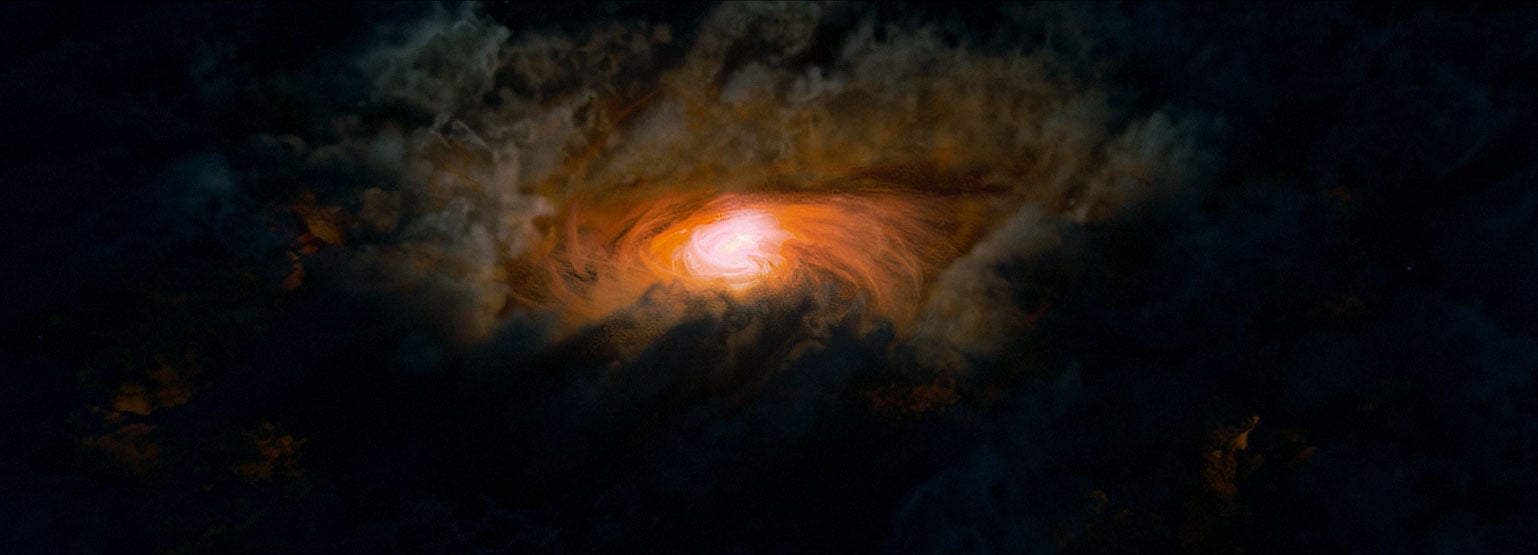
Quasars, which were first recognized in the 1960s, rank among the most luminous objects ever observed. Their extraordinary brightness comes from supermassive black holes that draw in nearby matter through intense gravitational forces. As this material falls inward, it forms a rapidly rotating disc that ultimately feeds the black hole.
The disc heats up to extreme temperatures as particles collide and rub against one another while orbiting the black hole. This process releases an astonishing amount of energy, producing between 100 and 1,000 times more light than an entire galaxy made up of roughly 100 billion stars. The resulting ultraviolet radiation is so powerful that telescopes can detect quasars across immense distances, even near the farthest reaches of the observable universe.
From Ultraviolet to X-Rays: A Long-Standing Connection
The ultraviolet light of the disc is also believed to be the fuel for the much more energetic X-ray light produced by quasars: the ultraviolet light rays as they travel through space intercept clouds of highly energetic particles very close to the black hole, a structure also known as the “corona”.
As they bounce off these energetic particles, the ultraviolet rays are boosted in energy and generate intense X-ray light that our detectors can also spot.
Because of their shared history, the X-ray and ultraviolet emissions of quasars are tightly connected – brighter ultraviolet light typically means stronger X-ray intensity. This correlation, discovered nearly 50 years ago, provides fundamental insights into the geometry and physical conditions of the material close to supermassive black holes and has been the focus of intense research for decades.
The latest research adds a new twist to previous studies by challenging the universality of the correlation – a fundamental assumption that implies that the structure of matter around black holes is similar throughout the universe.
It shows that when the universe was younger – about half its present age – the correlation between the X-ray and ultraviolet light of quasars was significantly different from that observed in the nearby universe. The discovery suggests that the physical processes linking the accretion disc and the corona around supermassive black holes may have changed over the last 6.5 billion years of cosmic history.
“Confirming a non-universal X-ray-to-ultraviolet relation with cosmic time is quite surprising and challenges our understanding of how supermassive black holes grow and radiate,” said Dr. Antonis Georgakakis, one of the study’s authors.
“We tested the result using different approaches, but it appears to be persistent.”
Unprecedented Data and a New Methodological Approach
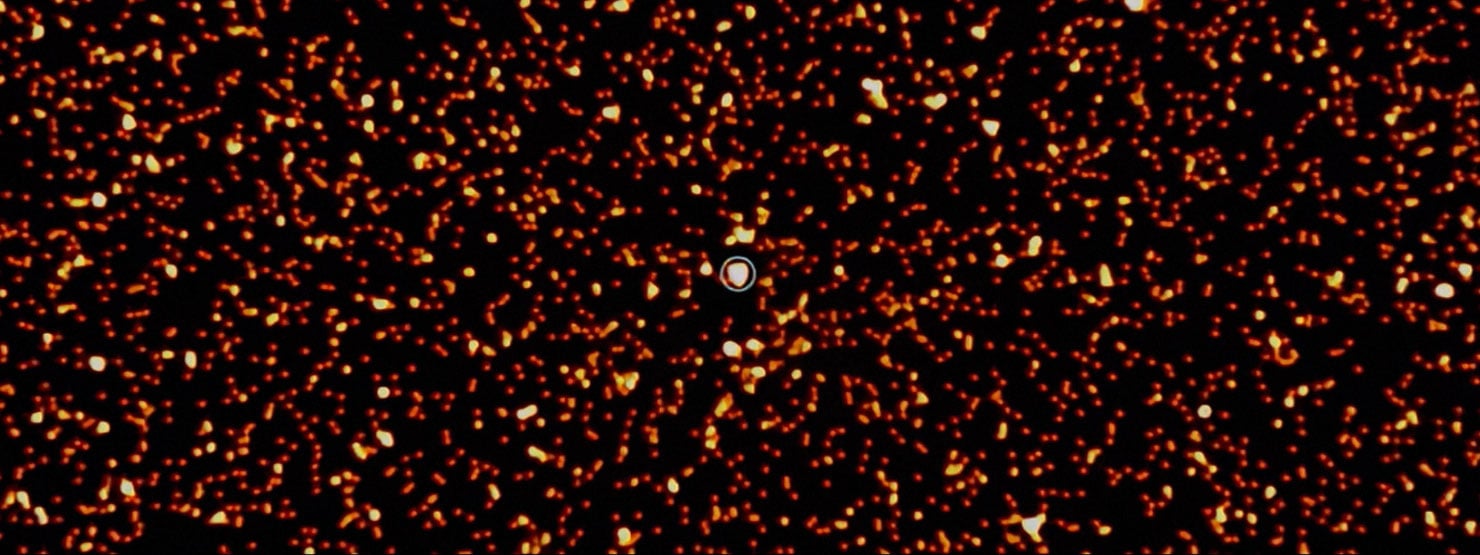
The study combines new X-ray observations from eROSITA X-ray telescope and archival data from the XMM-Newton X-ray observatory of the European Space Agency to explore the relation between X-ray and ultraviolet light intensity of an unprecedentedly large sample of quasars. The new eROSITA’s wide and uniform X-ray coverage proved decisive, enabling the team to study quasar populations on a scale never before possible.
The universality of the UV-to-X-ray relation underpins certain methods that use quasars as “standard candles” to measure the geometry of the universe and ultimately probe the nature of dark matter and dark energy. This new result highlights the necessity for caution, demonstrating that the assumption of unchanging black hole structure across cosmic time must be rigorously re-examined.
“The key advance here is methodological,” said postdoctoral researcher Maria Chira, of the National Observatory of Athens, who is the paper’s lead author.
“The eROSITA survey is vast but relatively shallow – many quasars are detected with only a few X-ray photons. By combining these data in a robust Bayesian statistical framework, we could uncover subtle trends that would otherwise remain hidden.”
The full set of eROSITA all-sky scans will soon allow astronomers to probe even fainter and more distant quasars. Future analyses using these data – together with next-generation X-ray and multiwavelength surveys – will help reveal whether the observed evolution reflects a genuine physical change or simply selection effects.
Such studies will bring new insight into how supermassive black holes power the most luminous objects in the universe, and how their behavior has evolved over cosmic time.
Reference: “Revisiting the X-ray-to-UV relation of quasars in the era of all-sky surveys” by Maria Chira, Antonis Georgakakis, Angel Ruiz, Shi-Jiang Chen, Johannes Buchner, Amy L Rankine, Elias Kammoun, Catarina Aydar, Mara Salvato, Andrea Merloni and Mirko Krumpe, 11 December 2025, Monthly Notices of the Royal Astronomical Society.
DOI: 10.1093/mnras/staf1905
Never miss a breakthrough: Join the SciTechDaily newsletter.
Follow us on Google and Google News.