
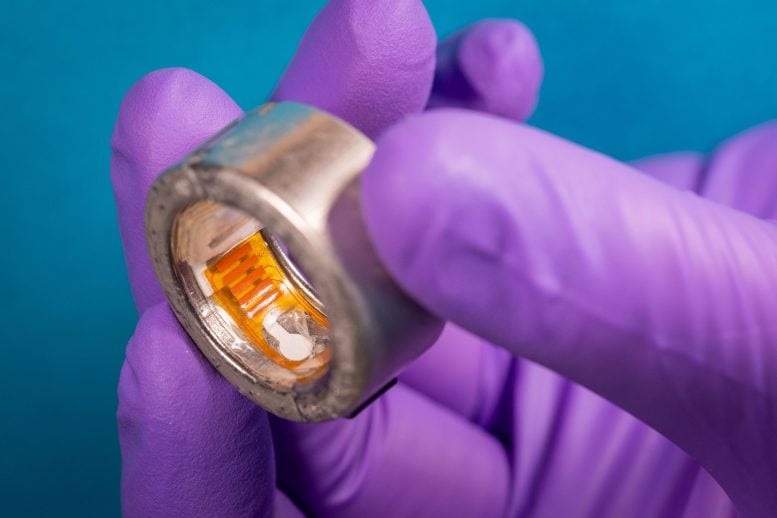
A new smart ring could reveal far more than how well someone slept or how fast their heart is beating.
Engineers at the University of California, San Diego, have developed an experimental smart ring that continuously analyzes sweat from the finger to monitor several molecules associated with metabolism, nutrition, exercise, and alcohol consumption.
The prototype can measure up to four biomarkers at once, with interchangeable sensors designed to detect glucose, ketones, vitamin C, uric acid, lactate, and alcohol.
The technology marks a shift from the physical measurements collected by most consumer wearables. Existing smart rings typically rely on signals such as heart rate, movement, and skin temperature, while the new device is designed to capture changing chemical information from inside the body.
“Commercial rings only provide biophysical information, but they lack molecular information about biochemical markers that offers deeper insights about an individual’s health status,” said study first author Tamoghna Saha, a postdoctoral researcher in Joseph Wang’s laboratory.
The researchers describe the system in Nature Communications as the first fully integrated smart ring intended for routine biochemical monitoring. Wang is a professor in the Aiiso Yufeng Li Family Department of Chemical and Nano Engineering at the UC San Diego Jacobs School of Engineering.
Collecting Sweat Without Exercise
One of the device’s most important features is that wearers do not need to exercise or deliberately work up a sweat. Fingers continually release small amounts of moisture, even when a person is resting. The ring captures that fluid through osmosis using a technique pioneered by Saha.
A soft material called an osmotic hydrogel creates a pressure difference that gently pulls sweat through the skin and into a narrow fluid channel. The process is painless and resembles the natural movement of water from soil toward the leaves of a plant.
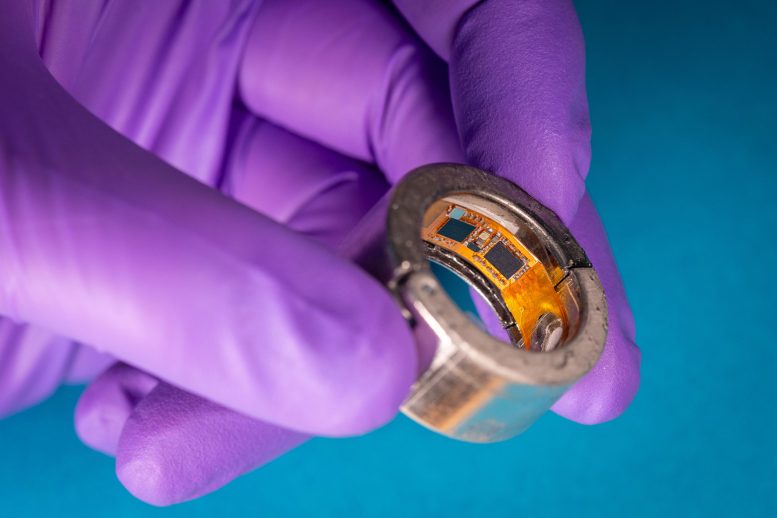
Inside the ring, an electrochemical sensor array measures molecules in the collected sweat. The electronic signals are then converted into estimated concentrations using calibration factors developed for each wearer. This personalized calibration is important because sweat composition and the relationship between sweat and blood measurements can vary from one person to another.
Tracking Metabolism in Real Time
The ability to follow several molecules together may reveal patterns that a single reading would miss. Glucose and ketones, for example, provide different but connected information about how the body is obtaining and using energy. Continuous monitoring could show how those levels change after meals, during fasting, throughout exercise, or in response to medication.
“A ring capturing dynamic molecular information in real time would be extremely useful for making informed decisions regarding health, diet, and lifestyle,” said Wang. “For example, the ring’s ability to track both glucose and ketone continuously and simultaneously would greatly benefit optimal insulin dosing for the management of diabetes.”
In tests involving healthy volunteers and people with type 1 diabetes, glucose measurements from the ring closely followed readings from commercial continuous glucose monitors (CGMs). Its ketone results also closely matched measurements from commercial blood ketone meters.
A Complete Lab on a Finger
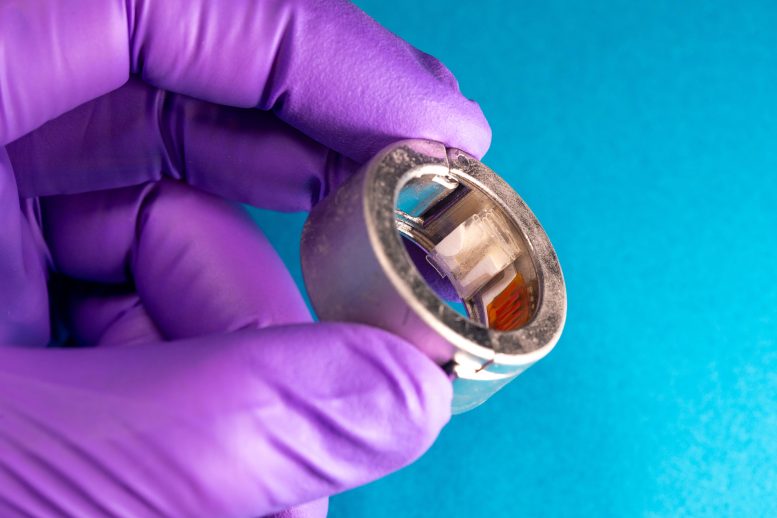
The ring contains the entire sensing system rather than relying on a separate patch or external reader. One section houses the sweat collection system, fluid channel, and sensors, while another contains the battery and circuit board. Results are transmitted wirelessly to a smartphone app, allowing biomarker changes to be viewed over time.
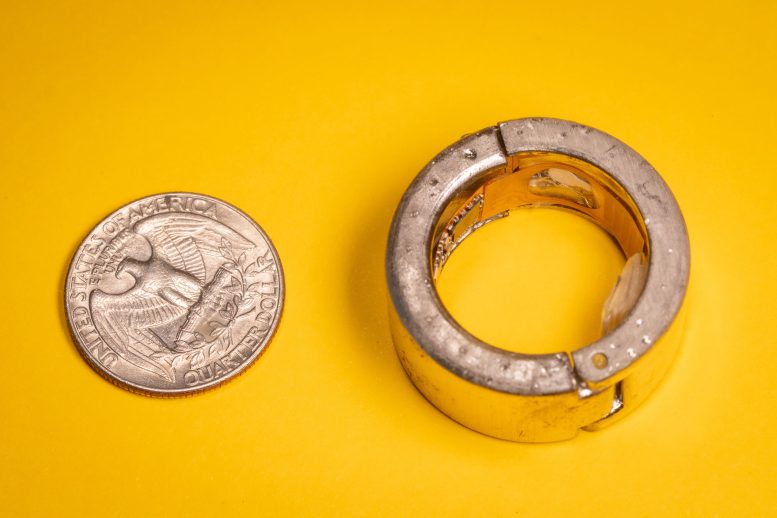
A flexible, rechargeable zinc-silver oxide battery can power the prototype for up to 12 hours between charges. The circuit board is smaller than a U.S. quarter, and the outer shell is made from a 3D-printed polymer.
“Such integration onto the small footprint of a ring form factor is amazing,” Wang said.
Reference: “A fully integrated smart ring for daily biochemical monitoring” by Tamoghna Saha, Shichao Ding, Siyu Qin, Hannah Fishman, Rosie Pham, Te Gu, Muyang Lin, Yushan Xian, Barak Sabbagh, Abdulhameed Abdal, Gaoyuan Ji, Kittiya Sakdaphetsiri, Yi Fung Winsten Lam, Muhammad Inam Khan, Hao Luan, Zongnan Wang, Selene Tang, Omeed Djassemi, Samar Singh Sandhu, Sheng Xu and Joseph Wang, 23 July 2026, Nature Communications.
DOI: 10.1038/s41467-026-75980-z
This work was supported by the UC San Diego Center of Wearable Sensors (CWS) and the National Science Foundation – UC San Diego Materials Research Science and Engineering Center (DMR‑2011924).
Never miss a breakthrough: Join the SciTechDaily newsletter.
Follow us on Google and Google News.
1 Comment
There are several brands of rings for sale that measure blood glucose. I’m diabetic, and considering buying one.