
Close Menu
    Facebook X (Twitter) Instagram
    SciTechDaily
    • Biology
    • Chemistry
    • Earth
    • Health
    • Physics
    • Science
    • Space
    • Technology
    Facebook X (Twitter) Pinterest YouTube RSS
    SciTechDaily
    Home»Science»Underwater Cave Bones Reveal Hidden Clues About Ancient Fossils
    Science

    Underwater Cave Bones Reveal Hidden Clues About Ancient Fossils

    By Griffith UniversityJuly 31, 2026No Comments3 Mins Read
    Facebook Twitter Pinterest Telegram LinkedIn WhatsApp Email Reddit
    Share
    Facebook Twitter LinkedIn Pinterest Telegram Email Reddit
    Meg Walker
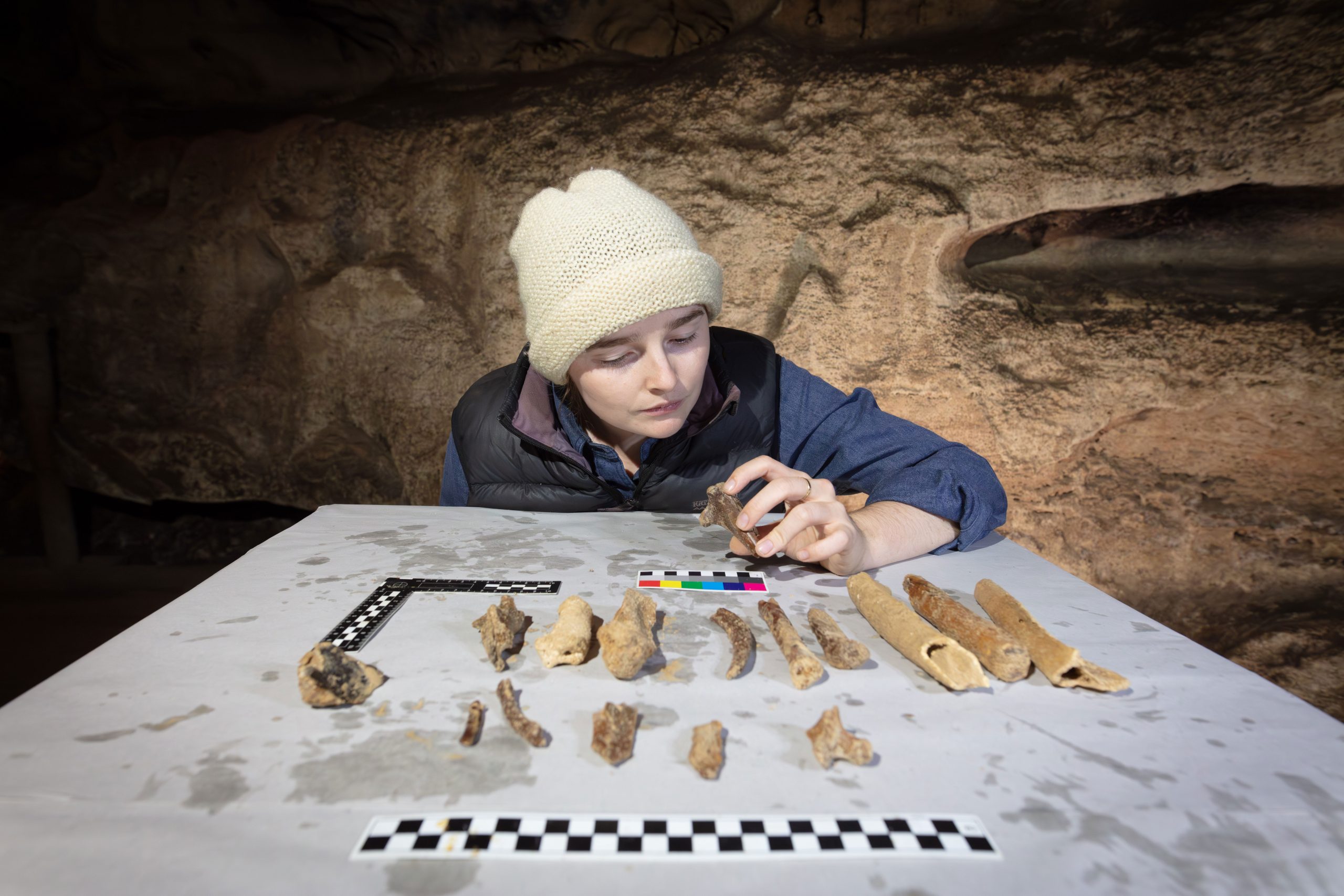
    Griffith University PhD Candidate Meg Walker examines retrieved megafauna fossils from Engelbrechts cave in Mount Gambier, South Australia. Credit: Steve Trewavas

    Distinct marks on cave bones can reveal how underwater fossil deposits formed and changed over time.

    Deep inside flooded caves, animal bones can remain remarkably intact for decades or even centuries. Yet researchers have lacked a reliable way to determine how the remains of extinct megafauna and other animals accumulated in these submerged sites or how the cave environment changed them over time.

    Research led by Griffith University now provides a framework for reading those clues.

    “By analyzing animal bones from two underwater cave systems in South Australia, we have revealed how different cave environments leave distinct preservation ‘fingerprints’ on skeletal remains,” said Meg Walker, a PhD Candidate supervised by Australian Research Center for Human Evolution Director Professor Julien Louys.

    “Backed by radiocarbon-dated bones, we tracked how skeletons accumulated and were modified over decades and centuries in underwater caves, then compared them to those buried in dry caves. Using a range of methods, from the macro to the micro, we looked at features associated with wet and dry caves. Things like spatial distributions of the bones and their surfaces, down to elemental compositions and proteins trapped in ancient cells.”
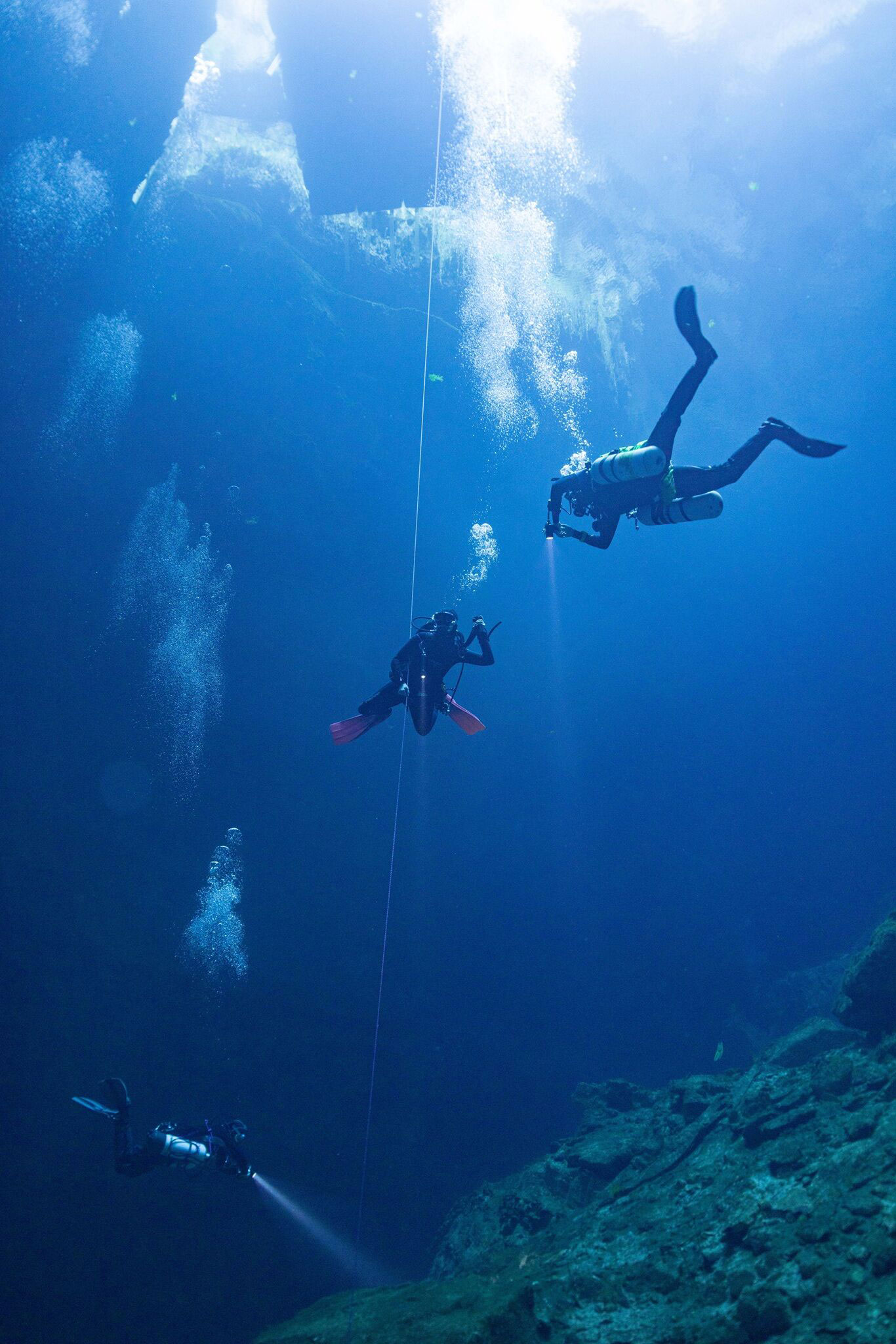
    Griffith University Team Dives Kilsby Cave
    The team dives Kilsby cave. Credit: Steve Trewavas

    Underwater caves leave distinct fingerprints

    The comparison showed that submerged caves can preserve bones with exceptional clarity, retaining both their overall form and fine surface details.

    At the same time, the water left behind distinctive chemical and biological evidence shaped by available light and the organisms living in each part of the cave.

    Near illuminated entrances, algae and aquatic plants grew in the cave water and sometimes directly across bone surfaces, producing recognizable traces.
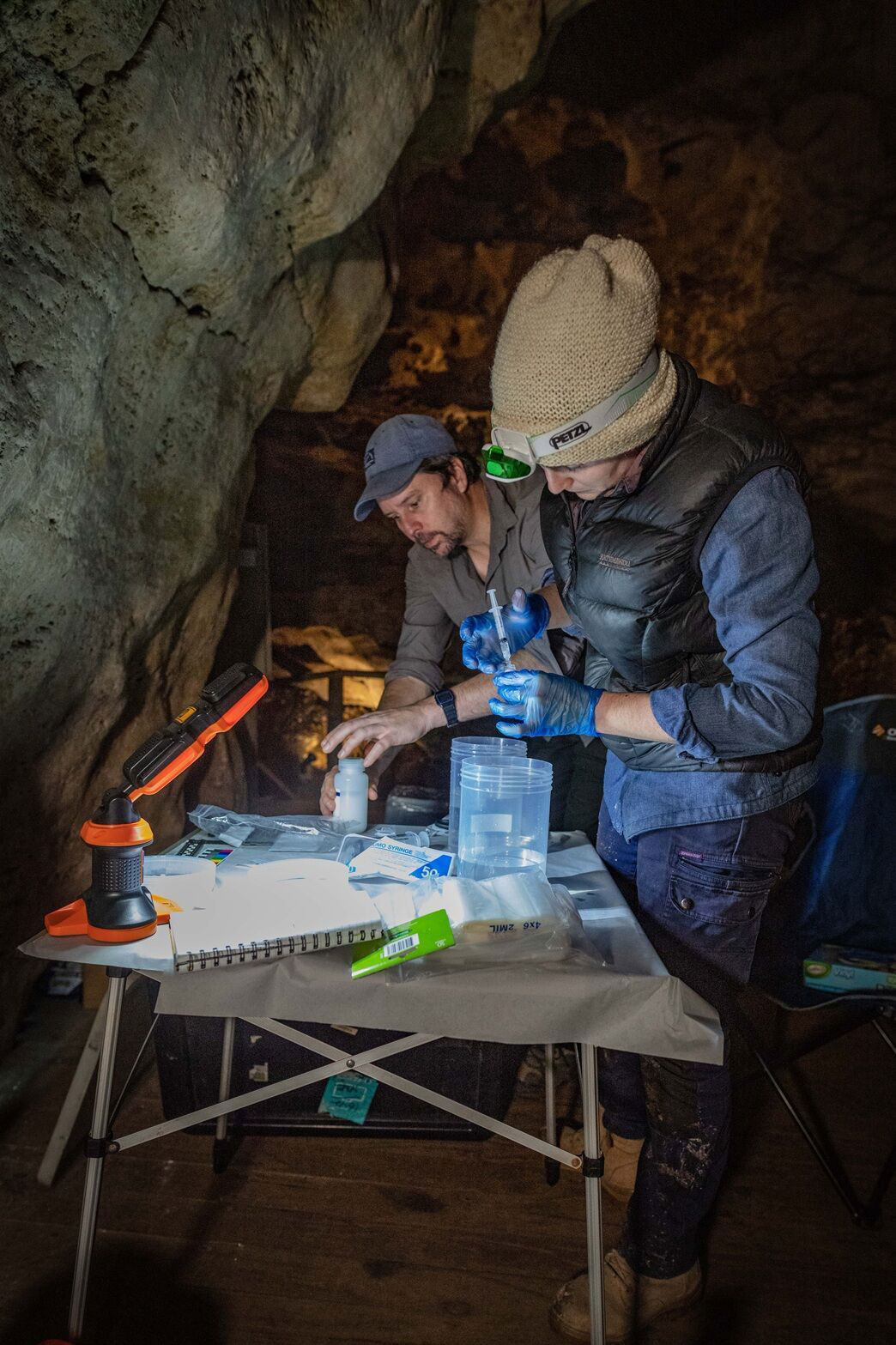
    Meg Walker Inside Engelbrechts Cave
    PhD Meg Walker inside Engelbrechts cave. Credit: Steve Trewavas

    Farther inside, in completely dark zones where sunlight and plant life were absent, the bones remained largely untouched.

    Dry cave remains followed a different path. They lacked the aquatic signatures and instead showed damage from land-based bacteria and long grooves formed by growing plant roots.

    Recent remains help explain megafauna

    Walker and her colleagues worked with specialist divers from the Cave Divers Association of Australia to collect historical animal remains from Green Waterhole and Gouldens Sinkhole near Mount Gambier in South Australia.

    The collection included native and introduced species such as kangaroos, emus, dingoes, possums, quolls, swamp rats, cows, sheep, pigs, and rabbits. Some of the remains may date to the first European settlement of the area during the 1840s.
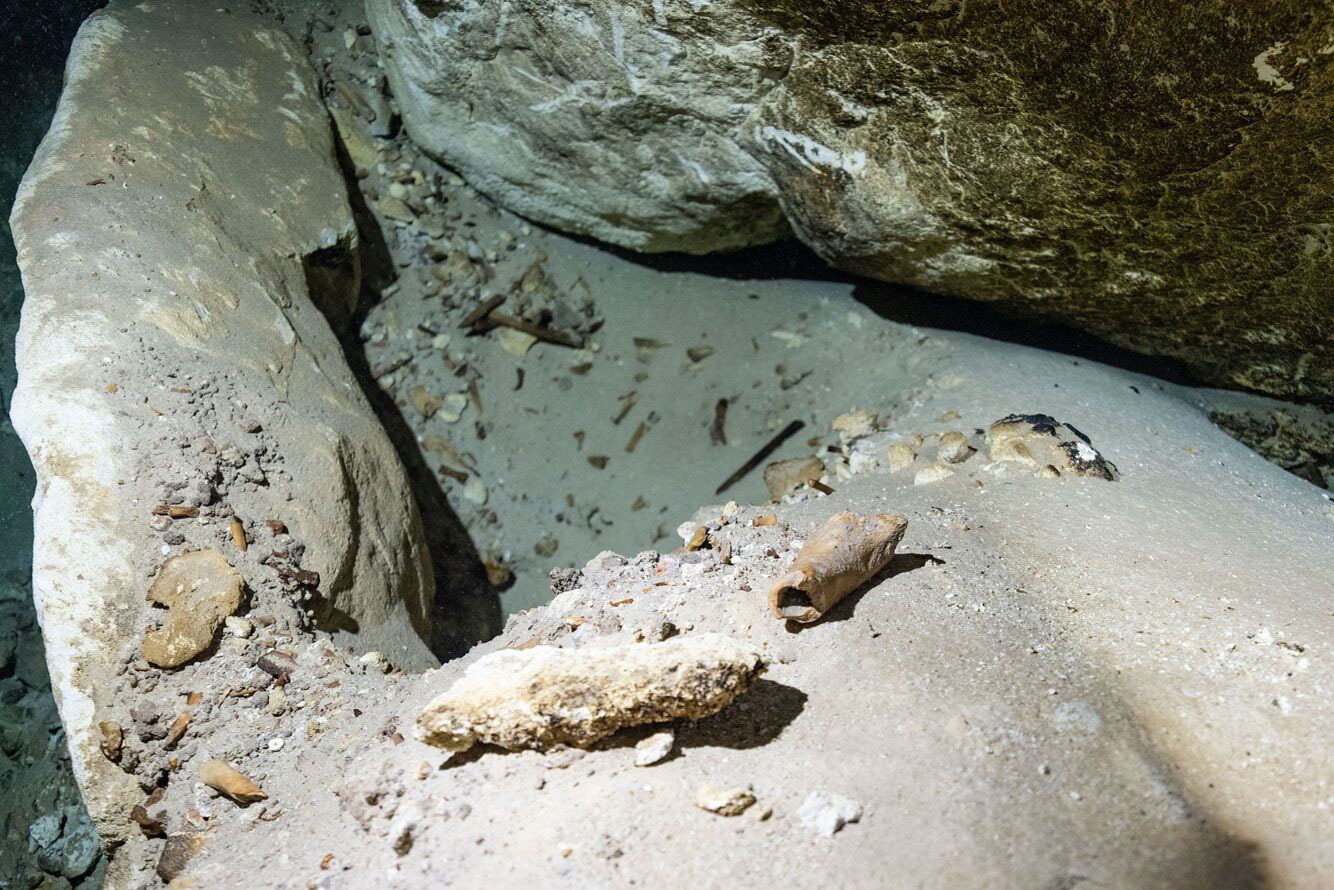
    Fossil Fragments on Kilsby Cave Floor
    Some of the fossil fragments have lain hidden on cave floors for thousands of years. Credit: Steve Trewavas

    By reconstructing what happened to these more recent bones, the researchers sought to understand how extinct megafauna remains entered the same underwater caves and what environmental conditions shaped their preservation.

    A framework for submerged fossils

    “This study has delivered the first framework for interpreting how megafauna fossils formed, survived, and changed in underwater caves,” Miss Walker said.

    “It will provide archaeologists and paleontologists worldwide with a powerful new tool for reconstructing past environments and histories in these challenging conditions.”

    Reference: “Neotaphonomic characteristics of vertebrate site formation in underwater caves” by Meg M. Walker, Joanne E. Wilkinson, Mathew Stewart, Geraldine E. Jacobsen, Shwaron Kumar, Vladimir Levchenko, Stewart Fallon, Rebecca Esmay, Rachel Wood, Justyna J. Miszkiewicz, Gilbert J. Price, Elizabeth Reed, Joseph Monks and Julien Louys, 15 July 2026, PLOS ONE.
    DOI: 10.1371/journal.pone.0343896

    Never miss a breakthrough: Join the SciTechDaily newsletter.
    Follow us on Google and Google News.

    Archaeology Caves Fossils Griffith University Paleontology Radiocarbon Dating
    Share. Facebook Twitter Pinterest LinkedIn Email Reddit

    Related Articles

    Researchers Identify Two New Ancient Mammals in Bolivia

    When Did Animals Leave Their First Footprint on Earth?

    Jurassic Fossil Links Ancient Crocodiles With Dolphin-Like Animals

    Paleontologists Identify a New Species of Ancient Whale

    Paleontologists Provide New Perspective on Triassic Period, Emergence of Dinosaurs

    Paleontologists Identify a New Species of Prehistoric Reptile, Colobops Noviportensis

    Paleontologists Discover Never-Before-Seen Ancient Fish Species

    Archaeologists Discover Oldest Known Funereal Fish Hooks

    27-Foot Long Crocodylus Thorbjarnarsoni Roamed Kenya

    Leave A Reply Cancel Reply

    • Facebook
    • Twitter
    • Pinterest
    • YouTube

    Don't Miss a Discovery

    Subscribe for the Latest in Science & Tech!

    Trending News

    FDA-Approved Drug Shows Promise for Reversing Osteoarthritis Damage

    11,000-Year-Old Grains Reveal a Surprise About the Origins of Agriculture

    This Common Type of Medication Is Linked to Slower Cognitive Decline

    Quantum Computer Solves a Problem in 15 Minutes That Classical Methods Can’t Practically Compute

    Taking the Stairs Could Cut Your Risk of Heart-Related Death by 39%

    Scientists Uncover a Surprising New Route for Stonehenge’s Most Mysterious Stone

    A Star Near the Milky Way’s Black Hole Is Losing Mass at an Astonishing Rate

    Scientists Solve a Vitamin B12 Mystery With an Unexpected Culprit

    Follow SciTechDaily
    • Facebook
    • Twitter
    • YouTube
    • Pinterest
    • Newsletter
    • RSS
    SciTech News
    • Biology News
    • Chemistry News
    • Earth News
    • Health News
    • Physics News
    • Science News
    • Space News
    • Technology News
    Recent Posts
    • Scientists Find a Hidden Biological Link Across Different Forms of Autism
    • Scientists Discover a 3.7-Billion-Year-Old Secret of Early Life
    • Scientists Revisited a Forest Experiment That Was Forgotten for 30 Years. What They Found Was Astounding
    • Astronomers Discover a Ghostly River of Stars That Could Reveal Dark Matter
    • NASA Is Building a Moon Base – and the First Pieces Are Already Coming Together
    Copyright © 1998 - 2026 SciTechDaily. All Rights Reserved.
    • Science News
    • About
    • Contact
    • Editorial Board
    • Privacy Policy
    • Terms of Use

    Type above and press Enter to search. Press Esc to cancel.