
Close Menu
    Facebook X (Twitter) Instagram
    SciTechDaily
    • Biology
    • Chemistry
    • Earth
    • Health
    • Physics
    • Science
    • Space
    • Technology
    Facebook X (Twitter) Pinterest YouTube RSS
    SciTechDaily
    Home»Science»Jurassic Fossil Links Ancient Crocodiles With Dolphin-Like Animals
    Science

    Jurassic Fossil Links Ancient Crocodiles With Dolphin-Like Animals

    By Corin Campbell, University of EdinburghMay 11, 20181 Comment2 Mins Read
    Facebook Twitter Pinterest Telegram LinkedIn WhatsApp Email Reddit
    Share
    Facebook Twitter LinkedIn Pinterest Telegram Email Reddit
    Jurassic Fossil Tail Links Crocodile Family Tree
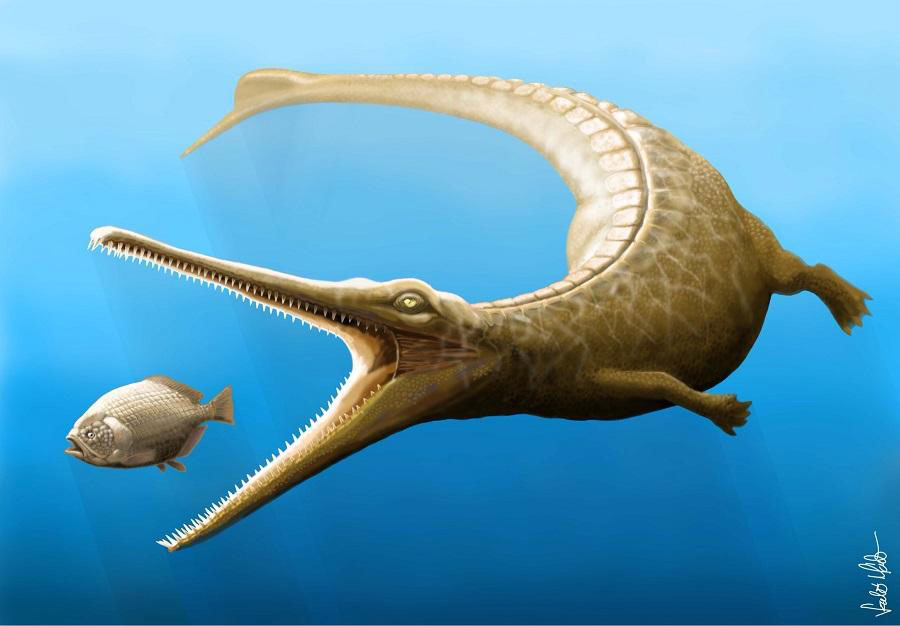
    This is an artist’s impression of Magyarosuchus fitosi. Credit_Márton Szabó

    A 180 million-year-old fossil has shed light on how some ancient crocodiles evolved into dolphin-like animals.

    The specimen – featuring a large portion of backbone – represents a missing link in the family tree of crocodiles, and was one of the largest coastal predators of the Jurassic Period, researchers say.

    Ancient predator

    The newly discovered species was nearly five meters long and had large, pointed teeth for grasping prey. It also shared key body features seen in two distinct families of prehistoric crocodiles, the team says.

    Some Jurassic-era crocodiles had bony armor on their backs and bellies, and limbs adapted for walking on land. Another group had tail fins and flippers but did not have armor.

    The new species was heavily armored but also had a tail fin, suggesting it is a missing link between the two groups, researchers say.
    Jurassic Fossil Links Ancient Crocodiles With Dolphin Like Animal
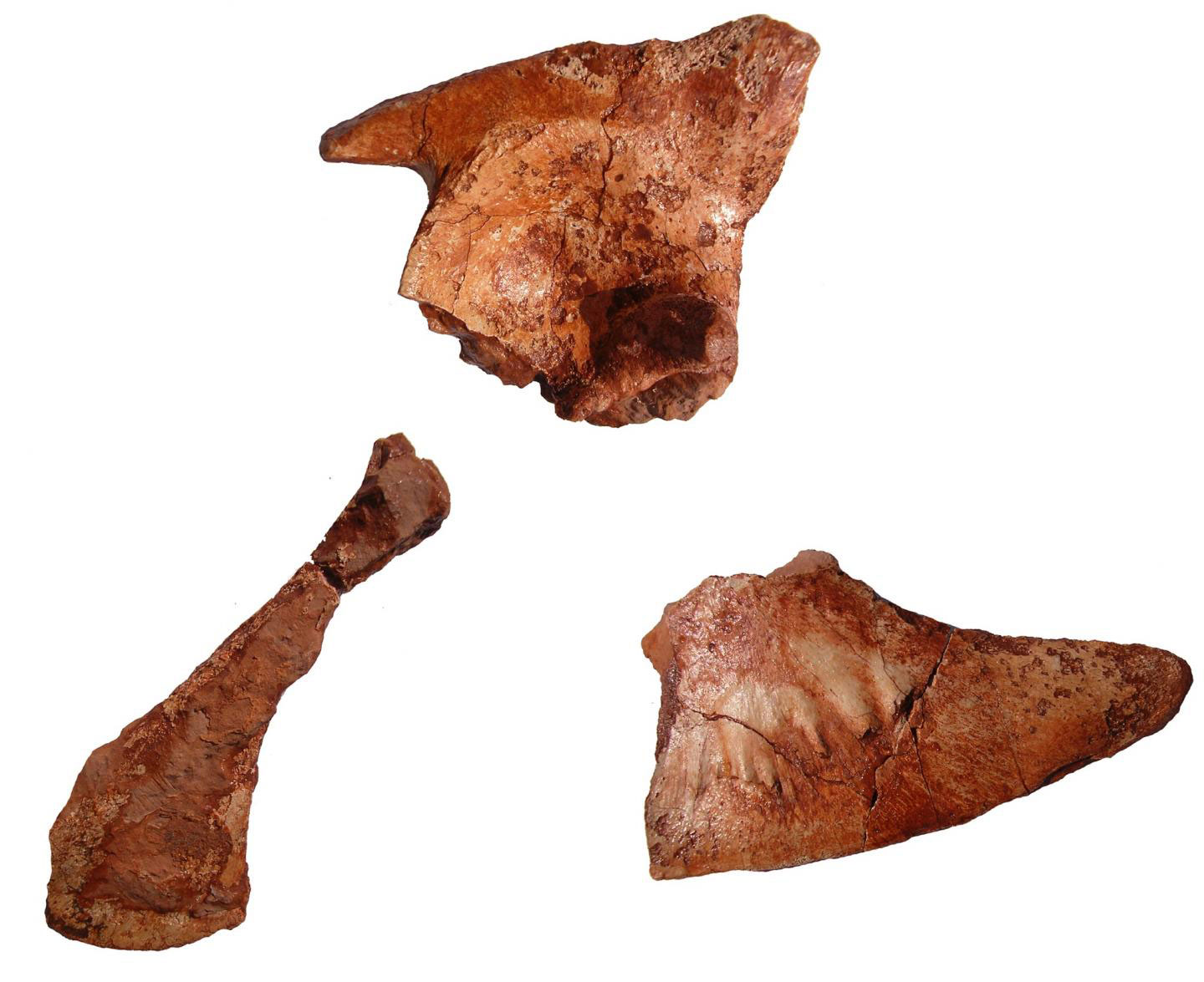
    These are fragments of pelvis. Attila Osi

    Hungarian fossil

    It has been named Magyarosuchus fitosi in honor of the amateur collector who discovered it, Attila Fitos.

    The fossil – unearthed on a mountain range in north-west Hungary in 1996 and stored in a museum in Budapest – was examined by a team of paleontologists, including an Edinburgh researcher.

    It was identified as a new species based on the discovery of an odd-looking vertebra that formed part of its tail fin.

    The study, published in the journal PeerJ, also involved researchers in Hungary and Germany. It was supported by the Leverhulme Trust and the SYNTHESYS project, part of the European Commission’s Seventh Framework Program.

    Magyarosuchus Fitosi
    This is a fragment of left mandible. Attila Osi

    Dr. Mark Young, of the University of Edinburgh’s School of GeoSciences, who was involved in the study, said: “This fossil provides a unique insight into how crocodiles began evolving into dolphin and killer whale-like forms more than 180 million years ago. The presence of both bony armor and a tail fin highlights the remarkable diversity of Jurassic-era crocodiles.”

    Reference: “A new large-bodied thalattosuchian crocodyliform from the Lower Jurassic (Toarcian) of Hungary, with further evidence of the mosaic acquisition of marine adaptations in Metriorhynchoidea” by Attila Ősi​, Mark T. Young, András Galácz and Márton Rabi, 10 May 2018, PeerJ.
    DOI: 10.7717/peerj.4668

    Never miss a breakthrough: Join the SciTechDaily newsletter.
    Follow us on Google and Google News.

    Archaeology Fossils Paleontology Popular University of Edinburgh
    Share. Facebook Twitter Pinterest LinkedIn Email Reddit

    Related Articles

    Landmark Study: Dinosaurs Were in Their Prime When Asteroid Hit Earth

    Human Ancestor Fossils in the “Cradle of Humankind” May Be More Than a Million Years Older Than Thought

    Brawn Before Brains: Mammals Bulked Up To Survive Post-Dinosaur World

    Incredible Dinosaur Treasure Trove in Italy Rewrites History, Geography, and Evolution

    Incredible 635 Million-Year-Old Fungi-Like Microfossil That Bailed Our Planet Out of an Ice Age

    200-Million-Year-Old ‘Squid-Like’ Creature Attack Captured in Ancient Fossil

    50 Newly Identified Footprints Show Stegosaurs Left Their Mark on Scottish Isle of Skye

    California High Schooler Unearths Rare Fossil – Perfect Skull of Giant 52 Million-Year-Old Fish

    Zhenyuanlong Suni – The Newly Discovered Feathered Cousin of the Velociraptor

    1 Comment

    1. D-4 on May 12, 2018 1:53 am

      Fossil Link also to Mr. Orbam?

      Reply
    Leave A Reply Cancel Reply

    • Facebook
    • Twitter
    • Pinterest
    • YouTube

    Don't Miss a Discovery

    Subscribe for the Latest in Science & Tech!

    Trending News

    Scientists Discover Game-Changing New Way To Treat High Cholesterol

    This Small Change to Your Exercise Routine Could Be the Secret to Living Longer

    Scientists Discover 430,000-Year-Old Wooden Tools, Rewriting Human History

    AI Could Detect Early Signs of Alzheimer’s in Under a Minute – Far Before Traditional Tests

    What if Dark Matter Has Two Forms? Bold New Hypothesis Could Explain a Cosmic Mystery

    This Metal Melts in Your Hand – and Scientists Just Discovered Something Strange

    Beef vs. Chicken: Surprising Results From New Prediabetes Study

    Alzheimer’s Breakthrough: Scientists Discover Key Protein May Prevent Toxic Protein Clumps in the Brain

    Follow SciTechDaily
    • Facebook
    • Twitter
    • YouTube
    • Pinterest
    • Newsletter
    • RSS
    SciTech News
    • Biology News
    • Chemistry News
    • Earth News
    • Health News
    • Physics News
    • Science News
    • Space News
    • Technology News
    Recent Posts
    • Quantum Breakthrough: Unhackable Keys Sent Over 120 km Using Quantum Dots
    • Researchers Discover Unknown Beetle Species Just Steps From Their Lab
    • Jellyfish Caught Feasting on Exploding Sea Worms for the First Time
    • Ancient “Spaghetti” in Dogs’ Hearts Reveals Heartworm’s Shocking Origins
    • Milk Nanoparticles Could Revolutionize Treatment for Deadly Bile Duct Cancer
    Copyright © 1998 - 2026 SciTechDaily. All Rights Reserved.
    • Science News
    • About
    • Contact
    • Editorial Board
    • Privacy Policy
    • Terms of Use

    Type above and press Enter to search. Press Esc to cancel.