
Close Menu
    Facebook X (Twitter) Instagram
    SciTechDaily
    • Biology
    • Chemistry
    • Earth
    • Health
    • Physics
    • Science
    • Space
    • Technology
    Facebook X (Twitter) Pinterest YouTube RSS
    SciTechDaily
    Home»Space»Next-Gen LISA Gravitational Wave Detector Will Complement LIGO
    Space

    Next-Gen LISA Gravitational Wave Detector Will Complement LIGO

    By Megan Fellman, Northwestern UniversityMay 11, 2018No Comments5 Mins Read
    Facebook Twitter Pinterest Telegram LinkedIn WhatsApp Email Reddit
    Share
    Facebook Twitter LinkedIn Pinterest Telegram Email Reddit
    LISA Could Detect Dozens of Binaries from Globular Clusters
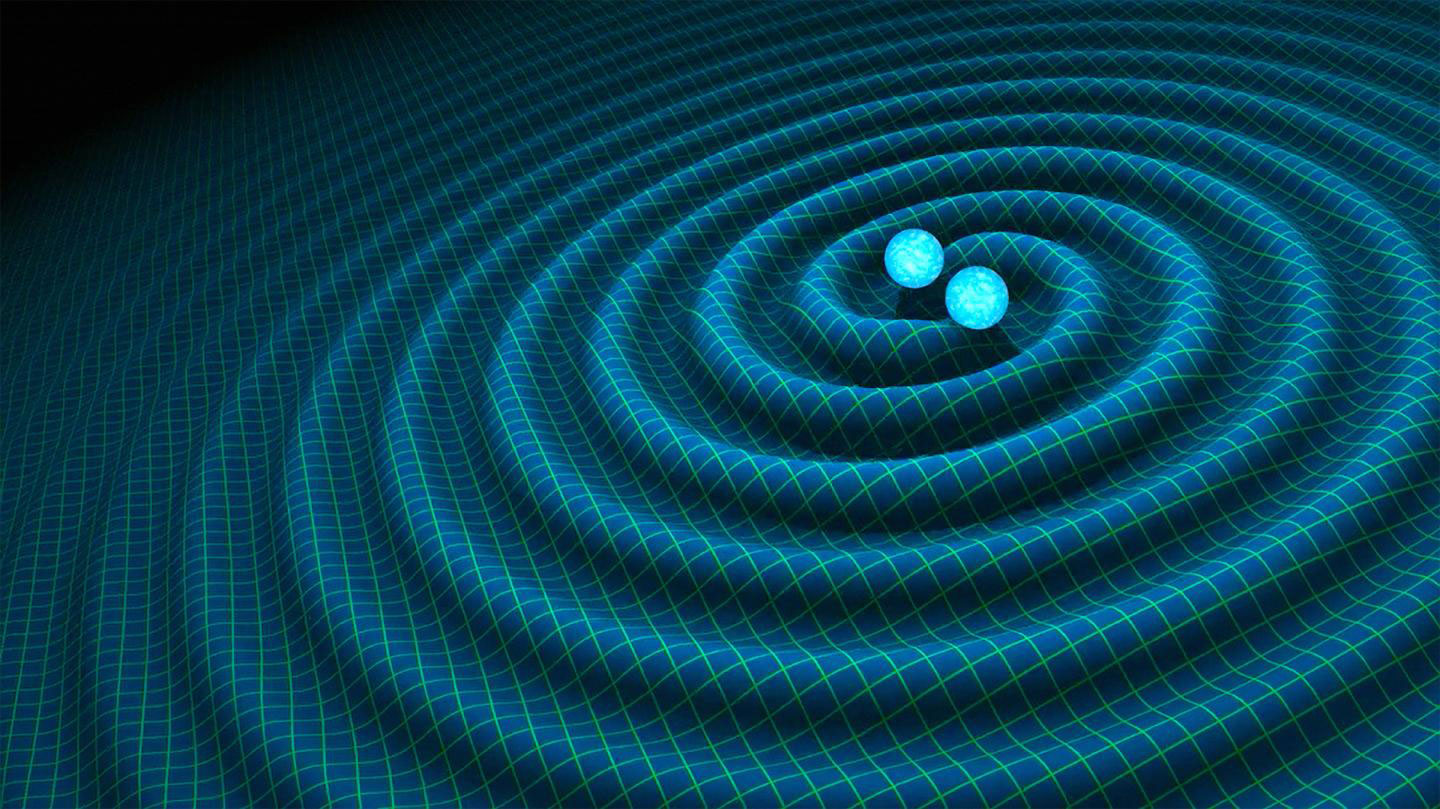
    This is a visualization of the gravitational wave emission from a pair of orbiting compact objects. The upcoming space-based gravitational wave observatory LISA will be able to observe hundreds of such binary star systems in the Milky Way galaxy, including approximately 50 binaries found in globular clusters, reports a new Northwestern University study. These binary sources would contain all combinations of black hole, neutron star and white dwarf components. NASA

    The historic first detection of gravitational waves from colliding black holes far outside our galaxy opened a new window to understanding the universe. A string of detections — four more binary black holes and a pair of neutron stars — soon followed the September 14, 2015, observation.

    Now, another detector is being built to crack this window wider open. This next-generation observatory, called LISA, is expected to be in space in 2034, and it will be sensitive to gravitational waves of a lower frequency than those detected by the Earth-bound Laser Interferometer Gravitational-Wave Observatory (LIGO).

    A new Northwestern University study predicts dozens of binaries (pairs of orbiting compact objects) in the globular clusters of the Milky Way will be detectable by LISA (Laser Interferometer Space Antenna). These binary sources would contain all combinations of black hole, neutron star and white dwarf components. Binaries formed from these star-dense clusters will have many different features from those binaries that formed in isolation, far from other stars.

    The study is the first to use realistic globular cluster models to make detailed predictions of LISA sources. “LISA Sources in Milky-Way Globular Clusters” was published today, May 11, by the journal Physical Review Letters.
    LISA Could Detect Dozens of Binaries in Milky Way
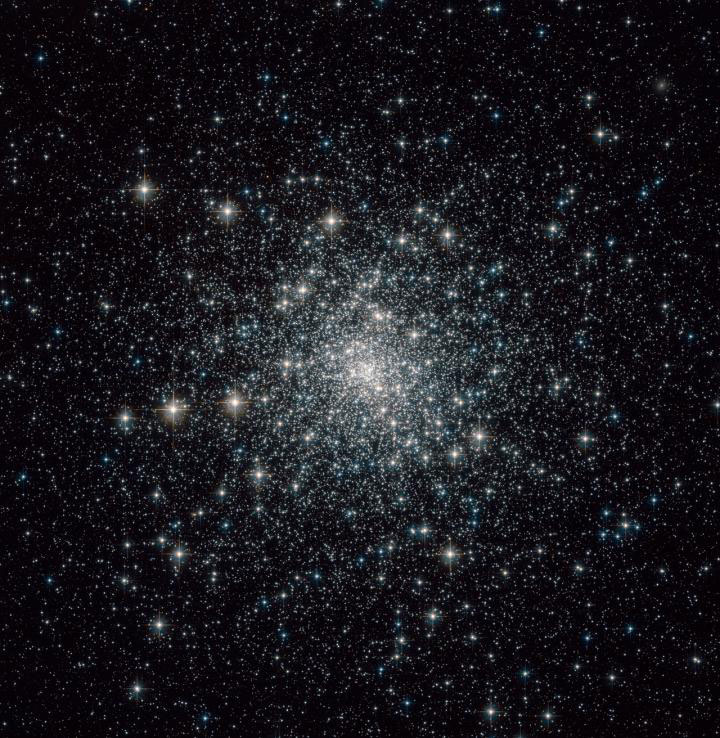
    The Milky Way contains approximately 150 observed globular clusters, such as M30, shown here, as imaged by the Hubble Space Telescope. Globular clusters are dense environments containing millions of stars packed tightly together. These clusters are efficient factories of gravitational wave sources that can be observed by detectors such as LIGO and the upcoming space-based observatory, LISA. A new Northwestern University study predicts approximately 50 binaries in the clusters will be detectable by LISA. These binary sources would contain all combinations of black hole, neutron star and white dwarf components. ESA/Hubble

    “LISA is sensitive to Milky Way systems and will expand the breadth of the gravitational wave spectrum, allowing us to explore different types of objects that aren’t observable with LIGO,” said Kyle Kremer, the paper’s first author, a Ph.D. student in physics and astronomy in Northwestern’s Weinberg College of Arts and Sciences and a member of a computational astrophysics research collaboration based in Northwestern’s Center for Interdisciplinary Exploration and Research in Astrophysics (CIERA).

    In the Milky Way, 150 globular clusters have been observed so far. The Northwestern research team predicts one out of every three clusters will produce a LISA source. The study also predicts that approximately eight black hole binaries will be detectable by LISA in our neighboring galaxy of Andromeda and another 80 in nearby Virgo.

    Before the first detection of gravitational waves by LIGO, as the twin detectors were being built in the United States, astrophysicists around the world worked for decades on theoretical predictions of what astrophysical phenomena LIGO would observe. That is what the Northwestern theoretical astrophysicists are doing in this new study, but this time for LISA, which is being built by the European Space Agency with contributions from NASA.

    “We do our computer simulations and analysis at the same time our colleagues are bending metal and building spaceships, so that when LISA finally flies, we’re all ready at the same time,” said Shane L. Larson, associate director of CIERA and an author of the study. “This study is helping us understand what science is going to be contained in the LISA data.”

    A globular cluster is a spherical structure of hundreds of thousands to millions of stars, gravitationally bound together. The clusters are some of the oldest populations of stars in the galaxy and are efficient factories of compact object binaries.

    The Northwestern research team had numerous advantages in conducting this study. Over the past two decades, Frederic A. Rasio and his group have developed a powerful computational tool — one of the best in the world — to realistically model globular clusters. Rasio, the Joseph Cummings Professor in Northwestern’s department of physics and astronomy, is the senior author of the study.

    The researchers used more than a hundred fully evolved globular cluster models with properties similar to those of the observed globular clusters in the Milky Way. The models, which were all created at CIERA, were run on Quest, Northwestern’s supercomputer cluster. This powerful resource can evolve the full 12 billion years of a globular cluster’s life in a matter of days.

    References:  “LISA Sources in Milky Way Globular Clusters” by Kyle Kremer, Sourav Chatterjee, Katelyn Breivik, Carl L. Rodriguez, Shane L. Larson and Frederic A. Rasio, 11 May 2018, Physical Review Letters.
    DOI: 10.1103/PhysRevLett.120.191103

    Never miss a breakthrough: Join the SciTechDaily newsletter.
    Follow us on Google and Google News.

    Gravitational Waves LIGO LISA Northwestern University
    Share. Facebook Twitter Pinterest LinkedIn Email Reddit

    Related Articles

    A New Type of Cataclysmic Event in the Cosmos: Astrophysicists Detect First Black Hole-Neutron Star Mergers

    Wealth of Discoveries From Gravitational-Wave Data Leads to Most Detailed Black Hole “Family Portrait”

    Quick ‘Bang’ Signals the Most Massive Gravitational-Wave Source Ever Detected

    LIGO and Virgo Detect Gravitational Waves from Binary Black Hole Merger

    Researchers Reveal That Hidden Dimensions Could Influence Gravitational Waves

    LIGO Detects Merging Ripples in Space and Time

    LIGO Detects Gravitational Waves Again

    Fermi Observations Poised to Pin Down Gravitational Wave Sources

    New Research Shows LIGO’s Twin Black Holes Might Have Been Born Inside a Single Star

    Leave A Reply Cancel Reply

    • Facebook
    • Twitter
    • Pinterest
    • YouTube

    Don't Miss a Discovery

    Subscribe for the Latest in Science & Tech!

    Trending News

    Scientists Warn That This Common Pet Fish Can Wreck Entire Ecosystems

    Scientists Make Breakthrough in Turning Plastic Trash Into Clean Fuel Using Sunlight

    This Popular Supplement May Interfere With Cancer Treatment, Scientists Warn

    Scientists Finally Solved One of Water’s Biggest Mysteries

    Could This New Weight-Loss Pill Disrupt the Entire Market? Here’s What You Should Know About Orforglipron

    Earth’s Crust Is Tearing Open in Africa, and It Could Form a New Ocean

    Breakthrough Bowel Cancer Trial Leaves Patients Cancer-Free for Nearly 3 Years

    Natural Compound Shows Powerful Potential Against Rheumatoid Arthritis

    Follow SciTechDaily
    • Facebook
    • Twitter
    • YouTube
    • Pinterest
    • Newsletter
    • RSS
    SciTech News
    • Biology News
    • Chemistry News
    • Earth News
    • Health News
    • Physics News
    • Science News
    • Space News
    • Technology News
    Recent Posts
    • Ancient Roman Ship Coating Reveals Secrets Hidden for 2,200 Years
    • Enormous Prehistoric Insects Puzzle Scientists
    • College Student Identifies Bizarre New Carnivorous Dinosaur Three Times Older Than T. rex
    • The Most Effective Knee Arthritis Treatments Aren’t What You Expect
    • Scientists Develop Bioengineered Chewing Gum That Could Help Fight Oral Cancer
    Copyright © 1998 - 2026 SciTechDaily. All Rights Reserved.
    • Science News
    • About
    • Contact
    • Editorial Board
    • Privacy Policy
    • Terms of Use

    Type above and press Enter to search. Press Esc to cancel.