
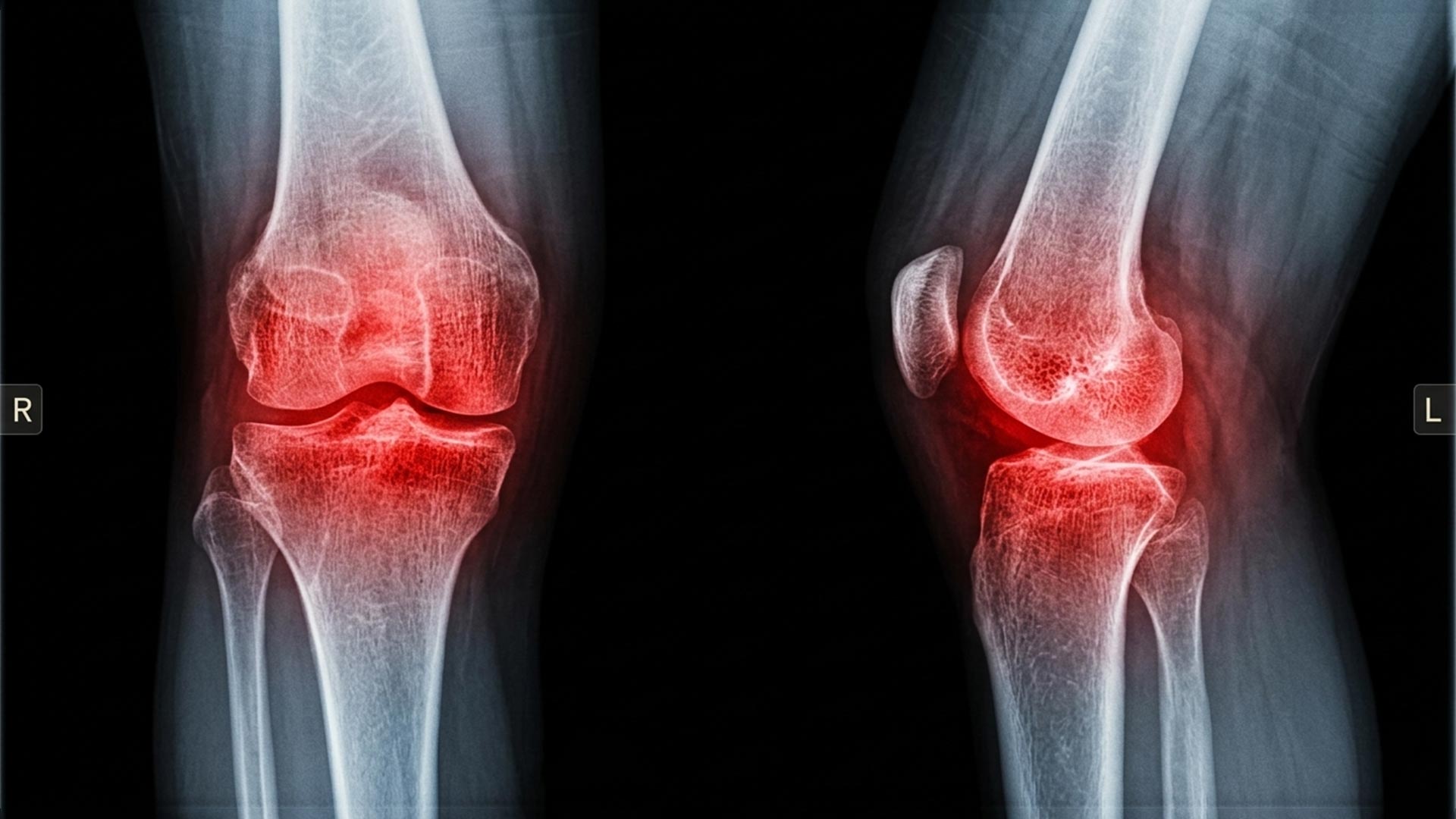
A minimally invasive procedure that targets inflamed blood vessels is giving many people with chronic knee pain lasting relief without major surgery.
For Cynthia Schraf-Fletcher, 74, the results were better than she expected.
Nearly a year after undergoing genicular artery embolization (GAE), a minimally invasive outpatient procedure for chronic knee pain, she says her treated right knee feels almost as good as the left knee that previously underwent a total knee replacement.
After turning to Leigh Casadaban, MD, MS, an assistant professor of radiology at the University of Colorado Anschutz School of Medicine, for the treatment, she has been able to return to activities she enjoys, including gardening and riding a stationary bicycle, with far less pain.
“I couldn’t be more pleased,” Schraf-Fletcher says.
How Genicular Artery Embolization Works
Genicular artery embolization is designed to ease chronic knee pain by reducing blood flow to inflamed areas inside the joint. By limiting circulation to abnormal blood vessels linked to inflammation, the procedure can help decrease swelling and pain.
“For treating osteoarthritis in the knees, we often think of medications, physical therapy, maybe a steroid injection, and then on the far end of the spectrum is a total knee replacement. There really hasn’t been anything for patients in between,” says Casadaban, a vascular interventional radiologist. “GAE is a promising minimally invasive procedure that may fill that spot for people who have failed conservative treatments but are not yet ready to have a major surgery.”
According to Casadaban, the treatment is best suited for people with mild to moderate osteoarthritis. Patients with more advanced disease can also undergo the procedure, although the benefits may not last as long.
“We find about 70% of patients have phenomenal results. They cut their pain scores in half, sometimes more. We have a few patients with no pain at all after the procedure,” Casadaban says. “Patients that have tried a lot of other treatments and haven’t had pain relief are happy to get back to their normal activities.”
After experiencing complications from her earlier knee replacement surgery, Schraf-Fletcher was eager to try a less invasive option. Looking back, she says she is glad she made that decision.
What Happens During the Procedure?
GAE is typically completed in one to two hours while the patient remains under conscious sedation.
During the procedure, an interventional radiology team makes a small incision near the crease of the leg and guides a thin catheter through the femoral artery using X-ray imaging and contrast dye. Once the catheter reaches the genicular arteries around the knee, tiny beads are released to block blood flow to the abnormal blood vessels associated with inflammation in the painful areas identified by the patient.
Patients are monitored for several hours after treatment before returning home the same day. Most are advised to rest for a few days during recovery.
The procedure was first developed in Japan a little more than a decade ago and has since expanded to medical centers around the world. Since 2021, the U.S. Food and Drug Administration has granted “breakthrough device status” to multiple devices used for GAE.
Research Suggests Long-Lasting Pain Relief
Early research continues to produce encouraging results.
“The theory is that GAE reduces inflammation inside the knee joint, and symptom relief can last years,” Casadaban says. “Four-year data published in Japan shows that if you have one outpatient procedure, your pain relief can last for those four years. In the U.S., we now have two-year data, which shows that if you have a good response, pain relief can last two years. That really speaks to the theory that we’re hopefully modifying something in the joint.”
Casadaban is leading two clinical trials at CU Anschutz. One is examining changes in knee joint fluid after GAE, while the other is evaluating a temporary arterial treatment device called Nexsphere-F, which blocks small blood vessels in the knee that may contribute to inflammation and pain.
Could GAE Be Used for Other Joint Conditions?
Osteoarthritis is a degenerative joint disease that affects millions of people every year and can develop in many different joints throughout the body.
Although GAE is currently used only to treat knee pain, researchers are investigating whether the same approach could help patients with other painful conditions, including frozen shoulder, tennis elbow, and plantar fasciitis.
Never miss a breakthrough: Join the SciTechDaily newsletter.
Follow us on Google and Google News.