
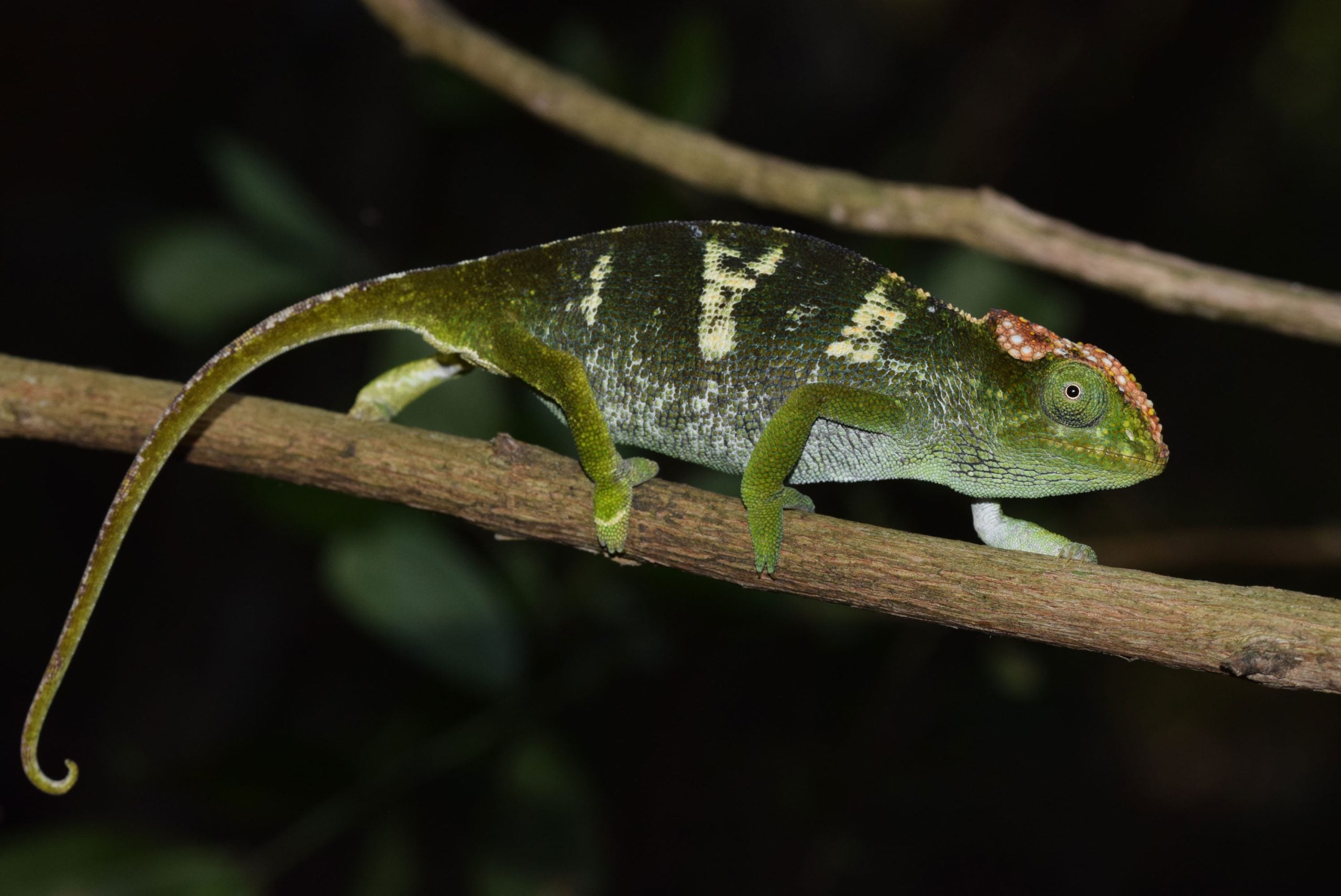
Four newly identified chameleons reveal the hidden diversity of Mozambique’s isolated mountain forests.
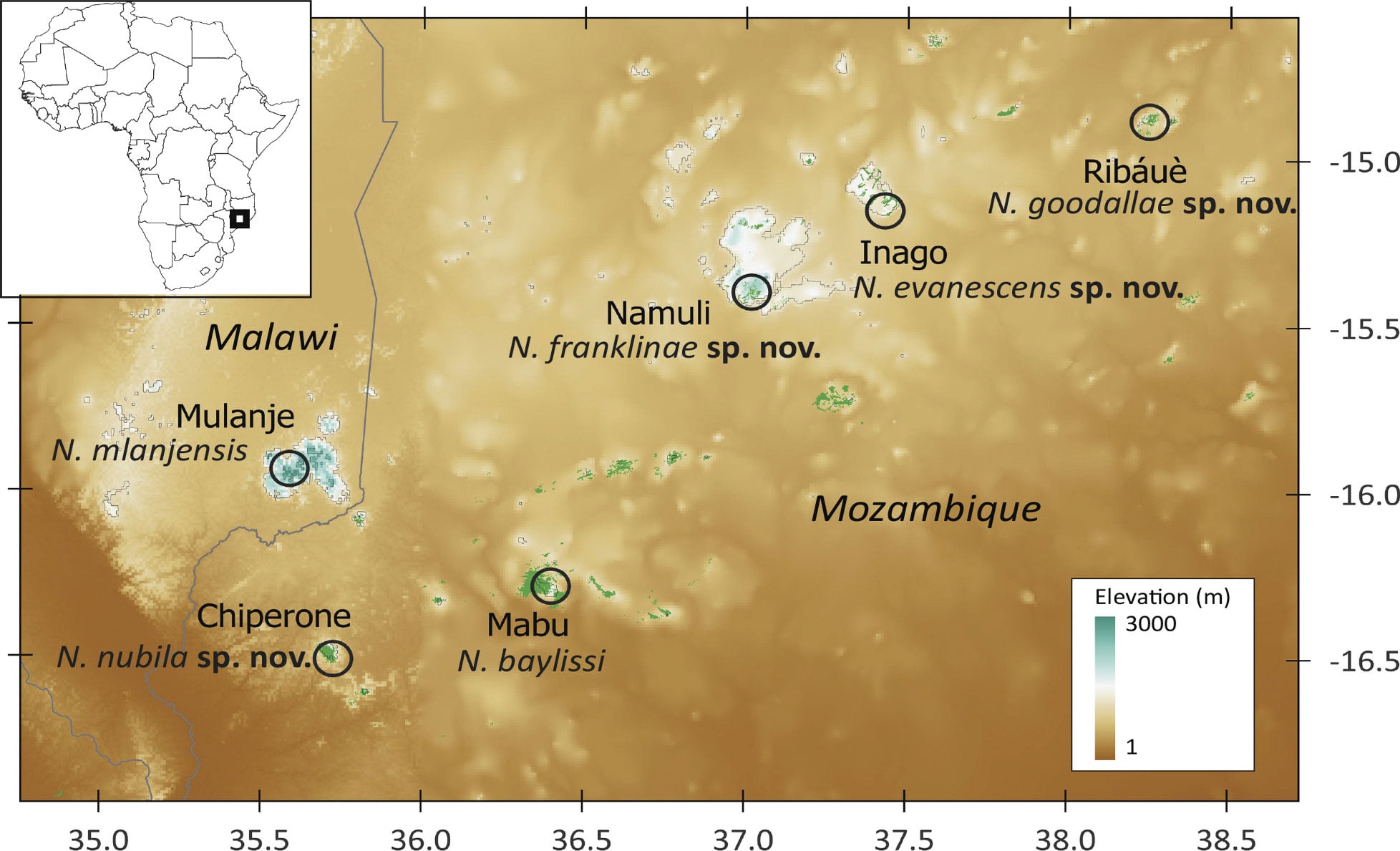
High above the savanna of northern Mozambique, isolated rainforest patches conceal animals found nowhere else. Surveys of these granite mountains have now identified four previously unknown species of Sylvan Chameleons, each confined to a separate “sky island.”
Prof. Krystal A. Tolley and Dr. Werner Conradie described the species in Vertebrate Zoology. Their names recognize animal behavior researcher and conservationist Jane Goodall, chemist Rosalind Franklin, and the idea of “vanishing”, linking scientific achievement with a warning about the loss of these forests.
The mountains rise abruptly from the dry landscape, capturing clouds and rainfall that sustain cool, damp forests near their summits. Because the forests are separated by expanses of savanna, species on one peak may remain isolated from those on another and evolve independently. Prof. Tolley says this isolation has left many sky island organisms with ranges found nowhere else on Earth.
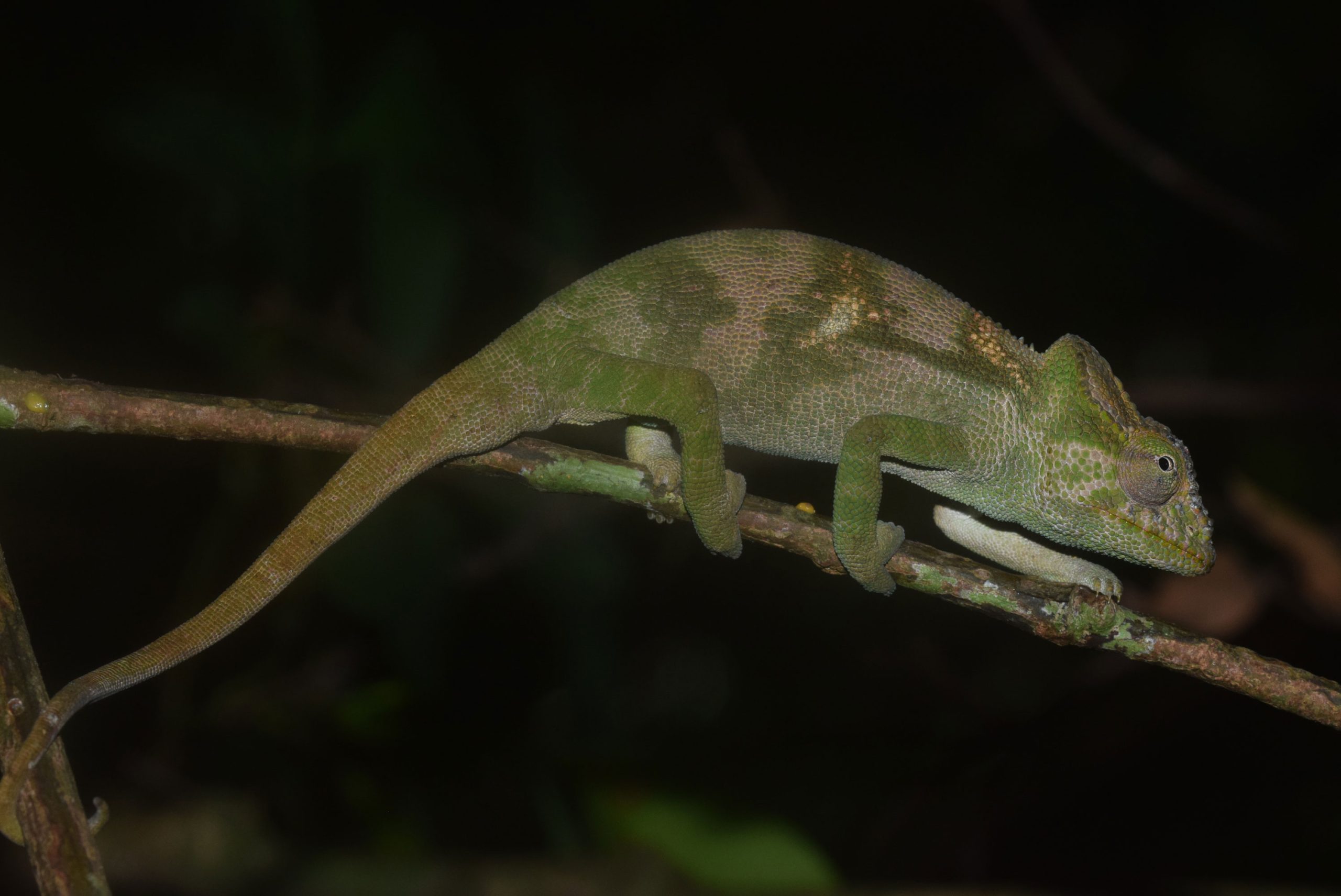
Much of northern Mozambique’s mountainous terrain remained poorly studied until the 2000s, even by the standards of remote African landscapes.
The researchers wanted to learn whether each forest contained distinct reptile and amphibian species shaped by long periods of separation. Their work carried added urgency because tropical forests across Africa are being cleared for agriculture, potentially eliminating species before researchers can identify them.
DNA tests separate lookalike species
The researchers conducted multiple expeditions to the remote mountains, recording the reptiles and amphibians living in each forest. After finding chameleon populations on several peaks, they collected body measurements and biological samples for closer comparison.
In the laboratory, they applied the General Lineage Species Concept, which uses several kinds of evidence to determine whether populations represent separate species. They sequenced four genes (DNA sequences) from Sylvan Chameleons collected on different mountains, compared the genetic patterns, and then considered those results alongside differences in body features. Together, the evidence allowed them to assess whether each mountain supported its own species.
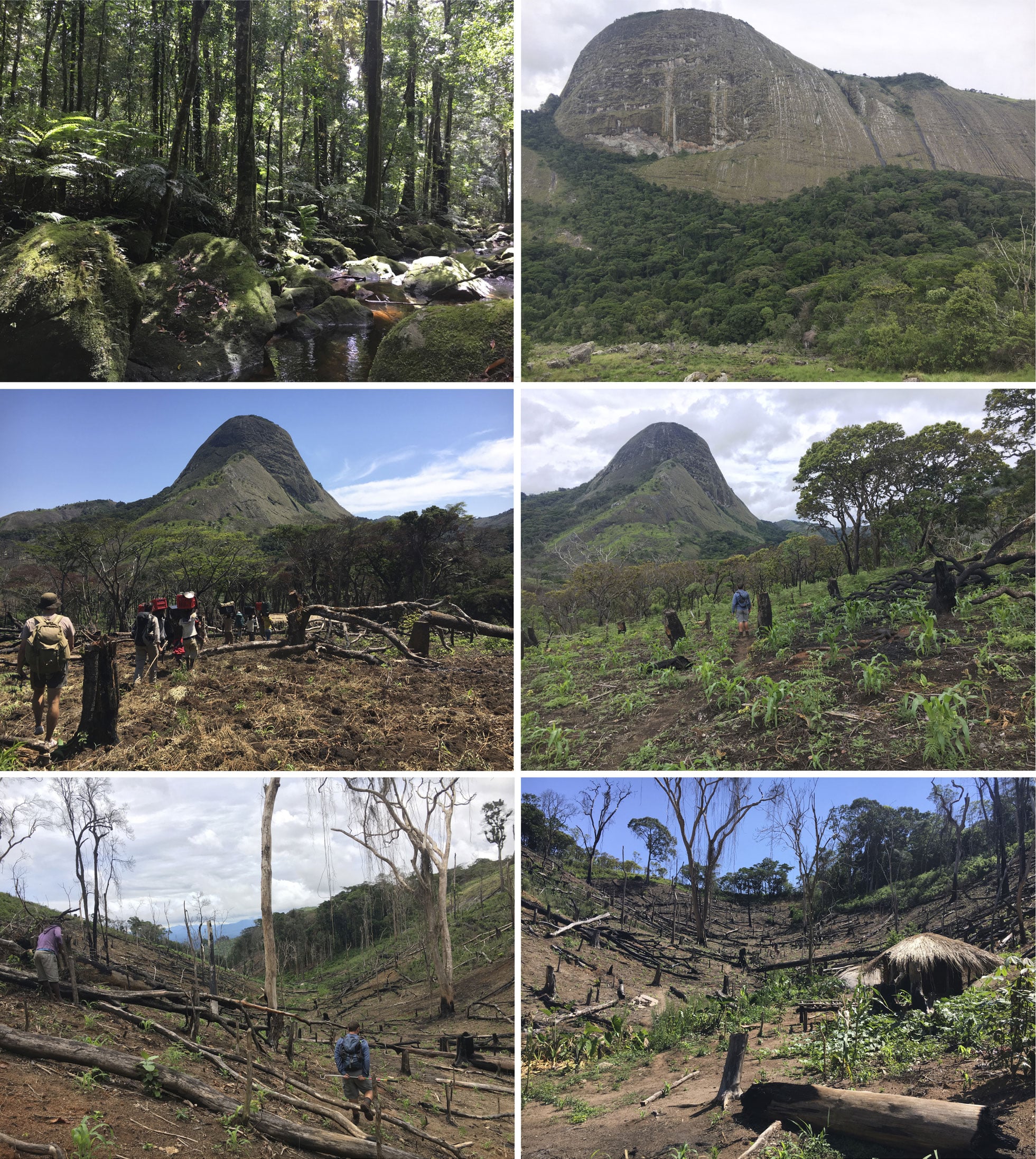
At first glance, the chameleons from the different forests appeared much alike. Their genes, however, revealed clear divisions. A phylogeny, which is a family tree reconstructed from genetic evidence, grouped the animals strictly according to the mountain where they were found.
That pattern suggests the populations have remained separated for millions of years and do not breed with chameleons from neighboring peaks. Their similar appearance reflects adaptation to comparable forest environments rather than membership in a single species.
According to Dr. Conradie “In the same way, African and Asian elephants both look like ‘elephants’ but are distinct species that have evolved similar body forms for similar lifestyles.”
Names honor discovery and loss
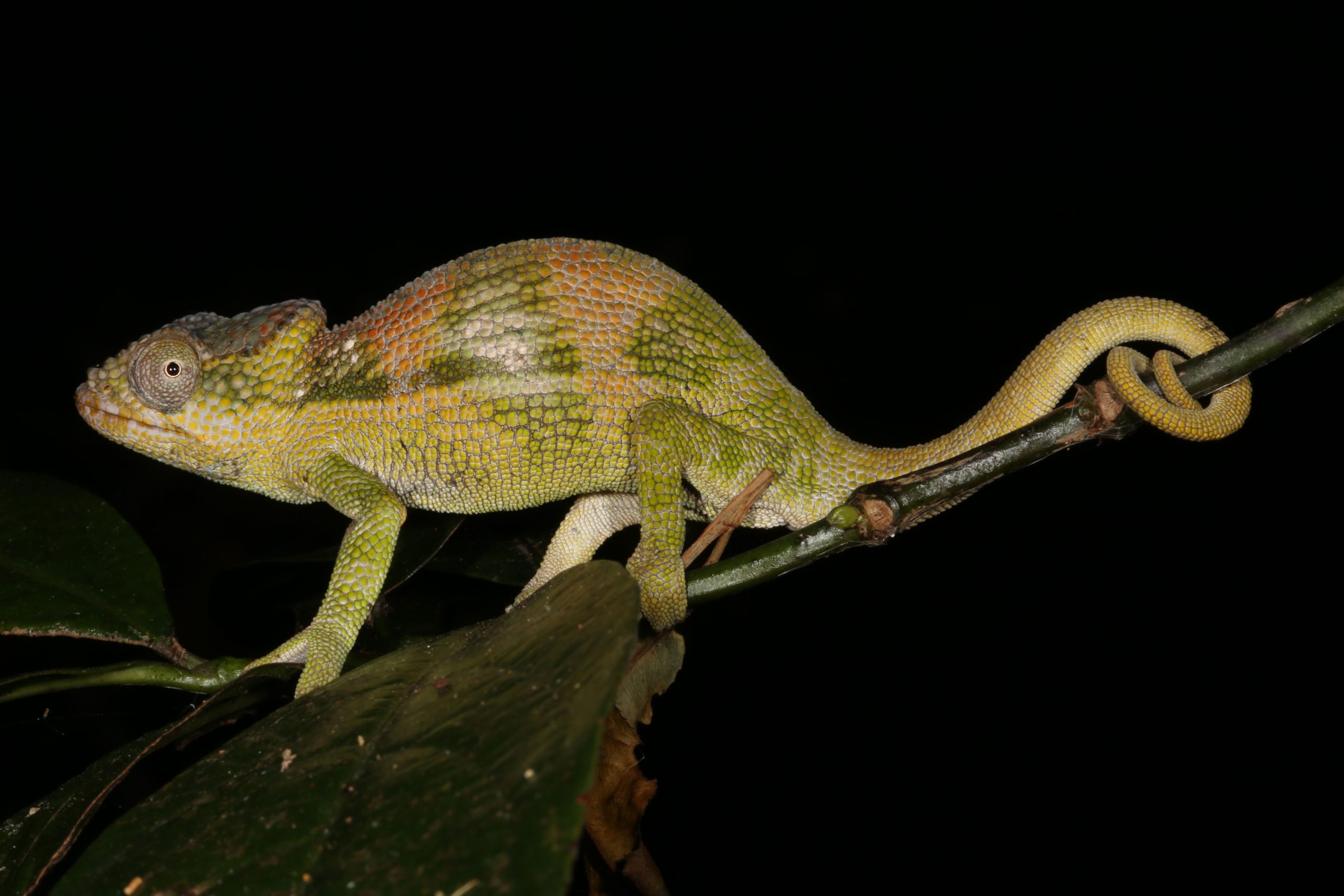
Each name was chosen to connect the species with a person, place, or conservation message. Nadzikambia goodallae, found on Mount Ribáuè, honors Dr. Jane Goodall and her influential research on African chimpanzees, which reshaped scientific understanding of animal behavior and helped inspire conservation efforts around the world.
Long before Dr. Jane Goodall became internationally known as a conservation advocate, she spent decades observing forest life and documenting how species contribute to the ecosystems around them.
“Naming this wonderfully unique Sylvan Chameleon for Jane is a fitting tribute to her advocacy and a reminder of the importance of protecting forest landscapes for all animals, including people,” says Anna Rathmann, Executive Director of the Jane Goodall Institute USA.
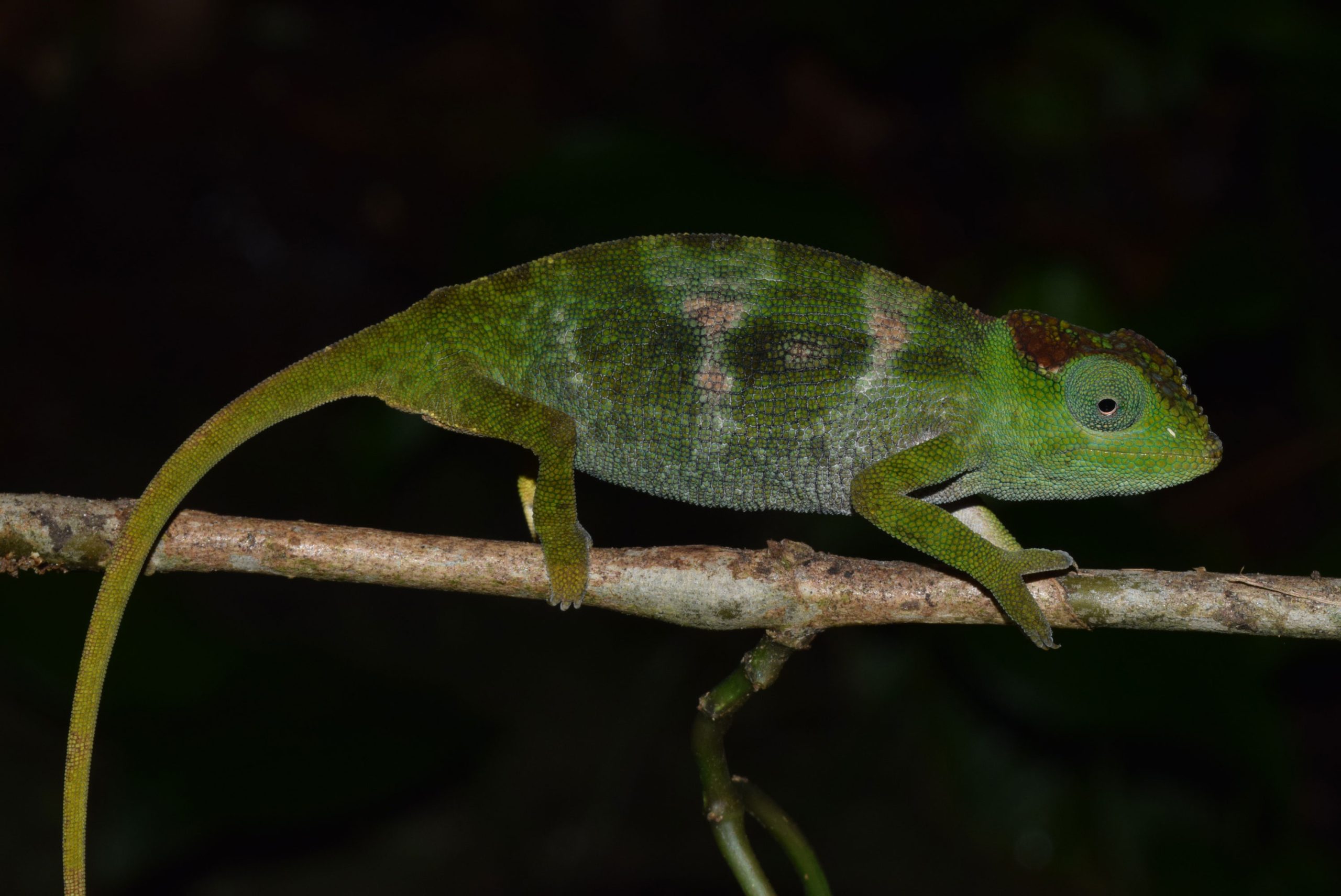
The Mount Namuli species, Nadzikambia franklinae, recognizes Rosalind Franklin, whose work on the structure of DNA helped establish the science behind the genetic methods used to distinguish the chameleons. A species from Mount Inago was named Nadzikambia evanescens, meaning “vanishing,” as a warning about its shrinking habitat and the possibility that many organisms could disappear before they are formally described.
The fourth species, The Chiperone sylvan chameleon (Nadzikambia nubila), was collected beside a stream on Mount Chiperone.
Its name refers to the “Ciperoni” – a local term for the thick, cloud-filled conditions that produce orographic rainfall when moist air rises over the mountain. That persistent moisture supports the mountain’s mid-elevation wet forest. The species name nubila comes from the Latin nubilus, meaning “cloudy.”
Community protection preserves intact forests
The four discoveries arrive as tropical forests, particularly those in Africa, continue to face extensive clearing. Mozambique’s sky island forests are especially exposed because they are both small and geographically isolated. The study also shows that local communities can play a central role in keeping these habitats intact.
Mount Chiperone’s forest is regarded as sacred, and those cultural beliefs have helped protect its plants and animals. On Mount Mabu, more than ten years of community-based conservation have supported forest protection. These two mountains contained the most intact forests examined during the research.
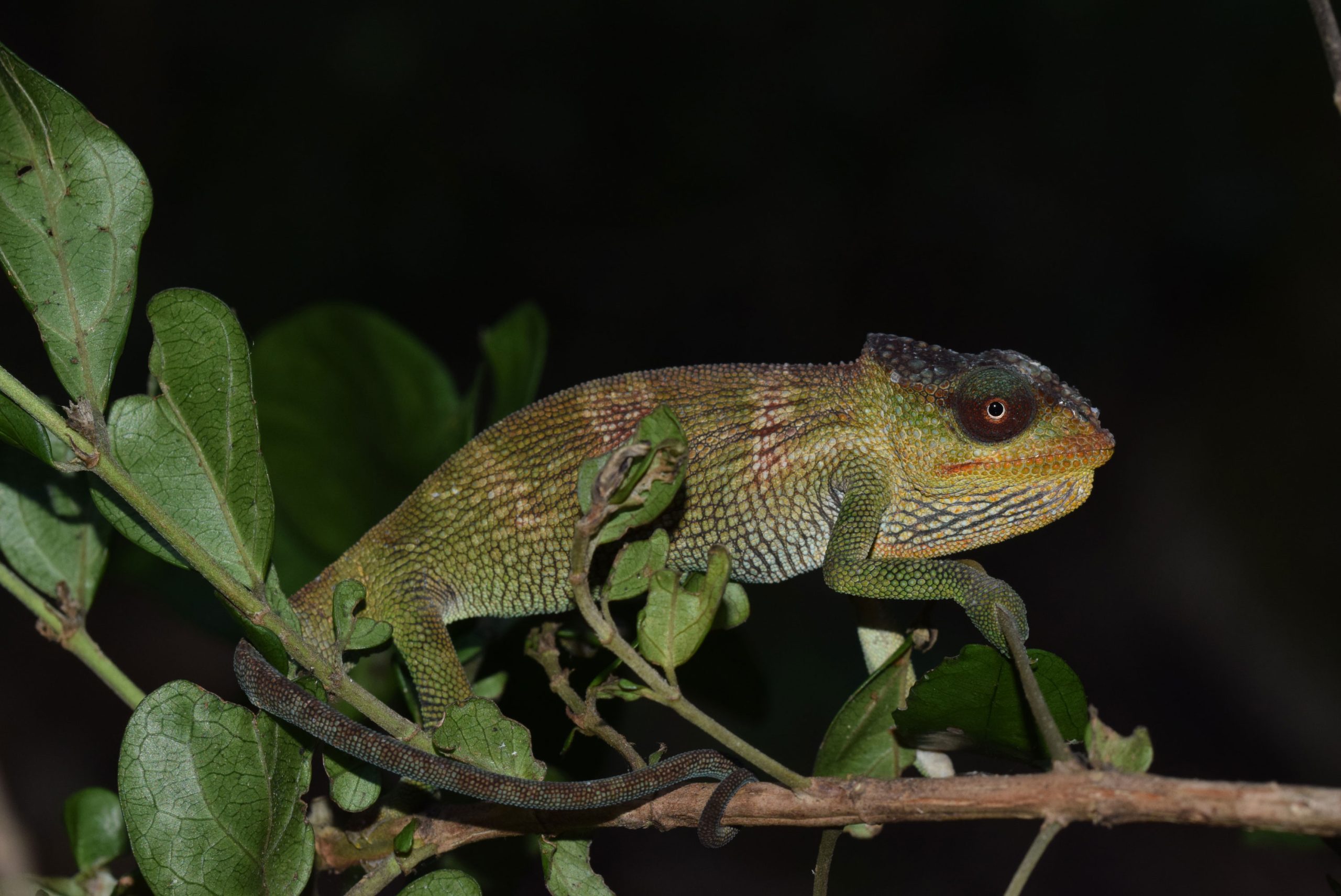
Their condition shows that communities do not necessarily have to choose between protecting forests and sustaining local livelihoods. Where residents receive support and cultural values align with conservation, both people and isolated ecosystems can benefit.
Reference: “Sky Islands of Mozambique harbour cryptic species of chameleons: Description of four new species of sylvan chameleons (Squamata: Chamaeleonidae: Nadzikambia Tilbury, Tolley & Branch, 2006)” by Krystal Tolley and Werner Conradie, 21 April 2026, Vertebrate Zoology.
DOI: 10.3897/vz.76.e178403
Never miss a breakthrough: Join the SciTechDaily newsletter.
Follow us on Google and Google News.