
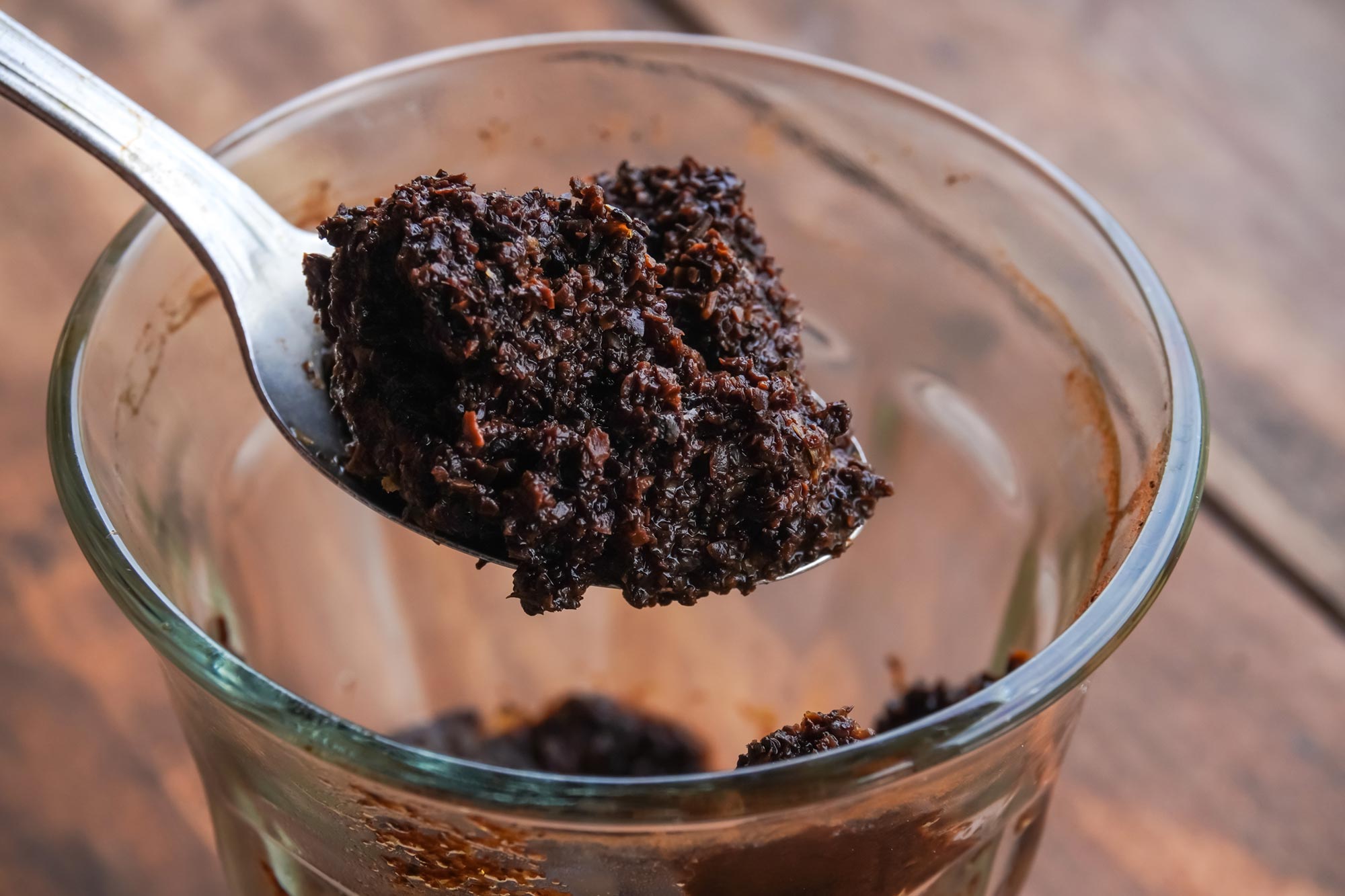
Every cup of coffee leaves behind a hidden reservoir of energy.
Damp coffee grounds discarded after brewing still contain valuable oils that can be converted into biodiesel, while their carbohydrates and other compounds could be used to produce renewable fuels, bioplastics, and industrial chemicals.
Researchers at Universitat Rovira i Virgili (URV) have now identified a relatively simple way to recover much of that oil without ruining the rest of the material. The approach could help turn spent coffee grounds from a widespread waste problem into a versatile raw material for biorefineries.
The study, published in Biomass and Bioenergy, focused on the enormous volume of residue generated by the global coffee industry. Roughly 10 million metric tons (about 11 million US tons) of coffee beans are produced each year, yet only part of each bean is transferred into the drink. Much of the remaining solid material is discarded after brewing.
That waste is far from chemically empty. Spent coffee grounds contain about 15% lipids, making them a potentially useful source of oil for biodiesel production. However, recovering the oil efficiently is only part of the challenge. An overly harsh treatment could damage the cellulose, hemicellulose, lignin, and other valuable components left behind.
Finding the Sweet Spot for Oil Extraction
The URV team therefore searched for conditions that would maximize oil recovery while preserving the residue for further processing. Jorge F. Romero, Alberto Tampieri, Daniel Montané, Magdalena Constantí, and Francesc Medina, all from URV’s Department of Chemical Engineering, examined how extraction temperature, processing time, and the amount of solvent affected the outcome.
They used n-hexane, a solvent commonly employed to separate fats, and tested combinations of the three variables to determine how they influenced one another.
“We have found that the optimal conditions are at 45°C (113°F) for 60 minutes with a ratio of 35 milliliters of hexane per gram of dry residue,” explained Magdalena Constantí, one of the study’s authors.
Under those conditions, the process recovered about 90% of the oil obtained through Soxhlet extraction, a standard laboratory method known for producing high yields. The new approach, however, required less time and energy and was considered more practical for industrial use.
A Cleaner, More Efficient Extraction
The recovered oil was also considerably cleaner. It contained just 0.3% impurities, compared with 3.9% in oil produced through Soxhlet extraction. Greater purity could reduce the need for additional refining before the oil is converted into fuel.
Its fatty acid composition also remained consistent across the different test conditions. Linoleic and palmitic acids were the dominant components, a profile that supports the material’s potential as a biodiesel feedstock.
Yet the study’s broader value lies in what remains after the oil is removed.
“In our study, we also demonstrate that extracting the oil does not mean that the rest of the material cannot be used for something else,” pointed out Francesc Medina, a researcher at the Department of Chemical Engineering who participated in the research.
Valuable Materials Remain After Oil Removal
The team deliberately preserved the lignocellulosic structure of the grounds. This plant-based framework contains cellulose, hemicellulose, and lignin, which can serve as starting materials for products including bioethanol, lactic acid, polyhydroxyalkanoates, phenolic compounds, and precursors for sustainable aviation fuel.
Removing the fat may even make those later steps easier. Oils can coat the biomass and limit the ability of solvents, enzymes, or catalysts to reach the compounds inside. By stripping away that barrier without significantly altering the residue, the process leaves the grounds better prepared for additional conversion.
The researchers also compared the method with ultrasound-assisted and microwave-assisted extraction. Those technologies can speed up the early release of oil, but they did not deliver a clear overall advantage when oil purity, energy use, efficiency, and the difficulty of scaling up the process were considered together.
For that reason, the team concluded that batch extraction with n-hexane under moderate conditions may offer the most practical balance for a larger biorefinery, where one waste stream is separated into several useful products rather than being processed for a single purpose.
Fueling Hard-to-Electrify Industries
The approach could be especially useful for producing renewable energy for sectors that are difficult to electrify, including heavy transportation and aviation. Rather than relying on one output, a coffee ground biorefinery could extract value from nearly every part of the residue.
Researchers can therefore “transform a typically underused waste product into various energy vectors and bio-based chemical products and reduce the environmental impact associated with its accumulation,” explained Daniel Montané, a researcher in the same department, who also participated in the research.
Reference: “Systematic evaluation of batch hexane extraction as a scalable pretreatment for the comprehensive valorization of spent coffee grounds” by Jorge F. Romero, Alberto Tampieri, Daniel Montané, Magdalena Constantí and Francesc Medina, 21 April 2026, Biomass and Bioenergy.
DOI: 10.1016/j.biombioe.2026.109467
Never miss a breakthrough: Join the SciTechDaily newsletter.
Follow us on Google and Google News.
1 Comment
Coffee use is widely distributed, down to the household level, so only a small percentage of grounds can be economically recovered.