
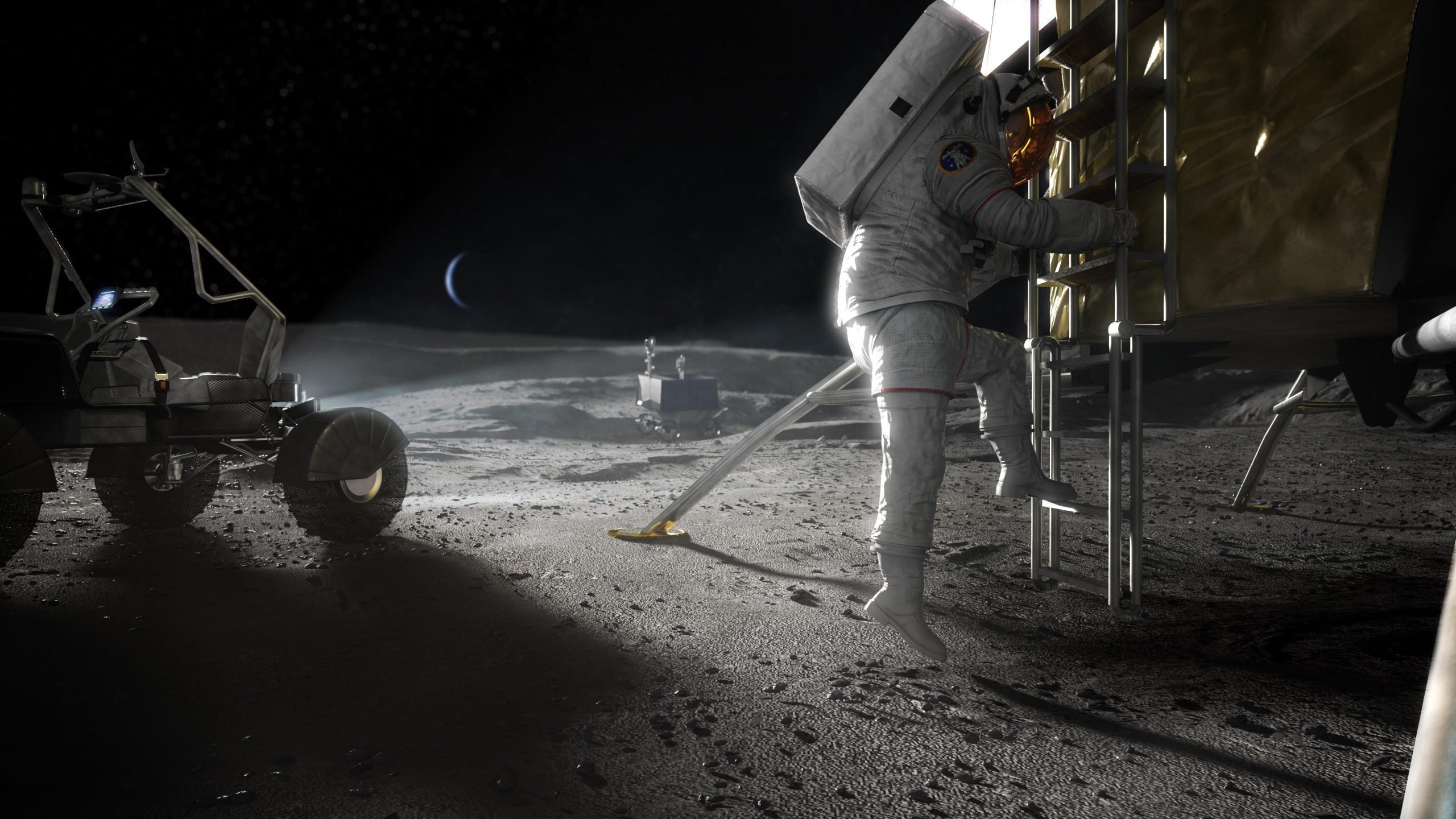
More than 20 robotic landings and a new fleet of commercial spacecraft are helping NASA turn its permanent Moon Base plans into reality.
NASA is moving forward with plans for a durable Moon Base near the lunar South Pole, where future missions could support scientific research, technology development, and eventually sustained human activity. A major part of that effort involves commercial partners Blue Origin, Firefly Aerospace, Intuitive Machines, and Voyager Lunar Systems, which are developing landers expected to make deliveries by 2028.
Those spacecraft are intended to provide some of the basic infrastructure needed for a lasting presence on the lunar surface. As development continues, the companies are also helping demonstrate the commercial delivery capabilities and surface systems that NASA expects its Moon Base to depend on.
More Than 20 Robotic Moon Landings Planned
Phase I of NASA’s Moon Base architecture plan is underway through 2029 and calls for more than twenty robotic landings. Rather than attempting to establish the entire system at once, each mission will build on the ones before it by testing equipment, improving capabilities, and validating components needed for later operations.
Before astronauts reach the site, robotic spacecraft will carry scientific instruments to the Moon, gather information about the lunar environment, demonstrate new technologies, and start putting essential infrastructure in place for future human habitation.
These early missions will also give NASA repeated opportunities to learn from real lunar operations and improve the reliability of the broader Moon Base architecture. Regular missions through NASA’s CLPS (Commercial Lunar Payload Services) initiative are expected to help establish a reliable supply chain between Earth and the Moon, supporting the agency’s goal of maintaining a long-term robotic and human presence there.
NASA has also released a Moon Base video update showing how the four companies are progressing with their spacecraft and related hardware as they work toward NASA’s Moon Base goals.
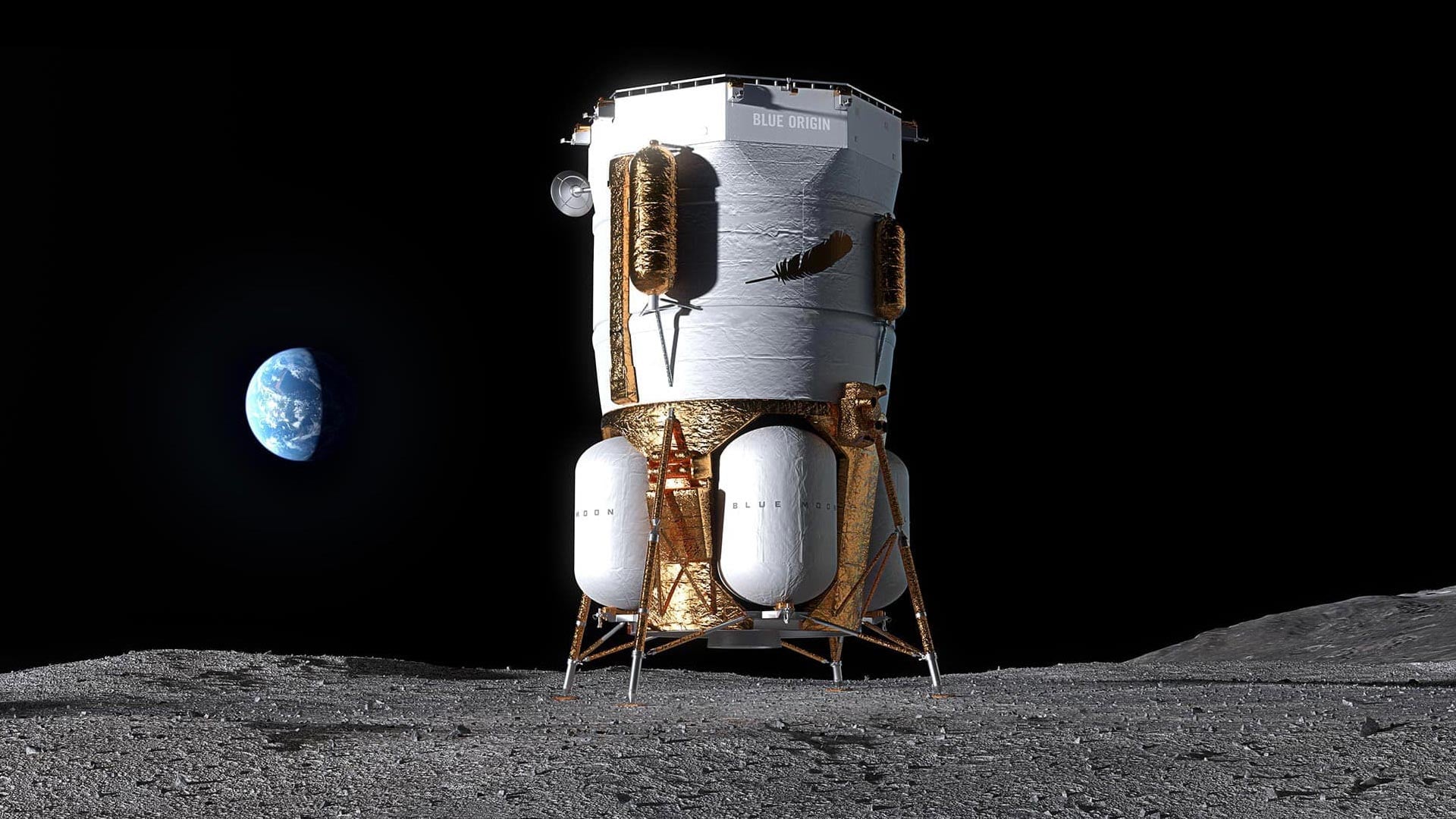
Blue Origin
Blue Origin is putting its Blue Moon MK1 lander through integrated testing ahead of its first lunar delivery mission. That mission, called Endurance, will demonstrate a new type of commercial lunar lander capable of transporting large payloads to the Moon.
The spacecraft successfully completed a wide-ranging environmental testing campaign. That work included a thermal vacuum test at NASA’s Johnson Space Center in Houston, where engineers verified that the lander can operate in conditions similar to those it will experience on the Moon.
Blue Origin is now working through additional integration milestones before MK1 begins its next round of testing. Its main structure, propulsion hardware, and avionics have already been assembled. Upcoming evaluations will check the wiring harness connections needed to integrate payloads.
The lander has also completed communications checks with NASA’s Tracking and Data Relay Satellite System and the Deep Space Network. One of the remaining major tests will involve loading cryogenic propellants before the spacecraft is integrated for launch.
During Endurance, Blue Moon MK1 will demonstrate precision landing, collect information about the lunar environment, and test autonomous systems that could be used during future Moon Base missions.
Firefly Aerospace
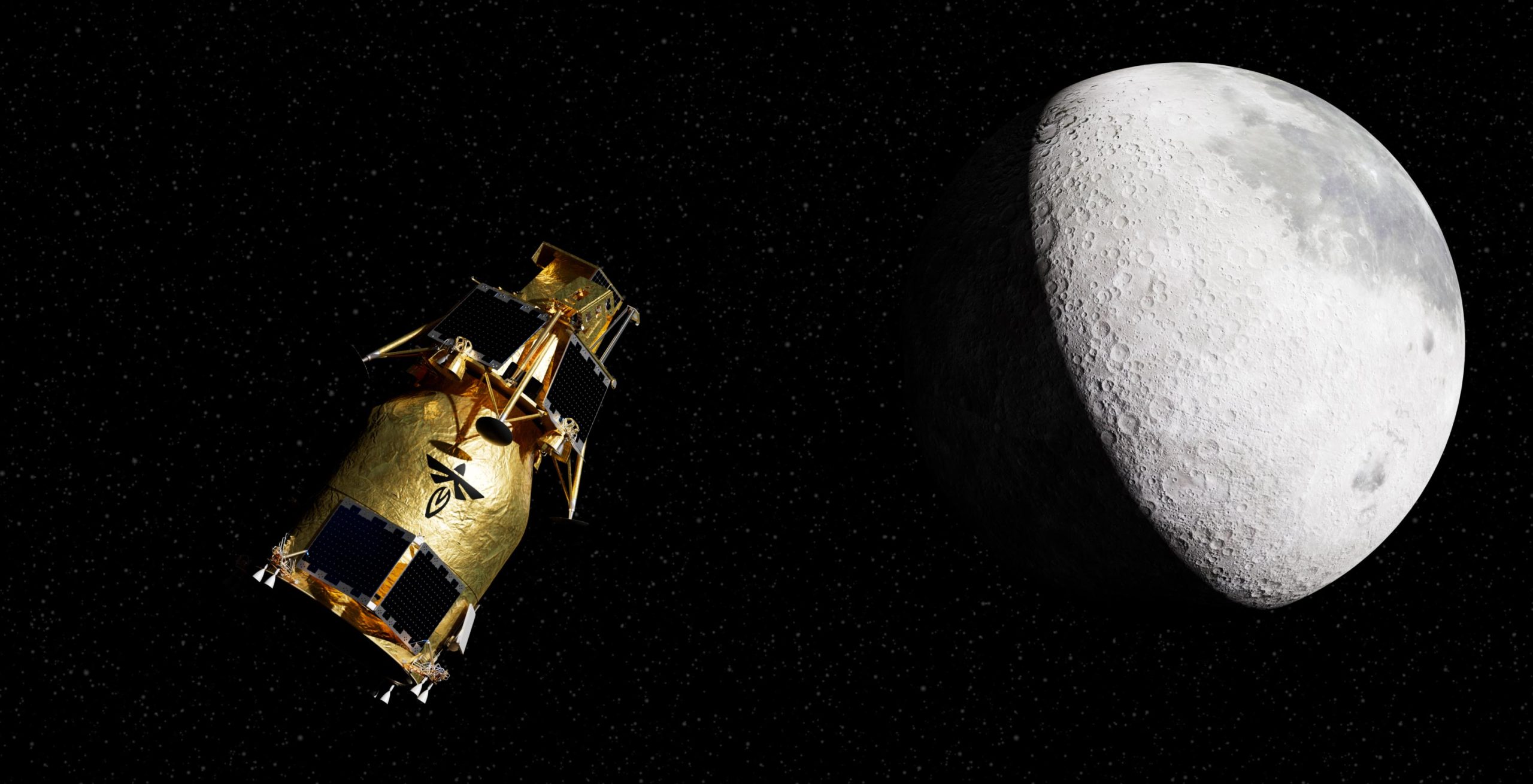
Firefly Aerospace is preparing Blue Ghost Mission 2, which builds on the company’s first successful lunar landing. This time, the mission will use a much larger configuration designed for operations on the far side of the Moon.
Blue Ghost will sit atop Elytra, Firefly’s orbital spacecraft. Together, the two vehicles form a 22-foot-tall system that is nearly three times as tall as the spacecraft used for Blue Ghost Mission 1 in 2025.
Because Elytra can deploy payloads both in lunar orbit and on the surface, the combined system gives NASA additional options for future Moon Base logistics and scientific missions.
A Historic Mission to the Moon’s Far Side
Blue Ghost Mission 2 is planned to become the first American landing on the far side of the Moon. The destination offers an unusually quiet environment that could help scientists investigate both lunar geology and the cosmic Dark Ages, an early period of the universe when newly formed stars were beginning to become visible.
The mission will carry three NASA payloads intended to support scientific research while also testing technologies relevant to future lunar habitats and infrastructure.
Firefly also plans to draw on technology already demonstrated during its first mission. Its autonomous landing sequence provided valuable experience in lunar flight, and some subsystems from the earlier spacecraft are being reused. That approach can speed development and lower risk while supporting NASA’s goal of creating commercial lunar landers that can fly repeatedly and at larger scale.

Intuitive Machines
Intuitive Machines is preparing IM 3, its third Nova C lunar landing mission. The flight will also introduce Altus 1, the company’s first lunar data relay satellite, which will travel with the lander and operate in lunar orbit.
The Nova C lander for the mission is named Trinity. Assembly and integration are progressing as Intuitive Machines works toward the ability to support regular cargo and scientific deliveries to the Moon.
The spacecraft’s top deck has been aligned, while its internal wiring is undergoing extensive checks before the final closeout panels are installed. Intuitive Machines recently worked with the X-Ray Cryogenic Facility team at NASA’s Marshall Space Center in Huntsville, Alabama to complete extended thermal vacuum testing. The tests were designed to confirm that the company’s sensors can remain accurate across the temperature extremes they could encounter during descent to the Moon.
Upcoming work will include the final stages of development, such as installing the engine and conducting hot fire testing.
Exploring the Mysterious Reiner Gamma Lunar Swirl
During IM 3, Altus 1 will be deployed in lunar orbit carrying three payloads. Trinity will meanwhile deliver five NASA payloads, six commercial payloads, and one civil payload to the surface.
The mission will support NASA’s scientific goals at Reiner Gamma’s unusual geomagnetic environment, where a magnetic anomaly exists on the lunar surface.
IM 3 is expected to become the first mission to directly explore the surface of a lunar swirl. Robots and instruments deployed there will allow scientists to investigate this unusual region in much greater detail.
Voyager Technologies
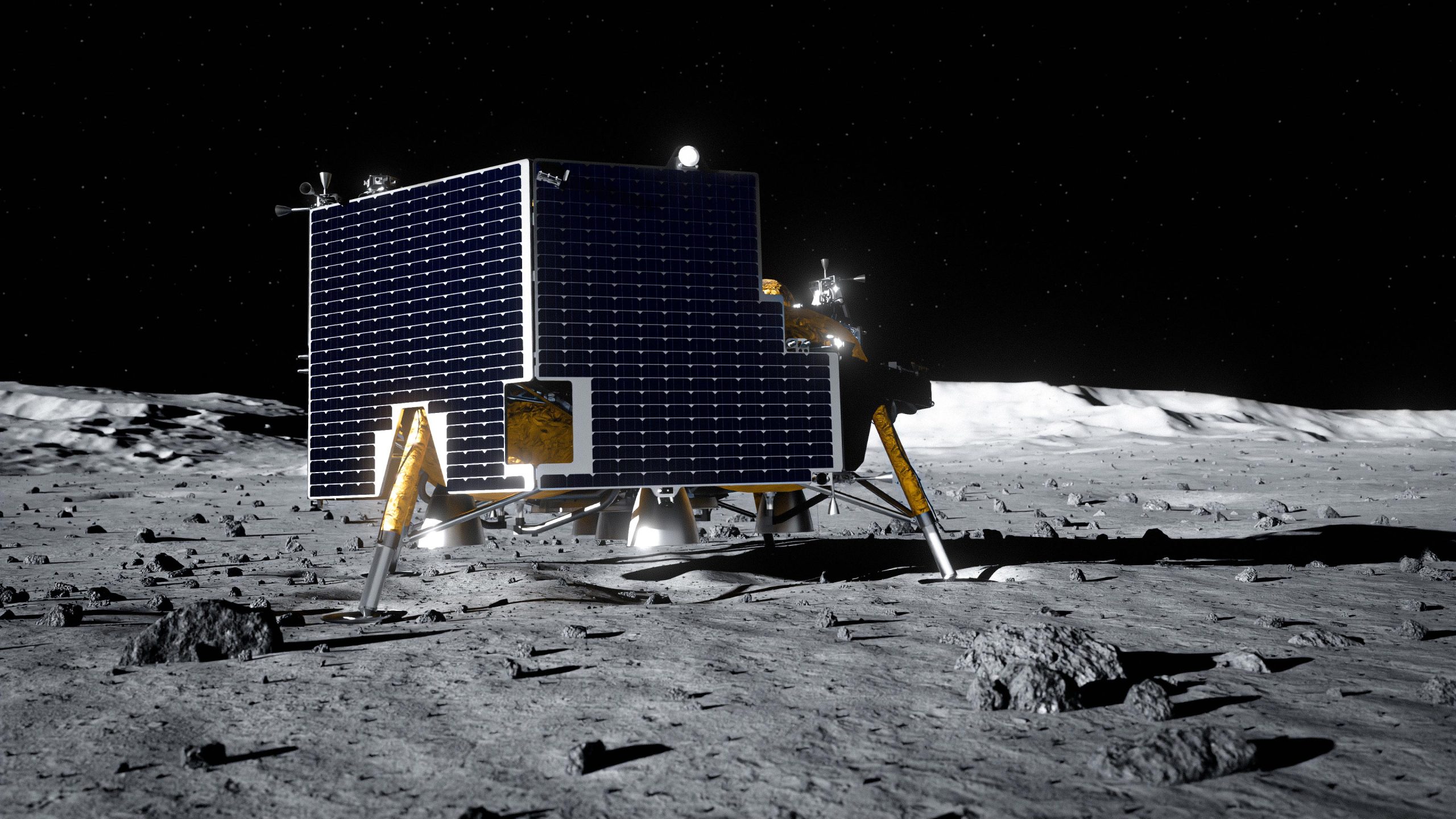
Voyager Technologies is testing its Griffin 1 lander inside the Environmental Test Laboratory at NASA’s Jet Propulsion Laboratory in Southern California. The work is an important step toward preparing the spacecraft for its trip to the Moon.
Testing at NASA JPL is intended to verify that commercial lunar landers can meet the precision and durability requirements needed for Moon Base operations.
Griffin 1 is designed as an infrastructure-class lander and is scheduled to launch in late 2026. It is expected to carry the largest commercial payload ever delivered to the Moon.
Five NASA payloads will ride aboard the Astrolab FLIP (FLEX Lunar Innovation Platform) rover. Together, the rover and its instruments will support demonstrations involving surface mobility, new technologies, and extended operations on the Moon.
Preparing Griffin 1 for Lunar Operations
Griffin 1 recently finished mass properties testing, which supplied important information for guidance, navigation, control, and flight dynamics.
Additional environmental testing is planned over the next several weeks. These tests will reproduce conditions the lander is expected to experience from launch through its descent and landing on the Moon. The goal is to reduce mission risk and improve confidence that the spacecraft can operate successfully in the lunar environment.
After environmental testing is complete, Griffin 1 will return to Voyager’s Lunar System Pittsburgh facility for final assembly. It will then go through its remaining launch readiness activities before being transported to Cape Canaveral.
Northrop Grumman
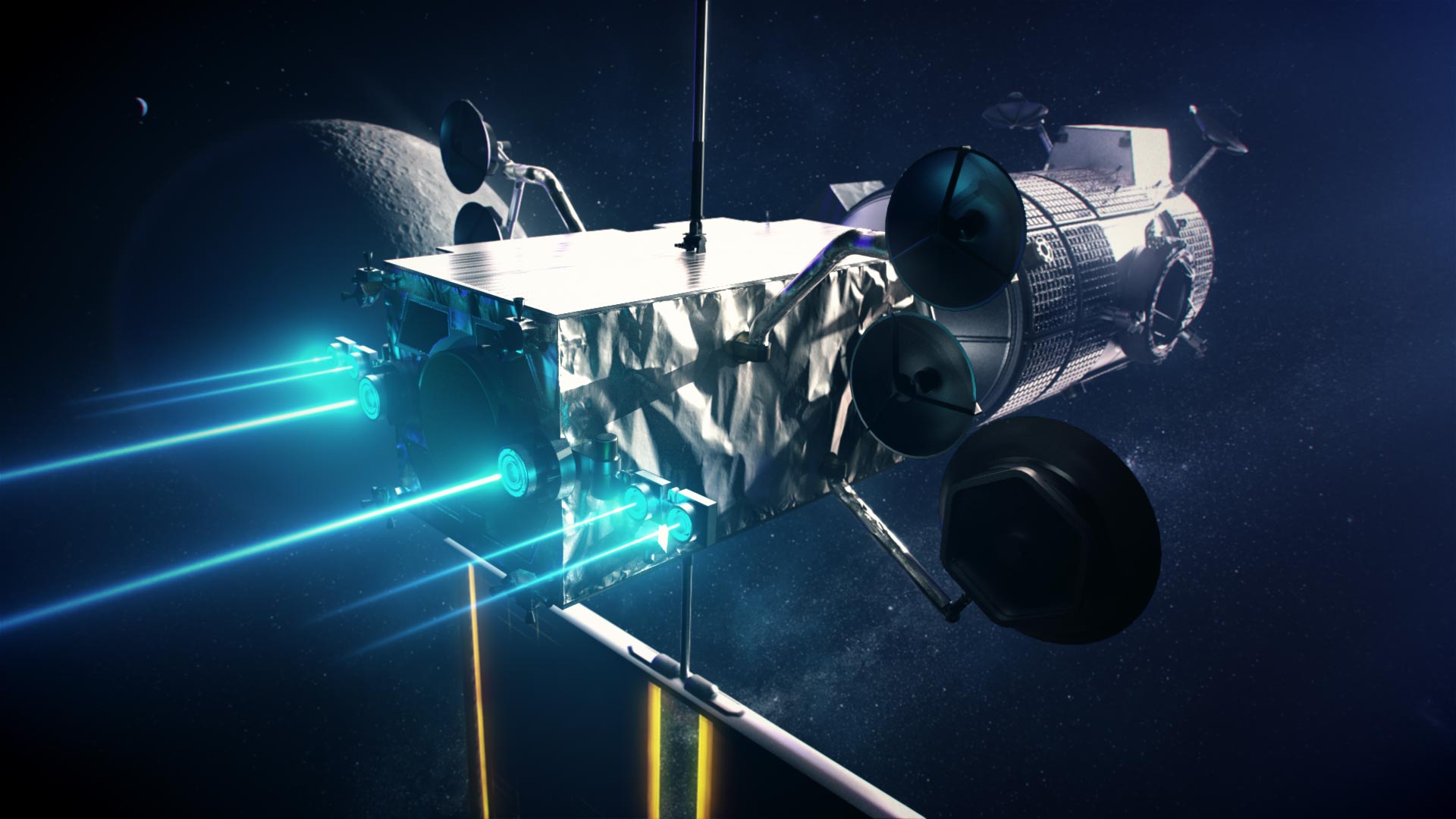
NASA is also working with Northrop Grumman on three technology demonstration payloads that are planned for delivery to the lunar surface.
The demonstrations use power and avionics technology originally developed for the Gateway program’s HALO (Habitation And Logistics Outpost) module. That hardware is now being adapted after NASA shifted its lunar strategy away from a primarily orbital approach and placed greater emphasis on surface operations.
One goal is to demonstrate survive-the-night technology capable of operating through some of the Moon’s harshest conditions, including shadowed periods that can last for multiple days.
The demonstrations will also evaluate shared surface power infrastructure that could provide electricity to important payloads and other Moon Base equipment. Additional avionics and power technologies considered essential for future lunar operations will be tested as well.
Through these commercial landers, robotic deliveries, scientific missions, and infrastructure demonstrations, NASA is continuing to develop its Moon Base strategy. The broader objective is to create the systems needed for a sustained human presence on the lunar surface, supported by regular scientific deliveries and a growing fleet of commercial lunar spacecraft.
Never miss a breakthrough: Join the SciTechDaily newsletter.
Follow us on Google and Google News.