
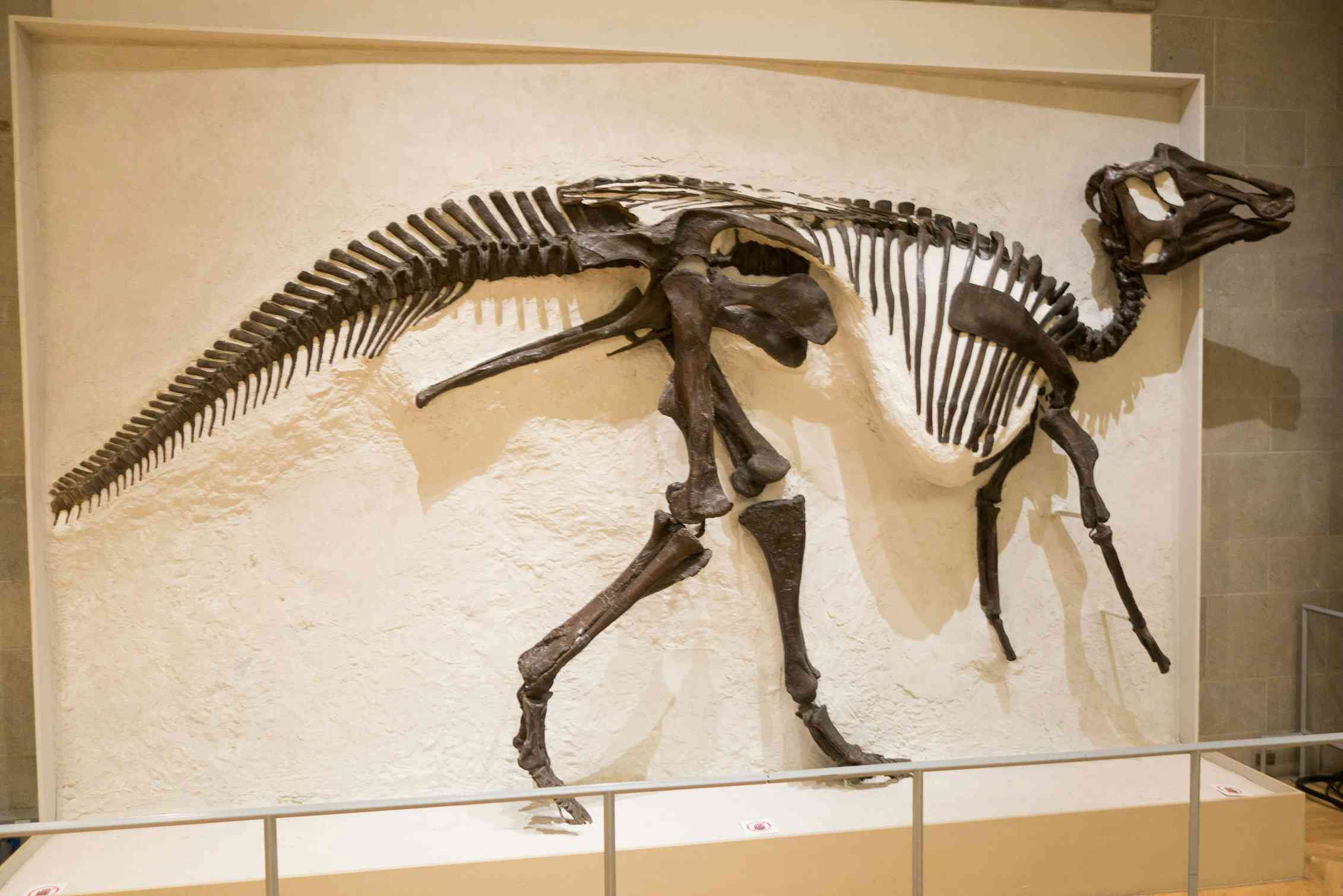
Rare tracks from northeastern British Columbia reveal an ornithopod-dominated dinosaur community from a poorly documented period when much of western North America lay beneath an inland sea.
Imagine the Western Plains of North America, from Texas to Alaska, submerged under a broad, shallow seaway. To the west lay the ancestral Rocky Mountains. To the east were low-lying plains traversed by large, sluggish rivers.
This was the landscape of North America in the mid-Cretaceous period — a geological age with a time span of 105 to 75 million years ago — when the global sea level was around 100 meters higher than it is now.
A high concentration of atmospheric carbon dioxide, due to massive volcanism, created a “greenhouse” climate such that Earth lacked significant polar ice caps. Alaska and Antarctica enjoyed temperate climates.
The record of dinosaur bones and tracks from this time in North America is sparse, especially from the Coniacian age — a sub-stage of this Cretaceous period, spanning 89.75 to 86.5 million years ago.
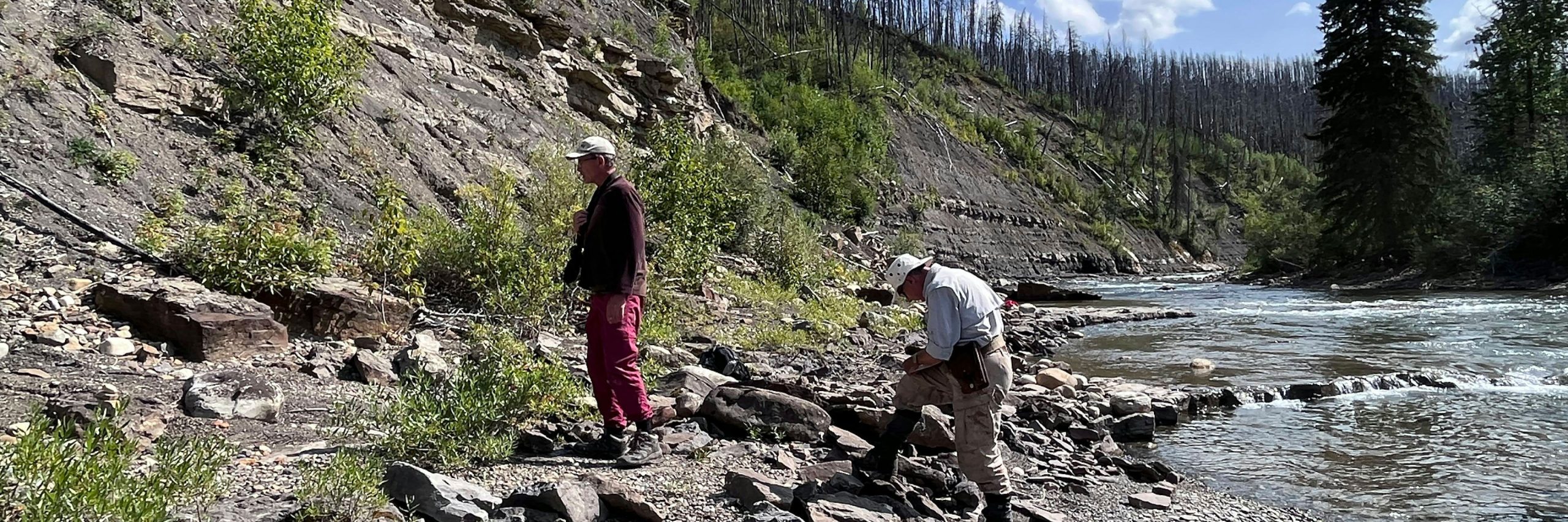
We have discovered the first Canadian dinosaur tracks from this Coniacian age, in the Tumbler Ridge area of northeastern British Columbia.
One of us, Guy Plint, first noticed these tracks in 1988. However, the remote nature of the site, best accessed by helicopter, delayed further investigation until 2022 when, together, we were able to begin a more comprehensive study. The findings were recently published in Historical Biology.
Dinosaurs of North America
North America has yielded an abundant record of dinosaur bones and tracks overall. Evidence from the Coniacian, however, is much scarcer, making the Tumbler Ridge tracks an important addition to the continent’s dinosaur record from this interval.
Footprints also preserve a different kind of evidence than bones. Dinosaur tracks can form and survive only in terrestrial, nonmarine sediments. For that reason, most North American dinosaur tracks are found in sedimentary rocks laid down by rivers draining the Rocky Mountains.
The newly studied tracks, therefore, provide rare evidence of dinosaurs living on land during a period of North American history for which both bones and tracks remain difficult to find.
A small delta escaped the inland sea
Their sediment load gradually built deltas and coastal plains along the western margin of the Interior Seaway.
Over millions of years, the sea level slowly rose and fell, alternately narrowing and widening the coastal plain.
The late Cenomanian, Turonian, Coniacian, and Santonian stages of the Cretaceous period — between about 95 and 84 million years ago — were times of exceptionally high net sea level when shorelines were pushed to the west, lapping against the foothills of the Rocky Mountains.
In western Canada, Coniacian rocks are entirely marine with the exception of the small Tumbler Ridge area of northeastern British Columbia.
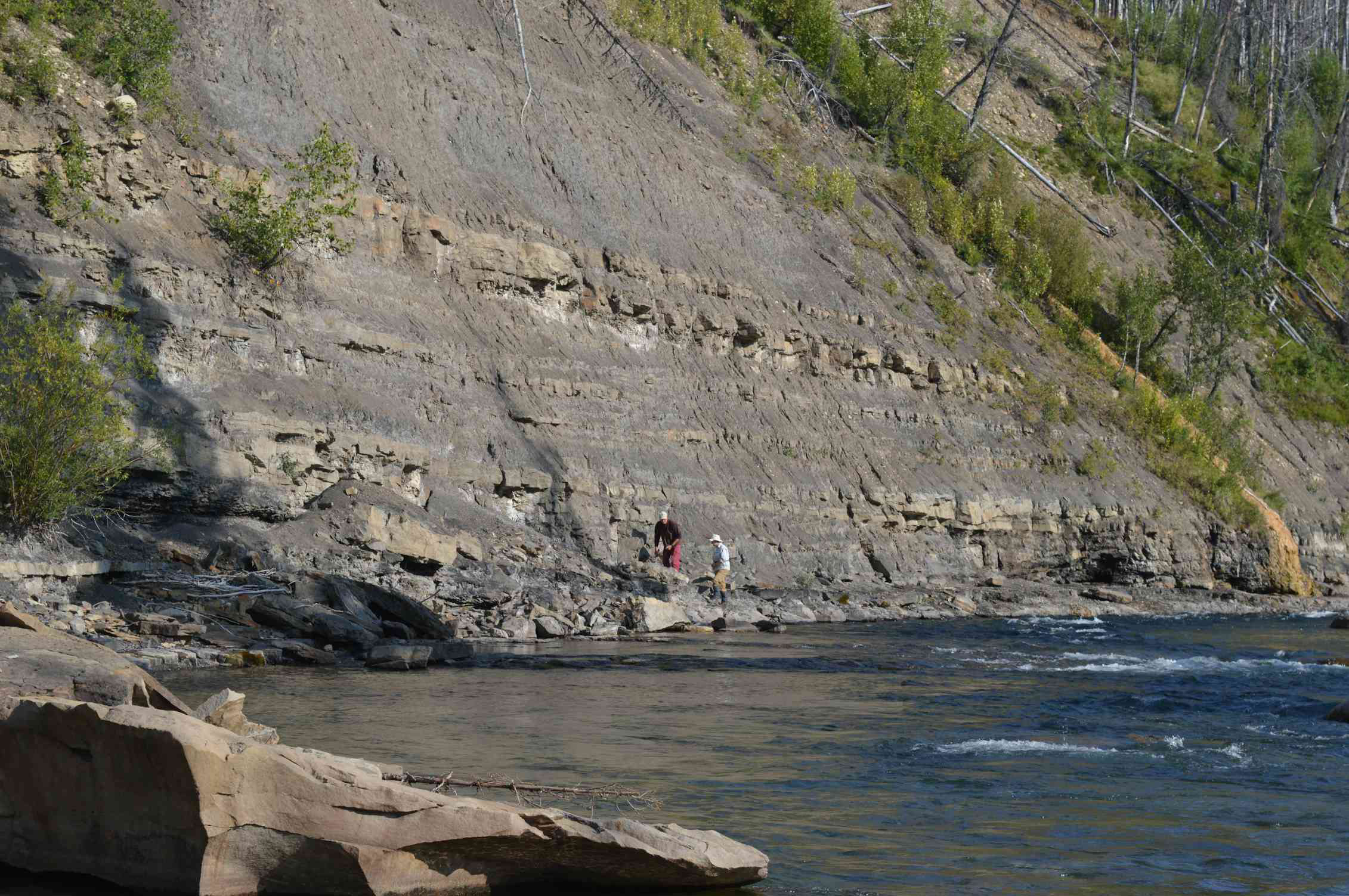
Here, a river system built a delta that protruded eastward into the seaway. The deposits of that ancient delta are called the Marshybank formation, which, critically, includes some terrestrial strata that preserve the tracks we found.
In addition to these rocks of Coniacian age, the Tumbler Ridge area includes terrestrial deposits spanning much of the Cretaceous period. These have yielded an abundant and diverse record of other fossil vertebrate tracks.
These include traces of giant crocodiles, birds, and pterosaurs, as well as abundant dinosaur tracks.
The Tumbler Ridge Museum is a repository and exhibition area for many examples of such tracks. The area was designated the Tumbler Ridge UNESCO Global Geopark in 2014.
Floods preserved a trampled dinosaur landscape
The Marshybank delta was very low-lying with shallow lakes, mires, and floodplains traversed by sluggish, sinuous rivers. Abundant fossil roots attest to dense vegetation, and preserved tree stumps indicate stands of large trees, probably conifers like the dawn redwood.
River floods washed sand beyond the river banks to form thin sand sheets called crevasse splays.
The bottom surfaces of these splays preserve, as natural casts, a variety of dinosaur tracks, originally impressed in soft mud. The sandy banks of ancient river channels were also pervasively trampled by dinosaurs.
Ornithopods dominated the dinosaur tracks
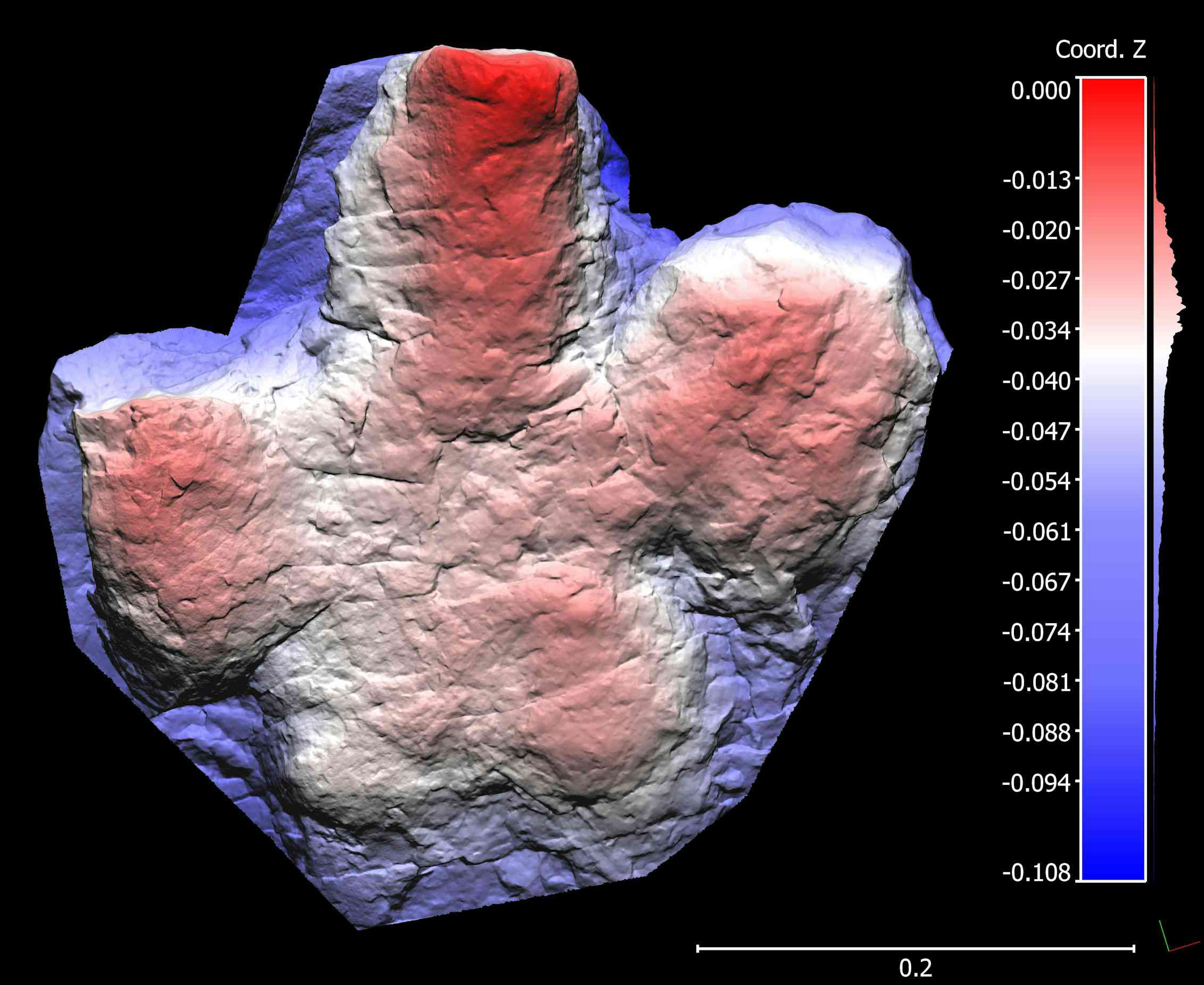
The most common tracks we found have three broad blunt toes and are typically 30 to 50 centimeters wide. These are ornithopod, or “duck-billed dinosaur” tracks. These large herbivores could walk on their hind legs, or shift to a quadrupedal gait.
The second most common track type has three, narrower and more elongated toes, tipped with claw impressions; we believe these to be carnivorous theropod dinosaur tracks.
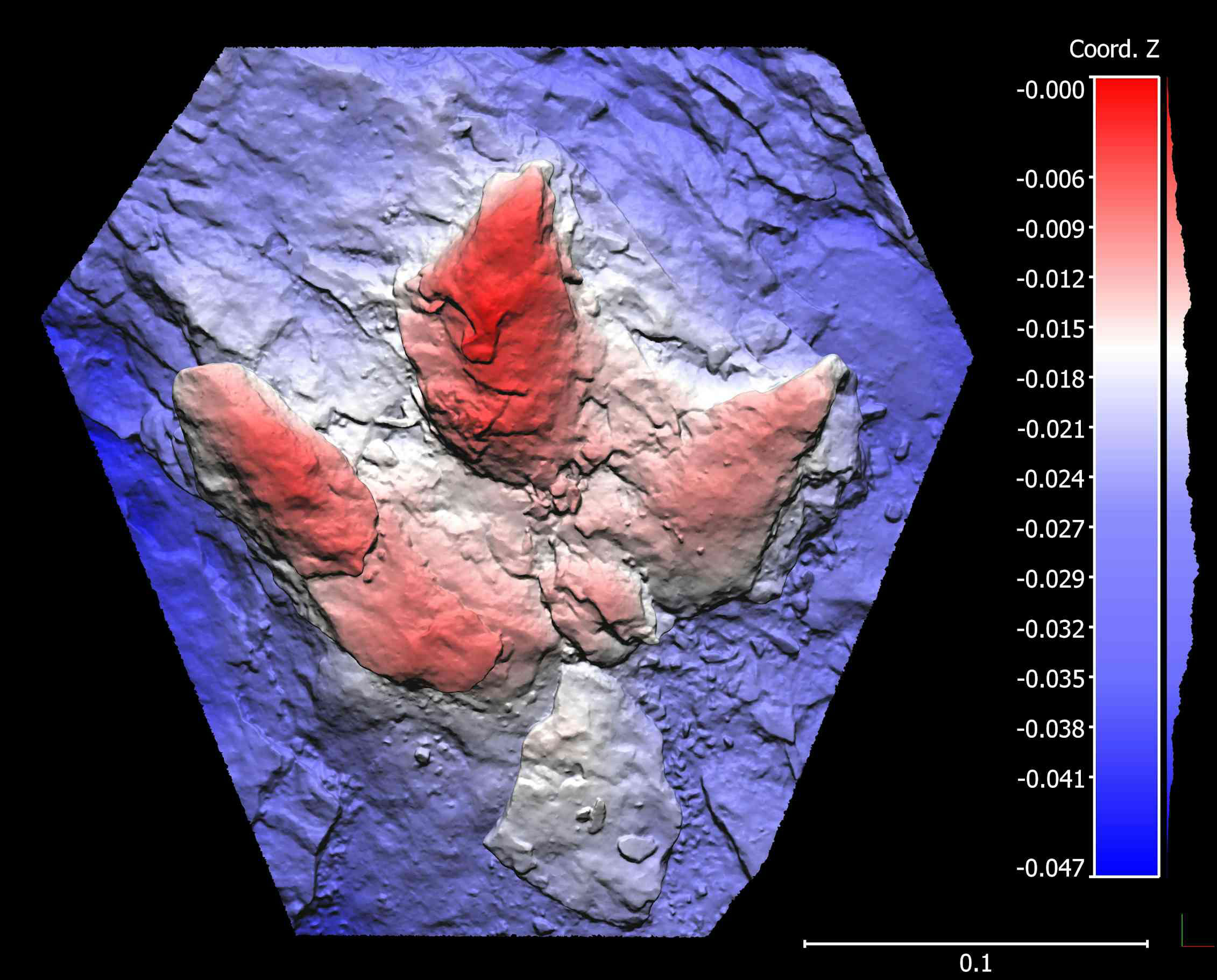
We also found some rare rounded tracks with four or five indistinct digits, which might belong to ankylosaurian (“armored”) dinosaurs.
The dinosaur tracks from the Marshybank Formation near Tumbler Ridge, which are mostly ornithopods, resemble a similar discovery from the contemporaneous Frontier Formation in southwestern Montana. They also have many elements in common with dinosaur fauna from the overlying Wapiti Formation (from 84 to 66 million years ago).
However, the ornithopod-dominated tracks of the Marshybank Formation differ markedly from those of the underlying Dunvegan Formation (97-95 million years ago) and Gates Formation (109-107 million years ago), which are dominated by ankylosaur tracks.
Flowering plants reshaped the food supply
Fossil plants in the Marshybank strata include gymnosperms (for example, conifers, cycads, and ginkgos), ferns, and horsetails. Most of the flora, however, are angiosperms (flowering plants) that may be distantly related to modern plane, poplar, and willow trees, plus laurel, buckthorn, soapberry, and low-growing shrubs and herbs.
Angiosperms evolved in tropical latitudes about 130 million years ago and spread rapidly to high latitudes, appearing in Alaska about 30 million years later.
Flowering plants provided a more nutritious and easily digested source of food than conifers, cycads, and ferns. They were also faster-growing and better able to recover from cropping by dinosaurs.
The proliferation of the Coniacian herbivorous dinosaurs, particularly ornithopods, and the sustenance of the carnivores that preyed on them are, therefore, related to the diversification and dispersal of flowering plants.
Reference: “An upper Coniacian (Upper Cretaceous) dinosaur track record from a high-latitude delta plain setting, north-east British Columbia, Canada” by A. Guy Plint and Charles W. Helm, 24 July 2026, Historical Biology.
DOI: 10.1080/08912963.2026.2683023
This study is funded by the Natural Sciences and Engineering Research Council of Canada through multiple Discovery Grant cycles.
Adapted from an article originally published in The Conversation.
Never miss a breakthrough: Join the SciTechDaily newsletter.
Follow us on Google and Google News.