
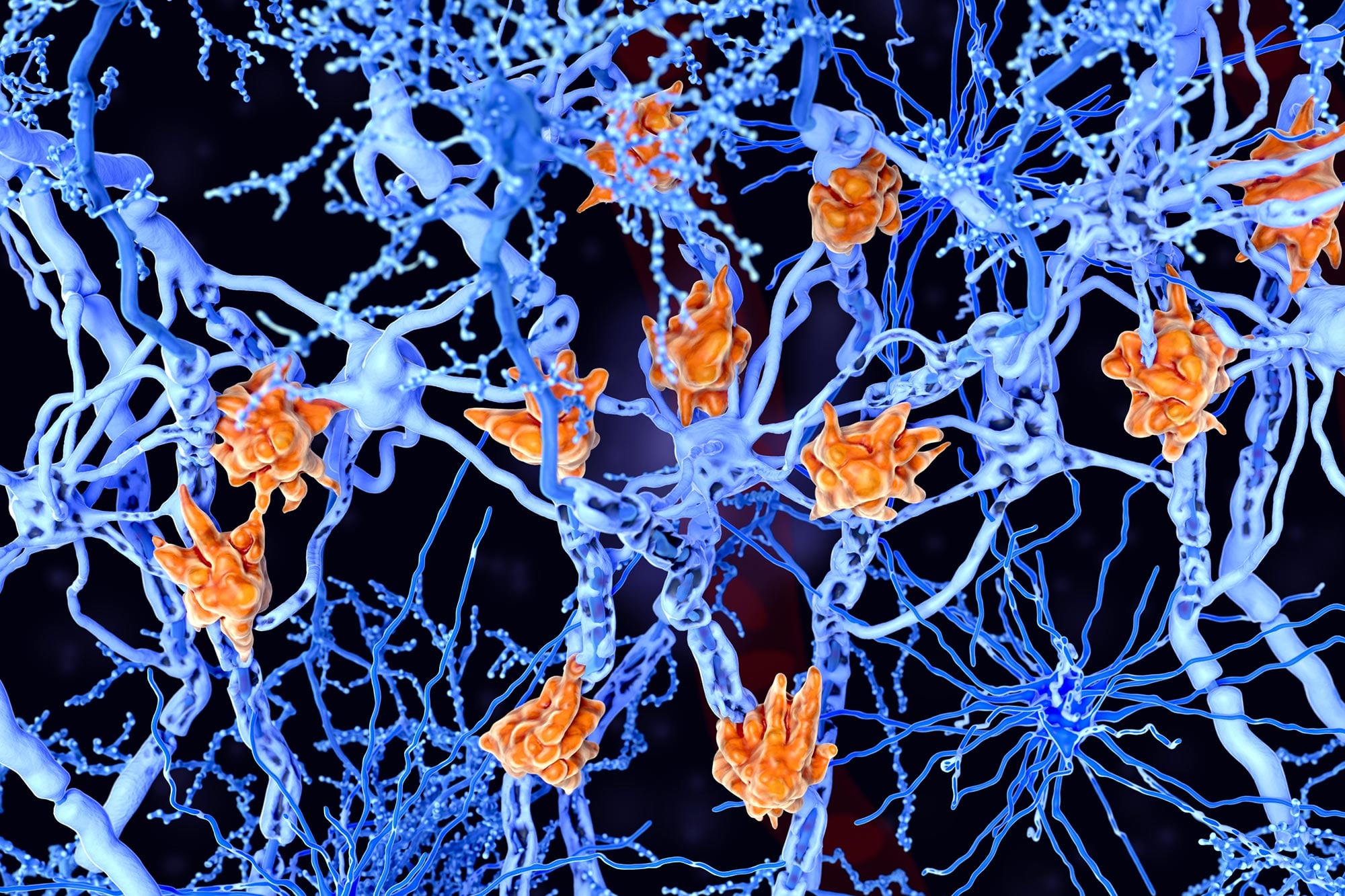
An experimental drug reversed paralysis and vision loss in mice with a multiple sclerosis-like disease while also preserving nerve tissue.
For the nearly one million Americans living with multiple sclerosis, current treatments offer ways to slow the disease and reduce flare-ups, but they cannot restore neurological function once it is lost. The condition typically strikes between ages 20 and 40 when immune cells mistakenly attack myelin, the protective sheaths that insulate nerves.
This harmful inflammation disrupts communication between the brain and the body, leading to vision loss, extreme fatigue, and progressive weakness. The autoimmune disorder varies greatly from patient to patient, but it ultimately reduces average life expectancy by seven years. Now, an experimental drug called Kamuvudine K-9 has reversed paralysis and vision loss in mice with a model of the disease.
Some people with multiple sclerosis (MS) experience long periods of remission, while severe cases can bring life-threatening complications. Doctors categorize the disease according to patients’ symptoms and relapses, reflecting the different courses it can take. Despite the benefits of available treatments, MS has no cure and remains the most common disabling neurological disease among young adults.
HIV drugs linked to lower MS risk
K-9 grew out of a discovery involving approved HIV medicines called nucleoside/nucleotide reverse transcriptase inhibitors, or NRTIs. UVA Health scientist Jayakrishna Ambati, MD, found that these drugs can block inflammasome activation, a process that drives inflammation. That finding prompted him to develop K-9, a derivative that appears safer and more effective than the drugs it came from.

Health records provided evidence that NRTIs might also affect MS. In a new paper, Ambati’s team reports an analysis of health insurance data from more than 3 million people. NRTI use was associated with a 41% lower risk of developing MS and, among people who already had the disease, a 36% lower annual relapse rate. Those associations concern the HIV medicines from which K-9 was derived, rather than K-9 itself.
Movement and vision return in mice
The mouse experiments allowed the researchers to examine K-9’s effects on both neurological function and the nerve tissue damaged by MS. Alongside the recovery of movement and vision, the drug preserved nerve fibers and their myelin insulation. It also halted the rise in neurofilament light chain (NfL), a blood marker of nerve damage. Animals given an approved MS drug in the same experiments recovered much less function than those receiving K-9.
“Most MS therapies are aimed at preventing the next attack. What’s remarkable is that K-9 not only prevented further neurological deterioration, but animals recovered function they had already lost,” said Ambati, founding director of UVA’s Center for Advanced Vision Science and the DuPont Guerry III Professor in the UVA School of Medicine’s Department of Ophthalmology. “When that recovery is considered together with the preservation of nerve tissue, the NfL response and the human epidemiologic findings, we believe there is a compelling rationale to test this approach in patients.”
Can K-9 restore function in people?
K-9 remains experimental for MS, and controlled clinical trials will be required to determine whether it can produce similar recovery in people. The drug has already entered trials for eye diseases, including diabetic macular edema and thyroid eye disease, and that clinical experience could help accelerate its evaluation for MS.
Because inflammasome activation and damage to axons, the nerve fibers that carry signals, are implicated in other neurodegenerative diseases, the researchers hope their findings will also inform work beyond MS. K-9 is slated to be tested for amyotrophic lateral sclerosis (ALS).
“Inflammasome inhibition is now recognized as the cutting edge of therapies for multiple inflammatory diseases,” Ambati said. “K-9 and the related K-8, which has already shown remarkable efficacy in macular degeneration, could also be beneficial in other diseases such as Alzheimer’s disease and Parkinson’s disease.”
Reference: “The nucleoside analog kamuvudine-9 shows protective and therapeutic efficacy in a mouse model of multiple sclerosis” by Praveen Yerramothu, Kameshwari Ambati, Joseph Magagnoli, Meenakshi Ambati, Thendral Velmurugan, Dijing Yu, Jing Zhang, Jingjing Zhang, Tammy Cummings, Joseph Nguyen, Claire C. Thomas, Vidya L. Ambati, Kaitlyn Cheng, Maksud Juraev, Roshni Dholkawala, Felipe Pereira, Peirong Huang, Ayami Nagasaka, Yosuke Nagasaka, Madhuri Rudraraju, Ashley Ban, Ivana Apicella, Xiaoyu Cai, Ranjith Konduri, Rhea Zahir, Elizabeth Frost, John Lukens, Ruwen Yin, Frederick Brøndsted, Cliff I. Stains, Makoto Ono, Brian P. Delisle, Jamie Horn, Markos Leggas, Jeffrey L. Dupree, S. Scott Sutton, Bradley D. Gelfand, Shao-bin Wang and Jayakrishna Ambati, 23 September 2026, Science Translational Medicine.
DOI: 10.1126/scitranslmed.aei2870
The research was supported by the UVA Strategic Investment Fund, grant 167; the National Institutes of Health, grants R01EY028027, R01EY029799, R01EY031039, R01AG078892, R01AG082108, R01EY028027, R01EY031039, R01AG078892, R01AG082108, R01EY032512, R01DA054992 and R35GM148221; the DuPont Guerry III Professorship; and a gift from Mr. and Mrs. Eli W. Tullis.
Never miss a breakthrough: Join the SciTechDaily newsletter.
Follow us on Google and Google News.