
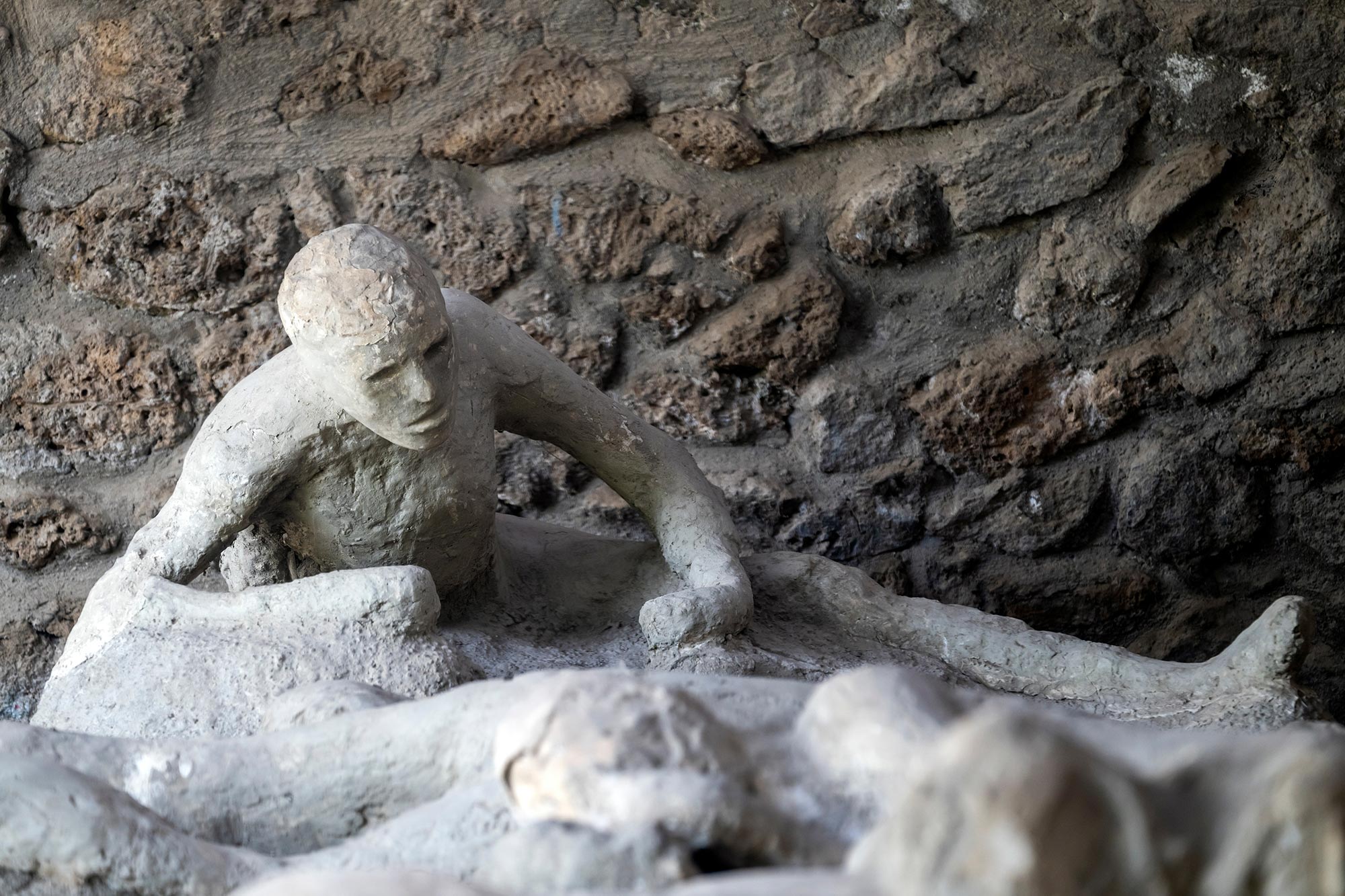
A nearly 2,000-year-old volcanic disaster is helping scientists refine the clocks used to reconstruct Earth’s history.
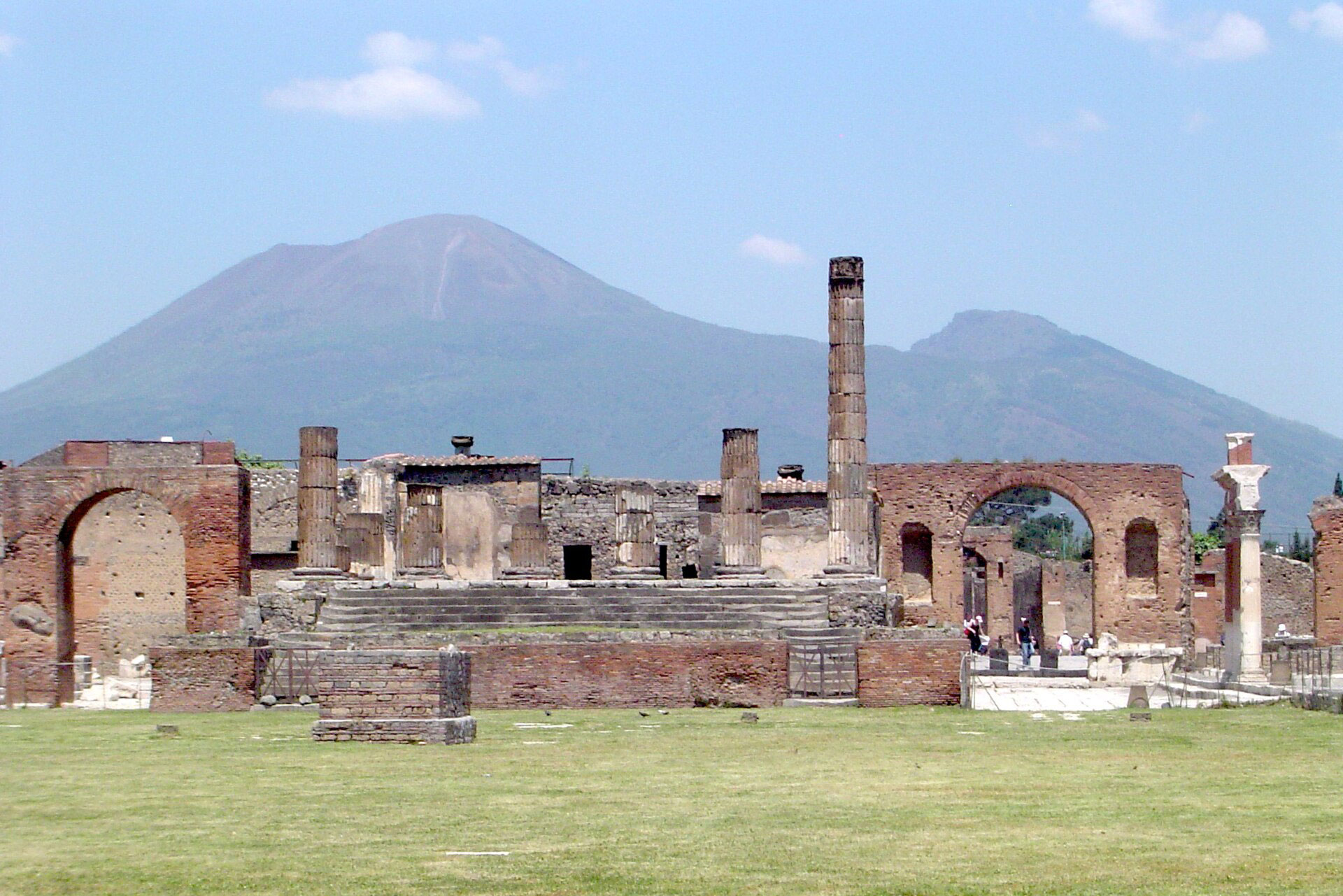
Nearly 2,000 years after Mount Vesuvius buried Pompeii, the eruption is serving as a calibration point for one of geology’s most widely used dating methods.
The key is that the disaster occurred within recorded history. Pliny the Younger described the eruption that killed his uncle, Pliny the Elder, and later historical analysis placed the event around August 24, 79 CE. That unusually precise historical reference gives scientists a rare opportunity to test whether a radiometric clock produces the correct age.
A Historical Date Becomes a Scientific Benchmark
Researchers from the Berkeley Geochronology Center, UC Berkeley, and the University of Padua in Italy have now used Vesuvius to refine argon-argon dating. In a study to be published in Science Advances, they report substantially improved precision for the technique, which is used to determine the ages of volcanic rocks and reconstruct events across geologic time.
The advance could improve timelines for past eruptions, including those from volcanic systems near heavily populated areas such as Naples, Mexico City, and Yogyakarta, Indonesia. It could also strengthen comparisons among different dating systems, including radiocarbon dating for relatively young organic material and uranium-lead dating for rocks that can be billions of years old.
“If you want to put together the eruptive history of a volcano in relatively recent time, precision and accuracy really count,” said study leader Paul Renne, a Berkeley professor in residence of earth and planetary science and director of the independent Berkeley Geochronology Center. “The study shows that you can achieve that kind of highly useful precision and accuracy into the historical realm.”

Measuring Precision Against a Known Eruption
Precision and accuracy describe different qualities of a measurement. Precision refers to how consistently a method can reproduce a result, while accuracy describes how closely that result matches the true value.
The team analyzed eight samples of sanidine, a potassium-rich volcanic mineral from the Vesuvius eruption. The recalibrated argon-argon method dated the samples to 1,938 ±13 years before they were measured in 2025. Based on the historical eruption date, the minerals were 1,946 years old. That corresponds to a precision of 0.7% and an accuracy of 0.4%.
“This lets us more precisely infer causality between events in the geologic record, for example, a meteor impact structure and a mass extinction,” Renne said.
Untangling Events Separated by Thousands of Years
That level of timing can matter when researchers are trying to determine whether major events separated by only thousands or tens of thousands of years may be related. About a decade ago, Renne used argon-argon dating to constrain the timing of the asteroid impact at the end of the Cretaceous Period, enormous volcanic eruptions in India, and the extinction of non-avian dinosaurs about 66 million years ago.
The resulting chronology bolstered the idea that the impact may have intensified volcanic activity, with both events contributing to the extinction. Establishing the order and spacing of such events depends on dating methods with uncertainties small enough to distinguish processes that occur close together in geologic time.
Graduate student Caroline Hasler also revisited the historical evidence for the Vesuvius eruption. Her analysis supported the August 24 date attributed to Pliny the Younger within an uncertainty of about two months.
Refining the Half-Life of Potassium-40
That historical constraint allowed the researchers to refine another fundamental quantity: the half-life of potassium-40 as it decays to argon-40. The team calculated a half-life of 12.044 billion years, with an uncertainty of 0.088 billion years. According to the researchers, that estimate is about twice as precise as the previous value derived from nuclear physics.
Renne’s group had already tried to use Vesuvius as a calibration standard. In a 1997 analysis, the team dated sanidine from pumice produced by the 79 CE eruption and concluded that precision below 1% should eventually be possible.
The new work reaches that threshold through a combination of improved samples, a more capable mass spectrometer, and updated neutron irradiation methods.
How Argon-Argon Dating Works
Argon-argon dating is based on the radioactive decay of potassium-40 into argon-40. Argon is a gas and is generally not retained in molten rock before it cools and crystallizes, so the argon that accumulates afterward can act as a record of elapsed time.
In the laboratory, researchers irradiate a sample with neutrons, converting stable potassium-39 into argon-39. They then measure the ratio of argon-40 to argon-39. Because the amount of potassium can be inferred from the produced argon-39, the ratio provides a way to calculate how long radioactive decay has been occurring. A greater proportion of argon-40 generally indicates an older sample.
Decades-Old Pumice Provides Better Material
The improved Vesuvius measurements depended in part on pumice collected decades earlier. In 1998, co-author Andrea Marzoli of the University of Padua obtained potassium-rich samples from Oplontis, another Roman settlement buried during the eruption.
Those samples came from deposits produced early in the eruption. Magma reservoirs beneath stratovolcanoes such as Vesuvius can become chemically layered, with elements distributed unevenly through the molten rock. Potassium can become concentrated toward the upper part of a reservoir, allowing potassium-rich magma to erupt early and settle into lower layers of the resulting ash and pumice deposits.
Marzoli’s samples came from those lower deposits and contained more potassium than material used in the earlier study, making them particularly useful for argon-argon analysis.
Revisiting Samples That Sat Unused for Years
They remained unanalyzed for years. More recently, graduate students Hasler, Anthony Fuentes, and Andy Tholt, working with postdoctoral fellow Jack Carter in Renne’s lab, proposed using the samples to improve on the 1997 measurements.
The effort also became part of a broader attempt to reconcile argon-argon dating with uranium-lead dating, another major method for establishing the ages of rocks. The two systems rely on different radioactive decay processes, so discrepancies between them can limit efforts to build a single, internally consistent timeline of Earth history.
“They came up with a Bayesian scheme — published in 2025 — to intercalibrate these two most important geochronometers that we have, which have not been giving us consistent results over the years,” Renne said.
Bringing Geological Clocks Into Better Agreement
The 1997 Vesuvius measurements were included in that earlier calibration effort, but their larger uncertainties limited how strongly they could influence the result. The new measurements provide a much tighter constraint.
“It was really just a combination of better samples, instrumental advantage and a more concerted effort. All of those things came together,” Renne added. He credits co-author Bill Cassata with a major role in developing the analytical strategy and data analysis.
Reexamining the Date of the Eruption
Before Vesuvius could serve as a historical benchmark, however, the team had to address a longstanding dispute over the eruption date. Some historians have argued for a later eruption in the fall of 79 CE, partly because of a coin found at Pompeii that has been interpreted as having been minted no earlier than September.
Hasler compared the artifact with other Roman coins from the same period and concluded that it was probably produced before September. The researchers still allowed for a two-month uncertainty in the eruption date.
That uncertainty had little effect on the overall calibration of the argon-argon method, but it mattered more when calculating the half-life of potassium-40, where the historical age served as a direct constraint.
Toward a More Consistent Timeline of Earth History
Renne said the improved argon-argon calibration could also help refine radiocarbon dating, the standard method for dating organic materials such as wood over roughly the past 55,000 years. Better agreement among independent dating systems can reduce discrepancies when researchers compare events recorded in different kinds of material.
“We’re hoping to really unify as many geologic dating methods as we can by using the same mathematics, the same Bayesian approach, and just bringing more data, more raw observations into that mix,” he said. “But argon-argon dating is always going to be a standard — it’s going to be an important calibrant in that sense.”
The Vesuvius results also establish a new benchmark for dating relatively recent eruptions with argon-argon methods. Under favorable conditions, the researchers report that events within the historical period can now be resolved with uncertainties on the scale of decades.
Reference: “Pliny the Younger advances geochronology” by Paul R. Renne, William S. Cassata, Caroline E. J. Hasler, Jack N. Carter, Anthony J. Fuentes, Andrew J. Tholt and Andrea Marzoli, 25 September 2026, Science Advances.
DOI: 10.1126/sciadv.aeg2624
The work was funded by the National Science Foundation (2102788, 2030393), the Ann and Gordon Getty Foundation and the Berkeley Geochronology Center.
Never miss a breakthrough: Join the SciTechDaily newsletter.
Follow us on Google and Google News.