
As glaciers retreat, steep Arctic fjords may face rising landslide-tsunami risks that could be reduced through better monitoring and faster warnings.
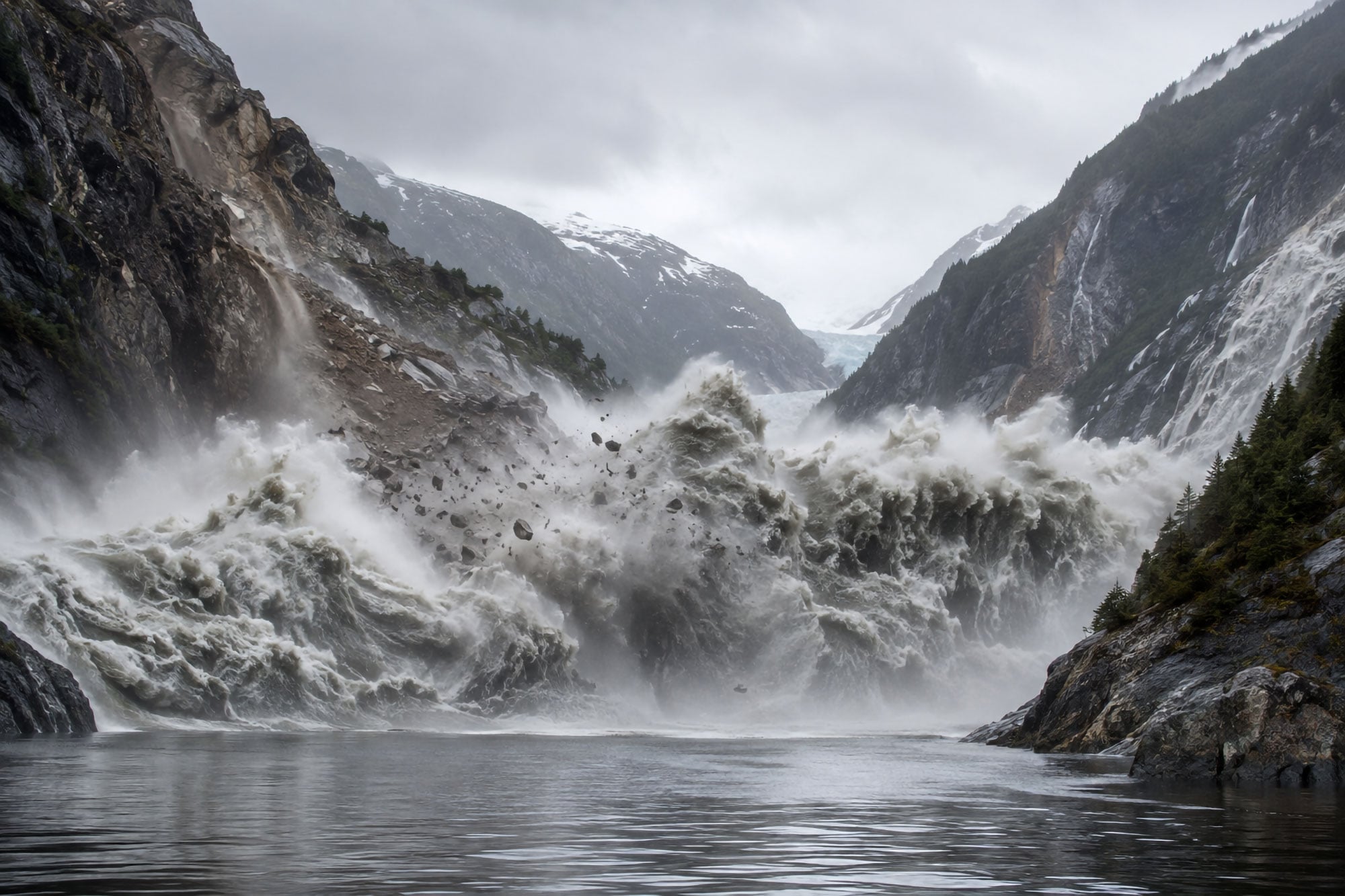
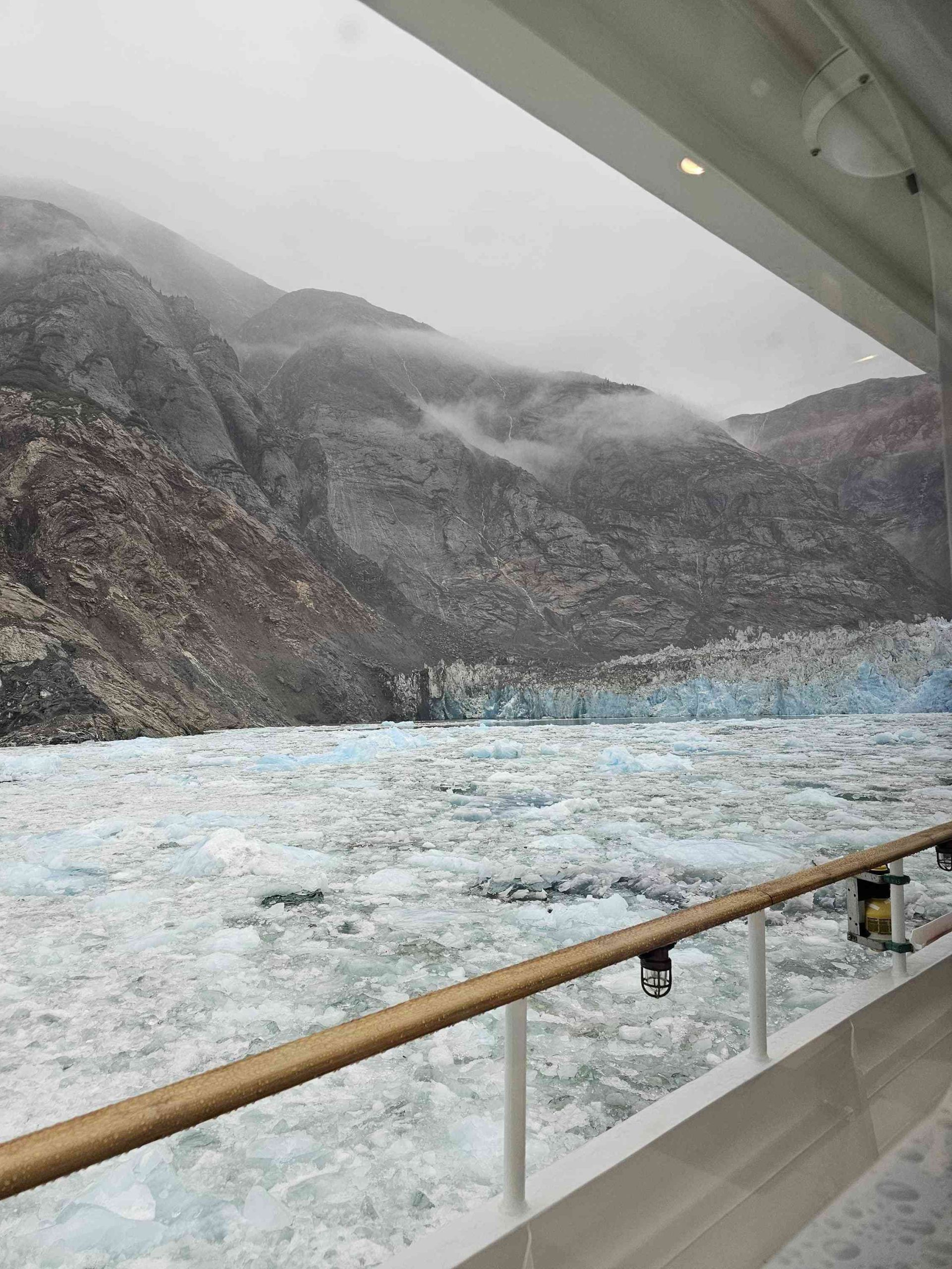
On the evening of August 9, 2025, passengers aboard the Hanse Explorer had just finished photographing and filming South Sawyer Glacier before the vessel began its trip back through the fjord. About 12 hours later, part of a nearby mountain suddenly collapsed into the water, triggering the second-highest tsunami ever recorded.
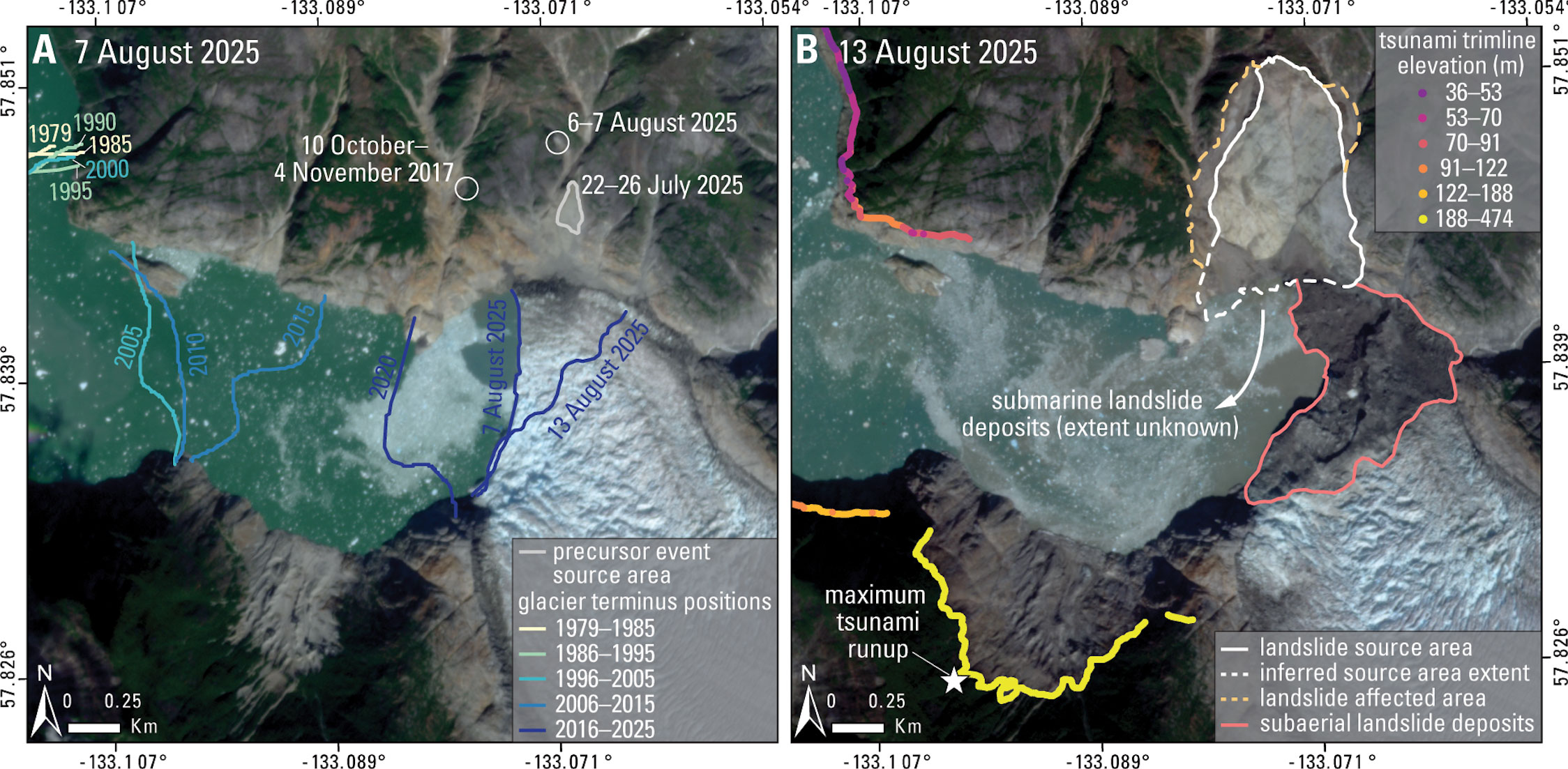
We study earthquakes and tsunamis at the Alaska Earthquake Center, and one of us is Alaska state seismologist. In a new study with colleagues, we describe how the landslide drove water and debris 1,580 feet (481 meters) up the opposite wall of the fjord, higher than the top floor of the Taipei 101 skyscraper, before surging onward through Tracy Arm. The wave was powerful enough to scour the fjord walls down to bare rock.
The collapse happened shortly after 5 o’clock in the morning on a gray, rainy day. Fortunately, no ships were in the area at the time. In the following months, some cruise lines began avoiding Tracy Arm. Still, the conditions that produced the disaster are not unique to this location.
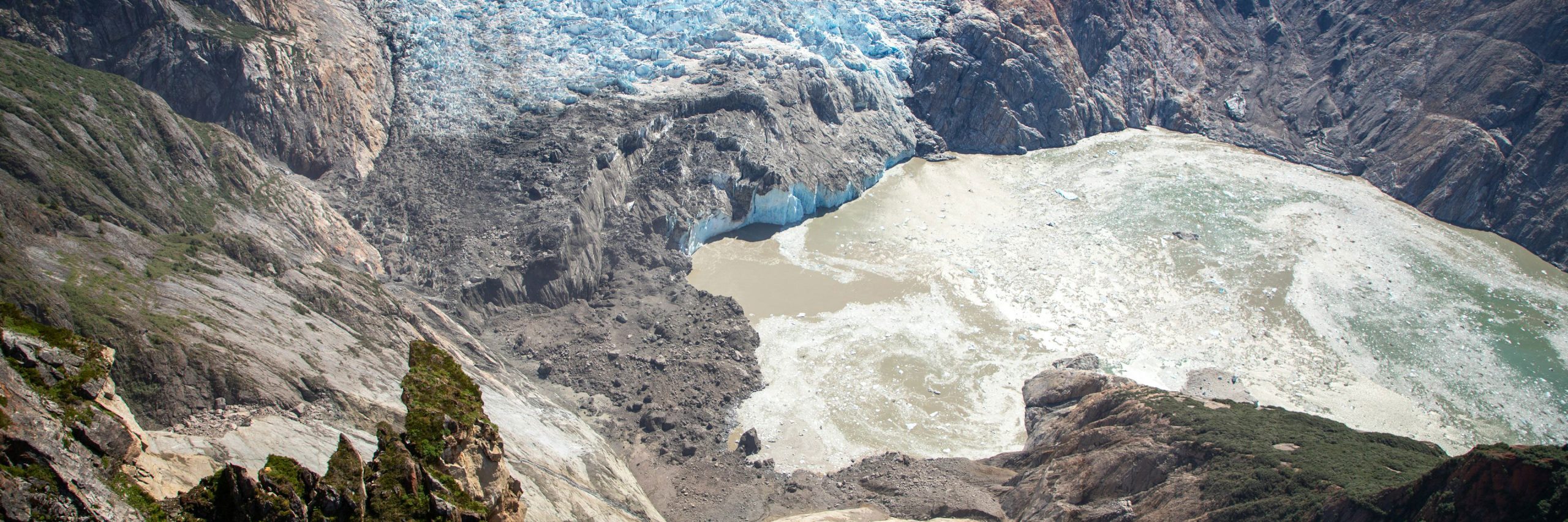
Landslides are a regular hazard in Alaska’s coastal mountains, where fast uplift from tectonic forces and long-term ice loss meet the wearing effects of rain, snow, and moving glaciers. In recent years, however, a striking pattern has appeared: Several major landslides have occurred exactly where a retreating glacier ends.
Though the mechanics are still poorly understood, these mountains appear to become unstable when the ice disappears. When the landslide hits the water, the momentum of millions of tons of rock is transferred into tsunami waves.
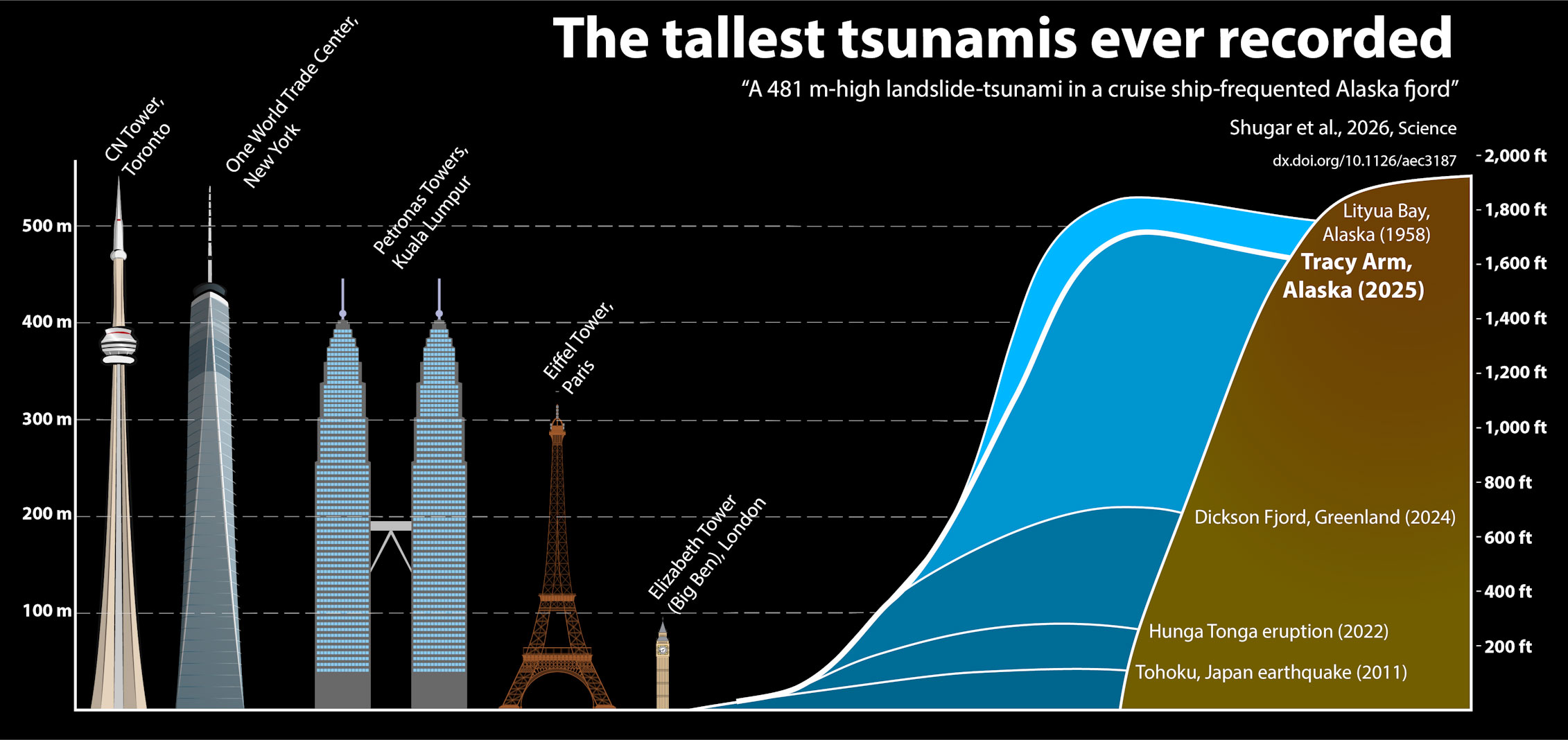
This same phenomenon is playing out from Alaska to Greenland and Norway, sometimes with deadly consequences. Across the Arctic, countries are trying to come to terms with this growing hazard. The options are not attractive: avoid vast swaths of coastline, or live with a poorly understood risk. We believe there is an obvious role for alert systems, but only if scientists have a better understanding of where and when landslides are likely to occur.
Signs that a landslide might be coming
The Tracy Arm landslide is a powerful example.
The landslide occurred in August, when warm ocean waters and heavier precipitation favor both glacier retreat and slope failure. The glacier below the landslide area had experienced rapid calving – large chunks of ice breaking off and falling into the water – and it had retreated more than a third of a mile in the two months prior. Heavy rain had been falling. Rain enters fractures in the mountain and pushes them closer to failure by increasing the water pressure in cracks.
Most provocative are the thousands of small seismic tremors that emanated from the area of the slide in the days prior to the mountainside collapsing.
We believe that this combination of signs would have been sufficient to issue progressive alerts to any ships in the vicinity and homes and businesses that could have been harmed by a tsunami at least a day prior to the failure – had a monitoring program existed.
The last view of Tracy Arm, taken from the Hanse Explorer motoring away from the South Sawyer glacier, before a landslide from a mountain just out of view on the left crashed into the fjord. The landslide generated a tsunami that sent a wave nearly 1,600 feet (about 490 meters) up the mountain on the right. Credit: Alaska Earthquake Center
Escalating alerts are used for everything from terrorism and nuclear plant safety to avalanches and volcanic unrest. They don’t remove the risk, but they do make it easier for people to safely coexist with hazards.
For example, though people are still killed in avalanches, alert systems have played an essential role in making winter backcountry travel safer for more people. The collapse at Tracy Arm demonstrates what could be possible for landslides.
What an alert system could look like
We believe that the combination of weather and rapid glacier retreat in early August 2025 was likely sufficient to issue an alert notifying people that the hazard may be temporarily elevated in a general area. On a yellow-orange-red scale, this would be a yellow alert.
In the hours prior to the landslide, the exponential increase in seismic events and telltale transition to what is known as seismic tremor – a continuous “hum” of seismic energy – were sufficient to communicate a time-sensitive warning for a specific region.
These observations, recorded as a byproduct of regional earthquake monitoring, warranted an “orange” alert noting immediate concern. The signs were arguably sufficient to recommend keeping boats and ships out of the fjord.
Our research over the past few years has demonstrated that once a large landslide has started, it is possible to detect and measure the event within a couple of minutes. In this amount of time, seismic waves in the surrounding area can indicate the rough size of the landslide and whether it occurred near open water.
A monitoring program that could quickly communicate this would be able to issue a red alert, signaling an event in progress.
The National Oceanic and Atmospheric Administration’s tsunami warning program has spent decades fine-tuning rapid message dissemination. A warning system would have offered little help for ships in the immediate vicinity, but it could have provided perhaps 10 minutes of warning for those who rode out the harrowing tsunami farther away.
There is no landslide monitoring system operating yet at this scale in the U.S. Building one will require cooperation across state and federal agencies, and strengthened monitoring and communication networks. Even then, it will not be fail-proof.
Seismic data from the closest monitoring station to the landslide, about 60 miles (100 kilometers) away, shows the “hum” of seismic energy increasing just ahead of the landslide, indicated by the tall yellow spike shortly after 5 a.m. Credit: Alaska Earthquake Center.
Understanding risk, not removing it
Alert systems do not remove the risk entirely, but they are a better option than no warning at all. Over time, they also build awareness as communities and visitors get used to thinking about these hazards.
Many of the most alluring places on Earth come with significant hazards. Arctic fjords are among them. The same processes that create this hazard – glacier retreat, steep terrain, dynamic geology – are also what make these landscapes so compelling. The mix of glaciers, ice-choked waters and steep mountains is exactly what draws people to these places. People will continue to visit and experience them.
The question is not whether these places should be avoided altogether, but how to help people make more informed decisions. We believe that stronger geophysical and meteorological monitoring, coupled with new research and communication channels, is the first step.
On Aug. 9, visitors unknowingly passed through a landscape on the cusp of failure. An alert system might have given tour companies and people in the area the information they needed to make more informed choices and avoid being caught by surprise.
Reference: “A 481-meter-high landslide-tsunami in a cruise ship–frequented Alaska fjord” by Dan H. Shugar, Katherine R. Barnhart, Mira Berdahl, Jacqueline Caplan-Auerbach, Göran Ekström, Aram Fathian, Marten Geertsema, Stephen P. Hicks, Bretwood Higman, Erin K. Jensen, Ezgi Karasözen, Patrick Lynett, John Lyons, Thomas Monahan, Gerard Roe, Kristian Svennevig, Liam Toney, Maximillian Van Wyk de Vries and Michael E. West, 6 May 2026, Science.
DOI: 10.1126/science.aec3187
Adapted from an article originally published in The Conversation.
Never miss a breakthrough: Join the SciTechDaily newsletter.
Follow us on Google and Google News.
2 Comments
Simple physics. Oversteepened mountain slopes collapse when their support has disappeared.
Remember the catastrophe that dropped off Trisul or thereabouts in Pakistan? Remember the recent catastrophic collapse in Nepal? Melting hanging glaciers fall off oversteepened mountains. Then oversteepened mountains fall off oversteepened mountains. I learnt that in the New Zealand mountains around Mt Cook 54 years ago where ice freezes the shattered greywacke together. Until the ice melts.
Why does this remind me of Nepal? Has anyone made the connection? Is permafrost involved at all or is it rock, and rock alone? Cracks in the rocks with water running in and expanding them may do the same thing, the one difference being that it goes into the ocean rather than hitting villages (if we are only thinking in terms of human mortality). Whichever, couldn’t Nepal and Alaska use the same mechanisms to allow for alerts?