
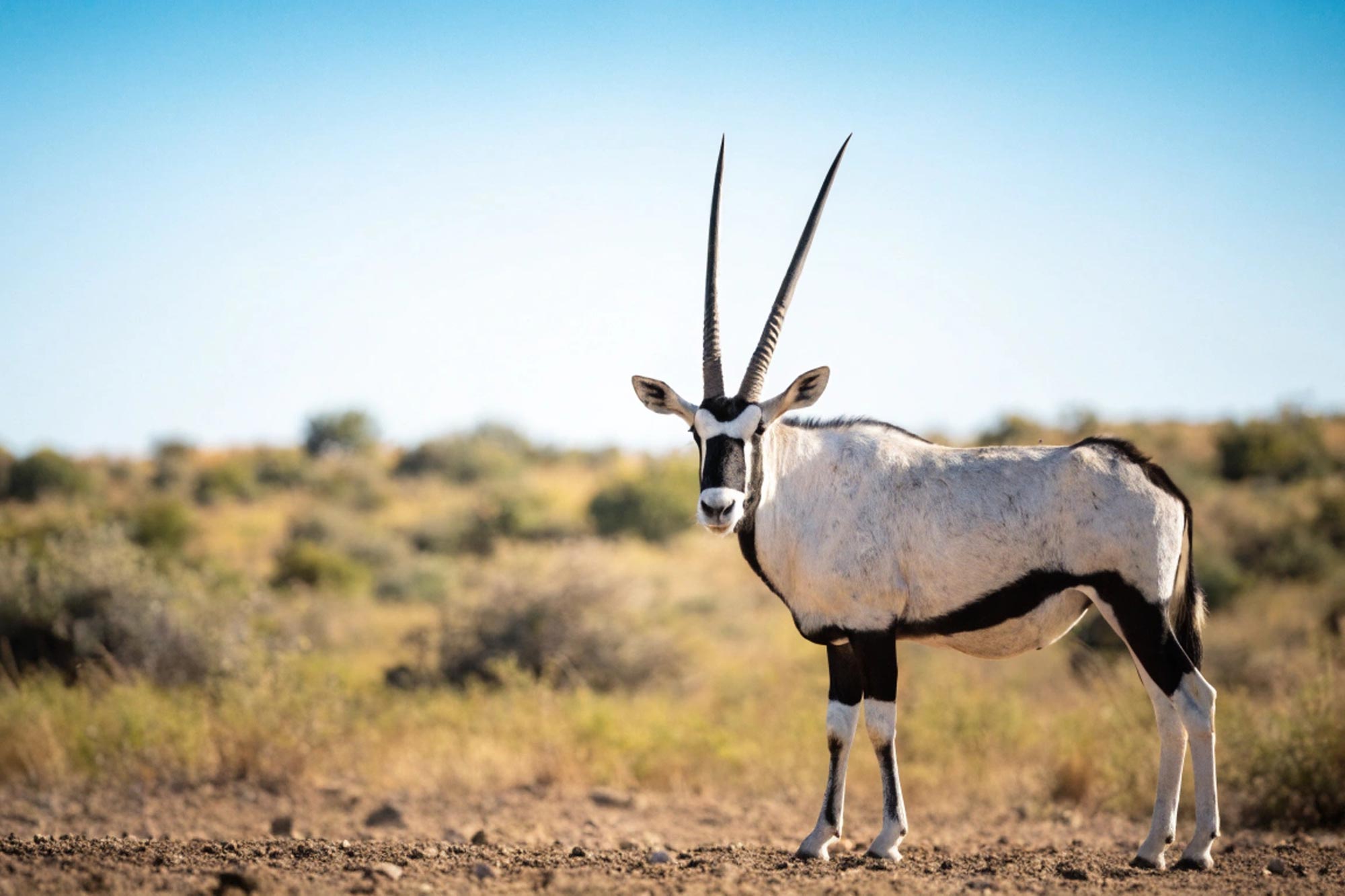
Climate change could give African antelopes an edge in the American West, with native wildlife facing tougher competition when drought leaves less to eat.
An antelope native to southern Africa’s Kalahari Desert has found a foothold in New Mexico’s dry rangelands, and climate change could give it far more of the American West to roam. Gemsbok were brought to the state for hunting in the 1960s and 1970s and have since spread more than 100 kilometers, or about 62 miles, from their release point.
A new study by researchers at the University of Illinois Urbana-Champaign suggests that suitable habitat could expand well beyond New Mexico by 2100, reaching into Texas, Arizona, Utah, California, and even southern Washington and Montana. The same adaptations that help gemsbok survive in arid country could give them an advantage over native wildlife as those conditions become more widespread, raising concerns about the animals and grasslands that would have to support growing herds.
“Gemsbok are famous for being really well adapted to heat and drought. In addition to other heat adaptations, they can get all of their water from plants, so they don’t really need to drink. That’s really unusual for animals that big — they can weigh 450 pounds. They’re the poster species for dealing with the kind of changes we’re going to see in the Southwest,” said study co-author Bob Schooley, professor and head of the university’s Department of Natural Resources and Environmental Sciences, or NRES.
Connected habitats could help gemsbok spread
The researchers built their forecasts around the places gemsbok already inhabit. For each recorded location, they examined precipitation, temperature seasonality, vegetation cover, terrain ruggedness, and human population density to identify the combination of conditions associated with the animals’ presence. People sharing wildlife photographs online supplied the sightings that made this analysis possible.
“We turned towards participant science to do this work. When people contribute photos to apps like iNaturalist, the occurrence records get scraped into something called the Global Biodiversity Information Facility. From that, we were able to use a statistical method called Maxent to find habitat associations for gemsbok,” said lead author Nathan Alexander. He began the research as a doctoral student in NRES, part of the College of Agricultural, Consumer and Environmental Sciences at Illinois, and is now a postdoctoral scholar at Southern Illinois University.
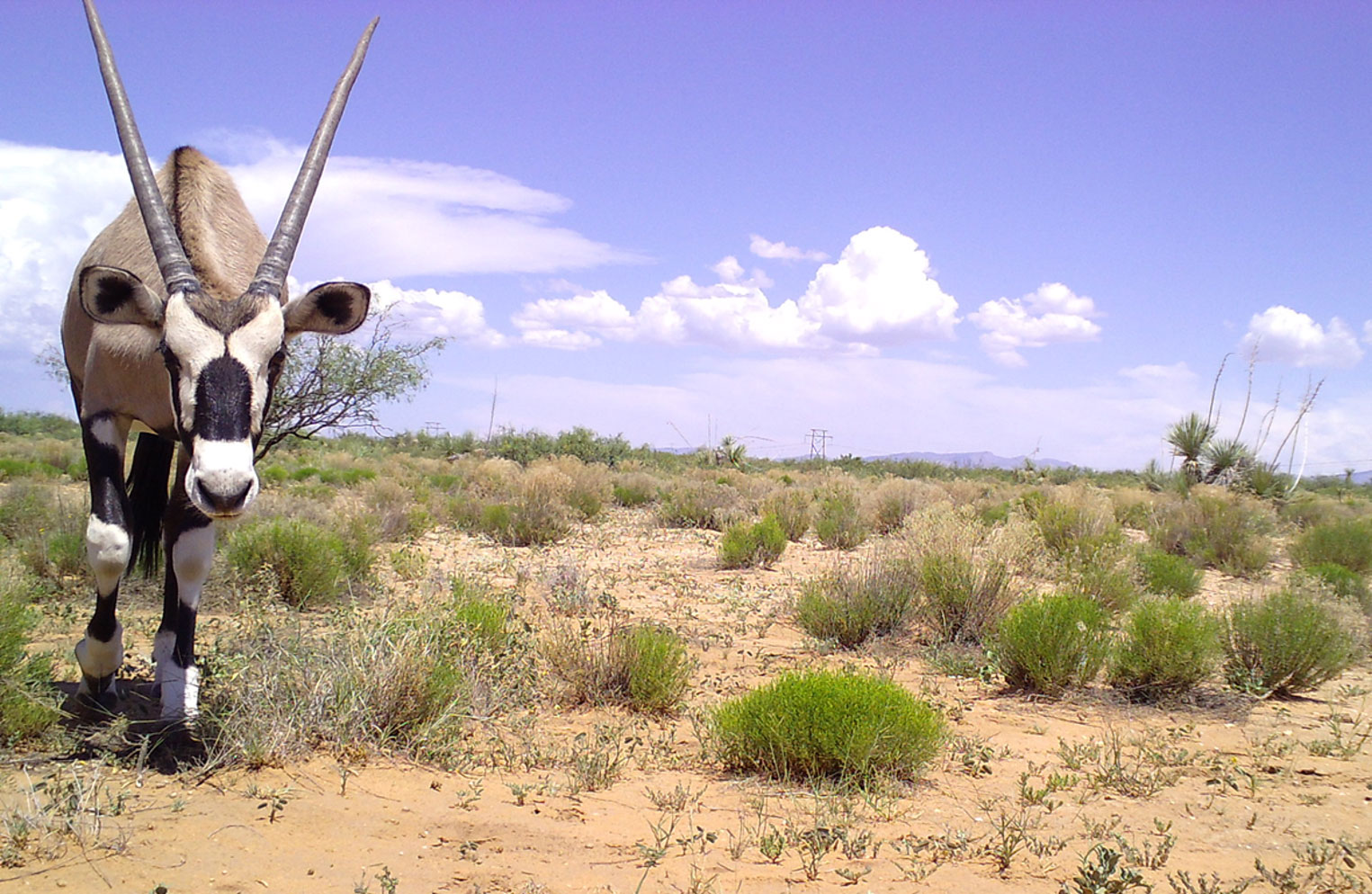
Using those habitat associations, the team searched for similar environments elsewhere and projected where they could occur under future climate scenarios. The resulting maps suggest that gemsbok could gain more than additional land to occupy. Areas that are currently separated could become connected, potentially making it easier for the animals to move between them.
“When there are these isolated patches, there might be dispersal barriers that they can’t cross to get to the next patch. But when these patches coalesce and connect, there might be increased opportunities for gemsbok to invade and expand into these novel habitats. We see this particularly in western Texas, but also into western New Mexico and up into Arizona, and even some regions of California, like Death Valley,” said Kieran Andreoni. He began the research as a master’s student in NRES and is now conservation director at the Southern Plains Land Trust in Colorado.
When cattle leave, gemsbok keep grazing
Gemsbok would still have to reach that territory and establish populations for the projected habitat expansion to translate into a wider occupied range. If they do, larger herds could consume more of the forage that cattle and native grazers such as pronghorn and bison depend on, leaving less food to go around.
“Along with that diet overlap, gemsbok are able to forage on lower quality plant materials than some of our native species,” Alexander said. “So in drought years, we could imagine our native species might be a little bit more stressed and nutrient deficient, whereas the gemsbok are going to be able to move to less nutrient-rich plant material and still be able to persist in the environment.”
Gemsbok also left their natural predators, lions and hyenas, behind in Africa. Coyotes and mountain lions in the Southwest kill far fewer of the antelopes, according to Schooley. With relatively little pressure from predators and the ability to keep feeding as forage quality declines, growing herds could continue grazing land that is already struggling through drought.
“These desert rangelands are often used for cattle grazing. When there’s a severe drought, they pull the cattle off the landscape because there’s no food for them. Well, no one pulls the gemsbok off. Considering their ability to survive on low-quality forage, they could severely damage remaining grasslands. So I think that’s the kind of thing we worry about — what are the implications when they get to even larger numbers?” Schooley said.
Disease could follow expanding herds
Gemsbok in the Southwest have also tested positive for malignant catarrhal fever, bovine respiratory syncytial virus, and bovine para-influenza-3, all of concern to the cattle industry. Alexander said the antelopes could carry and spread diseases to domestic and native ungulates, or hoofed mammals, adding a potential disease risk to the competition for food.
Conservationists, ranchers, and hunting operations bring competing interests to decisions about gemsbok, making future population management difficult but critical, the researchers say. On New Mexico’s dry rangelands, and potentially far beyond them, keeping herds in check could help protect the food that cattle and native wildlife need when drought leaves less to share.
Reference: “Predicted range expansion of exotic Gemsbok (Oryx gazella) under climate change in the United States” by Nathan Alexander, Kieran J Andreoni and Robert L Schooley, 26 September 2026, Journal of Mammalogy.
DOI: 10.1093/jmammal/gyag083
Supported by the USDA National Institute of Food and Agriculture (Project 7006200) and the National Science Foundation (Jornada Basin Long Term Ecological Research Program, DEB 2025166 and DEB 2425143).
Never miss a breakthrough: Join the SciTechDaily newsletter.
Follow us on Google and Google News.