
Close Menu
    Facebook X (Twitter) Instagram
    SciTechDaily
    • Biology
    • Chemistry
    • Earth
    • Health
    • Physics
    • Science
    • Space
    • Technology
    Facebook X (Twitter) Pinterest YouTube RSS
    SciTechDaily
    Home»Biology»Climate Change Affects Australian Shrub
    Biology

    Climate Change Affects Australian Shrub

    By SciTechDailyJuly 4, 20121 Comment2 Mins Read
    Facebook Twitter Pinterest Telegram LinkedIn WhatsApp Email Reddit
    Share
    Facebook Twitter LinkedIn Pinterest Telegram Email Reddit
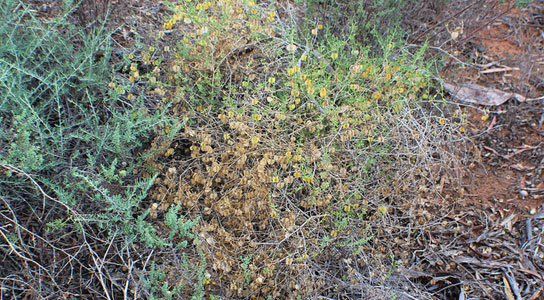
    south-australian-hopbush
    South Australia hopbush

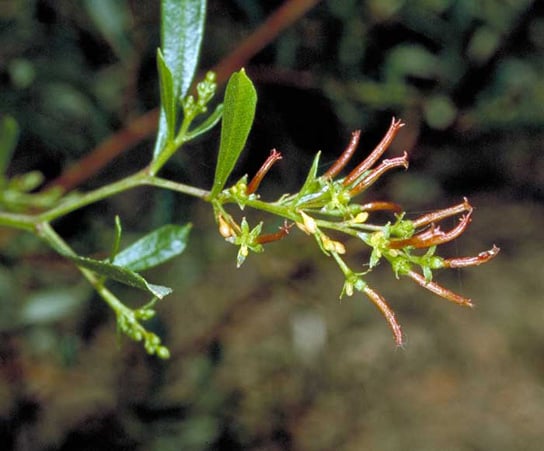
    While some mass media outlets are dismissing the obvious global climate change, nature isn’t. The hopbush (Dodonaea viscosa), the subspecies angustissima in South Australia, has lost width in its leaves by more than 2mm in the past 127 years, which is a 40% decrease.

    The findings were published in the journal Biology Letters. Other studies have documented these kinds of shifts in species ranges as well as the timing of natural cycles, like plant flowering and bird migration, all of a result of global warming. Few of those have demonstrated morphological adaptations to the climate change.
    dodonaea-viscosa

    Greg Guerin, an ecologist at the University of Adelaide in Australia, co-author of the study, states that the responses to climate change are happening right now, not in some distant future. Between 1950 and 2005, the average maximum temperature in South Australia increased by 1.2 °C (2.2 °F), which is more than the global average. There have been also several extreme droughts in this area.

    Guerin and his colleagues measured the hopbush plants across 600 km (370 mi) of latitude and 1 km (0.6 mi) of altitude. The closer the plants grew to the equator, the narrower their leaves were. After analyzing the leaf shape of 255 herbarium specimens of the same subspecies going back to the 1880s, the scientists found that the leaves had become narrower.

    Long, slender leaves reduce the amount of water lost from evaporation and gas exchange. The adaptive capability of the hopbush is indicative of its survivability at hotter temperatures. The researchers haven’t done specific genetic testing to determine whether the changes have an underlying genetic basis or whether the plants rely on a built-in plasticity that allows them to respond to the hotter temperatures.

    Guerin and his team plan on continuing to investigate these plants, and studying the leaf ecophysiology in much more detail.

    Reference: “Leaf morphology shift linked to climate change” by Greg R. Guerin, Haixia Wen and Andrew J. Lowe, 4 July 2012, Biology Letters.
    DOI: 10.1098/rsbl.2012.0458

    Never miss a breakthrough: Join the SciTechDaily newsletter.
    Follow us on Google and Google News.

    Climate Change Ecology Global Warming Plants
    Share. Facebook Twitter Pinterest LinkedIn Email Reddit

    Related Articles

    Insects Need Our Help – Now

    Monitoring Species Condemned to Extinction May Help Conservationists Save Others As Global Temperatures Rise

    New Climate Change Research: Future Too Warm for Baby Sharks

    American Pikas Far More Resilient in the Face of Global Warming Than Previously Believed

    Terrestrial Species Outpaced by Marine Species in the Race Against Global Warming

    Genetic Variability Supports Plant Survival During Droughts

    Biodiversity on Earth Increases With Global Warming

    Leaf Vein Architecture Allows Predictions of Past Climate

    Increased Number of Plant Species Responding to Global Warming

    1 Comment

    1. RedRaider on January 28, 2016 12:41 pm

      “While some mass media outlets are dismissing the obvious global climate change, nature isn’t. The hopbush (Dodonaea viscosa), the subspecies angustissima in South Australia, has lost width in its leaves by more than 2mm in the past 127 years, which is a 40% decrease.”

      If global warming has been happening for 127 years, since 1883, it can’t be being caused by people and that means this story can’t be true:

      “Politics – The Single Most Important Factor in Limiting Global Warming”
      https://scitechdaily.com/biggest-factor-to-limit-climate-change-is-politics/#comment-468114

      It can’t be true because politics, which is purely a human activity, could not have caused it in 1883 when you said it was happening 127 years ago.

      Reply
    Leave A Reply Cancel Reply

    • Facebook
    • Twitter
    • Pinterest
    • YouTube

    Don't Miss a Discovery

    Subscribe for the Latest in Science & Tech!

    Trending News

    Textbooks May Need Rewriting After Researchers Debunk a Core Chemistry Concept

    Alzheimer’s May Start With a Surprising Symptom – Not Memory Loss

    The “Hobbits” Mysteriously Disappeared 50,000 Years Ago – Scientists Have Revealed What Happened to Their Home

    One Sugar Tells Your Brain You’re Full. Another Barely Does

    One of Arizona’s Largest Reservoirs Is Less Than 1% Full After Snowpack Collapse

    This 400-Year-Old Shark May Hold the Secret to Preserving Human Vision

    Your Daily Orange Juice Could Have an Unexpected Health Benefit

    Black Hole Shredded a Massive Star in the Most Powerful Stellar Explosion Ever Seen

    Follow SciTechDaily
    • Facebook
    • Twitter
    • YouTube
    • Pinterest
    • Newsletter
    • RSS
    SciTech News
    • Biology News
    • Chemistry News
    • Earth News
    • Health News
    • Physics News
    • Science News
    • Space News
    • Technology News
    Recent Posts
    • Scientists Discover a 5-Million-Year-Old Whale Graveyard Deep Beneath the Indian Ocean
    • Ancient DNA Reveals the Hidden Origins of China’s Mysterious Shimao Civilization
    • Scientists Finally Solve a 50-Year Mystery Hidden in Solid Nitrogen
    • Saturn’s Largest Moon May Hold the Resources for a Space Colony
    • New Wearable Patch Boosts REM Sleep Without Drugs or Surgery
    Copyright © 1998 - 2026 SciTechDaily. All Rights Reserved.
    • Science News
    • About
    • Contact
    • Editorial Board
    • Privacy Policy
    • Terms of Use

    Type above and press Enter to search. Press Esc to cancel.