
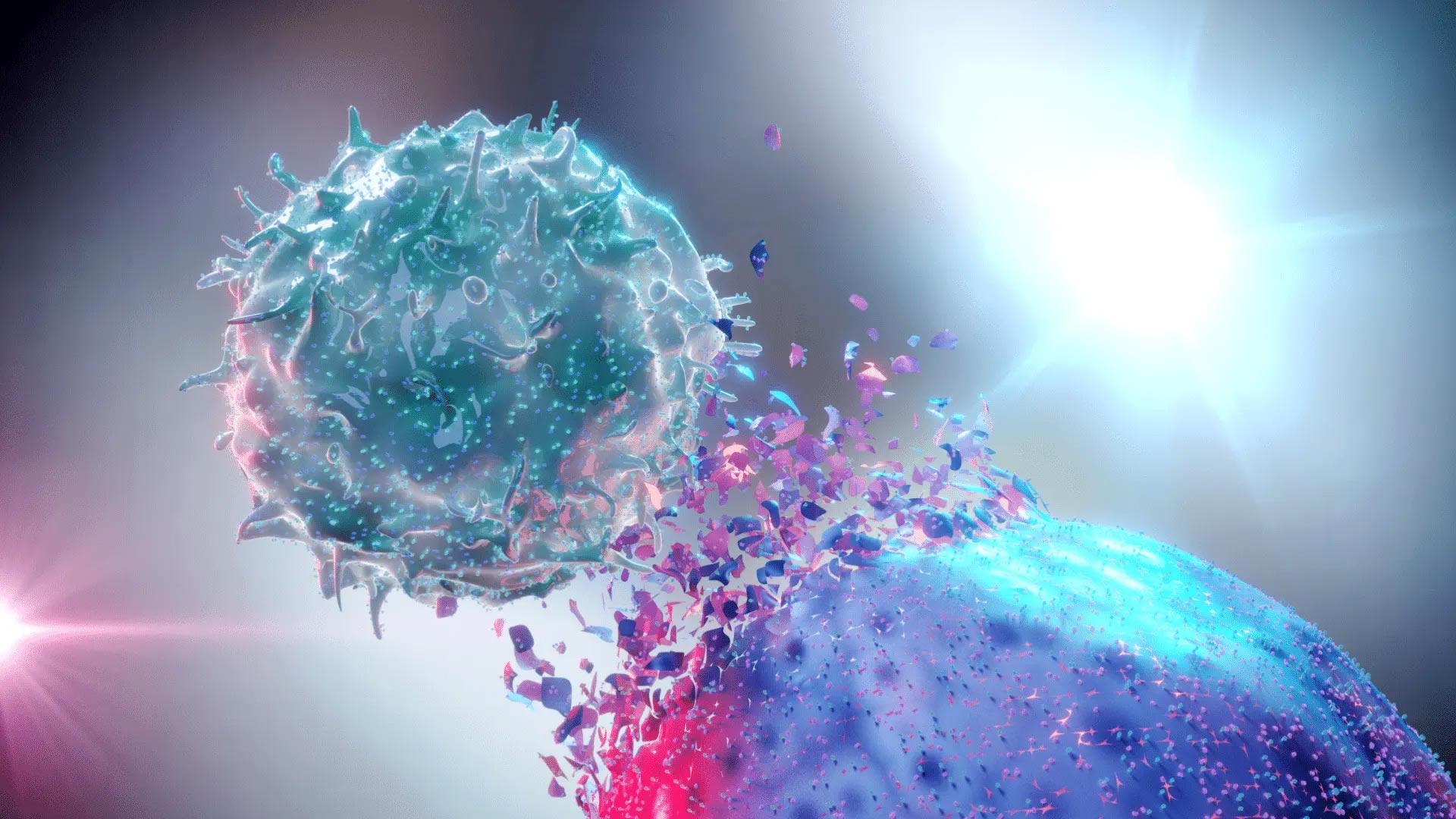
Earlier cancer studies may need a second look after researchers found that a drug acts mainly on an unexpected target.
An experimental cancer drug already being tested in patients appears to work mainly by blocking a different biological target from the one it was developed to inhibit. The finding emerged from brain cancer research that called into question how the drug, zavondemstat, and a closely related research compound, QC6352, produce their anticancer effects.
Both compounds were developed to treat cancers such as colorectal, pancreatic, and prostate cancer by targeting KDM4, a family of proteins that can help cancer cells grow and spread when overactive. The new investigation explored their potential against glioblastoma, the most common and aggressive form of brain cancer.
“We tested these compounds to investigate whether they could potentially be repurposed for glioblastoma treatment,” said lead author Professor Lenka Munoz of the University of Sydney School of Medical Sciences and Charles Perkins Centre.
“When we tested other KDM4 inhibitors, we found they did not reproduce the anti-cancer effects observed with QC6352.
“If blocking KDM4 was driving those effects, we would have expected the other inhibitors to behave similarly. Instead, the results suggested QC6352 was acting through a different mechanism.”
Cutting the supply of DNA building blocks
To trace that mechanism, the team used patient-derived glioblastoma stem cells, tumor models, and a series of genetic, mechanistic, and molecular experiments. The University of Sydney led the research in collaboration with Goethe University, Oxford University, and the Institute of Cancer Research, London. The results were published in Nature Chemical Biology.
“Our study found much of the anti-cancer activity of these compounds is driven by blocking DHODH rather than KDM4,” Munoz said.
DHODH is an enzyme that cancer cells rely on to produce molecules needed for rapid growth. Blocking it interferes with the supply of materials needed for DNA production.
“We can think of DHODH as a machine producing bricks needed to build new DNA. If you switch off the machine, the cell starts running out of bricks and can no longer efficiently copy its DNA and keep dividing,” Munoz said.
The findings point to DHODH inhibition as a possible approach to treating glioblastoma. Several drugs that target the enzyme are already being investigated for other cancers, raising the possibility that they could eventually be tested in patients with brain cancer. The current findings come from cells and tumor models, however, and do not establish that these drugs would benefit patients with glioblastoma.
Earlier KDM4 findings may need reinterpreting
The implications also extend to experiments that have used QC6352 to investigate what KDM4 does in cancer.
“Researchers around the world have used QC6352 as a leading tool to study KDM4 biology, while the related drug zavondemstat progressed into clinical trials based on the same understanding,” Munoz said.
If effects attributed to KDM4 inhibition were largely caused by blocking DHODH, earlier studies using QC6352 may need to be reinterpreted. To help researchers distinguish the two, the team developed new compounds that inhibit KDM4 without affecting DHODH. Those compounds could allow scientists to investigate KDM4’s role more accurately.
A mistaken target can misdirect trials
For zavondemstat’s ongoing clinical development, the findings raise questions about whether trials are being designed around the biological process responsible for much of the drug’s activity.
“Getting a drug’s mechanism wrong can lead to poorly designed clinical trials, inappropriate patient selection and years of research focused on the wrong biological target,” Munoz said.
“There are well-known examples of cancer drugs advancing through large clinical trials before researchers realized they were not working through the mechanism originally proposed.
“Our study shows this is not just a historical problem but one still happening today. Greater rigor is needed to ensure we understand exactly how potential treatments work before they move into clinical testing.
“Establishing a drug’s true mechanism early can protect patients, prevent wasted research effort, and help ensure what limited funding we have is directed towards genuinely promising treatments.”
Reference: “DHODH is the key target of the KDM4 inhibitor QC6352 in glioblastoma stem cells” by Jayden R. Sterling, Jacinda R. Holtsmark, George L. Joun, Matthew S. Graus, Tian Y. Du, Mani Kuchibhotla, Terrance G. Johns, Antoine deWeck, Lipin Loo, G. Gregory Neely, Karen Tran, Chloe Shard, Guillermo A. Gomez, Ashwini Patil, Diana D. Shi, Julie-Aurore Losman, Angus J. Saxton, Jennifer R. Baker, Zhihe Lei, Matthew T. O. Holland, Paul E. Brennan, Mathias Francois, Andreas Kraemer, Susanne Mueller, Yuchen Feng, Paul Workman and Lenka Munoz, 6 October 2026, Nature Chemical Biology.
DOI: 10.1038/s41589-026-02306-x
The study was funded by the National Health and Medical Research Council (NHMRC), Tour de Cure, and the Tim Trigg Scholarship into Glioblastoma Research.
Never miss a breakthrough: Join the SciTechDaily newsletter.
Follow us on Google and Google News.