
Close Menu
    Facebook X (Twitter) Instagram
    SciTechDaily
    • Biology
    • Chemistry
    • Earth
    • Health
    • Physics
    • Science
    • Space
    • Technology
    Facebook X (Twitter) Pinterest YouTube RSS
    SciTechDaily
    Home»Biology»Scientists Unlock the Secret of One of the World’s Smallest Flowering Plants
    Biology

    Scientists Unlock the Secret of One of the World’s Smallest Flowering Plants

    By University of NottinghamOctober 20, 2026No Comments3 Mins Read
    Facebook Twitter Pinterest Telegram LinkedIn WhatsApp Email Reddit
    Share
    Facebook Twitter LinkedIn Pinterest Telegram Email Reddit
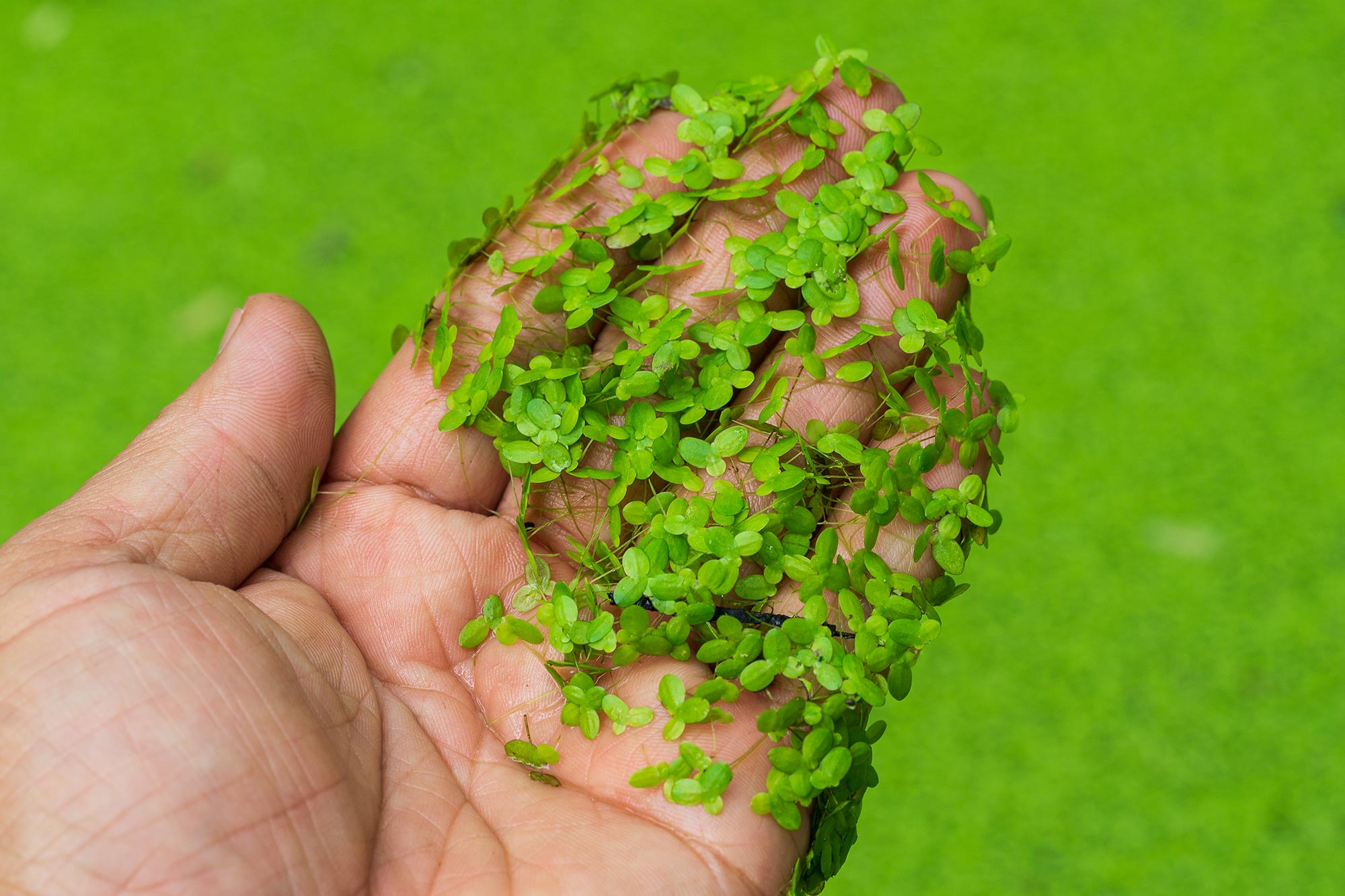
    Hand Holding Duckweed (Lemna perpusilla Torrey)
    Duckweed is one of the smallest flowering plants in the world, forming tiny green fronds that float on the surface of freshwater ponds and lakes. Credit: Shutterstock

    Tiny aquatic plants are attracting scientific attention for their untapped potential as future food sources, including for space missions.

    Some of the world’s smallest flowering plants have found a way to fit the basic architecture of much larger species into a body just a few millimeters (about 0.1 inch) across. Researchers at the University of Nottingham discovered that duckweed retains essential structures found in larger plant shoots, but these components are tightly compressed and fused rather than lost.

    Using advanced microscopy and gene expression analysis, the scientists examined how duckweed organizes its remarkably compact body. Their findings, published in Current Biology, challenge the assumption that extreme miniaturization necessarily involves losing parts of a plant’s original structure.

    Duckweed Pencil
    Duckweed on end of pencil. Credit: University of Nottingham

    How Duckweed Shrinks Without Losing Its Blueprint

    Dr. Anthony Bishopp, who led the research, explained: “We were interested to find out how a complete plant body plan can be packed into such a tiny space. While miniaturization in animals is often associated with the loss of organs or body structures, we have revealed that duckweeds have taken a different route.”

    “What surprised us is that, when we looked closely, the basic organization of the shoot was still there. Rather than throwing away parts of the blueprint, duckweed appears to have compressed and fused its components into an incredibly compact plant. That gives us a new way of thinking about how plants can evolve to become so small.”

    Tiny Plants With Potential for Future Food Production

    Despite their miniature size, duckweeds belong to a group of flowering plants whose relatives include some of the largest herbaceous species. Scientists are increasingly investigating duckweed as a potential source of food and protein, both on Earth and during future space missions.

    Unlike major agricultural crops, which have undergone thousands of years of domestication and selective breeding, duckweed remains largely unexplored as a cultivated food source. Its unusual anatomy has also been poorly understood, making it difficult to fully explain how the plant grows and develops. The new findings provide a foundation for investigating these processes and identifying traits that could eventually be improved for cultivation.

    Dr. Alex Ware, a co-author of the study, said: “Duckweeds are astonishingly small, so it is tempting to think of them as either primitive plants or simply as having lost parts, but this is not the case. Our research adds to growing evidence from across the research community about this plant and will help efforts to turn them into a future crop.”

    Reference: “Miniaturization of duckweeds occurred through compression of the angiosperm body plan” by Alexander Ware, Emily Chan, Rahul Bhosale and Anthony Bishopp, 7 October 2026, Current Biology.
    DOI: 10.1016/j.cub.2026.09.035

    Never miss a breakthrough: Join the SciTechDaily newsletter.
    Follow us on Google and Google News.

    Agriculture Botany Food Science Genetics Plant Science University of Nottingham
    Share. Facebook Twitter Pinterest LinkedIn Email Reddit

    Related Articles

    Lychee Genome Tells a Colorful Story About an Ancient Tropical Fruit

    Citrus Mystery: Juicy Past of Favorite Okinawan Fruit Revealed

    New and Improved CRISPR 3.0 System for Highly Efficient Gene Activation in Plants

    Predicting Effects of Genetic Mutations: For Tomato Genes, One Plus One Doesn’t Always Make Two

    Tomato’s Hidden DNA Mutations Revealed in Genetic Study of 100 Varieties

    Revealed: Plants Molecular ‘Alarm’ System That Protects Them From Predators

    Possible On/Off Switch for Plant Growth Identified

    Plants Harness ‘Bad’ Molecules for Good Ends – Here’s How

    Researcher Studies Root Growth to Develop Hardier, Weather-resistant Crops

    Leave A Reply Cancel Reply

    • Facebook
    • Twitter
    • Pinterest
    • YouTube

    Don't Miss a Discovery

    Subscribe for the Latest in Science & Tech!

    Trending News

    Scientists Simulated the Universe – And Discovered the Milky Way May Be One of the Best Places for Life

    “Something out of Science Fiction” – Astronomers Discover a Star That Glows a Bizarre Shade of Green

    Scientists Discover a Surprising New Effect of a Popular Blood Pressure Drug

    Scientists Discover a 99-Million-Year-Old Insect With a Bizarre Feature Never Seen in Living Species

    Scientists Discover an Unexpected Problem With a Cancer Drug Already in Human Trials

    NASA Is About to Investigate What Lies Beneath a Giant Hole on the Moon

    NASA Captures a Strange Formation on Earth With a Surprising Lunar Connection

    Scientists Discover a Surprising Shortcut to Nuclear Fusion

    Follow SciTechDaily
    • Facebook
    • Twitter
    • YouTube
    • Pinterest
    • Newsletter
    • RSS
    SciTech News
    • Biology News
    • Chemistry News
    • Earth News
    • Health News
    • Physics News
    • Science News
    • Space News
    • Technology News
    Recent Posts
    • Scientists Unlock the Secret of One of the World’s Smallest Flowering Plants
    • Antarctica’s Sea Ice Has Gone From Record Highs to Near-Record Lows
    • The Amazon Is Burning Again, and NASA Warns the Worst Is Yet To Come
    • Researchers Discover What Reading for Pleasure May Be Doing to Your Brain
    • Scientists Restore Memory in Mice With Alzheimer’s by Boosting a Single Brain Protein
    Copyright © 1998 - 2026 SciTechDaily. All Rights Reserved.
    • Science News
    • About
    • Contact
    • Editorial Board
    • Privacy Policy
    • Terms of Use

    Type above and press Enter to search. Press Esc to cancel.