
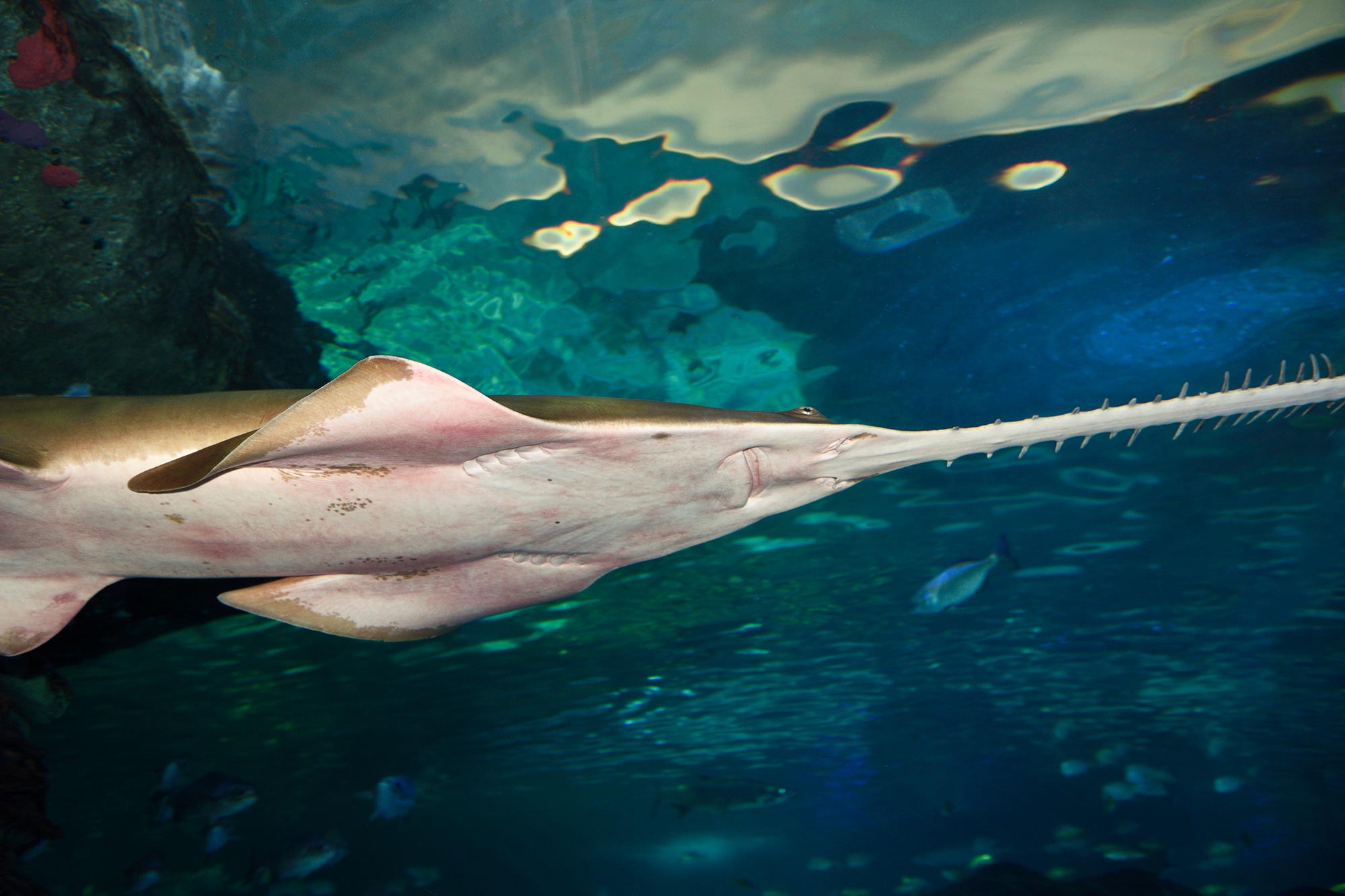
Despite decades of research, major gaps in scientists’ understanding of green sawfish could complicate efforts to save the species.
Green sawfish have disappeared from large parts of their former range, but northern Australia still supports some of the last relatively intact populations of this critically endangered species. A new scientific review suggests these waters could be central to the animal’s survival, although major gaps in researchers’ knowledge continue to complicate conservation efforts.
Green sawfish are a type of ray with a sharklike body and a distinctive, tooth-lined snout resembling a saw. Overfishing and habitat loss have driven their decline worldwide. Researchers at Murdoch University’s Centre for Sustainable Aquatic Ecosystems, part of the Harry Butler Institute, have now brought together decades of scientific findings to identify the species’ remaining strongholds and determine where further research is needed.
Northern Australia Offers a Rare Refuge
“Although the species has disappeared from large parts of its historic range, including parts of Africa and southern Asia, northern Australia still supports some of the last intact populations left anywhere on Earth,” said Dr. Jack Ingelbrecht, a postdoctoral research associate who led the review alongside Associate Professor David Morgan. Ingelbrecht added, “We’re fortunate that the main factors responsible for the global decline of sawfish are less severe in northern Australia.”
Western Australia’s Pilbara region is particularly valuable because it contains important green sawfish habitat and populations that remain relatively healthy. “The Pilbara region in particular has become one of the world’s most important areas for green sawfish research, as it still supports relatively healthy populations of this species and provides critical habitat,” said Morgan, who has studied Australian sawfish for more than 25 years. “It gives us a rare opportunity to understand how green sawfish use their environment, and identify which conservation measures would best facilitate their recovery.”
Why Australia Leads Green Sawfish Research
The survival of green sawfish in Australian waters has also shaped the global scientific understanding of the species. “To research something, you first need specimens to study. Naturally, opportunities for green sawfish research will be greater in areas where this species still occurs in relatively high numbers,” Ingelbrecht explained.
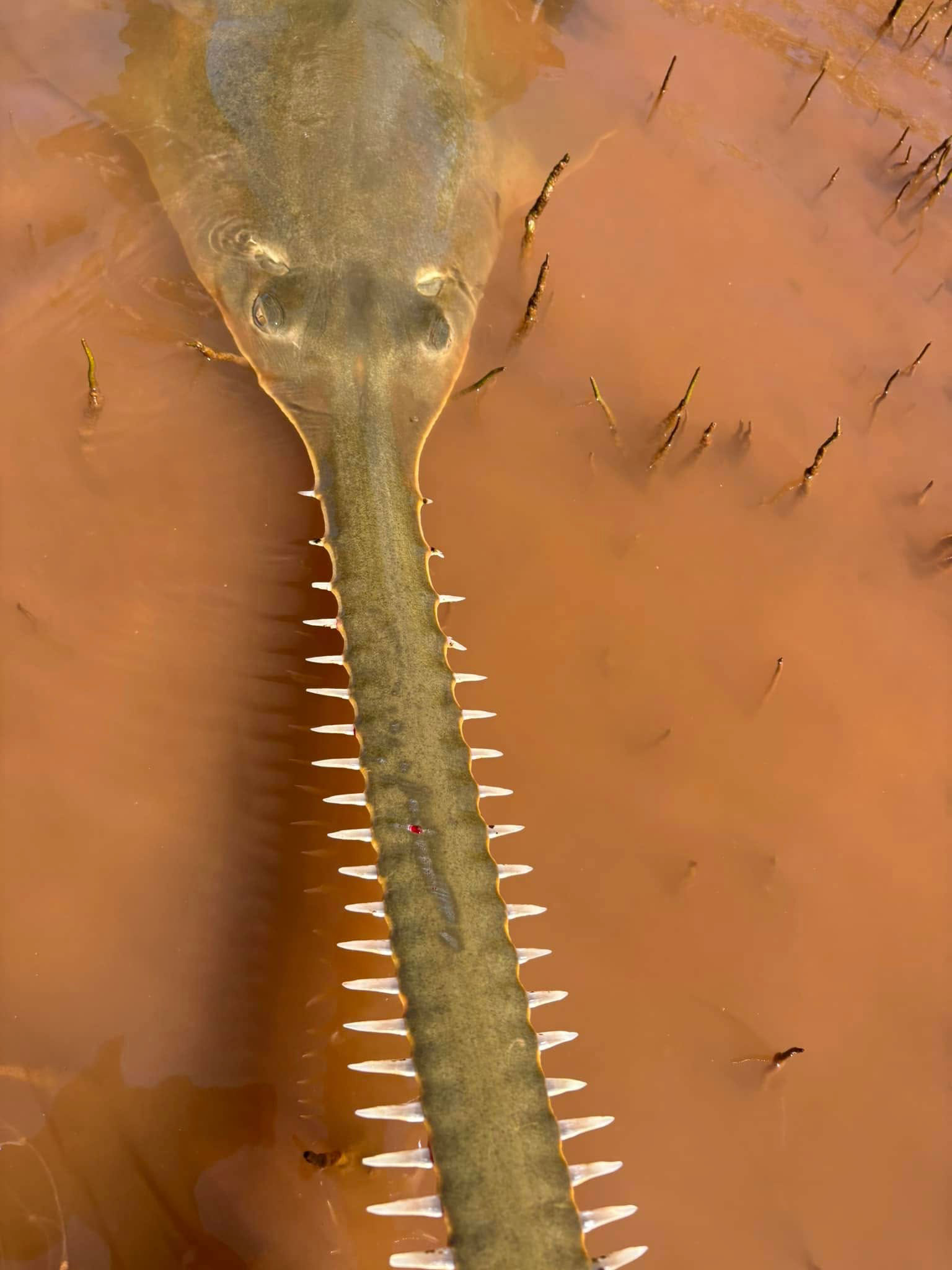
“Our review found that, for decades, Australia has been the global leader in green sawfish research. This is partly because green sawfish populations have been wiped out in many countries, but still exist in Australia,” he said. Australia’s contribution extends across many different areas of scientific investigation. “Interestingly, when we looked at the specific types of information that have been produced, we found that Australia has also been at the forefront of almost every major sub-discipline of research relating to green sawfish.”
The research team compiled existing studies into a single resource intended to support conservation planning and future investigations. “Renowned zoologist Ferdinando Boero said it best: ‘you can’t protect what you don’t know,'” Ingelbrecht said. “It’s incredibly difficult to stay up to date with research on any topic, particularly when there’s a lot of information to cover. Ultimately, if conservation experts don’t fully understand the species they’re trying to protect, they can’t implement the most-suitable recovery initiatives.”
Critical Questions Remain Unanswered
Despite Australia’s extensive research history, the review identified substantial gaps in the information needed to protect green sawfish. “By synthesizing the current knowledge of green sawfish, we wanted to provide an all-in-one resource to guide conservation efforts and researchers, alike,” Ingelbrecht said.
The most pressing uncertainties concern how many green sawfish survive, where their most important habitats are located, and how many individuals are old enough to reproduce. “Sadly, when it comes to the research areas most relevant to conservation – the size of remaining populations, the locations of critical habitat, and the number of mature individuals present in the wild – we realized that there’s very little information currently available.”
These missing data make it difficult to design conservation strategies suited to the species’ biological needs. “Research is the lifeblood of conservation. In order to be successful, recovery efforts often need to be tailored towards the species they’re intended for. To do that, you need scientific input,” Ingelbrecht said.
The Race to Prevent Extinction
As green sawfish disappear from more of their historical range, Australia’s role in protecting the species could become increasingly significant. “Conservation biologists bear the responsibility of enhancing recovery initiatives through research. If green sawfish populations continue to decline, that responsibility – that burden – will fall more and more towards Australia,” Ingelbrecht warned.
The researchers nevertheless believe extinction can still be prevented if scientific research and conservation measures receive sufficient support. “It’s not over yet. There’s still a genuine opportunity to turn things around. With the right support, the right research, and the right conservation measures, we can ensure the survival of green sawfish. I hope Australia sets an example the rest of the world can follow,” Ingelbrecht said.
Reference: “The Critically Endangered green sawfish (Pristis zijsron): current knowledge and future directions” by Jack Ingelbrecht, Barbara E. Wueringer, Tyler N. Dornan, Penelope T. Dantas, Travis Fazeldean and David L. Morgan, 11 September 2026, Reviews in Fish Biology and Fisheries.
DOI: 10.1007/s11160-026-10088-7
Funding: BCI Minerals, Western Australian Marine Science Institution, Leichhardt, Chevron Australia, Department of Primary Industries and Regional Development, Save Our Seas Foundation, Ecological Society of Australia
Never miss a breakthrough: Join the SciTechDaily newsletter.
Follow us on Google and Google News.
1 Comment
All governments should create a schools process for all fisheries workers to include a set series of protocols for all aspects of management.