
Close Menu
    Facebook X (Twitter) Instagram
    SciTechDaily
    • Biology
    • Chemistry
    • Earth
    • Health
    • Physics
    • Science
    • Space
    • Technology
    Facebook X (Twitter) Pinterest YouTube RSS
    SciTechDaily
    Home»Biology»“Coughing” Scallops Are Early Warning System for Worsening Water Quality
    Biology

    “Coughing” Scallops Are Early Warning System for Worsening Water Quality

    By SciTechDailyDecember 4, 2012No Comments2 Mins Read
    Facebook Twitter Pinterest Telegram LinkedIn WhatsApp Email Reddit
    Share
    Facebook Twitter LinkedIn Pinterest Telegram Email Reddit
    coughing-scallops-science
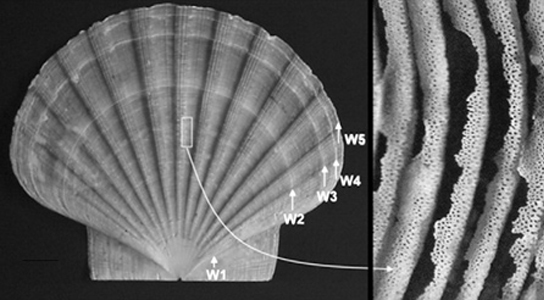
    Biologists believe that scallop coughs could act as an early warning system for deteriorating water quality. Credit: L. Di Iorio et al., Jembe, 432-433 (30 November 2012)

    Scallops cough to expel feces and water from their central cavities. The friction between the mollusk’s two valves makes a sharp crack, followed by a drawn-out puffing sound as the valves close. Biologists think that these coughs could serve as an early warning system for worsening water quality.

    The scientists published their findings in the Journal of Experimental Marine Biology and Ecology. Because the sonically striking coughs are distinct from the choruses of other marine organisms like shrimp and sea urchins, the researchers discovered that they could record the scallops’ coughs from up to 10 meters (33 feet) away by using hydrophones, which are submersible acoustic sensors.

    Previous research has indicated that scallops feed less often and grow slower in the presence of toxic algae and decreased levels of oxygen concentration. Scientists could monitor the changes in water quality by analyzing fine-scale growth patterns in the tiny ridges of scallop shells, but they feel it will be less labor-intensive to set up a network of hydrophones to track the coughing behaviors of the animals instead.

    This method could replace the current, more disruptive method of tracking scallops. Usually, scientists attach motion sensors directly to their shells. The researchers plan on exploring other kinds of scallop movement, such as digging, swimming, jumping and spinning. These could reveal more sonic qualities useful for diagnosing the health of the oceans.

    Reference: “Hydrophone detects cracking sounds: Non-intrusive monitoring of bivalve movement” by Lucia Di Iorio, Cédric Gervaise, Virginie Jaud, Anthony A. Robson and Laurent Chauvau, 30 November 2012, Journal of Experimental Marine Biology and Ecology.
    DOI: 10.1016/j.jembe.2012.07.010

    Never miss a breakthrough: Join the SciTechDaily newsletter.
    Follow us on Google and Google News.

    Conservation Ecology Marine Biology Oceanography Pollution Water Quality
    Share. Facebook Twitter Pinterest LinkedIn Email Reddit

    Related Articles

    Scientists Find Microplastics in Fish From Pristine Pacific Waters

    Much Shallower Than Previously Thought: New Study Redefines Marine Boundaries in the Southwest Atlantic

    Seagrass Meadows Turn Back the Clock on Ocean Acidification – Can Reduce Local Acidity by Up to 30%

    Ocean’s Mammals at Crucial Crossroads – 25% of Species at Risk of Extinction

    “Deep Biosphere” Microbes: Life Is Bubbling Up From Sediments Deep Below the Ocean Floor

    Biologists Explore the Effect of Coral Restoration on Caribbean Reef Fish Communities

    New Chinese Survey Reveals Extensive Coastal Pollution

    Jellyfish Bloom in Marine Ecologies As Ocean Health Declines

    Researchers Report That Anthropogenic CO2 Emissions Have Raised Ocean Acidity

    Leave A Reply Cancel Reply

    • Facebook
    • Twitter
    • Pinterest
    • YouTube

    Don't Miss a Discovery

    Subscribe for the Latest in Science & Tech!

    Trending News

    Why Popular Diabetes Drugs Like Ozempic Don’t Work for Everyone: The “Genetic Glitch”

    Scientists Stunned After Finding Plant Thought Extinct for 60 Years

    Scientists Discover Tiny New Spider That Hunts Prey 6x Its Size

    Natural Component From Licorice Shows Promise for Treating Inflammatory Bowel Disease

    Scientists Warn: Popular Sweetener Linked to Dangerous Metabolic Effects

    Monster Storms on Jupiter Unleash Lightning Beyond Anything on Earth

    Scientists Create “Liquid Gears” That Spin Without Touching

    The Simple Habit That Could Help Prevent Cancer

    Follow SciTechDaily
    • Facebook
    • Twitter
    • YouTube
    • Pinterest
    • Newsletter
    • RSS
    SciTech News
    • Biology News
    • Chemistry News
    • Earth News
    • Health News
    • Physics News
    • Science News
    • Space News
    • Technology News
    Recent Posts
    • Ancient Bacteria Turned a DNA System Into a Cell Skeleton
    • Researchers Finally Solve 50-Year-Old Blood Group Mystery
    • Scientists Discover “Molecular Switch” That Fuels Alzheimer’s Brain Inflammation
    • Hidden Ocean Currents Revealed in Stunning Detail by AI
    • Trees Emit Tiny Lightning Flashes During Storms and Scientists Finally Prove It
    Copyright © 1998 - 2026 SciTechDaily. All Rights Reserved.
    • Science News
    • About
    • Contact
    • Editorial Board
    • Privacy Policy
    • Terms of Use

    Type above and press Enter to search. Press Esc to cancel.