
Close Menu
    Facebook X (Twitter) Instagram
    SciTechDaily
    • Biology
    • Chemistry
    • Earth
    • Health
    • Physics
    • Science
    • Space
    • Technology
    Facebook X (Twitter) Pinterest YouTube RSS
    SciTechDaily
    Home»Space»NASA Skywatching Highlights for March 2022: Don’t Miss Easy To Find Exoplanets
    Space

    NASA Skywatching Highlights for March 2022: Don’t Miss Easy To Find Exoplanets

    By NASA Jet Propulsion LaboratoryMarch 6, 2022No Comments4 Mins Read
    Facebook Twitter Pinterest Telegram LinkedIn WhatsApp Email Reddit
    Share
    Facebook Twitter LinkedIn Pinterest Telegram Email Reddit
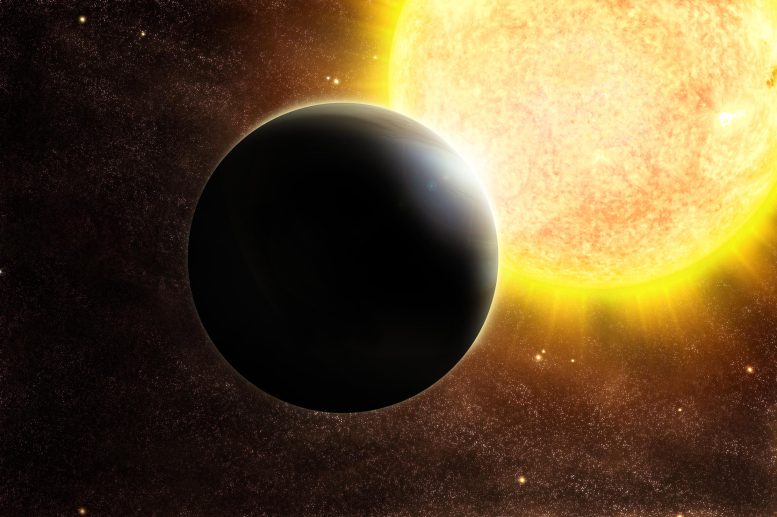
    Jupiter Sized Exoplanet
    Artist’s rendering of a Jupiter-sized exoplanet and its host star. Credit: ESO

    What’s Up for March? Meet the morning planets, the nearest star cluster, and some do-it-yourself exoplanets.

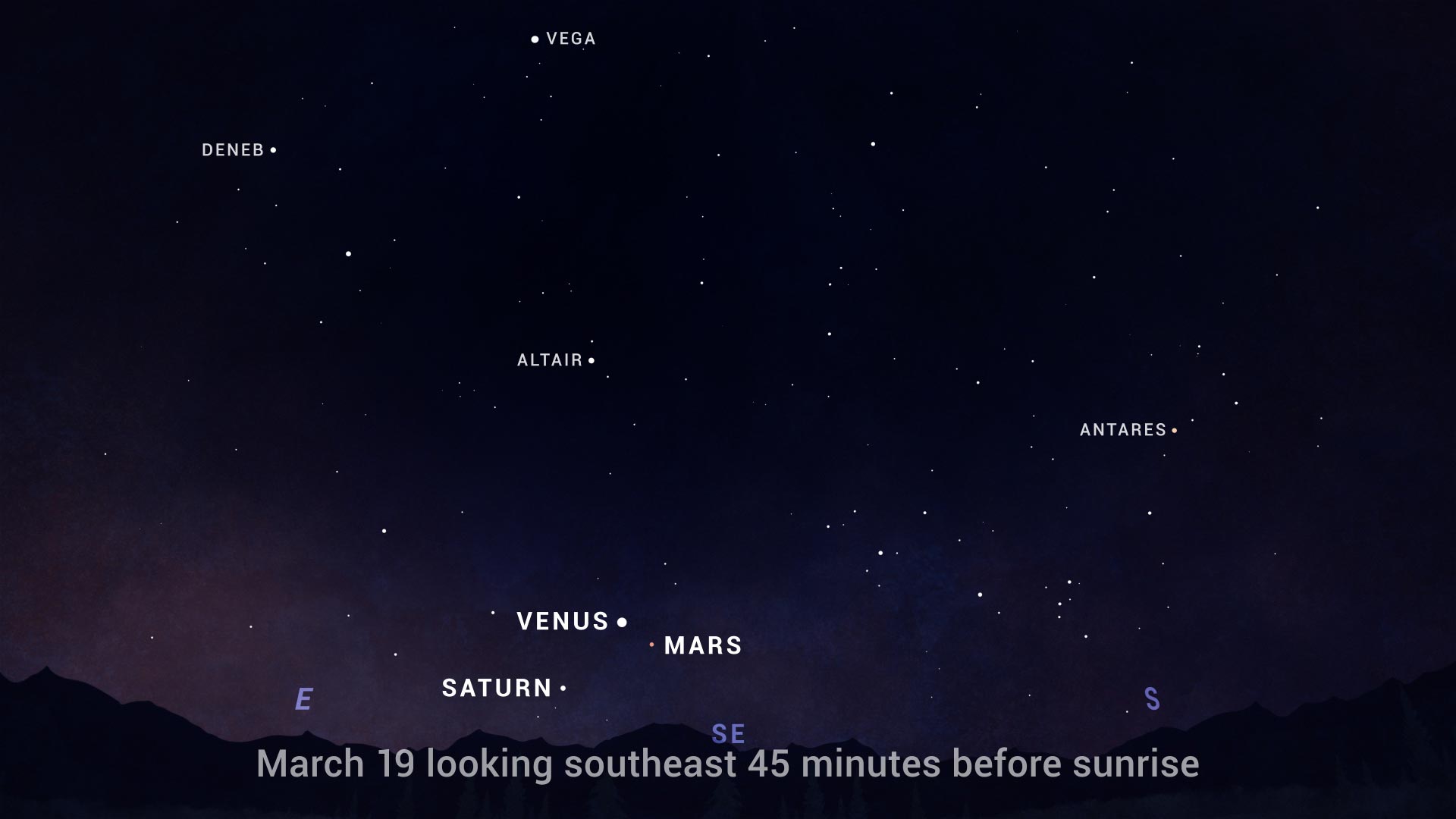
    Saturn joins Venus and Mars this month in the morning sky. Beginning around March 18 or 19th, early risers may notice Saturn steadily moving toward Mars and Venus each day, to form a trio low in the east before sunrise. The crescent moon joins the crowd on the 27th and 28th. Saturn and Mars are headed toward a super-close meeting at the start of April. (More about that in next month’s video.)
    Saturn Venus Mars March 2022
    See Saturn, Venus, and Mars in the pre-dawn sky in March, with Saturn becoming more noticeable after around March 18th or 19th. Credit: NASA/JPL-Caltech

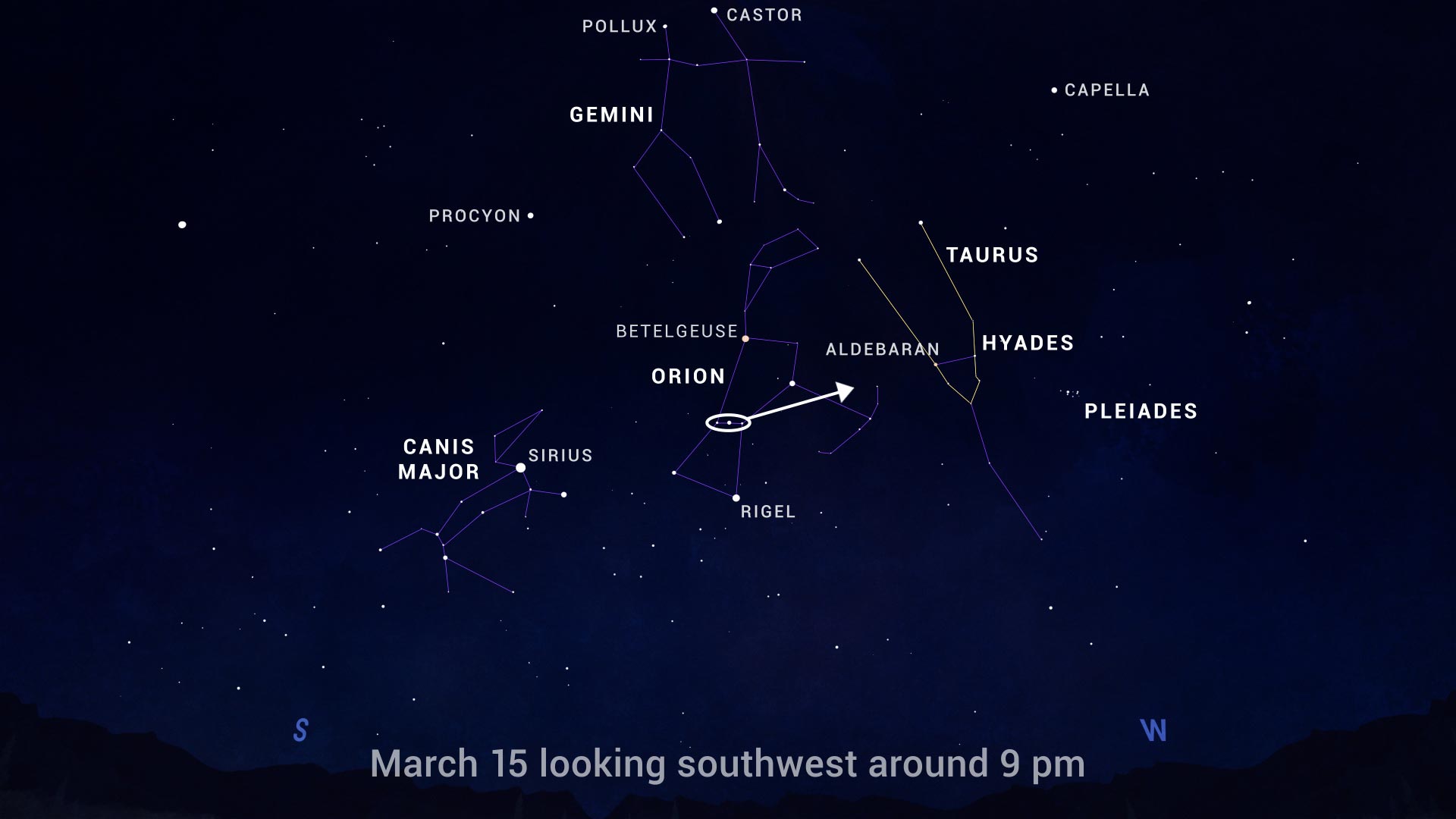
    Look high in the southwest on March evenings, and you’ll find the tall, Y-shaped constellation Taurus, the bull. And at the center of Taurus, forming the bull’s face, is a grouping of stars known as the Hyades star cluster. It’s the closest open star cluster to our solar system, containing hundreds of stars.
    Taurus March 2022
    Find Y-shaped Taurus high in the southwest in the first few hours after dark, with bright Aldebaran guiding your eye to the Hyades star cluster. Credit: NASA/JPL-Caltech

    Now, an open cluster is a group of stars that are close together in space and loosely bound together by their mutual gravity. These are stars that formed together around the same time, from the same cloud of dust and gas. Over time they blow away that leftover nebula material and drift apart. Because of this and their open, or diffuse, structures, they’re called “open” clusters. Our own Sun formed in a cluster like this, and studying these structures helps us understand how stars form and evolve.

    Another well-known open cluster is the Pleiades, which is also located in Taurus. The Hyades and the Pleiades are actually about the same size, at about 15 or so light-years across. But the Pleiades is about 3 times farther away, so it appears more compact.

    You don’t need a telescope to find the Hyades. Look for this V-shaped grouping of stars in Taurus. Use the stars of Orion’s belt as a handy pointer, leading you to bright orange Aldebaran. (Aldebaran isn’t actually part of the star cluster. It’s located halfway to the Hyades, and just happens to be visible in the foreground.)

    So check out the Hyades in March, where you’ll see a handful of stars with the unaided eye, and more than a hundred with binoculars.

    March skies contain several easy-to-find, bright stars that are known to have planets of their own orbiting around them. Locate these distant “suns” for yourself and you’ll know you’re peering directly at another planetary system.

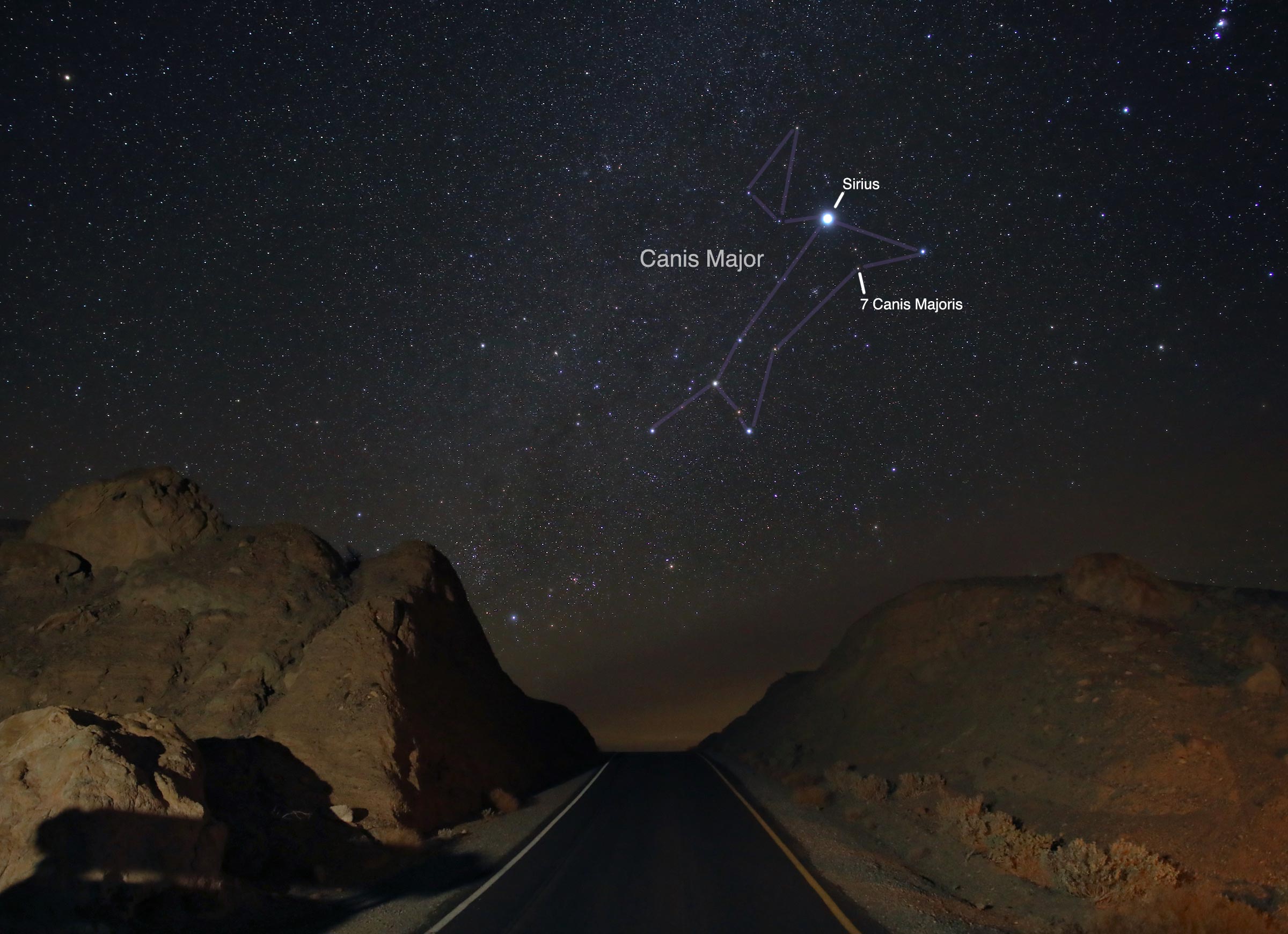
    First is Epsilon Tauri, the right eye of Taurus the bull. This orange dwarf star has a gas giant planet around 8 times the mass of Jupiter. Next is 7 Canis Majoris. This is the star at the heart of the dog constellation that contains blazing bright Sirius. This star is known to have two planets: a gas giant nearly twice the mass of Jupiter and another just a little smaller than Jupiter.
    Canis Major Constellation
    The constellation Canis Major contains a star – 7 Canis Majoris – known to have at least two planets. Credit: NASA/Bill Dunford

    Moving on, we find Tau Geminorum, the star at the heart of Castor – northernmost of the twins in Gemini. Tau Geminorum has a huge gas giant planet 20 times the mass of Jupiter in an orbit only slightly larger than that of Earth. And finally, wheeling around to the north, is Beta Ursae Minoris, the brightest star in the bowl of the Little Dipper. This star has a 6-Jupiter-mass planet in orbit around it.

    Researchers expect that most stars have a family of planets orbiting them, because forming planets is a natural part of forming stars. And now you know how to find a few of them yourself, no telescope required.

    Never miss a breakthrough: Join the SciTechDaily newsletter.
    Follow us on Google and Google News.

    Astronomy Exoplanet JPL NASA
    Share. Facebook Twitter Pinterest LinkedIn Email Reddit

    Related Articles

    NASA Hits 6,000 Exoplanets. Some Are Stranger Than Sci-Fi

    Enticing Clues to Formation of Exotic Worlds From Young Giant Planet

    ASTERIA – A Tiny CubeSat Spacecraft – Detected a Planet Outside Our Solar System

    Earth-Size Habitable-Zone World Found by NASA Planet Hunter [Video]

    Hot Jupiters Orbit 20 Times Closer to Their Host Stars Than Earth Does to the Sun

    Flower-Shaped Starshade Spacecraft to Acquire Images of Earth-Like Planets

    NASA Study Reveals that Carbon Planets May be Waterless

    “Habitable Zone” Might Help Extreme Life Forms Survive on Exoplanets

    Smaller Than Earth, Exoplanet Candidate UCF-1.01 Is Just 33 Light-Years Away

    Leave A Reply Cancel Reply

    • Facebook
    • Twitter
    • Pinterest
    • YouTube

    Don't Miss a Discovery

    Subscribe for the Latest in Science & Tech!

    Trending News

    Monster Storms on Jupiter Unleash Lightning Beyond Anything on Earth

    Scientists Create “Liquid Gears” That Spin Without Touching

    The Simple Habit That Could Help Prevent Cancer

    Millions Take These IBS Drugs, But a New Study Finds Serious Risks

    Scientists Unlock Hidden Secrets of 2,300-Year-Old Mummies Using Cutting-Edge CT Scanner

    Bread Might Be Making You Gain Weight Even Without Eating More Calories

    Scientists Discover Massive Magma Reservoir Beneath Tuscany

    Europe’s Most Active Volcano Just Got Stranger – Here’s Why Scientists Are Rethinking It

    Follow SciTechDaily
    • Facebook
    • Twitter
    • YouTube
    • Pinterest
    • Newsletter
    • RSS
    SciTech News
    • Biology News
    • Chemistry News
    • Earth News
    • Health News
    • Physics News
    • Science News
    • Space News
    • Technology News
    Recent Posts
    • Simple Blood Test May Predict Alzheimer’s Years Before Brain Scans Show Signs
    • Scientists Say Adding This Unusual Seafood to Your Diet Could Reverse Signs of Aging
    • U.S. Waste Holds $5.7 Billion Worth of Crop Nutrients
    • Scientists Say a Hidden Structure May Exist Inside Earth’s Core
    • Doctors Surprised by the Power of a Simple Drug Against Colon Cancer
    Copyright © 1998 - 2026 SciTechDaily. All Rights Reserved.
    • Science News
    • About
    • Contact
    • Editorial Board
    • Privacy Policy
    • Terms of Use

    Type above and press Enter to search. Press Esc to cancel.