
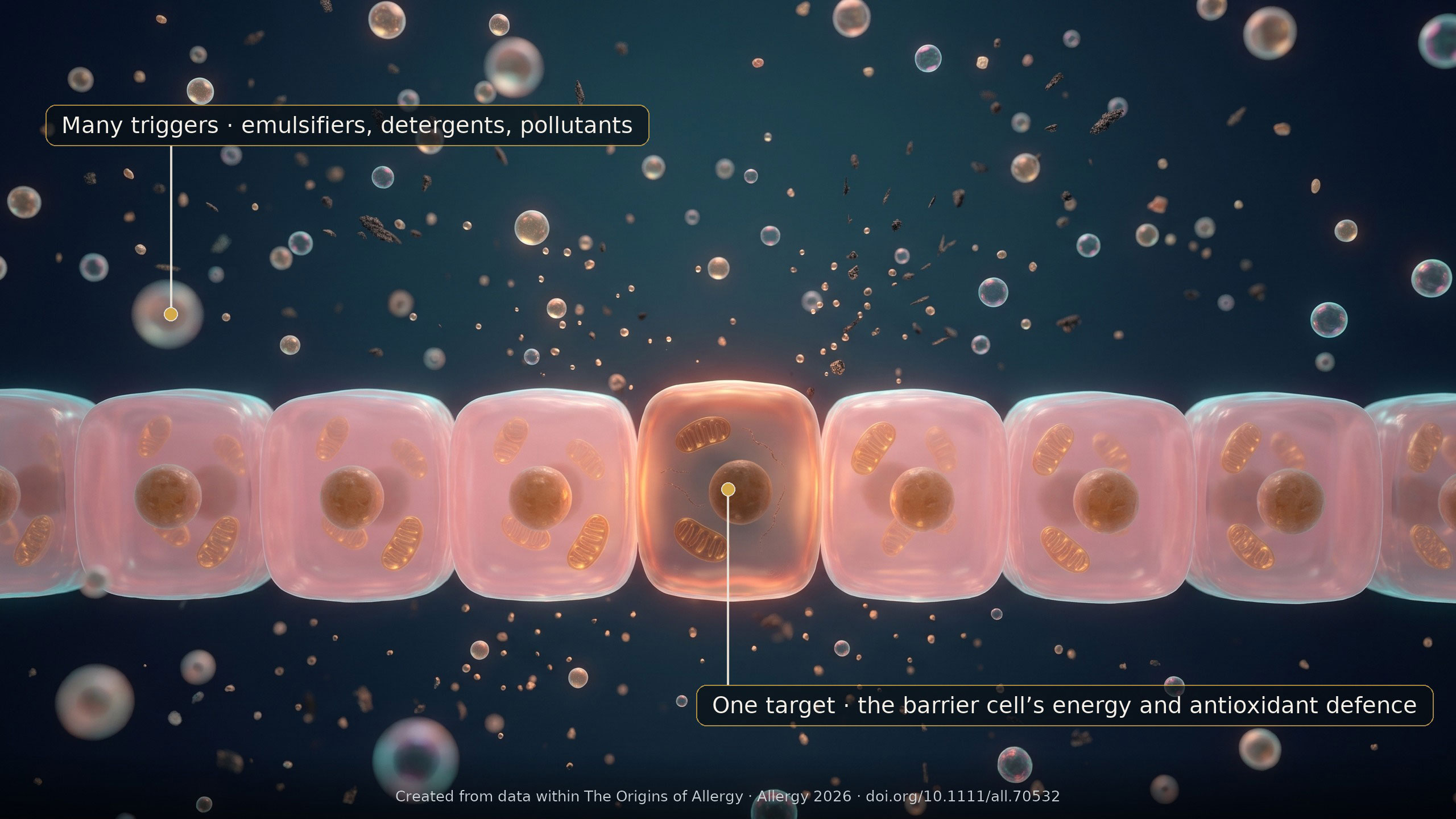
Scientists have identified a potential biological mechanism that could explain how seemingly unrelated environmental factors contribute to the growing prevalence of allergies.
Allergies may begin with an energy crisis inside the cells that protect the body from the outside world, rather than a malfunction of the immune system. An extensive analysis led by Griffith University researchers challenges decades of conventional thinking about allergic diseases and proposes a potential biological origin for conditions ranging from eczema to food allergies.
The researchers identified abnormalities involving mitochondria, the structures responsible for producing much of the energy cells need to function. Their findings suggest that epithelial cells, which form protective barriers along the skin, gut, nose, lungs, and esophagus, may struggle to meet environmental and metabolic demands, triggering an excessive immune response.
“For 60 years, we’ve taught that allergies start with the immune system and the barrier breaks as a consequence, but our work suggests it may be the other way around,” said study lead Professor Peter Smith, a clinical immunologist from Griffith’s School of Medicine and Dentistry.
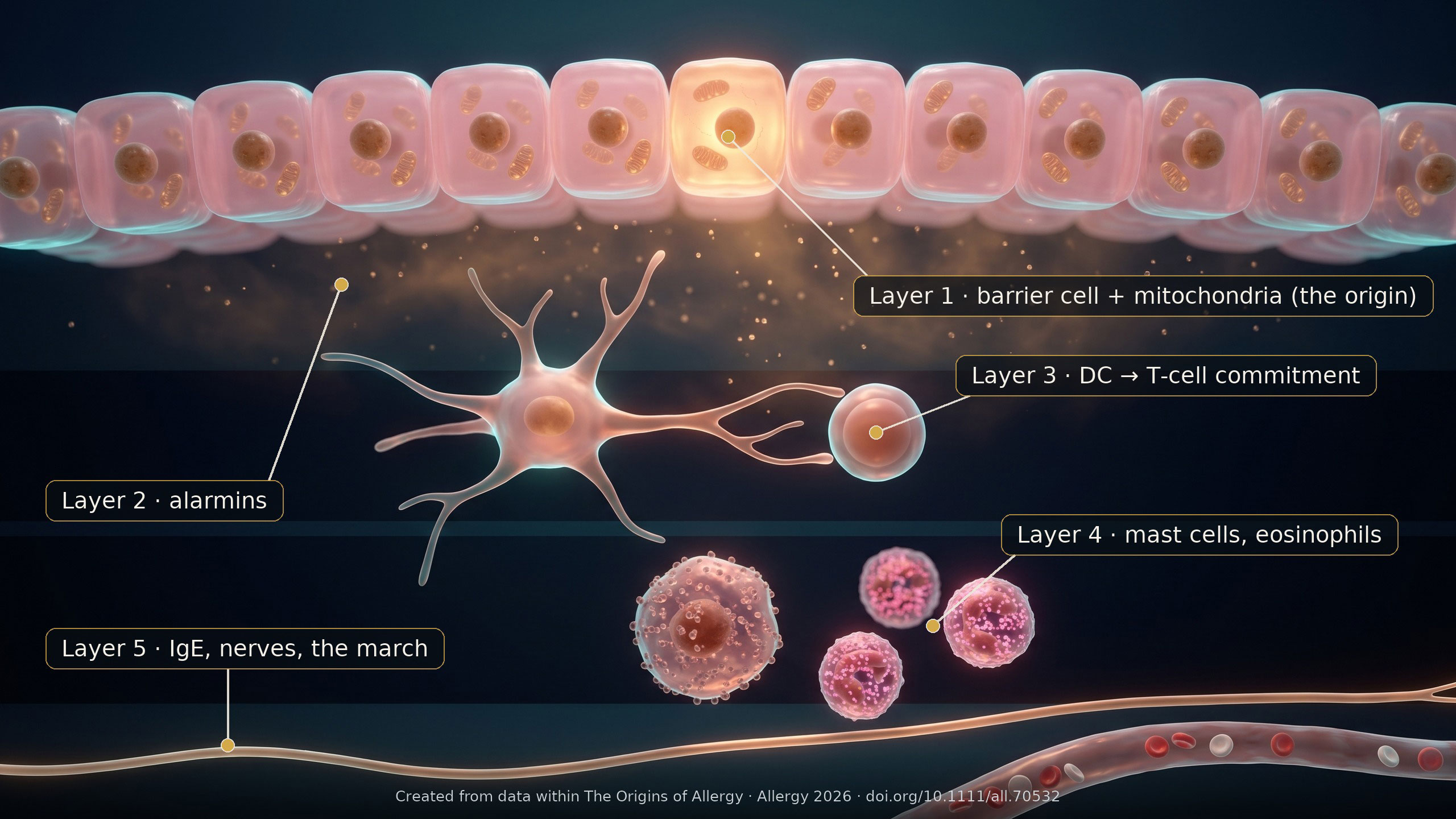
A Potential Energy Crisis Behind Allergies
The team examined what it describes as the largest collection of multi-omic allergy data known to the researchers, drawing on 116 case-control cohorts and data from 3,776 patients. Multi-omic analysis combines different types of molecular information to identify biological patterns that might otherwise go undetected.
Scientists may have discovered the hidden cause of allergies. Credit: Professor Peter Smith, Griffith University
“Allergy diseases, which now affect up to one in three children, may start one step earlier as a power failure in the mitochondria of the epithelial cells which form the body’s barrier surfaces,” Professor Smith said.
“The barrier cell can’t meet the energy and stress demands of the modern environment so raises the alarm too easily, and the immune events we recognize as an allergy, follow.
“It could help to explain why some children have eczema, food allergies, hay fever, asthma and related conditions.”
Evidence Hidden in Apparently Healthy Tissue
The strongest evidence emerged in eosinophilic esophagitis, an allergic inflammatory disease affecting the esophagus. Across all 13 independent patient cohorts, researchers found reduced activity in the cellular process responsible for removing damaged mitochondria.
In patients with eczema, abnormalities affecting the skin’s protective barrier and antioxidant defenses appeared even in areas without inflammation. This finding is consistent with the possibility that cellular dysfunction precedes visible symptoms.
However, the mitochondrial signature was not universal. Researchers found only partial evidence of it in hay fever, while the pattern was absent in established asthma and nasal polyps.
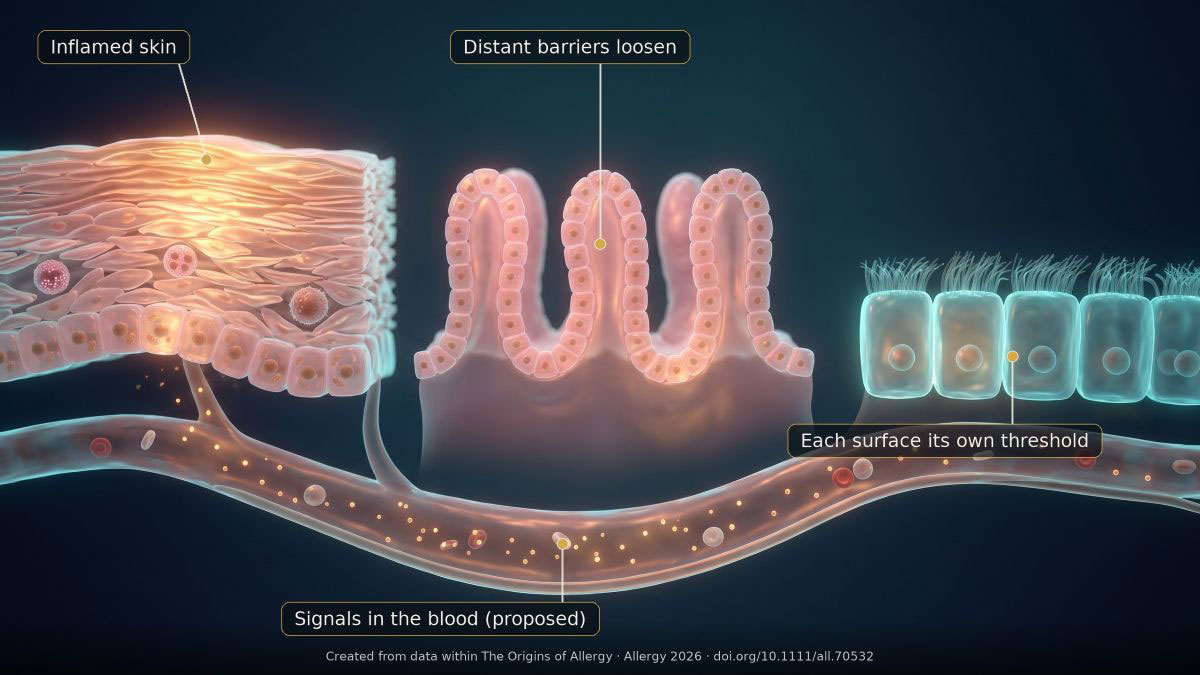
How Modern Environmental Exposures May Contribute
The researchers propose that several environmental factors associated with allergies could converge on the same biological vulnerability: the ability of epithelial cells to generate sufficient energy and withstand stress.
Potential contributors include highly processed diets, air pollution, microplastics, detergents, declining dietary fiber intake, and antibiotic exposure early in life.
Associate Professor Nic West, a molecular immunologist from Griffith’s School of Pharmacy and Medical Sciences and co-author of the study, said the wide range of factors associated with allergies has made it difficult to develop a unified explanation for their rapid increase within a single generation.
Why Allergies May Return After Treatment
The proposed mechanism could also explain why allergic diseases frequently recur after treatment. Inflammation itself can damage epithelial cells, potentially creating a self-perpetuating cycle of barrier dysfunction and immune activation.
“The research also explains why allergies can relapse,” Associate Professor West said.
“Once inflammation is established it damages the barrier further.
“Today’s drugs act downstream, so the disease often returns when treatment stops as they do not reach the root cause.”
Testing the Origins of Allergic Disease
The researchers emphasize that their findings support a hypothesis rather than establish a definitive cause of allergies. Direct measurements of epithelial cell function before symptoms appear will be needed to determine whether mitochondrial dysfunction initiates allergic disease.
“We have spent our careers managing the smoke and for the first time we think we can see the fire, and it is not where everyone was looking,” Professor Smith said.
“This is not a cure but is something we have never had before – a logical starting point.
“The next step is to measure these cells directly in infants before the allergy develops.”
Reference: “The Origins of Allergy: An Outside-In, Bioenergetic Hypothesis” by Peter K. Smith, Nicholas P. West, Stanley Du Preez, Hugh A. Sampson, Peter W. Hellings, David Price, Liam O’Mahony, Carina Venter, Cezmi A. Akdis and Gil Yosipovitch, 29 October 2026, Allergy.
DOI: 10.1111/all.70532
Never miss a breakthrough: Join the SciTechDaily newsletter.
Follow us on Google and Google News.