
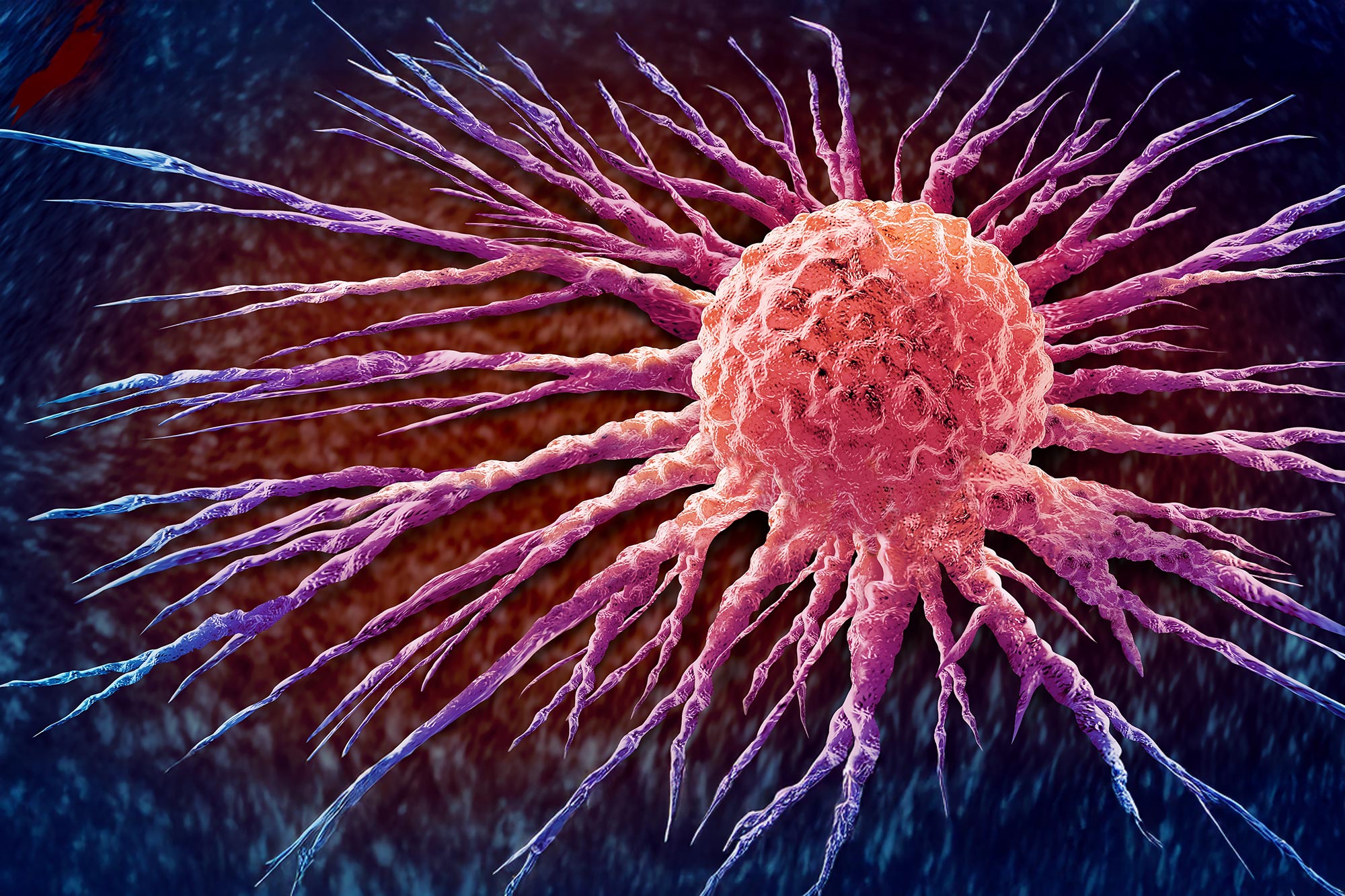
A newly developed therapy inspired by bacteria residing within tumors offers a different way to combat cancer by targeting how tumor cells produce energy.
Researchers at the University of Illinois Chicago have designed a new cancer treatment by borrowing a strategy from bacteria that live inside tumors. Instead of attacking cancer cells directly, the approach targets how those cells generate energy.
In prostate cancer models, the therapy delivered its strongest results when combined with radiation, a standard treatment. Tumor growth slowed dramatically. The key component is a lab-made peptide called aurB, derived from a bacterial protein. Once inside cancer cells, aurB disrupts the mitochondria, the structures responsible for producing energy.
Without that energy supply, tumor cells struggle to survive and multiply. The findings were published in Signal Transduction and Targeted Therapy.
Targeting the Cell’s Energy Factories
“The mitochondria are very important for a cell to survive; they are the energy factories,” said Tohru Yamada, senior author on the study, associate professor in the departments of surgery and biomedical engineering at UIC and a member of the University of Illinois Cancer Center. “Many cancer cells exhibit altered mitochondrial number and activity, because a cancer cell has to grow aggressively and rapidly. Therefore, the mitochondria would be an ideal target for cancer therapy.”
Scientists have long known that tumors contain bacteria as part of the tumor microenvironment. More recently, researchers have begun investigating these microbes as possible sources of cancer-fighting compounds.
Earlier work from Yamada’s lab identified a bacterial protein called a cupredoxin that could suppress tumor growth. Cupredoxins are copper-containing proteins that help move electrons between other proteins.
The team developed a peptide drug from this protein and tested it extensively, including in clinical trials involving adults and in studies of brain cancer in children.
However, that earlier treatment depended on a gene called p53, which does not function the same way in all cancers. P53 normally helps suppress tumors, but it is often mutated, and those mutations vary. As a result, the peptide was effective in some cases but not in others.
“We wanted to have an anti-cancer agent that doesn’t use the p53 function,” Yamada said.
Discovery of a New Mechanism
To address this limitation, the researchers searched for a bacterial protein that targets mitochondria instead. They identified another cupredoxin that works through this pathway.
In the new study, the team analyzed tumor samples from breast cancer patients and used DNA sequencing to identify the bacteria present. One species stood out because it contained a cupredoxin protein called auracyanin, which functions similarly to the one identified in earlier research.
Using this protein as a model, the scientists designed a new peptide called aurB. Laboratory experiments showed that aurB enters the mitochondria of tumor cells and binds to ATP synthase, a key enzyme needed to produce ATP, the cell’s main energy source.
The team tested aurB in cell lines lacking active p53 and in mouse models of prostate cancer that no longer respond to hormone therapy. When combined with radiation, a standard treatment for prostate cancer, aurB significantly reduced tumor growth without clear signs of toxicity.
“The combination significantly enhanced the activity of the peptide and the tumor became much smaller,” Yamada said. “This approach is promising. Using a well-established tibial bone metastatic model, we demonstrated significant inhibition of tumor growth, preclinically.”
Next Steps Toward Clinical Use
The researchers have secured a patent for aurB with support from UIC’s Office of Technology Management and are now exploring how to move the therapy into human clinical trials.
Yamada continues to study bacteria as a source of new drug ideas. He believes auracyanin may be just one of many bacterial proteins that could be adapted into future cancer treatments.
“There are many other bacterial proteins that could be source of cancer drugs,” Yamada said. “We simply haven’t tried them yet.”
Reference: “Suppression of mitochondrial energy production by a photosynthetic bacterial cupredoxin peptide inhibits tumor growth” by Samer A. Naffouje, Duy Binh Tran, David J. Rademacher, Valentina Botti, Konstantin Christov, Albert Green, Weiguo Li, Ngoc Hai Trieu Phong, Salvatore Cannistraro, Anna Rita Bizzarri, Tapas K. Das Gupta and Tohru Yamada, 7 April 2026, Signal Transduction and Targeted Therapy.
DOI: 10.1038/s41392-026-02703-7
Never miss a breakthrough: Join the SciTechDaily newsletter.
Follow us on Google and Google News.
5 Comments
It’s possible that the recurring issue of treating cancer with exact electricity zapping, has a VALIDITY, because even tiny electric charges can disrupt bacteria like that in cancer cells. Also, if cancer cells can spread, metastasis throughout the human body, because they can create a biochemical’mask’ that prevents the patient’s immune system from identifying them as hostile, perhaps controlled zapping could disrupt that biochemical’Mask’, so the immune system CAN identify and attack the cancer cells. One cancer cure experiment I would like to see, is sticking a long, very electrically conductive metal needle, with an insulated length, except for the very end, into a cancer tumor, and then attaching a large number of DC electric patches all around the cancer patient’s body, surrounded the tumor, and zapping it simultaneously with small charges from all of these wired patches. By attaching a mile long wire to this needle to the POWERFUL grounding of a big electrical generator far away, the massive ‘draw’ of that grounding connection, would intensely concentrate the combined zaps into a jolt at the tumor’s center, killing it, all without electrocuting the cancer patient’s immune system. EOJ
Why is their no cure for this disease it’s been around long enough and a lot of money put in to it. with all the technology available people are still dying from this terrible disease.
They aren’t trying to cure it, they’re trying to synthesize their own products to sell. People don’t matter, money & social status does.
Make it an emergency drug asap without any clinical trials with a signed agreement.
So many new ones.
One dostarlimab cured first 13 of rectal cancer.
Expensive and approved for breast cancer but why is supplybnot ramped up?
They’ll never allow this…. There’s NO profit in cures… ONLY Treatment….. For life…. For a VERY EXPENSIVE price.