
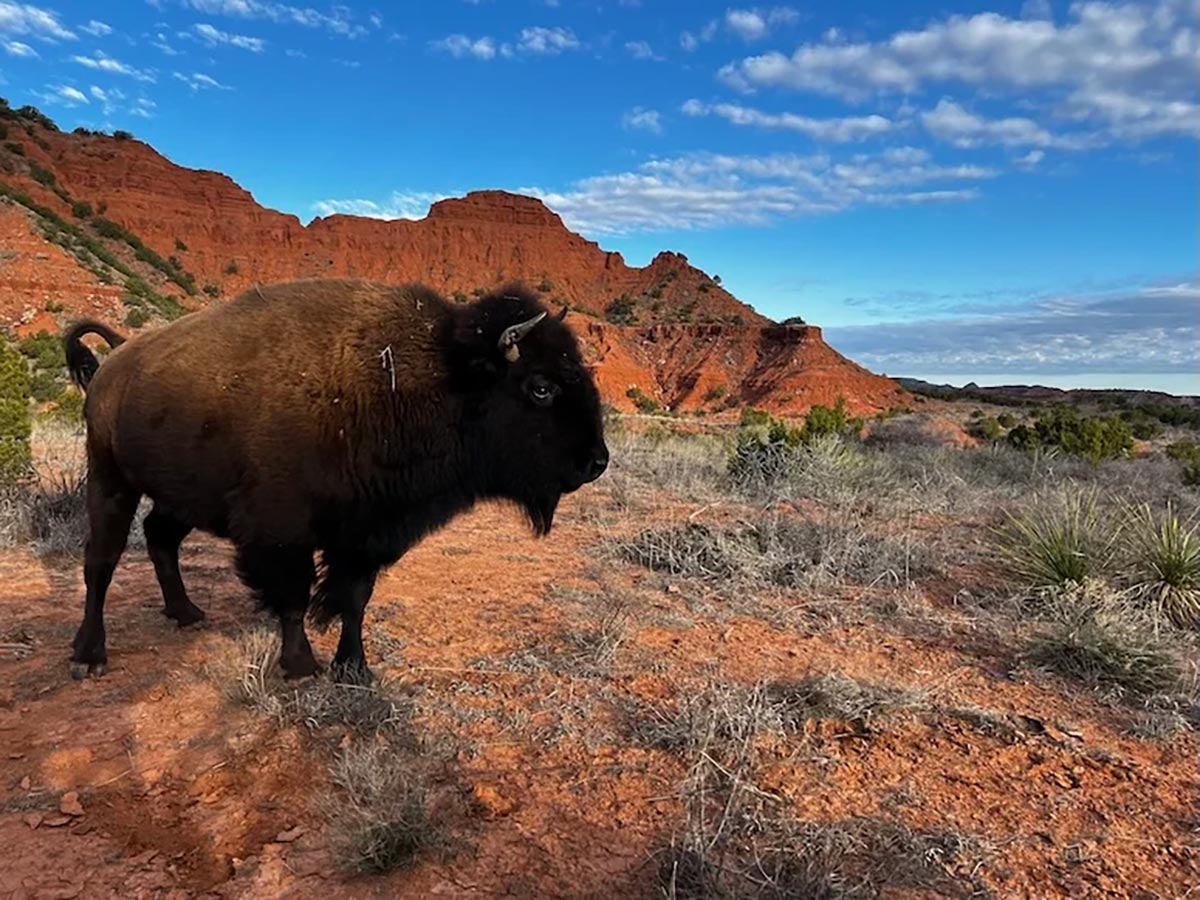
Evidence of communal bison hunts spanning 3,000 years in Texas offers a fascinating glimpse into the enduring knowledge and ingenuity of ancient Indigenous hunter-gatherers.
For Indigenous hunter-gatherers in the Southern Plains, a successful large-scale bison hunt likely depended on people performing different jobs across the landscape. Some hunters located herds and guided them toward grazing areas near a cliff, while others waited in hiding to drive the animals over the edge, where the fall would kill or incapacitate them. Additional teams would have killed injured bison and processed the meat, hides, and other materials.
Archaeologists have now uncovered evidence that generations of Indigenous communities carried out such hunts at the same location in the Texas Panhandle over approximately 3,000 years. Known as Nighthawk, the site lies within Caprock Canyons State Park and is only the second scientifically verified example of a bison jump in Texas. For decades, archaeologists had questioned whether this sophisticated hunting technique, widely documented in the northern Great Plains, was also practiced farther south.
The findings, published in the journal American Antiquity, come from a collaborative investigation involving the Texas Parks and Wildlife Department, Texas Tech University, Plains Archeological Research, and other research partners. Rice University adjunct lecturer August “Gus” Costa served as a principal investigator and is the study’s lead author.
“Bison jumping is exciting because it’s a community activity,” Costa said. “Large-scale bison harvests (like jumps) are exciting because they require a large group of people working together to be successful.”
These gatherings likely fulfilled needs beyond securing food and other resources. Costa believes the hunts provided opportunities for communities to trade, hold ceremonies, celebrate, and strengthen social relationships.
A hunting tradition spanning 3,000 years
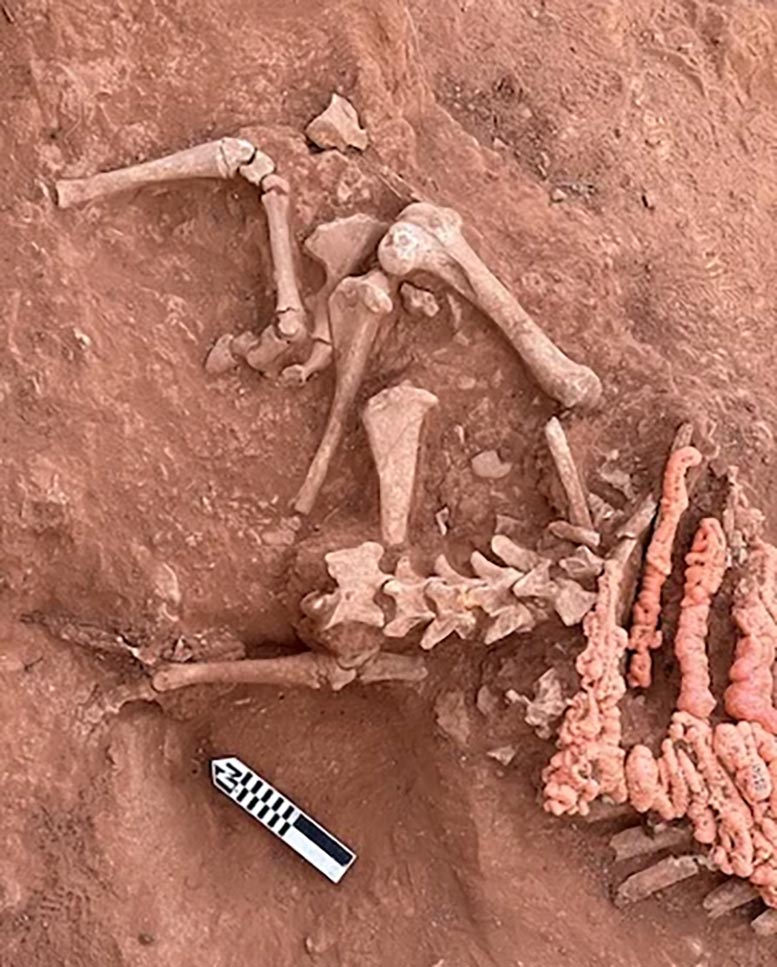
Initially, stone spear and arrow points recovered at Nighthawk suggested that at least two hunts had taken place there. Radiocarbon dating of bison bones revealed a much longer history, identifying evidence of at least seven separate hunting events spanning approximately three millennia.
During that time, hunting technology shifted from stone-tipped spears to bows and arrows, pottery was introduced, and the surrounding landscape underwent substantial changes. Erosion alone moved the cliff’s jump-off point roughly the length of a football field.
“Returning to the same place over and over again over 3,000 years shows that people had a significant connection to the Nighthawk hunting facility,” Costa said.
The challenge of an exposed cliff
The shape of the landscape also presents an intriguing problem. At many northern Plains bison jumps, the terrain may have concealed the cliff edge from approaching animals. Nighthawk, however, sits on a projecting cliff, meaning the bison could likely see the danger ahead. How hunters adapted their methods to overcome this difficulty remains unknown.
“We don’t know exactly how they managed herding the bison, but the setting is different from the typical northern Plains jump,” Costa said.
More bison jumps may lie undiscovered
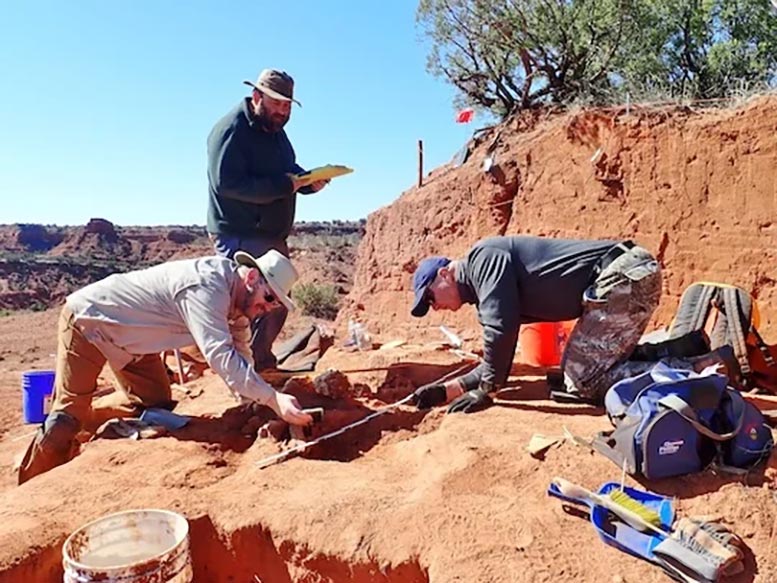
Before Nighthawk was documented, Bonfire Shelter, identified more than 60 years ago, was the only scientifically verified bison jump in Texas. Costa and his colleagues have since identified eight additional potential sites in and around Caprock Canyons, suggesting that the practice may have been considerably more widespread.
Part of the difficulty in finding these sites lies in where archaeologists traditionally look. Investigations often concentrate on former living areas, where people left tools and other traces of daily life. Steep slopes beneath cliffs would have made poor campsites and consequently received less attention. Erosion and limited access to private property have further complicated the search.
“The jump was hidden in plain sight,” Costa said.
Reconstructing an overlooked hunting culture
With fieldwork at Nighthawk complete, the researchers are searching for additional sites across the Southern Plains. They are also examining ancient bison DNA and the chemical composition of bones and teeth to reconstruct herd migrations, understand past environmental conditions, and investigate possible connections to the bison living in Caprock Canyons State Park today.
“For a long time when it comes to Indigenous bison hunting culture, the Southern Plains hasn’t received much respect, at least when compared to the north,” Costa said.
For Costa, the discovery illustrates the danger of judging ancient societies solely by the evidence that happens to survive. Gaps in the archaeological record can obscure generations of accumulated knowledge, ingenuity, and cultural practices.
“It’s about respect,” Costa said. “Bison jumping is a complicated community effort, and getting that incorporated into the story of Southern Plains people is important.”
Reference: “The Nighthawk Bison Jump: New Evidence for Recurrent Late Holocene Bison Jumping in the Southern Plains” by August G. Costa, Brett A. Houk, Anthony S. Lyle, Leland Bement, Christopher Lintz, Ken L. Lawrence, Charles D. Frederick and Brendan J. Culleton, 9 November 2026, American Antiquity.
DOI: 10.1017/aaq.2026.10229
Never miss a breakthrough: Join the SciTechDaily newsletter.
Follow us on Google and Google News.