
Close Menu
    Facebook X (Twitter) Instagram
    SciTechDaily
    • Biology
    • Chemistry
    • Earth
    • Health
    • Physics
    • Science
    • Space
    • Technology
    Facebook X (Twitter) Pinterest YouTube RSS
    SciTechDaily
    Home»Science»Rewriting the Timeline: New Radiocarbon Dating Reveals True Age of Ancient Greek Shipwreck
    Science

    Rewriting the Timeline: New Radiocarbon Dating Reveals True Age of Ancient Greek Shipwreck

    By PLOSJuly 2, 2024No Comments3 Mins Read
    Facebook Twitter Pinterest Telegram LinkedIn WhatsApp Email Reddit
    Share
    Facebook Twitter LinkedIn Pinterest Telegram Email Reddit
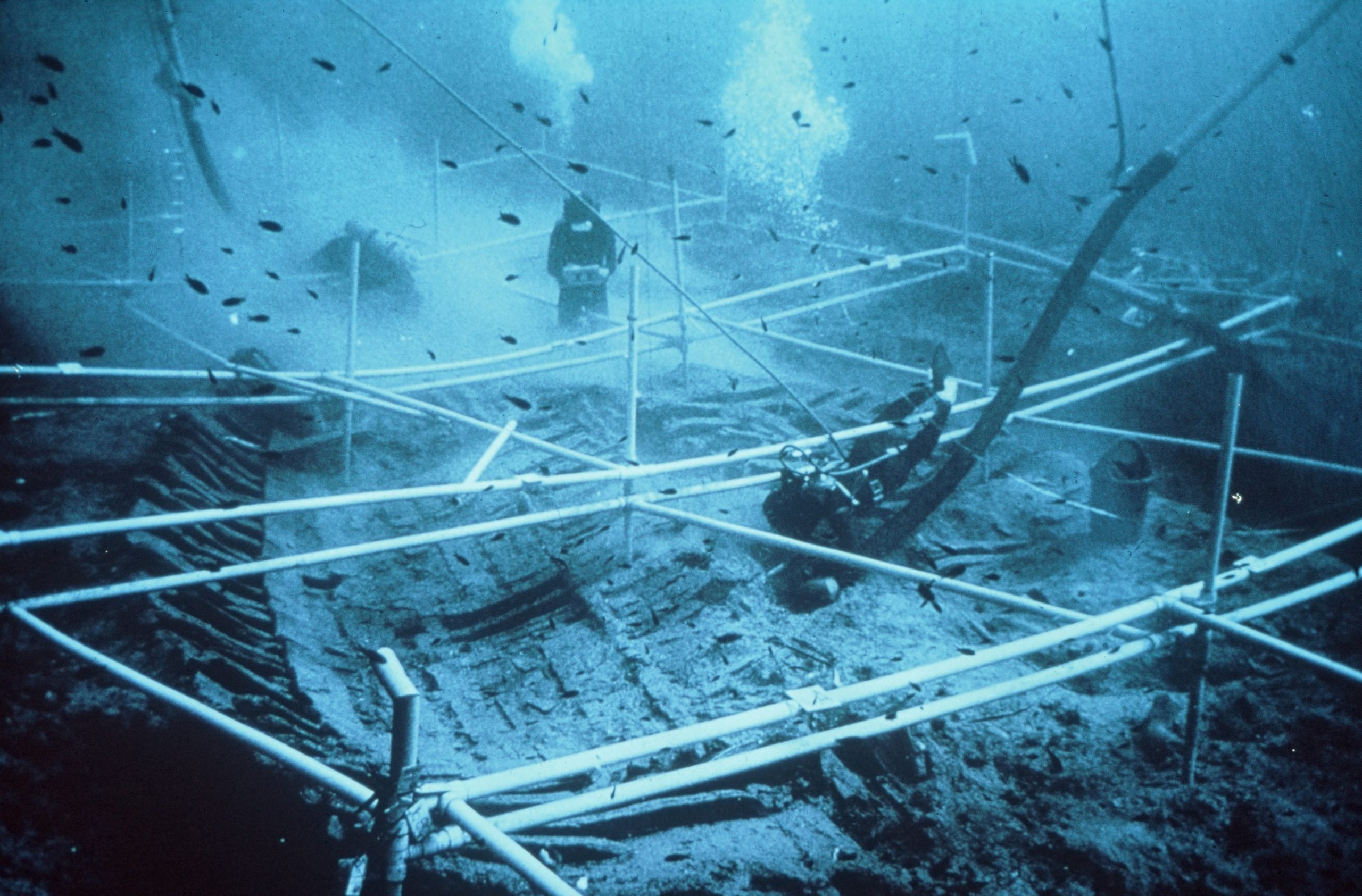
    Kyrenia Ship Hull During Excavation
    Kyrenia Ship Hull during excavation. Kyrenia Ship hull on the seabed off northern Cyprus during underwater excavation in the later 1960s. Credit: Image provided to authors by Kyrenia Ship Excavation team for use with this paper, CC-BY 4.0

    Research updates radiocarbon calibration curve and reevaluates dates of Greek shipwrecks.

    Improved radiocarbon calibration techniques now offer more accurate date estimates for Greek shipwrecks, according to a study published in the open-access journal PLOS ONE by Sturt Manning of Cornell University and colleagues.

    The Kyrenia Ship was found in the 1960s off the coast of Cyprus, and it has become a key vessel in the study of ancient Greek shipbuilding. Archaeological evidence has indicated the age of the ship’s final voyage at around 300 BCE, but previous radiocarbon dating efforts have not lined up with the archaeological evidence. Manning and colleagues suggest that this discrepancy is due to outdated radiocarbon calibration data.

    Kyrenia Ship Hull Remains
    Kyrenia Ship hull remains shortly after the reassembly of the timbers recovered from the seabed excavation. Credit: Image provided to authors by Kyrenia Ship Excavation team for use with this paper, CC-BY 4.0

    Accurate radiocarbon dating relies on calibration data based on known-age tree-ring dates to correct for errors caused by variations in atmospheric carbon over time. As radiocarbon dating techniques have improved, some time periods within the current Northern Hemisphere calibration curve have yet to be updated. In this study, the researchers applied new tree-ring samples and modern dating techniques to revise calibration data for the period between 433 and 250 BCE.

    Improvements in Calibration Data

    The authors then applied the updated calibration to newly acquired radiocarbon dates on materials from the Kyrenia Ship (both from the ship and its final cargo). The resulting dates are compatible with existing archaeological data, and they indicate the ship’s last voyage around 280 BCE, slightly later than previous estimates. The authors also applied the new radiocarbon calibration curve to radiocarbon dates from another Greek ship, the Mazotos ship, and estimated an age of around 370 BCE for the last voyage. This was again slightly later than indicated by previous research.

    This study emphasizes the importance of continuing revision of radiocarbon calibration data. The authors note that further refinements to this and other time periods will be especially important for archaeological materials that require dating precision on the order of decades.

    The authors add: “We are excited to apply scientific techniques to date the famous Kyrenia Ship a little over 2300 years ago. Central to the history of ship technology and maritime trade in the classical Mediterranean, the methods we use to date the ship – and solutions to various technical challenges we had to overcome – will now help date other shipwrecks and better inform the history of ancient seafaring.”

    For more on this research, see Surprise Discovery Reveals Secrets of Ancient Greek Shipwreck.

    Reference: “A revised radiocarbon calibration curve 350–250 BCE impacts high-precision dating of the Kyrenia Ship” by Sturt W. Manning, Brita Lorentzen, Martin Bridge, Michael W. Dee, John Southon and Madeleine Wenger, 26 June 2024, PLOS ONE.
    DOI: 10.1371/journal.pone.0302645

    Funding: SWM, New Frontiers Grant, College of Arts & Sciences, Cornell University

    Never miss a breakthrough: Join the SciTechDaily newsletter.
    Follow us on Google and Google News.

    Anthropology Archaeology PLOS Radiocarbon Dating
    Share. Facebook Twitter Pinterest LinkedIn Email Reddit

    Related Articles

    Over 57,000 Years Old – Scientists Discover Oldest Known Neanderthal Cave Engravings

    Uncovering the Past of Ancient Puerto Rico: New Study Challenges Simplistic Assumptions

    Uncovering the Secrets of an Ancient Stone Monument: New Findings From an Archaeological Site in Saudi Arabia

    Ancient Roman Gold Coins – Long Thought To Be Fakes – Now Authenticated

    Before Stonehenge Monuments, Hunter-Gatherers Made Use of Open Woodland Habitats

    Archaeologists Discover That Ancient Islamic Tombs Cluster Like Galaxies

    Indiscriminate Killing Revealed in Genetic Analysis of Ancient Massacre

    Deformed Skulls Discovered in an Ancient Cemetery Reveal a Remarkably Diverse Community

    Neandertals Dove Underwater to Collect Clam Shells to Use as Tools

    Leave A Reply Cancel Reply

    • Facebook
    • Twitter
    • Pinterest
    • YouTube

    Don't Miss a Discovery

    Subscribe for the Latest in Science & Tech!

    Trending News

    Bone-Strengthening Discovery Could Reverse Osteoporosis

    Scientists Uncover Hidden Trigger Behind Stem Cell Aging

    Scientists Find Way to Reverse Fatty Liver Disease Without Changing Diet

    Could Humans Regrow Limbs? New Study Reveals Promising Genetic Pathway

    Scientists Reveal Eating Fruits and Vegetables May Increase Your Risk of Lung Cancer

    Scientists Reverse Brain Aging With Simple Nasal Spray

    Scientists Uncover Potential Brain Risks of Popular Fish Oil Supplements

    Scientists Discover a Surprising Way To Make Bread Healthier and More Nutritious

    Follow SciTechDaily
    • Facebook
    • Twitter
    • YouTube
    • Pinterest
    • Newsletter
    • RSS
    SciTech News
    • Biology News
    • Chemistry News
    • Earth News
    • Health News
    • Physics News
    • Science News
    • Space News
    • Technology News
    Recent Posts
    • This Student Recreated the Universe in a Bottle. What She Discovered Could Help Reveal How Life Started on Earth
    • Alzheimer’s Symptoms May Start Outside the Brain, Study Finds
    • Cancer’s Secret Weapon? Scientists Reveal How Tumors “Learn” To Survive Treatment
    • Millions Take This Popular Supplement – Scientists Discover a Concerning Link to Heart Failure
    • What Makes Rubber So Strong? Scientists Finally Solve 100-Year-Old Mystery
    Copyright © 1998 - 2026 SciTechDaily. All Rights Reserved.
    • Science News
    • About
    • Contact
    • Editorial Board
    • Privacy Policy
    • Terms of Use

    Type above and press Enter to search. Press Esc to cancel.