
Close Menu
    Facebook X (Twitter) Instagram
    SciTechDaily
    • Biology
    • Chemistry
    • Earth
    • Health
    • Physics
    • Science
    • Space
    • Technology
    Facebook X (Twitter) Pinterest YouTube RSS
    SciTechDaily
    Home»Earth»Rapidly Retreating Glacial Ice Leaves Species Threatened
    Earth

    Rapidly Retreating Glacial Ice Leaves Species Threatened

    By SciTechDailyMarch 12, 2012No Comments2 Mins Read
    Facebook Twitter Pinterest Telegram LinkedIn WhatsApp Email Reddit
    Share
    Facebook Twitter LinkedIn Pinterest Telegram Email Reddit
    retreating-glaciers-ecuador
    Retreating glaciers

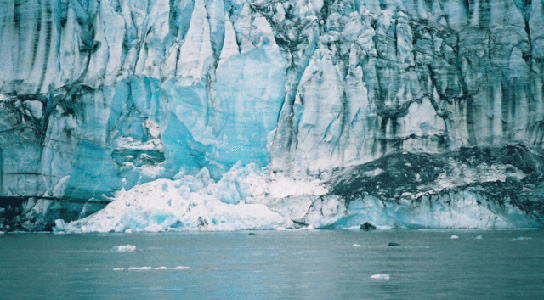
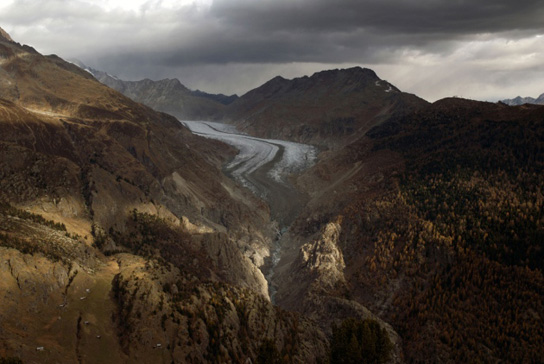
    The rapidly disappearing glaciers are altering more than the physical landscape, as a recent analysis suggests. Species that live in streams and rivers that flow from melting glaciers could start disappearing when half of the glacial cover in a region is lost.

    A team of scientists looked at the diversity of insect larvae in water at 103 different sites that were fed by glacial waters in the Ecuadorian Andes, the European Alps, and Alaska’s coastal mountains. They compared the number of species to the percentage of glacier cover in the catchment areas.
    retreating-glaciers

    In areas that had high glacial cover, several species will start to disappear when the cover drops to 50%. If the glaciers in all three different regions were to disappear, between 9 and 14 species would be extinct, representing 11% of the biodiversity in Ecuador, 16% in the Alps, and 38% in Alaska.

    Many small invertebrates are restricted to this kind of environment and their findings were published in Nature Climate Change today.

    Alpine invertebrates are somewhat of a neglected area of study, and it’s only recently that the effects of climate change have been properly discovered. Conservation options for species that have such limited and specific ranges are problematic, since relocation and habitat restoration aren’t applicable. It’s something that can’t be done on a local level.

    Many of the world’s glaciers are retreating and a study estimates that the tropical glaciers in Mexico and South America have already retreated by 30% since the mid-1980s. A different analysis suggests that most of the world’s smaller glaciers will disappear by the year 2100.

    In Ecuador, they retreat by about 15 meters (49 feet) per year.

    Reference: “Biodiversity under threat in glacier-fed river systems” by Dean Jacobsen, Alexander M. Milner, Lee E. Brown and Olivier Dangles, 11 March 2012, Nature Climate Change.
    DOI: 10.1038/nclimate1435

    Never miss a breakthrough: Join the SciTechDaily newsletter.
    Follow us on Google and Google News.

    Alaska Alpine Alps Climate Change Freshwater Glacier Insect Invertebrates Popular Species
    Share. Facebook Twitter Pinterest LinkedIn Email Reddit

    Related Articles

    Vulnerable to Climate Change: Huge Antarctic Glacier Melting From the Bottom Up

    Climactic Risk of Global Sea Level Rise as Antarctica’s Denman Glacier Has Retreated Almost 3 Miles

    Antarctica’s Biggest Glacier Is Thinning in Patterns Opposite to Previously Observed

    Unprecedented Look at Ice Stream Formation on Remote Russian Glacier [Video]

    Ice in Motion: Incredible Time-Lapse Satellite Footage Captures Decades of Change

    1930s Photos Reveal History of Greenland Glaciers

    Columbia Glacier Retreating to the Sea in Alaska

    Third Pole Glacial Measuring Stations Will Give Monitor Glacier Health in Tibet

    Research Shows Roughly 150 Billion Tons of Ice Lost Annually

    Leave A Reply Cancel Reply

    • Facebook
    • Twitter
    • Pinterest
    • YouTube

    Don't Miss a Discovery

    Subscribe for the Latest in Science & Tech!

    Trending News

    JWST Finds a “Star” 100 Billion Times Brighter Than Any Star Should Be

    Scientists Find a Hidden Biological Link Across Different Forms of Autism

    Astronomers Discover a Ghostly River of Stars That Could Reveal Dark Matter

    Why Is Colorectal Cancer Rising in People Under 50? New Clues Point to the Environment

    Quantum Fluctuations Break a Crystal’s Symmetry Rules

    Why Does an Irregular Heartbeat Strike 40 Years Early in Some People?

    Scientists Reveal How ADHD Could Fuel Creative Thinking

    Scientists Find Just 3 Minutes of Sprinting Can Transform Blood Chemistry

    Follow SciTechDaily
    • Facebook
    • Twitter
    • YouTube
    • Pinterest
    • Newsletter
    • RSS
    SciTech News
    • Biology News
    • Chemistry News
    • Earth News
    • Health News
    • Physics News
    • Science News
    • Space News
    • Technology News
    Recent Posts
    • Scientists Uncover Signs of an Ancient Climate “Tipping Point”
    • Cleaner Cars May Be Hiding a New Pollution Problem
    • Common Plant Chemical Linked to Widespread Organ Damage in Aquatic Animals
    • Scientists Discover a Hidden Baobab Species in Madagascar
    • Dogs and Humans May Share a Surprising Biological Secret to Longevity
    Copyright © 1998 - 2026 SciTechDaily. All Rights Reserved.
    • Science News
    • About
    • Contact
    • Editorial Board
    • Privacy Policy
    • Terms of Use

    Type above and press Enter to search. Press Esc to cancel.