

Close Menu
    Facebook X (Twitter) Instagram
    SciTechDaily
    • Biology
    • Chemistry
    • Earth
    • Health
    • Physics
    • Science
    • Space
    • Technology
    Facebook X (Twitter) Pinterest YouTube RSS
    SciTechDaily
    Home»Earth»New Research Into Early Life on Earth Offers Explanation to Carl Sagan’s ‘Faint-Young-Sun’ Paradox
    Earth

    New Research Into Early Life on Earth Offers Explanation to Carl Sagan’s ‘Faint-Young-Sun’ Paradox

    By University of British ColumbiaDecember 2, 2019No Comments3 Mins Read
    Facebook Twitter Pinterest Telegram LinkedIn WhatsApp Email Reddit
    Share
    Facebook Twitter LinkedIn Pinterest Telegram Email Reddit
    Archean Ocean Illustration
    In the absence of oxygen, bacteria from an iron-rich lake in the DRC can transform sunlight into rusty iron minerals and cellular biomass. The biomass ultimately causes the production of the potent greenhouse gas methane by other microbes.
    How ancient microbes created massive ore deposits, set the stage for early life on Earth.

    New research in Science Advances is uncovering the vital role that Precambrian-eon microbes may have played in two of the early Earth’s biggest mysteries.

    University of British Columbia (UBC) researchers, and collaborators from the universities of Alberta, Tübingen, Autònoma de Barcelona, and the Georgia Institute of Technology, found that ancestors of modern bacteria cultured from an iron-rich lake in Democratic Republic of Congo could have been key to keeping Earth’s dimly lit early climate warm, and in forming the world’s largest iron ore deposits billions of years ago.

    The bacteria have special chemical and physical features that in the complete absence of oxygen allow them to convert energy from sunlight into rusty iron minerals and into cellular biomass. The biomass ultimately causes the production of the potent greenhouse gas methane by other microbes.

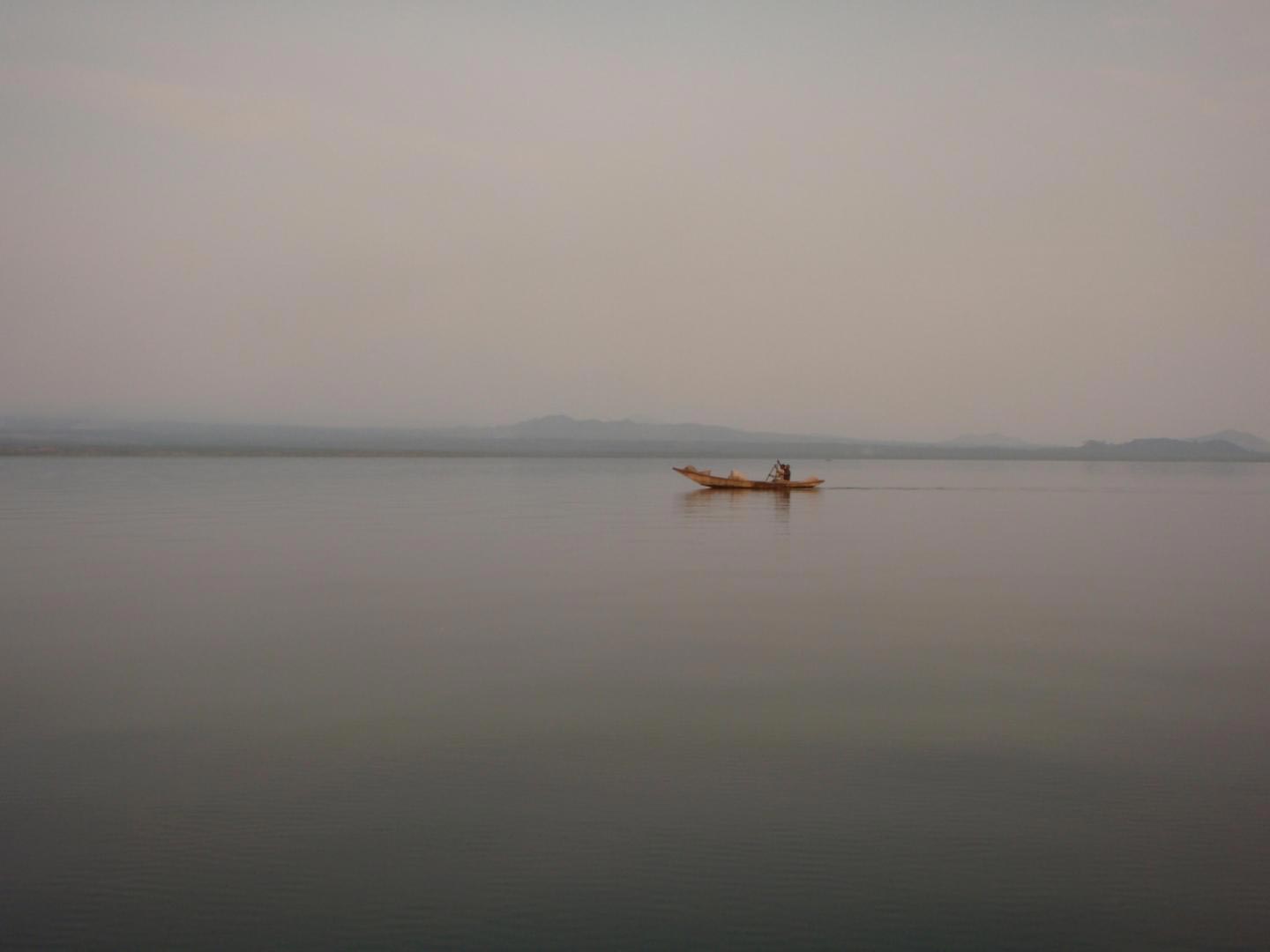
    Iron-Rich Lake in Democratic Republic of Congo
    Bacteria cultured from an iron-rich lake in Democratic Republic of Congo are helping researchers solve two of the early Earth’s biggest mysteries. Credit: University of British Columbia

    “Using modern geomicrobiological techniques, we found that certain bacteria have surfaces which allow them to expel iron minerals, making it possible for them to export these minerals to the seafloor to make ore deposits,” said Katharine Thompson, lead author of the study and Ph.D. student in UBC’s department of Microbiology and Immunology.

    “Separated from their rusty mineral products, these bacteria then go on to feed other microbes that make methane. That methane is what likely kept Earth’s early atmosphere warm, even though the sun was much less bright than today.”

    This is a possible explanation to the ‘faint-young-sun’ paradox, originated by astronomer Carl Sagan. The paradox is that there were liquid oceans on early Earth, yet heat budgets calculated from the early Sun’s luminosity and modern atmospheric chemistry imply Earth should have been entirely frozen. A frozen Earth would not have supported very much life. A methane-rich atmosphere formed in connection to large-scale iron ore deposits and life was initially proposed by University of Michigan atmospheric scientist James Walker in 1987. The new study provides strong physical evidence to support the theory and finds that microscale bacterial-mineral interactions were likely responsible.

    “The fundamental knowledge we’re gaining from studies using modern geomicrobiological tools and techniques is transforming our view of Earth’s early history and the processes that led to a planet habitable by complex life including humans,” said senior author of the paper, Sean Crowe, Canada Research Chair in Geomicrobiology and associate professor at UBC.

    “This knowledge of the chemical and physical processes through which bacteria interact with their surroundings can also be used to develop and design new processes for resource recovery, novel building and construction materials, and new approaches to treating disease.”

    In the future, such geo-microbiological information will likely be invaluable to large-scale geoengineering efforts that might be used to remove from CO2 from the atmosphere for carbon capture and storage, and again influence climate through bacterial mineral interactions.

    Reference: “Photoferrotrophy, deposition of banded iron formations, and methane production in Archean oceans” by Katharine J. Thompson, Paul A. Kenward, Kohen W. Bauer, Tyler Warchola, Tina Gauger, Raul Martinez, Rachel L. Simister, Céline C. Michiels, Marc Llirós, Christopher T. Reinhard, Andreas Kappler, Kurt O. Konhauser and Sean A. Crowe, 27 November 2019, Science Advances.
    DOI: 10.1126/sciadv.aav2869

    Never miss a breakthrough: Join the SciTechDaily newsletter.
    Follow us on Google and Google News.

    Bacteria Biochemistry Climate Science Microbiology University of British Columbia
    Share. Facebook Twitter Pinterest LinkedIn Email Reddit

    Related Articles

    Lesions of Doom – How a Parasitic Bacterium Disrupts Blood Vessels in the Human Body

    Researchers Have Found a Way to Control Bacteria to Transport Microscopic Cargo

    Proof in an Ancient Shell: Earth Turned Faster 70 Million Years Ago

    A Small Answer to One of the Biggest Problems on the Planet

    Incredible Images Reveal How Bacteria Form Communities on the Human Tongue

    Bioluminescent Bacteria Kill Rivals and Establish Symbiosis in Squid Using Genetic Regulatory Factors

    ‘Poison Arrows’ Launched by Warring Bacteria Could Lead to New Antibiotics

    Solution to Decades-Old Puzzle of Ice Age Ocean Chemistry

    Climate Change Threatens Boreal Coniferous Forests

    Leave A Reply Cancel Reply

    • Facebook
    • Twitter
    • Pinterest
    • YouTube

    Don't Miss a Discovery

    Subscribe for the Latest in Science & Tech!

    Trending News

    The Strange “Spacetime Crystal” That Can Suddenly Turn Into a Black Hole

    The Surprising Way Asteroids May Have Helped Life Begin on Earth

    Vast Hidden Structure Discovered Under Miles of Ice in East Antarctica

    A Surprising Discovery Suggests Autism Is Not One Condition

    New Alzheimer’s Discovery Could Change How Scientists Fight the Disease

    Yale Discovery Overturns Long-Held “Evolutionary Dead End” Theory

    UCLA Scientists Uncover a “Hidden Weakness” in Some of the World’s Deadliest Cancers

    Humpback Whale Stuns Scientists With 15,000 Kilometer Journey Across Oceans

    Follow SciTechDaily
    • Facebook
    • Twitter
    • YouTube
    • Pinterest
    • Newsletter
    • RSS
    SciTech News
    • Biology News
    • Chemistry News
    • Earth News
    • Health News
    • Physics News
    • Science News
    • Space News
    • Technology News
    Recent Posts
    • Meet the Artemis III Astronauts Preparing for NASA’s Boldest Moon Mission Yet
    • Scientists Develop a New Way To Measure Gravitational Waves in the Expanding Universe
    • MIT’s New Dual-Mode Rocket System Could Send Tiny Satellites to Mars
    • Scientists Discover a Biological Clock Unlike Anything Seen Before
    • This “Zombie” Sea Creature Keeps Growing After Being Cut Apart
    Copyright © 1998 - 2026 SciTechDaily. All Rights Reserved.
    • Science News
    • About
    • Contact
    • Editorial Board
    • Privacy Policy
    • Terms of Use

    Type above and press Enter to search. Press Esc to cancel.