
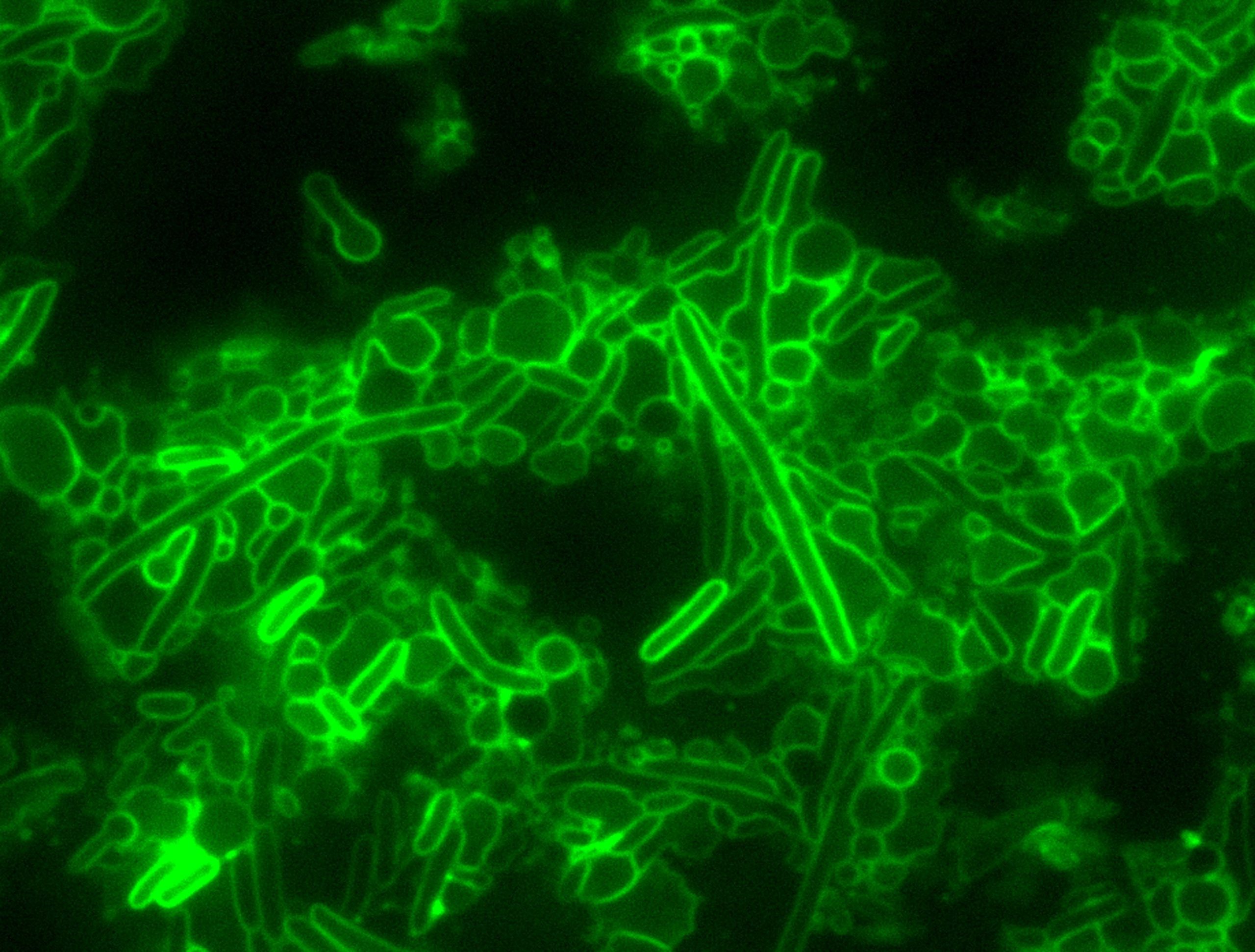
A weapon bacteria use to vanquish their competitors could be copied to create new forms of antibiotics, according to Imperial College London research.
Researchers have uncovered a novel weapon in the arsenal of bacteria that works in a similar way to common antibiotics.
“By further understanding and characterizing the molecular targets of VgrG2b, and how the toxin works, this research would support the design of new antibiotics.” — Dr. Thomas Wood
By discovering the mechanism of this new weapon, the team says new antibiotics could be designed to fill the gap left by rising antibiotic resistance.
Lead author Professor Alain Filloux, from the MRC Center for Molecular Bacteriology and Infection in the Department of Life Sciences at Imperial, said: “Bacteria evolved alongside each other for billions of years and have designed many strategies to fight and kill each other to prevail in the environment.
“This new ‘toxic arrowhead’ is one of the tools developed for this, and finding all the other possible strategies employed for bacterial warfare would help researchers and the pharmaceutical industry replenish the currently dwindling pipeline of antibiotics.”
Fired from a molecular crossbow
The new study, published in Cell Reports, looked at the Type VI Secretion System (T6SS) – a ‘molecular crossbow’ that some bacteria use to launch toxic packages at rival bacteria. Bacteria fight for dominance to control food sources and space, allowing them to thrive in their environment.
“Bacteria evolved alongside each other for billions of years and have designed many strategies to fight and kill each other to prevail in the environment.” — Professor Alain Filloux
The team discovered a new kind of toxic arrowhead used by the bacteria Pseudomonas aeruginosa, called VgrG2b, with the toxin found at the very tip. By analyzing the atomic structure of the toxin, the team showed that it is an enzyme known as a metallopeptidase, which cuts up proteins.
Once fired into a rival bacterium, VgrG2b targets the cell envelope, between the inner and outer bacterial membranes and encompassing the cell wall. Dr. Abderrahman Hachani, now at the University of Melbourne’s Doherty Institute, said: “This vital area provides structural integrity to the cell, regulates its growth, and acts as a protective barrier against the external environment.”
VgrG2b prevents the cell from dividing, causing it instead to bulge and eventually explode as the integrity of the cell fails.
Antibiotic mimic
This form of attack is similar to how a group of antibiotics, called beta-lactams, work. These antibiotics include penicillin, and as is the case with many classes of antibiotics, many harmful bacteria are becoming increasingly resistant to them.
Dr. Thomas Wood, now at Harvard Medical School, said: “The impact of VgrG2b on target cells mimics the action of beta-lactam antibiotics. Yet it is clear that its mode of action is different. By further understanding and characterizing the molecular targets of VgrG2b, and how the toxin works, this research would support the design of new antibiotics.”
The research was supported by the Medical Research Council and the Wellcome Trust.
Reference: “The Pseudomonas aeruginosa T6SS Delivers a Periplasmic Toxin that Disrupts Bacterial Cell Morphology” by Thomas E. Wood, Sophie A. Howard, Andreas Förster, Laura M. Nolan, Eleni Manoli, Nathan P. Bullen, Hamish C.L. Yau, Abderrahman Hachani, Richard D. Hayward, John C. Whitney, Waldemar Vollmer, Paul S. Freemont and Alain Filloux, 1 October 2019, Cell Reports.
DOI: 10.1016/j.celrep.2019.08.094
Never miss a breakthrough: Join the SciTechDaily newsletter.
Follow us on Google and Google News.