
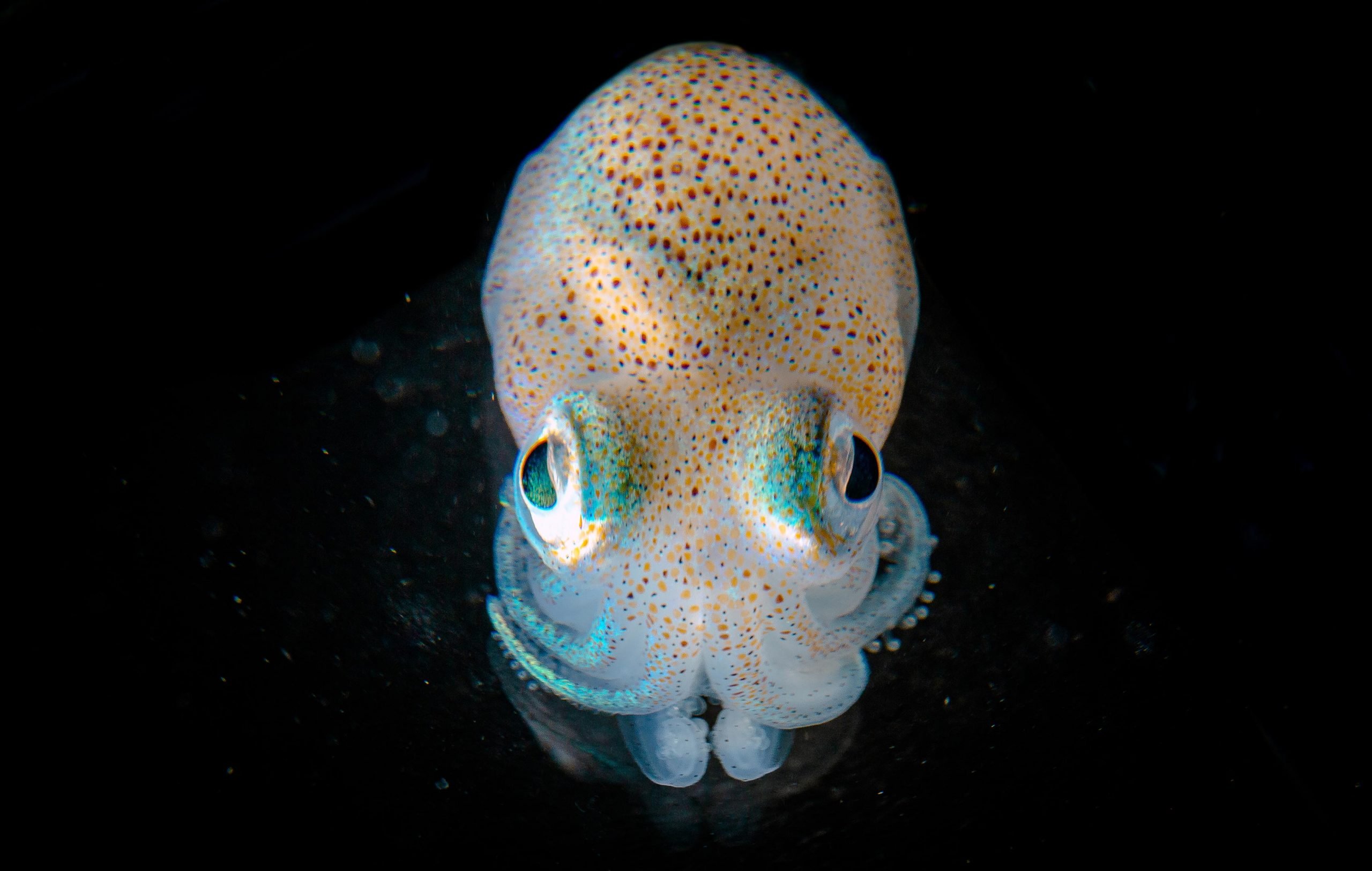
Two factors that control the expression of a key gene required by luminescent bacteria to kill competing bacterial cells have been identified. The finding, by researchers at Penn State, sheds light on the molecular mechanisms that enable different strains of bacteria to compete and establish symbiosis in the Hawaiian bobtail squid. Consequently, the study, which appears online in the Journal of Bacteriology, adds to our understanding of how the make-up of a host’s microbiome is determined, and may be applicable to more complex microbiomes in humans.
“We are trying to understand how bacteria interact with one another in the context of an animal-microbe symbiosis,” said Tim Miyashiro, assistant professor of biochemistry and molecular biology at Penn State and the leader of the research team. “With many of these symbioses, the surface of the host tissue becomes an ecosystem where the cells of different species and strains of bacteria interact and compete for resources. We knew that some of these bacterial strains have the capacity to attack and kill other strains, but we didn’t know how this mechanism is regulated genetically.”
When a Hawaiian bobtail squid hatches, bioluminescent bacteria in the surrounding environment begin to colonize tiny recesses called crypts in the squid’s light organ. The bacteria find shelter and a nutrient-rich environment within the crypts, where they produce a blue glow that researchers believe helps to obscure the nocturnal squids from predators below. Some strains of this bacteria, Vibrio fischeri, employ a needle-like mechanism known as a type VI secretion system (T6SS) to inject toxins into and kill nearby bacterial cells. Strains that use T6SS will kill susceptible bacterial strains in a crypt, whereas those without T6SS can cohabitate with other strains.
“The type VI system is found within many different bacteria,” said Kirsten R. Guckes, a postdoctoral researcher at Penn State and first author of the paper. “It was originally thought to primarily contribute to the virulence of pathogenic bacteria. For example, Vibrio cholerae, the bacteria that causes cholera, uses it. But, we now know that beneficial bacteria, like V. fischeri, also use T6SS to kill other bacteria. Because T6SS is thought to be energetically expensive for the bacteria to produce, and doing so could interfere with the bacteria’s ability to thrive and produce bioluminescence, understanding how the components of the system are regulated will help us to explain the host-symbiont relationship and the factors that contribute to establishing symbiosis.”
A key structural component of T6SS is Hcp, coded for by two functionally redundant genes. The research team showed that the expression of Hcp is dependent on two factors: the alternative sigma factor σ54 and the bacterial enhancer binding protein VasH. Additionally, they showed that VasH, which is required for the bacteria to kill other cells, regulates Hcp expression within the host, suggesting that the expression of T6SS is regulated during symbiosis.
“The knowledge that the environment of the host can stimulate the type VI system suggests that the system has been integrated into the developmental program that the bacteria use when they initiate symbiosis with the squid,” said Miyashiro. “So, it appears that the system is important for the establishment of symbiosis, whether or not other competing bacteria are present. Additionally, we can apply what we are learning in this relatively simple host-symbiont relationship to more complex microbiomes like the ones found in the human gut and on our skin.”
Reference: “The Bacterial Enhancer Binding Protein VasH Promotes Expression of a Type VI Secretion System in Vibrio fischeri during Symbiosis” by Kirsten R. Guckes, Andrew G. Cecere, Amanda L. Williams, Anjali E. McNeil and Tim Miyashiro, 21 January 2020, Journal of Bacteriology.
DOI: 10.1128/JB.00777-19
In addition to Miyashiro and Guckes, the research team at Penn State includes Andrew G. Cecere, Amanda L. Williams, and Anjali E. McNeil. The research was funded by the U.S. National Institutes of Health.
Never miss a breakthrough: Join the SciTechDaily newsletter.
Follow us on Google and Google News.