
Close Menu
    Facebook X (Twitter) Instagram
    SciTechDaily
    • Biology
    • Chemistry
    • Earth
    • Health
    • Physics
    • Science
    • Space
    • Technology
    Facebook X (Twitter) Pinterest YouTube RSS
    SciTechDaily
    Home»Health»SARS-CoV-2 Coronavirus Has a “Camouflage” That Causes Cells Not to Recognize It – “Fundamental Advance in Our Understanding of the Virus”
    Health

    SARS-CoV-2 Coronavirus Has a “Camouflage” That Causes Cells Not to Recognize It – “Fundamental Advance in Our Understanding of the Virus”

    By University of Texas Health Science Center at San AntonioJuly 24, 20201 Comment3 Mins Read
    Facebook Twitter Pinterest Telegram LinkedIn WhatsApp Email Reddit
    Share
    Facebook Twitter LinkedIn Pinterest Telegram Email Reddit
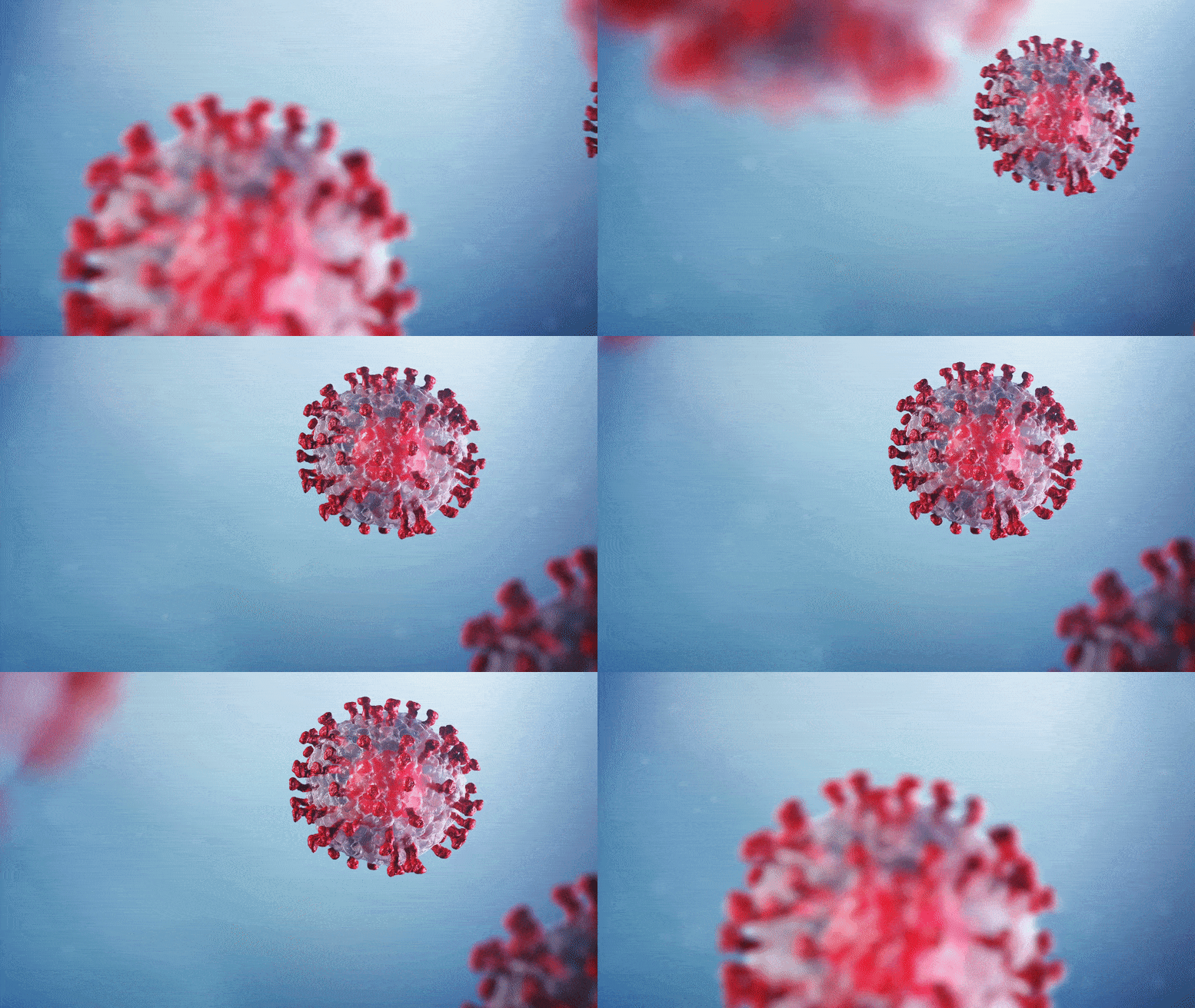
    Coronavirus Camouflage Concept
    Researchers have uncovered how the SARS-CoV-2 virus enters cells without triggering immune system response. By modifying its messenger RNA cap using an enzyme called nsp16, the virus camouflages itself as part of the cell’s own code. This allows it to enter cells undetected.

    Discovery lays groundwork for designing novel antiviral drugs.

    With an alarm code, we can enter a building without bells going off. It turns out that the SARS coronavirus 2 (SARS-CoV-2) has the same advantage entering cells. It possesses the code to waltz right in.

    Today (July 24, 2020), in Nature Communications, researchers at The University of Texas Health Science Center at San Antonio (UT Health San Antonio) reported how the coronavirus achieves this.

    Yogesh K Gupta
    Yogesh K. Gupta, Ph.D., and colleagues at UT Health San Antonio discovered the mechanism by which the novel coronavirus is able to enter cells without encountering immune system resistance. Credit: UT Health San Antonio

    The scientists resolved the structure of an enzyme called nsp16, which the virus produces and then uses to modify its messenger RNA cap, said Yogesh Gupta, Ph.D., the study lead author from the Joe R. and Teresa Lozano Long School of Medicine at UT Health San Antonio.

    “It’s a camouflage,” Dr. Gupta said. “Because of the modifications, which fool the cell, the resulting viral messenger RNA is now considered as part of the cell’s own code and not foreign.”

    Deciphering the 3D structure of nsp16 paves the way for rational design of antiviral drugs for COVID-19 and other emerging coronavirus infections, Dr. Gupta said. The drugs, new small molecules, would inhibit nsp16 from making the modifications. The immune system would then pounce on the invading virus, recognizing it as foreign.

    “Yogesh’s work discovered the 3D structure of a key enzyme of the COVID-19 virus required for its replication and found a pocket in it that can be targeted to inhibit that enzyme. This is a fundamental advance in our understanding of the virus,” said study coauthor Robert Hromas, MD, professor and dean of the Long School of Medicine.

    Dr. Gupta is an assistant professor in the Department of Biochemistry and Structural Biology at UT Health San Antonio and is a member of the university’s Greehey Children’s Cancer Research Institute.

    In lay terms, messenger RNA can be described as a deliverer of genetic code to worksites that produce proteins.

    Reference: “Structural basis of RNA cap modification by SARS-CoV-2” by Thiruselvam Viswanathan, Shailee Arya, Siu-Hong Chan, Shan Qi, Nan Dai, Anurag Misra, Jun-Gyu Park, Fatai Oladunni, Dmytro Kovalskyy, Robert A. Hromas, Luis Martinez-Sobrido and Yogesh K. Gupta, 24 July 2020, Nature Communications.
    DOI: 10.1038/s41467-020-17496-8

    The laboratory of the lead author, Yogesh Gupta, Ph.D., is supported through funds from the Max and Minnie Tomerlin Voelcker Foundation, the San Antonio Area Foundation, The University of Texas System, UT Health San Antonio, the Greehey Children’s Cancer Research Institute of UT Health San Antonio, and the Cancer Prevention and Research Institute of Texas (CPRIT).

    Never miss a breakthrough: Join the SciTechDaily newsletter.
    Follow us on Google and Google News.

    COVID-19 Infectious Diseases Popular University of Texas Virology
    Share. Facebook Twitter Pinterest LinkedIn Email Reddit

    Related Articles

    18 Months of the COVID-19 Pandemic – Are We Doing Anything Right?

    Global COVID-19 Cases Now Dominated by New, More Infectious Strain of Virus

    Far-UVC Light Safely Kills 99.9% of Airborne Coronaviruses

    COVID-19 Could Be a Seasonal Illness – Recurring in Periods of Lower Humidity

    Killing COVID-19 Coronavirus With a Handheld UV Light Device

    How COVID-19 Kills: New Study Explains the Mechanisms of the New Coronavirus

    Vitamin D Linked to Low Coronavirus Death Rate

    Infection Researchers Identify How Coronaviruses From Animals Need to Change to Spread to Humans

    COVID-19 Can Cause Cardiac Injury – Even in Patients Without Underlying Heart Conditions

    1 Comment

    1. Carolyn L Zaremba on July 26, 2020 2:54 pm

      A very good explanation of this process appears in the book, “The Great Influenza” by John M. Barry in the chapter entitled “The Swarm”. Scary stuff.

      Reply
    Leave A Reply Cancel Reply

    • Facebook
    • Twitter
    • Pinterest
    • YouTube

    Don't Miss a Discovery

    Subscribe for the Latest in Science & Tech!

    Trending News

    Scientists May Have Discovered How To Heal Damaged Kidneys

    Interstellar Visitor 3I/ATLAS Is Bursting With an Unexpected Chemical

    Scientists Just Found All 5 Genetic “Letters” of DNA and RNA on an Asteroid

    The 4,000-Year-Old City That Defied History’s Rules on Wealth and Power

    The World’s Biggest Population Fear Has Flipped – and It Could Change Everything

    This “Fake” Pill Improved Memory and Physical Performance in Just 3 Weeks

    Scientists Say Frequent Ejaculation May Improve Sperm Quality and Fertility

    Scientists Have Found “The Heaven Sword” After Years of Looking

    Follow SciTechDaily
    • Facebook
    • Twitter
    • YouTube
    • Pinterest
    • Newsletter
    • RSS
    SciTech News
    • Biology News
    • Chemistry News
    • Earth News
    • Health News
    • Physics News
    • Science News
    • Space News
    • Technology News
    Recent Posts
    • Scientists Create Tiny “Mini Livers” That Could One Day Replace Liver Transplants
    • This Surprising Factor May Predict Heart Disease Decades Before It Strikes
    • New Nonsurgical Knee Treatment Delivers Lasting Pain Relief
    • Scientists Discover Hidden Rule That Could Make Fuel Cells Cheaper and More Powerful
    • New Water-Harvesting Jacket Pulls up to 30 Ounces of Drinking Water From the Air Daily
    Copyright © 1998 - 2026 SciTechDaily. All Rights Reserved.
    • Science News
    • About
    • Contact
    • Editorial Board
    • Privacy Policy
    • Terms of Use

    Type above and press Enter to search. Press Esc to cancel.