
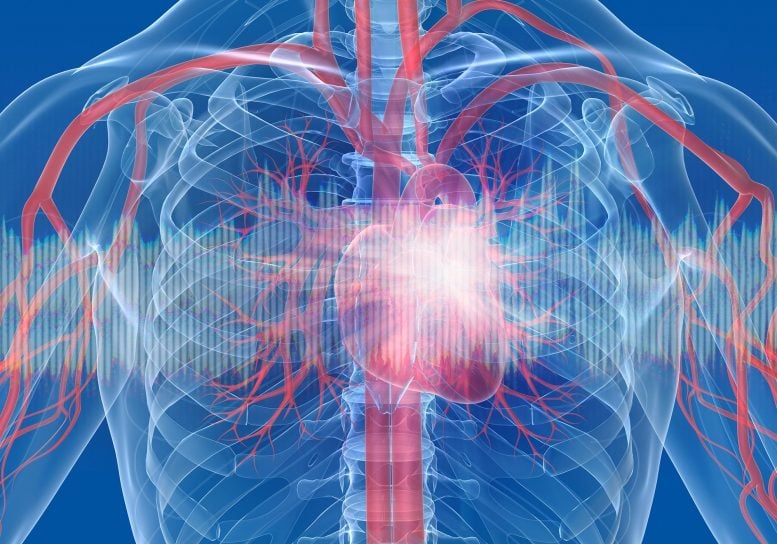
COVID-19 can have fatal consequences for people with underlying cardiovascular disease and cause cardiac injury even in patients without underlying heart conditions, according to a review published today (March 27, 2020) in JAMA Cardiology by experts at The University of Texas Health Science Center at Houston (UTHealth).
Experts have known that viral illnesses such as COVID-19 can cause respiratory infections that may lead to lung damage and even death in severe cases. Less is known about the effects on the cardiovascular system.
“It is likely that even in the absence of previous heart disease, the heart muscle can be affected by coronavirus disease,” said Mohammad Madjid, MD, MS, the study’s lead author and an assistant professor of cardiology at McGovern Medical School at UTHealth. “Overall, injury to heart muscle can happen in any patient with or without heart disease, but the risk is higher in those who already have heart disease.”
The study authors explained that research from previous coronavirus and influenza epidemics suggest that viral infections can cause acute coronary syndromes, arrhythmias, and the development of, or exacerbation of, heart failure.
In a clinical bulletin issued by the American College of Cardiology, it was revealed that the case fatality rate of COVID-19 for patients with cardiovascular disease was 10.5%. Data also points to a greater likelihood that individuals over the age of 65 with coronary heart disease or hypertension can contract the illness, as well as experience more severe symptoms that will require critical care.
According to the study authors, critical cases are those that reported respiratory failure, septic shock, and/or multiple organ dysfunction or failure that resulted in death. “It is reasonable to expect that significant cardiovascular complications linked to COVID-19 will occur in severe symptomatic patients because of the high inflammatory response associated with this illness,” said Madjid, who also sees patients at the UT Physicians Multispecialty — Bayshore clinic.
The novel virus that causes COVID-19 was first identified in January 2020. This novel virus originated in Wuhan, China, and by March 11, 2020, the World Health Organization had declared it a global pandemic. The three most common symptoms of COVID-19 include fever, cough, and shortness of breath. Other less common symptoms are muscle pain, sore throat, nasal congestion, and headache. Symptoms can appear as soon as two days after exposure to the virus to up to 14 days after. There is a high viral load in both symptomatic and asymptomatic patients, meaning asymptomatic spread between person to person is likely.
Previously identified coronaviruses known to cause severe illness in humans include Severe Acute Respiratory Syndrome Coronavirus (SARS-CoV) and Middle East Respiratory Syndrome (MERS-CoV). SARS-CoV was first identified in southern China in 2002, and by 2003 it had killed over 8,000 individuals in 29 countries. Data suggests that SARS-CoV may have resulted in cardiovascular complications, such as acute coronary syndrome and myocardial infarction. MERS-CoV was first discovered in 2012 in Saudi Arabia. As of 2019, 2,494 cases have been confirmed along with 858 deaths in 26 countries.
Current COVID-19 treatment options are being researched, and there is a large effort to develop vaccines for prevention and to test antivirals for the treatment of the disease. In the meantime, the study authors encourage all individuals to consult with their health care providers about being vaccinated against influenza and that at-risk patients seek advice on receiving a pneumonia vaccine from their primary care physician. While these vaccines will not provide specific protection against COVID-19, they can help prevent superimposed infections alongside COVID-19.
Reference: “Potential Effects of Coronaviruses on the Cardiovascular System: A Review” by Mohammad Madjid, MD, MS; Payam Safavi-Naeini, MD; Scott D. Solomon, MD and Orly Vardeny, PharmD, 27 March 2020, JAMA Cardiology.
DOI: 10.1001/jamacardio.2020.1286
Study co-authors include Payam Safavi-Naeini, MD, of the Texas Heart Institute; Scott Solomon, MD, of Harvard Medical School; and Orly Vardeny, PharmD, of the University of Minnesota.
Never miss a breakthrough: Join the SciTechDaily newsletter.
Follow us on Google and Google News.
1 Comment
https://www.sott.net/article/134182-Infrasound-There-is-geometry-in-the-humming-of-the-strings-there-is-music-in-the-spacing-of-the-spheres
INFRASOUND may be the cause of the injuries. The spirals of bubble energy one after another enveloping Earth. INFRASOUND on Wiki says heart, lung injury possible.