
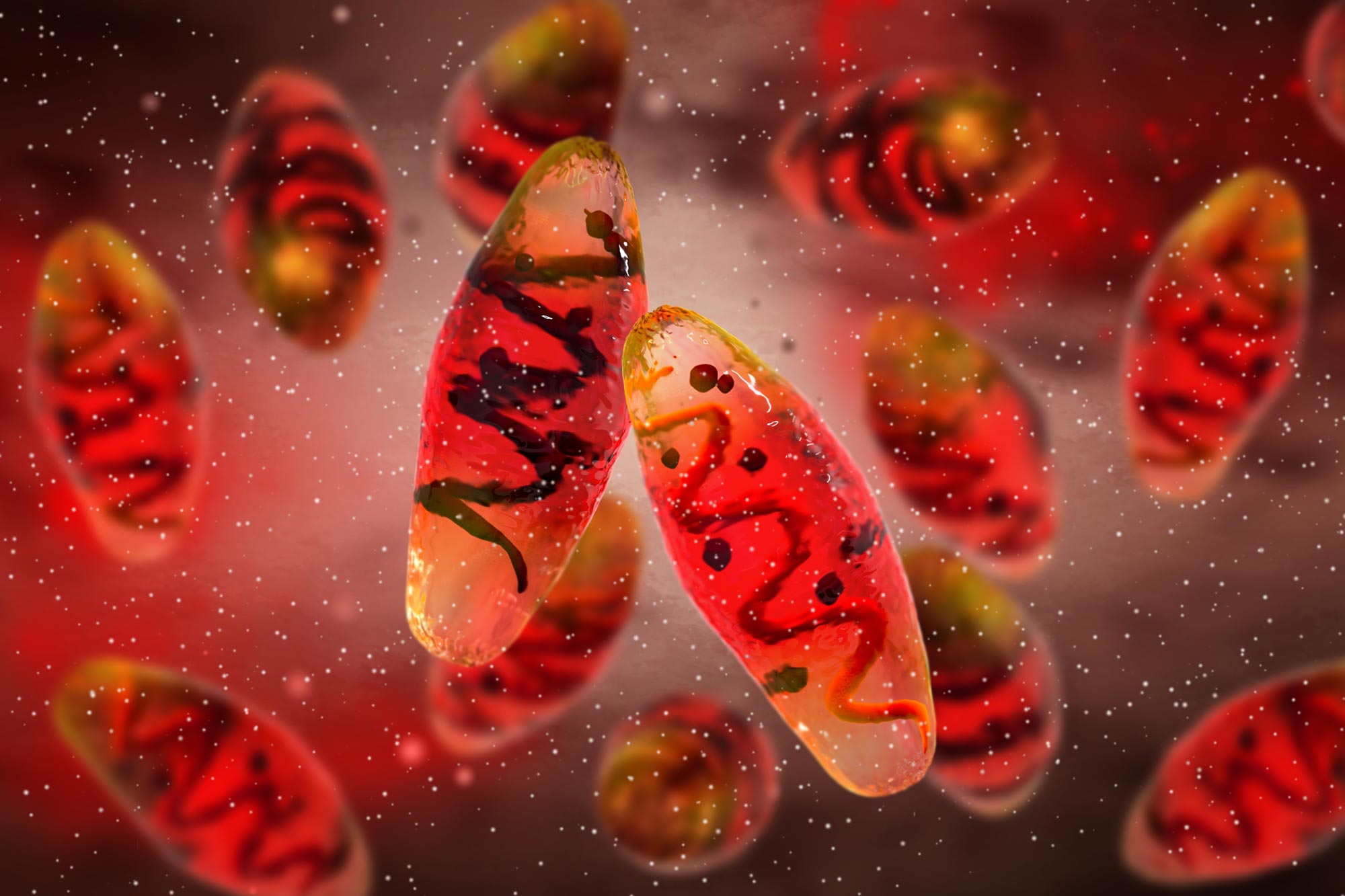
Scientists investigating an ancient mystery have uncovered the first evidence that a Bronze Age strain of plague infected livestock, not just humans.
During the Middle Ages, a devastating outbreak of plague wiped out roughly one-third of Europe’s population. The disease spread when fleas carrying the bacterium Yersinia pestis moved from infected rats to humans, triggering what became known as the Black Death.
Thousands of years earlier, a different form of Y. pestis appeared during the Bronze Age, about 5,000 years ago. This ancient strain affected human populations across Eurasia for nearly 2,000 years before disappearing. Unlike the later medieval version, it could not be passed along by fleas, leaving scientists uncertain about how it managed to persist and travel across such a wide region for so long.
Researchers have now uncovered an important clue. An international team that includes University of Arkansas archaeologist Taylor Hermes has identified the first known case of a Bronze Age plague infection in an animal. The group detected Y. pestis DNA in the remains of a domesticated sheep that lived around 4,000 years ago at Arkaim, a fortified settlement in the Southern Ural Mountains of present-day Russia near the border of Kazakhstan. This finding helps explain how the ancient plague may have moved across continents.
The study was published in the journal Cell. Additional contributors came from Harvard University and leading research institutions in Germany, Russia, and South Korea.
A lucky discovery
Hermes co-directs a large, ongoing study of ancient livestock DNA. By analyzing the DNA in animal bones and teeth, Hermes and his collaborators are tracing how domesticated cattle, goats and sheep spread from the Fertile Crescent throughout Eurasia and gave rise to nomadic societies and empires.
“When we test livestock DNA in ancient samples, we get a complex genetic soup of contamination,” Hermes said. “This is a large barrier to getting a strong signal for the animal, but it also gives us an opportunity to look for pathogens that infected herds and their handlers.”
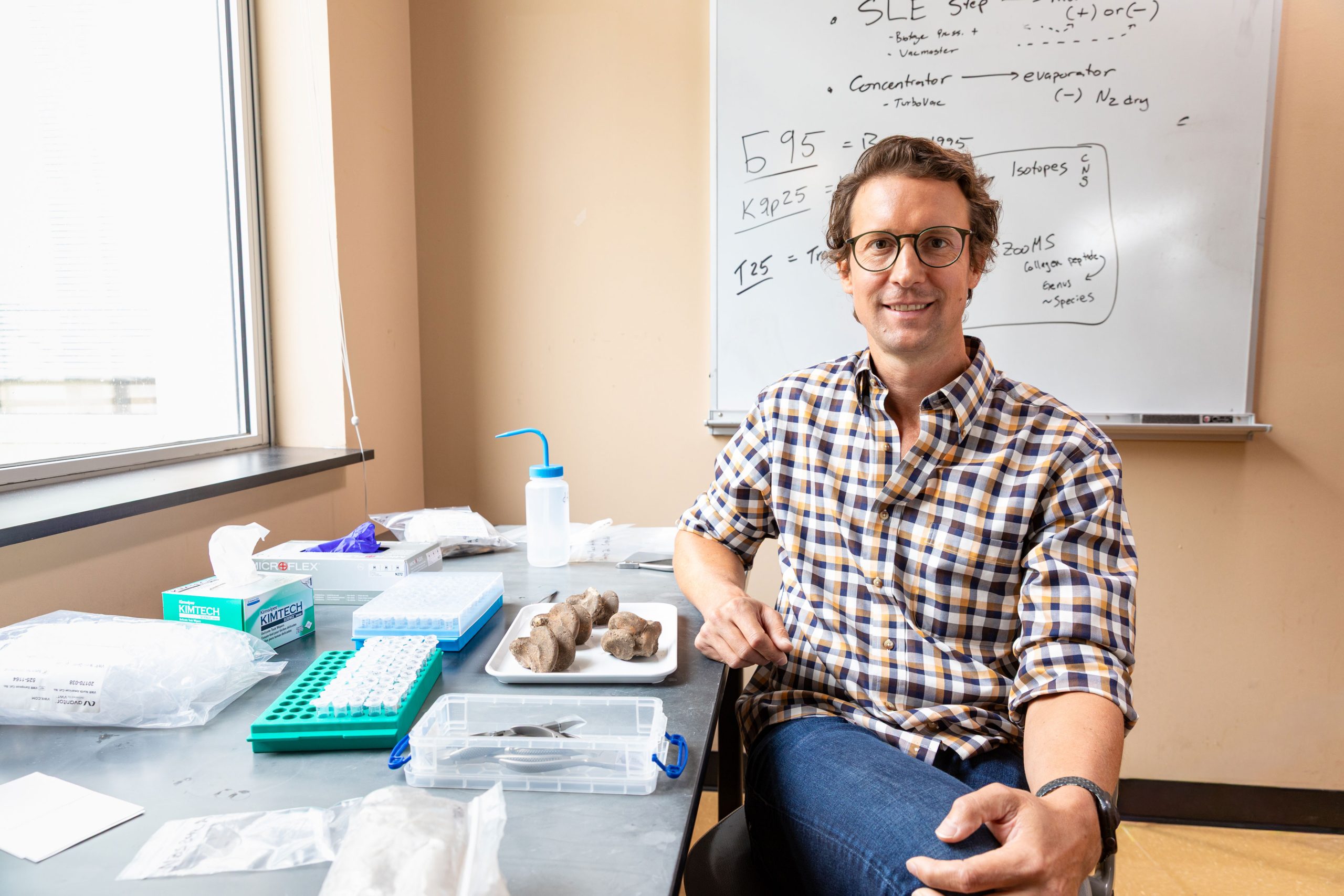
The research is highly technical and time-intensive. A host’s DNA must be filtered out from all the other DNA in the sample. Organisms that lived in the surrounding ground where the bones and teeth were buried leave their own DNA. The researchers themselves contaminate the samples with DNA from their saliva and skin cells. The recovered DNA fragments are often only 50 base pairs long. In comparison, a complete strand of human DNA is more than 3 billion base pairs.
Animal remains are also rarely as well preserved as human remains, which are normally carefully buried. Heat from cooking the animals and the leftovers being left in trash piles and exposed to the elements degrade genetic material.
While analyzing livestock samples excavated from Arkaim in the 1980s and 1990s, Hermes and his colleagues realized a sheep bone contained DNA from Y. pestis.
“It was alarm bells for my team. This was the first time we had recovered the genome from Yersinia pestis in a non-human sample,” Hermes said. “We were extra excited because Arkaim is linked to the Sintashta culture, which is known for early horse riding, impressive bronze weaponry, and substantial geneflow into Central Asia.”
The next question to answer
Scientists have found numerous examples of identical strains of Bronze Age plague in humans thousands of kilometers apart. How did the disease spread so widely?
“It had to be more than people moving. Our plague sheep gave us a breakthrough. We now see it as a dynamic between people, livestock, and some still unidentified ‘natural reservoir’ for it, which could be rodents on the grasslands of the Eurasian steppe or migratory birds,” Hermes said.
A natural reservoir is an animal that carries the bacteria but does not get sick from it. In the Middle Ages, rats were the reservoir and fleas were the vector for Y. pestis. Today, bats are often the natural reservoir for pathogens like Ebola and the Marburg virus.
To continue this work, Hermes has received a five-year grant from Germany’s Max Planck Society for 100,000 Euros to dig for human and animal samples in the Southern Urals near Arkaim. He will be looking for more examples of Y. pestis infections.
The Bronze Age was the moment when people in the Sintashta culture began to maintain larger herds of livestock, while also riding horses well for the first time. The Bronze Age plague was likely a result of that closer contact with animals and frequently moving into areas where they would be exposed to the reservoir. Even though it occurred thousands of years ago, Hermes believes the ancient plague has lessons for us today.
When we encroach on natural environments with new economic needs, there can be deadly consequences. We should appreciate the delicate inner workings of the ecosystems we might disturb and aim to preserve the balance.
“It’s important to have a greater respect for the forces of nature,” he said.
Reference: “Bronze Age Yersinia pestis genome from sheep sheds light on hosts and evolution of a prehistoric plague lineage” by Ian Light-Maka, Taylor R. Hermes, Raffaela Angelina Bianco, Lena Semerau, Pavel Kosintsev, Valeriia Alekseeva, Donghee Kim, William P. Hanage, Alexander Herbig, Choongwon Jeong, Christina Warinner and Felix M. Key, 11 August 2025, Cell.
DOI: 10.1016/j.cell.2025.07.029
Funding: Wenner-Gren Foundation, Max-Planck-Förderstiftung
Never miss a breakthrough: Join the SciTechDaily newsletter.
Follow us on Google and Google News.