
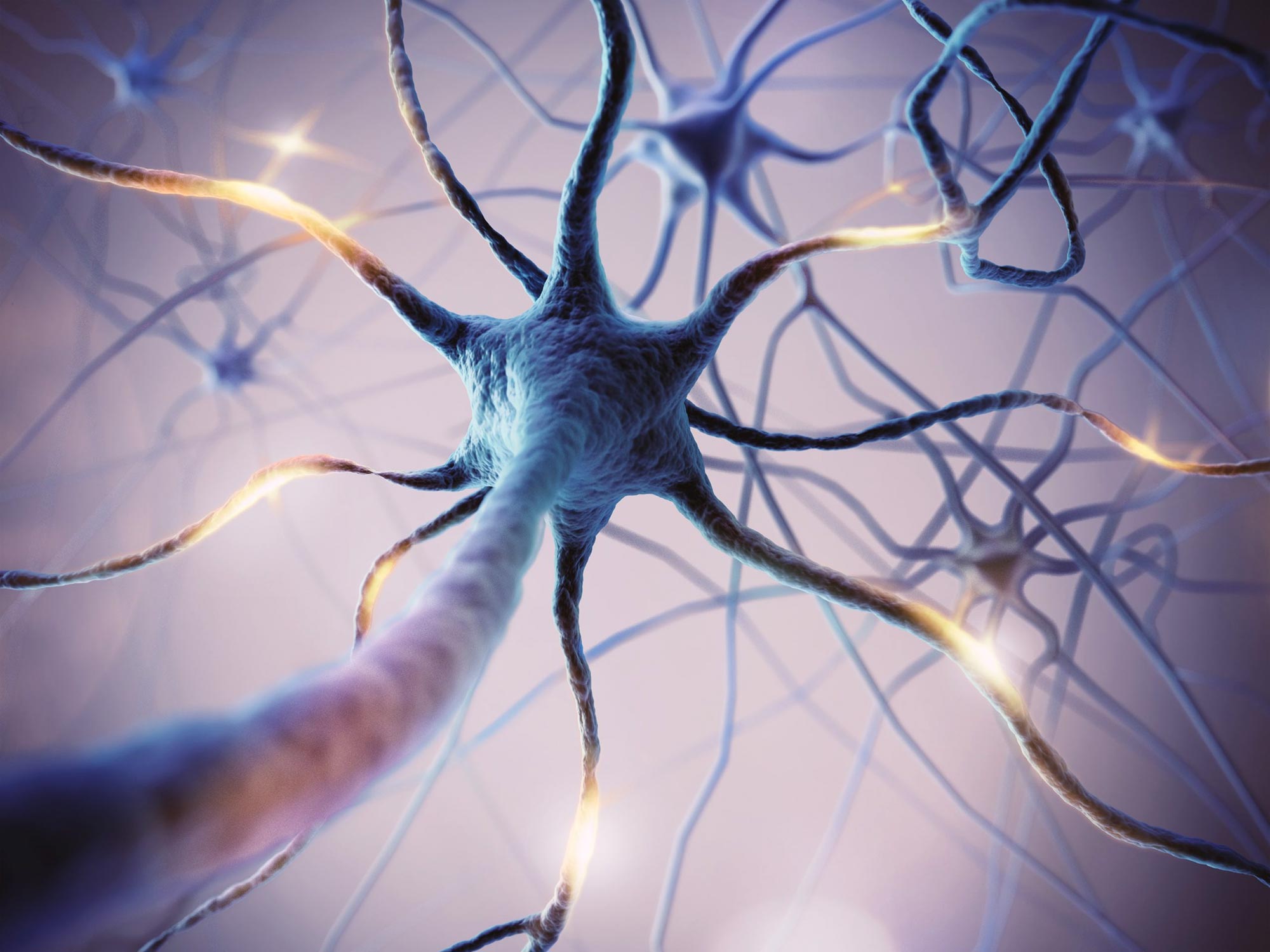
A single neuron may help the brain recognize what it sees, track what the body is doing, and guide a decision, all at the same time.
Most neurons may be far more versatile than scientists once thought. In a major study published in Nature, researchers analyzed more than 14,000 individual neurons across 43 regions of the mouse cortex and found that most did not perform one clearly defined job. Instead, they responded to shifting combinations of sensory information, movement, and decision-making.
The findings attracted unusual attention even before publication, with preliminary versions downloaded more than 11,000 times. The attention underscores a fundamental question in neuroscience: Are neurons dedicated specialists, or can individual brain cells participate in many different processes?
The answer appears to depend on where a neuron is located. Strong specialists were found in primary sensory regions, including areas that process visual information. But as signals moved into brain regions involved in more complex processing, neurons became increasingly difficult to sort into distinct functional groups.
Why the Brain Defies Simple Labels
In most of the cortex, the researchers found a diverse population of neural generalists.
“We have to move away from this image of the brain as a machine made of gears, with every gear having an exact purpose that we can attach a label to,” said Stefano Fusi, PhD, a principal investigator at Columbia’s Zuckerman Institute, a member of the Kavli Institute for Brain Science and the paper’s co-senior author. “The brain doesn’t work like that. Instead, most neurons can display a huge diversity of responses, and this can help the brain solve a huge number of different tasks.”
The discovery challenges a familiar way of describing the brain. Scientists often speak of neurons that respond to faces, locations, movements, or other particular features. Such labels can be useful, but the new findings suggest they may capture only one part of what a cell does.
A neuron that appears devoted to one feature under certain conditions may also encode several other pieces of information. Its activity might reflect what an animal sees, which choice it is considering, how it moves, and whether it expects a reward.
That flexibility could help explain how the brain handles new situations without requiring a separate group of cells for every possible experience.
Resolving a Long-Running Neuroscience Debate
Whether neurons are specialists or generalists “is an old, important question, and one which researchers have really strong opinions on,” said Lorenzo Posani, PhD, the study’s co-lead author and a principal investigator at the Paris Brain Institute and France’s CNRS. Posani conducted the work while at Columbia’s Zuckerman Institute.
The debate has remained unresolved partly because neuroscience experiments are often difficult to compare. Different laboratories may study different animals, brain regions, behaviors, or recording methods. One experiment might reveal neurons that appear highly specialized, while another finds cells responding to several unrelated variables.
The new study reduced those inconsistencies by examining a massive standardized dataset from the International Brain Laboratory. The recordings followed mice performing the same decision-making task while researchers measured individual neurons across dozens of cortical regions.
This allowed the team to compare neural activity across much of the cortex under the same conditions rather than piecing together results from unrelated experiments.
Specialists Become the Exception
The pattern was clear. Neurons near the beginning of the brain’s processing hierarchy tended to have more defined roles. Visual neurons, for example, were more likely to respond consistently to particular sensory features.
Farther along the hierarchy, those clean divisions largely disappeared. Neurons became more varied, with each cell responding to a different mixture of information. The cortex appeared to favor diversity over a rigid system of narrowly defined cell types.
“We’re not saying that there are no specialized neurons,” said Fusi, who is also a professor of neuroscience at Columbia’s Vagelos College of Physicians and Surgeons and a member of Columbia’s Center for Theoretical Neuroscience. “We’re saying they are the exceptions. They’re not the rule.”
Organized Brain Regions, Diverse Neurons
Despite this diversity, the activity was not random.
The researchers could often determine which brain region a neuron came from simply by examining its responses during the task. Cells within the same region shared broad characteristics, even though individual neurons rarely behaved in precisely the same way.
“For example, compare this to maps of voter opinions,” Posani said. “There are clear clusters where people generally vote the same way. But when you zoom in, you see mixes of opinions.”
The same principle appeared across the cortex. Brain regions remained distinguishable at the population level, but their individual neurons showed a wide range of response patterns.
The researchers also found that individual neurons rarely responded in exactly the same way.
A Flexible, High-Dimensional Brain Code
“Each is versatile in its own way,” said study co-lead author Shuqi Wang, a doctoral student at École Polytechnique Fédérale de Lausanne in Switzerland.
This diversity may be one of the brain’s strengths. If thousands of neurons responded identically, much of their activity would be redundant. By encoding different combinations of information, a population can represent far more possibilities.
Consider an animal viewing objects that differ in color and shape. Some neurons might respond mainly to color, while others reflect shape, movement, choice, or a combination of those variables. Together, their activity could distinguish a red circle from a red square, a black circle, or many other possibilities.
Neuroscientists describe these complex population patterns as “high-dimensional” representations. Rather than storing each feature separately, groups of neurons encode many overlapping variables at once. This creates a flexible neural code that can separate similar situations and support different behaviors.
“You can reuse these high-dimensional representations for lots of different tasks,” Fusi said.
Why Single Neurons Can Be Misleading
An individual neuron may respond to several variables, making its activity look confusing or inconsistent when viewed alone. The underlying information becomes clearer only when researchers examine the coordinated patterns produced by large populations of cells.
That idea marks a shift from decades of research that often searched for neurons with simple, easily labeled responses while setting aside cells that did not fit an obvious category.
Fusi said the field historically focused “on one neuron at a time, discarding all neurons whose responses could not be understood.”
The apparently messy activity of those cells may not have been meaningless. It may have reflected a richer and more adaptable form of information processing than researchers could detect with older approaches.
New Clues to Brain Disorders
Understanding this population code could eventually help scientists investigate what changes when brain networks malfunction. Neurological and psychiatric disorders may not always involve the failure of a single specialized cell type. Some could instead arise when patterns across large groups of versatile neurons lose their organization, flexibility, or ability to separate information.
The researchers also want to determine whether neurons shift between specialist and generalist behavior depending on the task. A cell that responds broadly in one situation might take on a narrower role when the brain faces a different demand.
“There is still a lot to discover,” Fusi said.
Reference: “Rarely categorical, highly separable representations along the cortical hierarchy” by Lorenzo Posani, Shuqi Wang, Samuel P. Muscinelli, Liam Paninski and Stefano Fusi, 15 July 2026, Nature.
DOI: 10.1038/s41586-026-10668-4
This work was funded by grants from the National Institutes of Health (RF1AG080818, U19NS123716), the Simons Foundation, the Kavli Foundation, the Gatsby Foundation (GAT3708), and the Swartz Foundation. This work is also supported by the funds provided by the National Science Foundation and by the DoD Office of the Under Secretary of Defense (R&E) under Cooperative Agreement PHY-2229929 (the NSF AI Institute for Artificial and Natural Intelligence). Dr. Posani was also supported by the NIH 1K99MH135166-01 grant.
Never miss a breakthrough: Join the SciTechDaily newsletter.
Follow us on Google and Google News.