
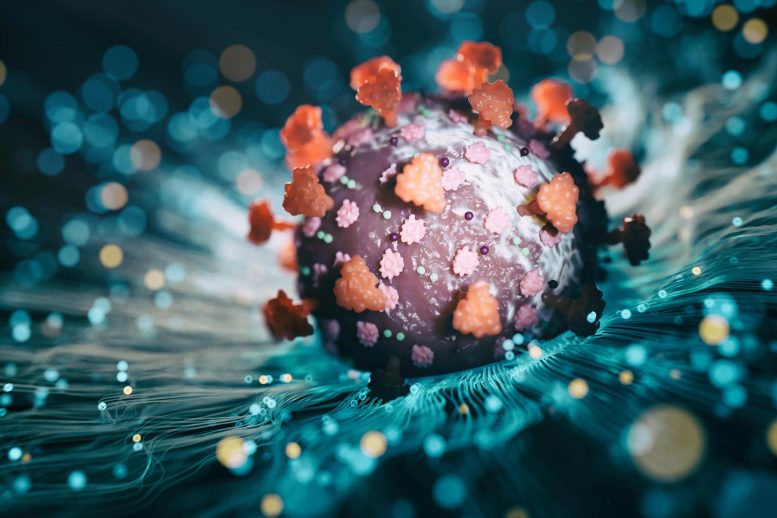
The Arcturus variant of COVID-19, a subvariant of Omicron, has been identified in 34 countries, with India hardest hit. The variant’s heightened transmissibility is likely due to its ability to evade immunity from vaccinations and prior infections. While there’s no data on vaccine efficacy against Arcturus, it is not currently believed to be more severe than previous variants, and scientists are developing vaccines to counter such emerging strains.
A new COVID variant XBB.1.16, or “Arcturus,” has now been identified in at least 34 countries including the UK.
Arcturus is a subvariant of omicron and was first detected in India in January 2023.
As of April 17, the latest date up to which the UK Health Security Agency (UKHSA) has reported data on this variant in the UK, 105 cases of Arcturus had been sequenced across England. Five Britons who tested positive for Arcturus have died.
It’s important to note that only a small portion of COVID infections undergo genetic sequencing, so it’s likely there are many more cases of Arcturus. The UKHSA recently reported that the variant is making up 2.3% of sequences in the UK.
Meanwhile, Arcturus has been steadily rising in the US in recent weeks, accounting for more than 10% of new confirmed COVID cases as of the end of April.
But the variant has been most dominant in India, which had recorded 61% of global sequences of Arcturus as of mid-April. It has driven a huge increase in cases in India over the past month. The country was recording more than 10,000 COVID cases each day with Arcturus making up about two-thirds of all cases. Fortunately, this wave now appears to be on the decline.
Nonetheless, Arcturus has been classified as a variant of interest by the World Health Organization. So what do we know about this variant, and should we be worried?
Where did Arcturus come from?
XBB.1.16 is a descendant of XBB, a recombinant omicron strain, meaning it contains genetic material from two different variants. Specifically, XBB is a mixture of two BA.2 sublineages: BA.2.10.1 and BA.2.75.
XBB has shown increased transmissibility relative to earlier variants, probably because it appears to be better at evading existing immunity from vaccination and prior infections.
Arcturus is very closely related to XBB.1.5, also known as Kraken.
Compared with its parent strain XBB, Arcturus has three additional mutations in the spike protein: E180V, F486P and K478R. This is a protein on the surface of SARS-CoV-2 (the virus that causes COVID) which allows it to bind to and infect our cells.
Arcturus is understood to be the most contagious subvariant yet, and these additional mutations might explain why.
The typical symptoms of COVID include fever, cough, runny nose and loss of sense of taste or smell. However, doctors in India have reported conjunctivitis symptoms in children infected with Arcturus, which has not generally been seen in earlier COVID waves.
What about vaccine protection?
COVID vaccines target the spike protein of SARS-CoV-2. As such, mutations in the spike protein may affect how well the vaccines work.
There is no data yet on vaccine efficacy against Arcturus. However, a recent study found that among people who had been vaccinated or previously infected, the antibody responses generated against closely related strains XBB and XBB.1 were significantly lower than against other variants.
So XBB subvariants could threaten current COVID vaccines and therapeutics. But importantly, it’s likely vaccines still offer good protection against severe disease.
While further studies are needed to confirm how Arcturus responds to vaccines, scientists are continuing work on new vaccines that could offer stronger protection against emerging variants.
The continued evolution of omicron
Although omicron was first detected in late 2021 it continues to evolve resulting in new subvariants. Arcturus is one of some 600 detected to date.
This is to be expected in a highly vaccinated population. New variants naturally evolve to evade existing defences. Those strains with a competitive advantage – namely greater transmissibility and capacity to escape our immune response – will dominate. Arcturus may yet fuel a rise in cases in the UK and elsewhere.
However, there is no great cause for concern. While scientists will continue to monitor Arcturus, there’s no evidence at this stage to suggest it’s more severe than previous variants. In addition, we have good protection now from vaccines and natural infection.
That said, the continued evolution of COVID and the emergence of new strains such as Arcturus is a reminder that the virus is still with us. For those eligible for further boosters, it’s important to keep these up to date.
Written by Manal Mohammed, Senior Lecturer, Medical Microbiology, University of Westminster.
This article was first published in The Conversation.
Never miss a breakthrough: Join the SciTechDaily newsletter.
Follow us on Google and Google News.
4 Comments
“Where did Arcturus come from?”
Google “Project Veritas” for one possibility.
Whose brilliant idea was it to name strains of an infectious virus after stars? Disgusting.
Time for the suckers to line up for more jabs
I have just went through three and half weeks of this virus, almost as bad as covid. Respiratory, fever, no appetite, hard to breath, no energy, headaches. Do not remember much of May, do not wish on anyone!