
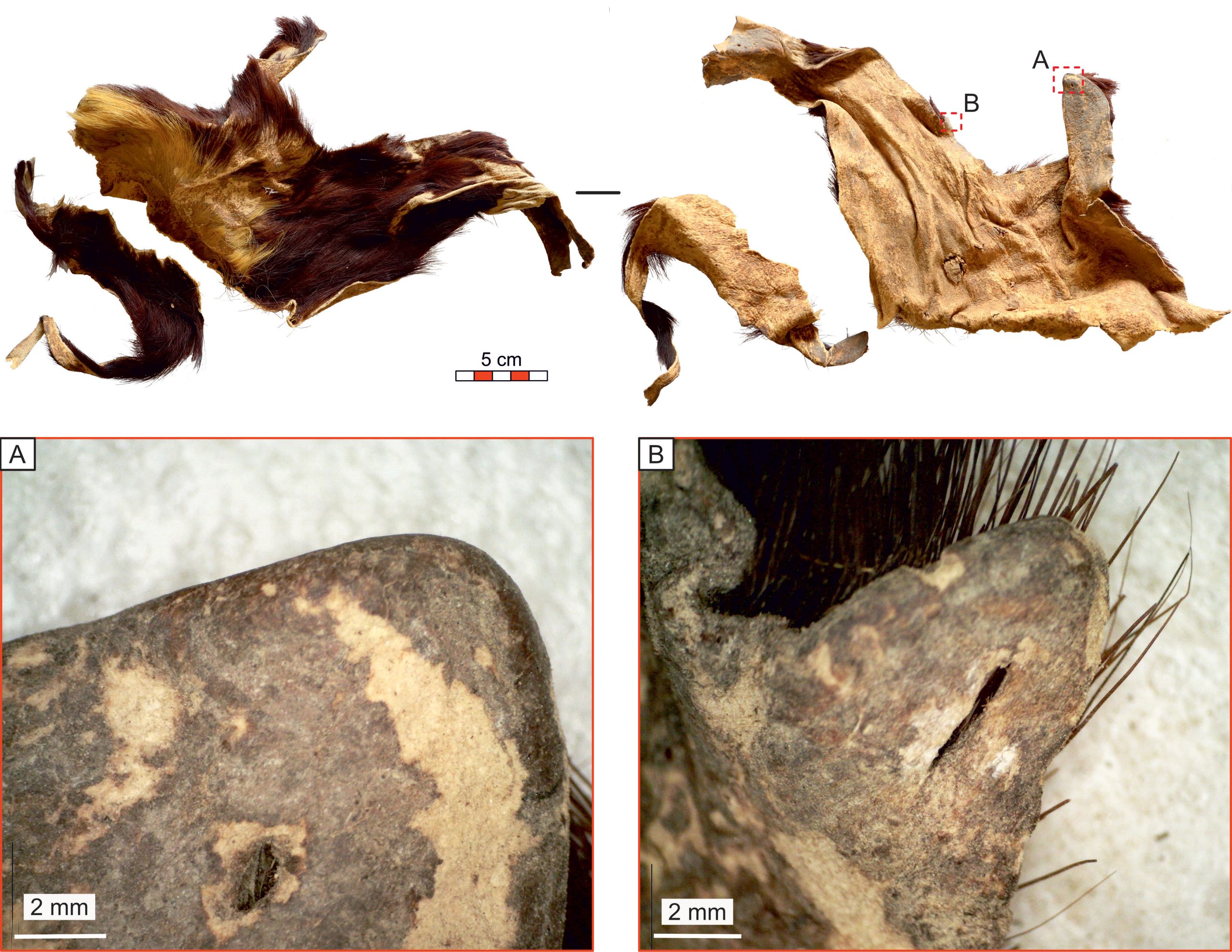
Ancient DNA recovered from a remarkably preserved piece of 7,000-year-old leather is shedding new light on how prehistoric communities in Spain used domesticated animals.
A 7,000-year-old piece of goat leather discovered in a Spanish burial cave has yielded ancient DNA, allowing scientists to trace a genetic connection between prehistoric livestock and goats living in Spain today. The exceptionally preserved material also provides direct evidence that Early Neolithic communities were processing the hides of domesticated animals.
The findings, published November 4, 2026, in the journal PLOS One, come from a study led by Jolijn A. M. Erven of University College Dublin and colleagues. Their analysis offers a rare glimpse into animal husbandry and leatherworking on the Iberian Peninsula thousands of years before written records.
Ancient Leather Preserves Evidence of Prehistoric Craftsmanship
The leather fragment was recovered from Cueva de los Murciélagos, a burial site in southern Spain known for preserving ancient organic materials. Radiocarbon dating placed the specimen at approximately 7,000 years old. Marks on its surface indicate that the hide had been tanned and perforated, suggesting it was once part of a garment or protective covering before being buried alongside human remains.
Recovering DNA from such ancient leather is particularly difficult in warmer regions, where heat and environmental conditions accelerate the breakdown of genetic material. Despite extensive fragmentation, researchers extracted both mitochondrial DNA, which is inherited through the maternal line, and nuclear DNA, which contains genetic information from both parents.
Francisco Martínez-Sevilla emphasized the unusual preservation conditions: “The preservation of this 7,000-year-old goat leather is exceptional. Cueva de los Murciélagos has preserved organic materials that rarely survive in the archaeological record, offering us a unique opportunity to investigate prehistoric technologies, animal husbandry, and the relationships between human communities and domestic animals.”
Ancient DNA Connects Neolithic Goats With Modern Spanish Breeds
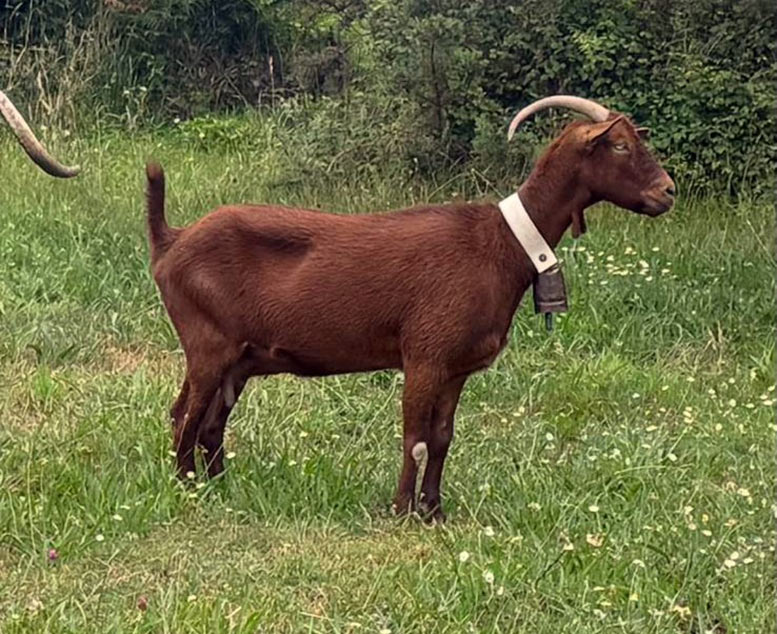
Genetic analysis identified the leather as coming from a domestic goat rather than a wild Iberian ibex. Its DNA showed a close relationship to the modern Bermeya goat breed of northern Spain, indicating that a related genetic lineage has persisted on the Iberian Peninsula for thousands of years.
The researchers also detected no evidence of African genetic ancestry in the ancient specimen, unlike the ancestry found in modern European goats. One possible explanation is that genetic exchange involving African goat populations occurred after the Neolithic period. However, the incomplete DNA and limited sample size prevent firm conclusions about when these connections developed or what they might indicate about prehistoric interactions between Iberia and Africa.
Kevin Daly highlighted the genetic link between ancient and living animals: “It is rare to for such ancient, organic materials to retain DNA – but this was one of the few exceptions. With a tiny amount of surviving DNA, we were able to show a link with Iberian breeds today – a genetic connection spanning 7,000 years. This study demonstrates what can done through the collaboration of international multidisciplinary teams – transforming an archaeological object into a link with the living present.”
Reference: “Genetic analysis of 7,000 year old preserved goat leather from Cueva de los Murciélagos (Albuñol, Spain)” by Jolijn A. M. Erven, Zoé Robinet Guyet, Louis L’Hôte, Valeria Mattiangeli, Eva Fernández-Domínguez, Geordie Laidlaw, Rafael M. Martínez Sánchez, Blas Ramos Rodríguez, Maria Herrero-Otal, Pedro Henríquez Valido, José Antonio Lozano Rodríguez, The VarGoats consortium, Daniel G. Bradley, Kevin G. Daly and Francisco Martínez-Sevilla, 4 November 2026, PLOS ONE.
DOI: 10.1371/journal.pone.0358468
Funding: This research has been carried out within the framework of different research projects: ‘De los museos al territorio: actualizando el estudio de la Cueva de los Murciélagos of Albuñol (Granada)’ (MUTERMUR) (CM/JIN/2021-009, to F. M.-S.) and ‘La Cueva de los Murciélagos of Albuñol una ventana única a la Prehistoria del sur de Europa’ (MUTERMUR 2.0) (CM/DEMG/2024-046, to F. M.-S.) financed by the Comunidad de Madrid and Universidad de Alcalá (directed by F.M.S.). Fieldwork at the site was conducted with permission from Delegación Territorial de la Junta de Andalucía de Cultura y Patrimonio Histórico de Granada (EXP: BC.03.143/22 14100 and EXP: BC.03.136/23 15490, to F.M.-S.). P.H.V is supported by a postdoctoral contract Juan de la Cierva by the Ministerio de Ciencia, Innovación y Universidades y Agencia Estatal de Investigación (AEI) (JDC2023-051629) and RMMS´s work is part of the project “First Settlements in Inland/Central Andalusia” (ERSAND) [Ref. PID2023-152309NA-I00 / funded by the Ministry of Science, Innovation and Universities of the Government of Spain]. This publication has emanated from research conducted with the financial support of Taighde Éireann – Research Ireland under Grant number 21/PATH-S/9515(T), to K.G.D; and was supported by the ERC (grant no. 101220382-HERDPATH, to K.G.D., and 885729-AncestralWeave, to D.G.B.).
Never miss a breakthrough: Join the SciTechDaily newsletter.
Follow us on Google and Google News.