
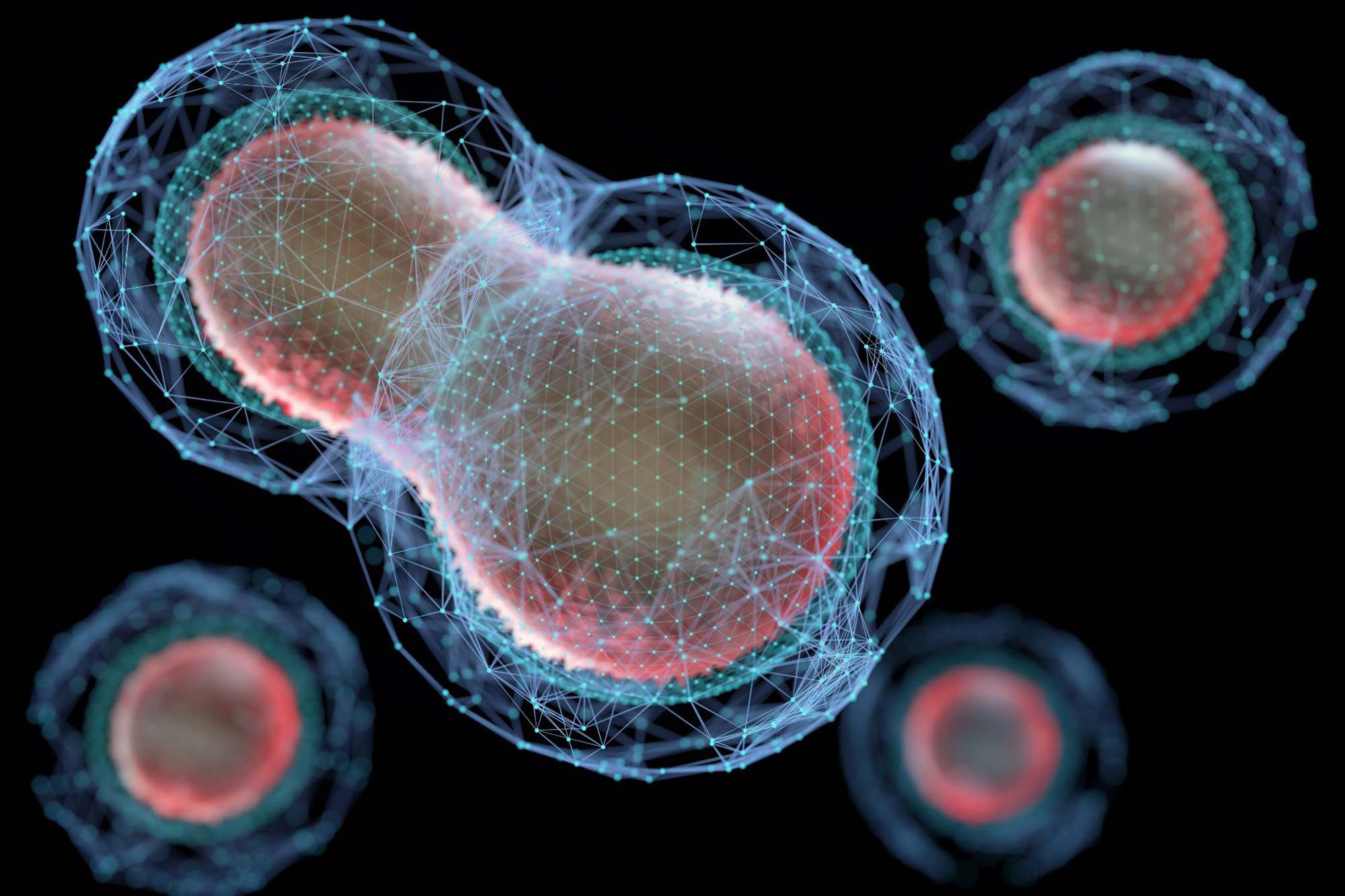
Rice lab pioneers an assembly kit for synthetic sense-and-respond circuits in human cells.
Rice University bioengineers have created a groundbreaking construction kit for designing custom sense-and-respond circuits in human cells. Published in Science, this research marks a significant advancement in synthetic biology, with the potential to transform treatments for complex diseases such as cancer and autoimmune disorders.
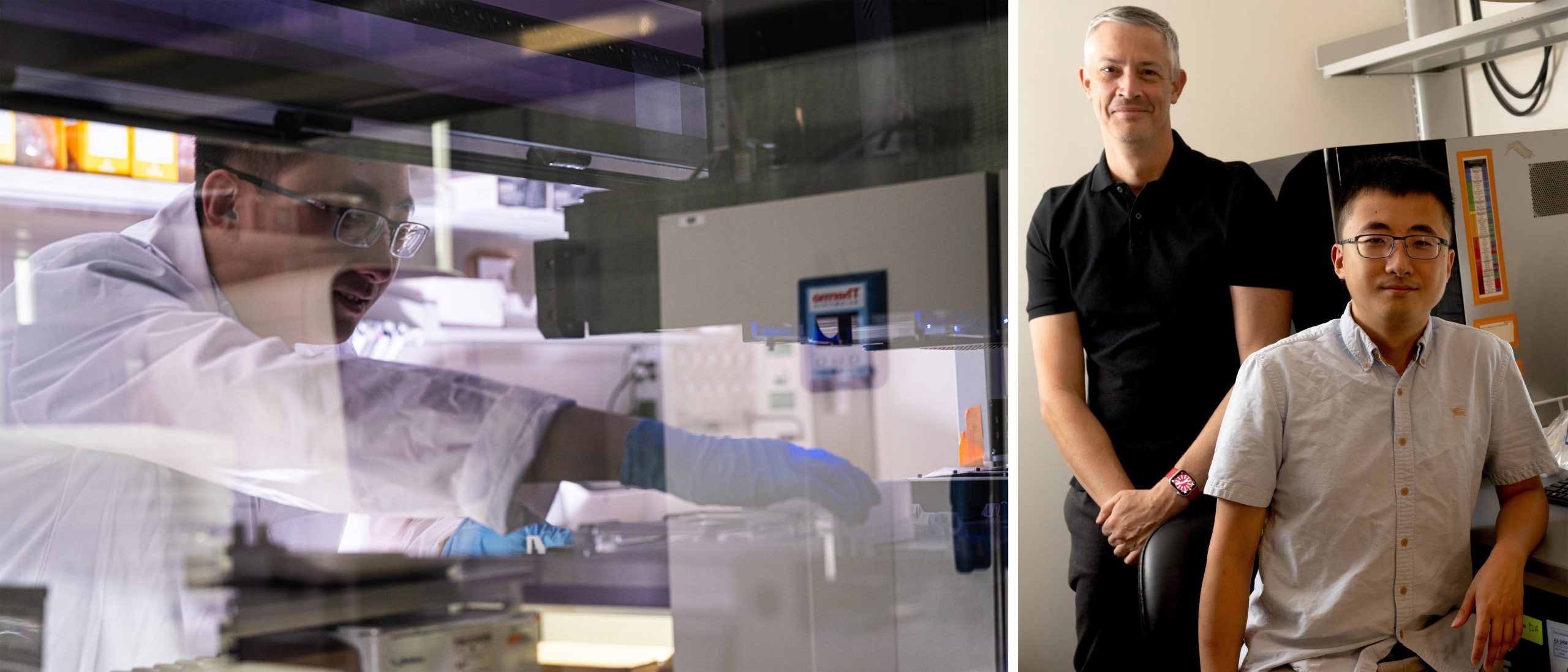
“Imagine tiny processors inside cells made of proteins that can ‘decide’ how to respond to specific signals like inflammation, tumor growth markers, or blood sugar levels,” said Xiaoyu Yang, a graduate student in the Systems, Synthetic and Physical Biology Ph.D. program at Rice who is the lead author on the study. “This work brings us a whole lot closer to being able to build ‘smart cells’ that can detect signs of disease and immediately release customizable treatments in response.”
The new approach to artificial cellular circuit design relies on phosphorylation — a natural process cells use to respond to their environment that features the addition of a phosphate group to a protein. Phosphorylation is involved in a wide range of cellular functions, including the conversion of extracellular signals into intracellular responses — e.g., moving, secreting a substance, reacting to a pathogen, or expressing a gene.
In multicellular organisms, phosphorylation-based signaling often involves a multistage, cascading effect like falling dominoes. Previous attempts at harnessing this mechanism for therapeutic purposes in human cells have focused on re-engineering native, existing signaling pathways. However, the complexity of the pathways makes them difficult to work with, so applications have remained fairly limited.
A New Perspective on Circuit Design
Thanks to Rice researchers’ new findings, however, phosphorylation-based innovations in “smart cell” engineering could see a significant uptick in the coming years. What enabled this breakthrough was a shift in perspective.
Phosphorylation is a sequential process that unfolds as a series of interconnected cycles leading from cellular input (i.e. something the cell encounters or senses in its environment) to output (what the cell does in response). What the research team realized — and set out to prove — was that each cycle in a cascade can be treated as an elementary unit, and these units can be linked together in new ways to construct entirely novel pathways that link cellular inputs and outputs.
“This opens up the signaling circuit design space dramatically,” said Caleb Bashor, an assistant professor of bioengineering and biosciences and corresponding author on the study. “It turns out, phosphorylation cycles are not just interconnected but interconnectable — this is something that we were not sure could be done with this level of sophistication before.
“Our design strategy enabled us to engineer synthetic phosphorylation circuits that are not only highly tunable but that can also function in parallel with cells’ own processes without impacting their viability or growth rate.”
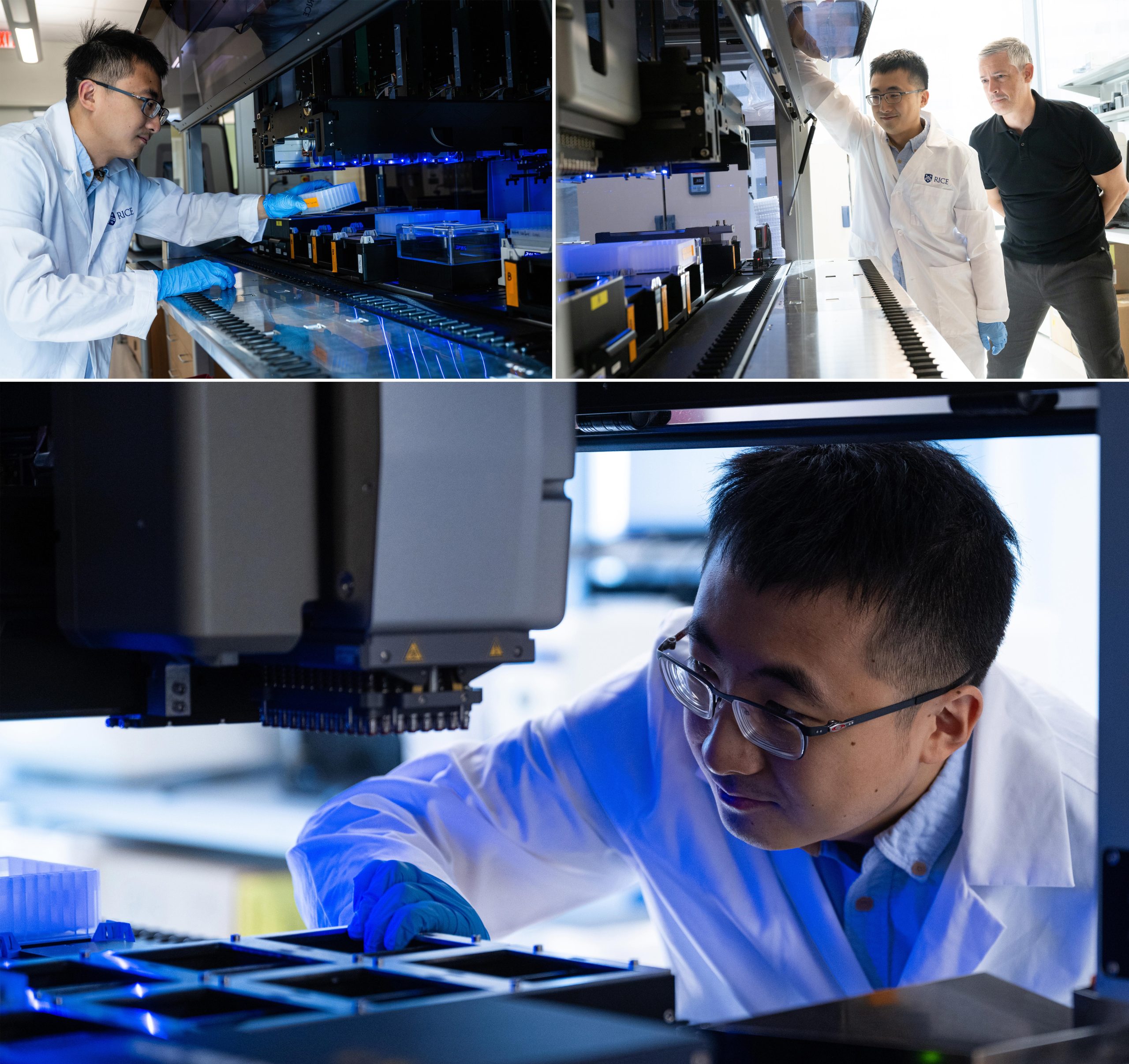
While this may sound straightforward, figuring out the rules for how to build, connect, and tune the units — including the design of intra- and extracellular outputs — was anything but. Moreover, the fact that synthetic circuits could be built and implemented in living cells was not a given.
“We didn’t necessarily expect that our synthetic signaling circuits, which are composed entirely of engineered protein parts, would perform with a similar speed and efficiency as natural signaling pathways found in human cells,” Yang said. “Needless to say, we were pleasantly surprised to find that to be the case. It took a lot of effort and collaboration to pull it off.”
Advantages of the Modular Approach
The do-it-yourself, modular approach to cellular circuit design proved capable of reproducing an important systems-level ability of native phosphorylation cascades, namely amplifying weak input signals into macroscopic outputs. Experimental observations of this effect verified the team’s quantitative modeling predictions, reinforcing the new framework’s value as a foundational tool for synthetic biology.
Another distinct advantage of the new approach to sense-and-respond cellular circuit design is that phosphorylation occurs rapidly in only seconds or minutes, so the new synthetic phospho-signaling circuits could potentially be programmed to respond to physiological events that occur on a similar timescale. In contrast, many previous synthetic circuit designs were based on different molecular processes such as transcription, which can take many hours to activate.
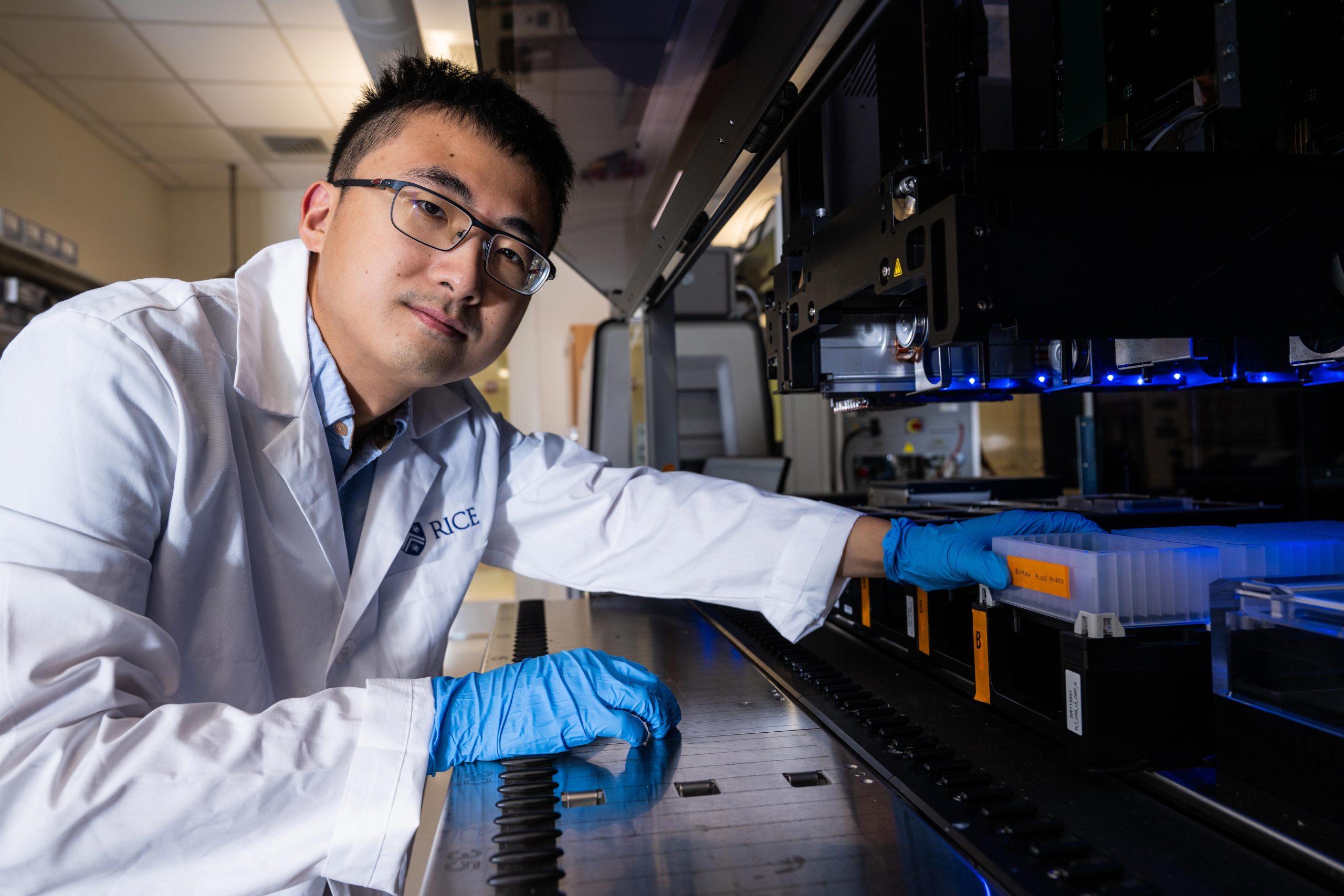
The researchers also tested the circuits for sensitivity and ability to respond to external signals like inflammatory factors. To prove its translational potential, the team used the framework to engineer a cellular circuit that can detect these factors and could be used to control autoimmune flare-ups and reduce immunotherapy-associated toxicity.
“Our research proves that it is possible to build programmable circuits in human cells that respond to signals quickly and accurately, and it is the first report of a construction kit for engineering synthetic phosphorylation circuits,” said Bashor, who also serves as deputy director for the Rice Synthetic Biology Institute, which was launched earlier this year in order to capitalize on Rice’s deep expertise in the field and catalyze collaborative research.
Caroline Ajo-Franklin, who serves as institute director, said the study’s findings are an example of the transformative work Rice researchers are doing in synthetic biology.
“If in the last 20 years, synthetic biologists have learned how to manipulate the way bacteria gradually respond to environmental cues, the Bashor lab’s work vaults us forward to a new frontier — controlling mammalian cells’ immediate response to change,” said Ajo-Franklin, a professor of biosciences, bioengineering, chemical, and biomolecular engineering and a Cancer Prevention and Research Institute of Texas Scholar.
Reference: “Engineering synthetic phosphorylation signaling networks in human cells” by Xiaoyu Yang, Jason W. Rocks, Kaiyi Jiang, Andrew J. Walters, Kshitij Rai, Jing Liu, Jason Nguyen, Scott D. Olson, Pankaj Mehta, James J. Collins, Nichole M. Daringer and Caleb J. Bashor, 2 January 2025, Science.
DOI: 10.1126/science.adm8485
The research was supported by the National Institutes of Health (R01EB029483, R01EB032272, R21NS116302, 5R35GM119461), the Office of Naval Research (N00014-21-1-4006), the Robert J. Kleberg Jr. and Helen C. Kleberg Foundation, the Claire Glassell Pediatric Fund, the Grace Reynolds Wall Research Fund and the National Science Foundation (1842494).
Never miss a breakthrough: Join the SciTechDaily newsletter.
Follow us on Google and Google News.
1 Comment
I have read your paper ” Bioengineers Create “Smart Cells” That Detect and Fight Disease in Real-Time
BY RICE UNIVERSITYFEBRUARY 9, 2025. It is good progressive research to developed new synthetic bio molecule to treat some anomalies developed in the body, but I think it is just only one part, I have been working on this topic from last 30 years, and with a God blessed, I have found complete fundamental mechanism lying in our body, if we would followed this mechanism carefully, we can prevent our body easily from overall diseases & can be treat some of them with to change of simple diet.