
Close Menu
    Facebook X (Twitter) Instagram
    SciTechDaily
    • Biology
    • Chemistry
    • Earth
    • Health
    • Physics
    • Science
    • Space
    • Technology
    Facebook X (Twitter) Pinterest YouTube RSS
    SciTechDaily
    Home»Biology»Bumblebees May Hold the Secret to How Intelligence Evolved
    Biology

    Bumblebees May Hold the Secret to How Intelligence Evolved

    By American Association for the Advancement of Science (AAAS)November 25, 2026No Comments3 Mins Read
    Facebook Twitter Pinterest Telegram LinkedIn WhatsApp Email Reddit
    Share
    Facebook Twitter LinkedIn Pinterest Telegram Email Reddit
    Bumblebee Flower Macro
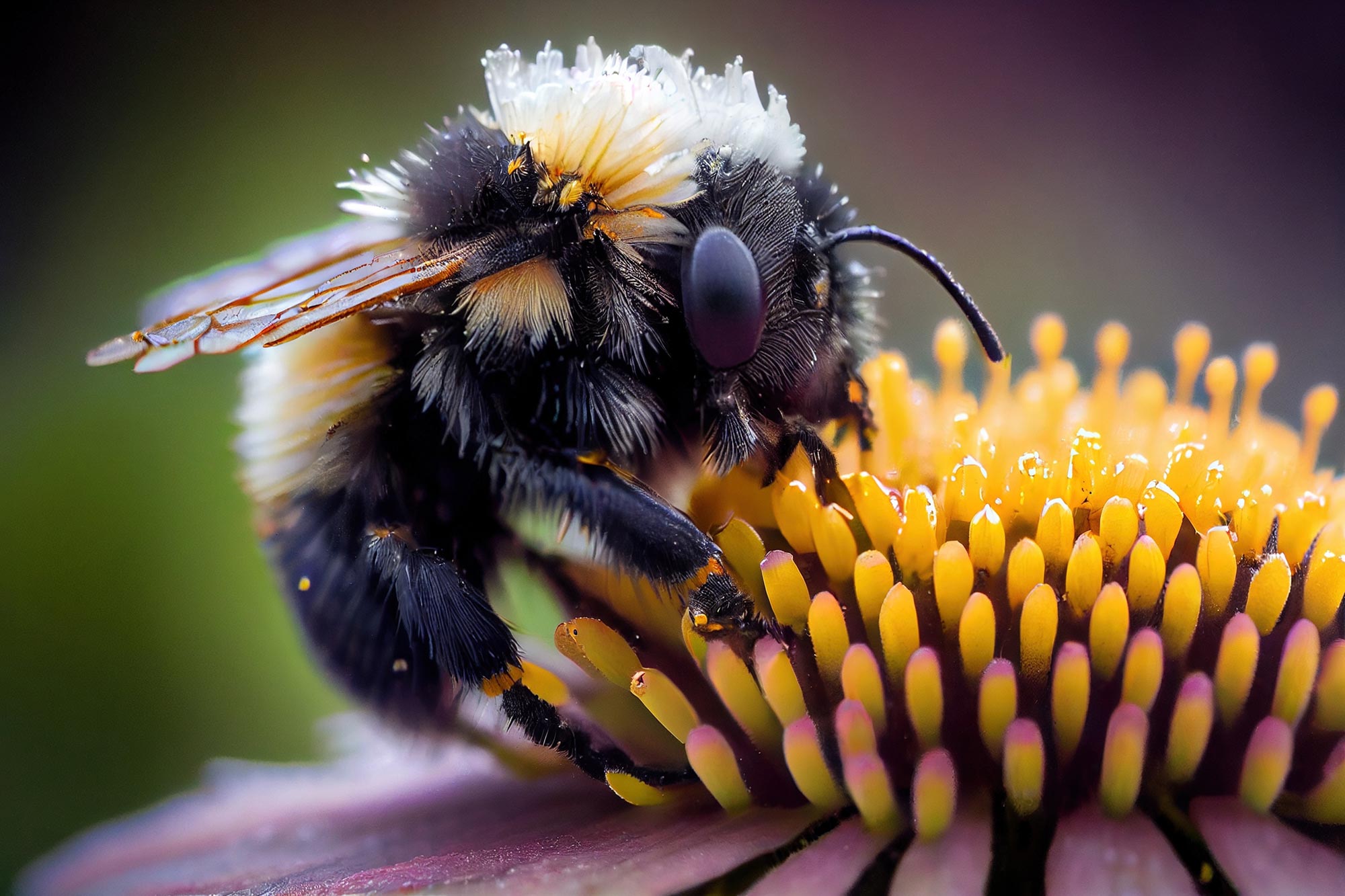
    Bumblebees (Bombus) are social insects known for their fuzzy bodies, distinctive buzzing, and vital role in pollinating wildflowers and agricultural crops. Despite their tiny brains, they possess impressive cognitive abilities, including complex learning, spatial memory, problem-solving, and flexible decision-making. Credit: Shutterstock

    Ancient neural circuits in insects may hold unexpected clues to how intelligence evolved.

    Bumblebees can solve unfamiliar problems, learn complex skills by watching others, and even transmit emotion-like states to their nestmates. They accomplish all this with fewer than a million neurons, challenging the long-standing assumption that sophisticated intelligence requires a large brain.

    In a new Perspective published in Science, researchers Lars Chittka and Stanley Heinze examine growing evidence that advanced cognitive abilities may emerge through evolutionary modifications to ancient neural circuits.

    Remarkable Intelligence in Tiny Brains

    In one experiment, bumblebees learned to move a ball and climb onto it to reach an otherwise inaccessible source of nectar. They could even guide the ball toward a target that was no longer visible, suggesting an ability to mentally represent goals and solve unfamiliar problems.

    Another study published in Nature found that bumblebees could learn to open a two-step puzzle box by observing trained nestmates, even though none independently discovered the solution.

    Bumblebees also appear capable of transmitting emotion-like states. After receiving an unexpected reward, bees displayed an optimism-like bias when interpreting ambiguous stimuli. Other bees developed a similar bias simply by observing them through a transparent barrier, without physical contact or chemical communication.

    Ancient Brain Circuits May Explain Complex Thinking

    “The remarkable cognitive abilities of bees may not have required them to evolve entirely new neural algorithms,” Chittka and Heinze write.

    One possible explanation lies in the mushroom bodies, insect brain structures involved in learning and memory. Bumblebees possess approximately 50 times as many specialized neurons called Kenyon cells as fruit flies, giving them greater memory capacity. Additional circuits involved in navigation and decision-making may also allow bees to weigh multiple goals and plan their actions.

    “More broadly, higher cognitive processes could have evolved many times and might be more widespread than previously thought,” the authors write.

    Uncovering the Origins of Intelligence

    Scientists have already produced a complete wiring diagram, known as a connectome, of the fruit fly brain. Similar efforts are underway in several bee species. Comparing these neural networks could reveal which evolutionary changes enable sophisticated cognition.

    “It seems likely that, just like between birds and mammals, different neural solutions might have evolved to produce similar cognitive traits in different insects,” write the authors. “Both shared and distinct solutions that shape the cognitive abilities of animals might emerge as general principles, and some might apply to both vertebrates and invertebrates.”

    Reference: “Bumble bee cognition” by Lars Chittka and Stanley Heinze, 19 November 2026, Science.
    DOI: 10.1126/science.aek1724

    Never miss a breakthrough: Join the SciTechDaily newsletter.
    Follow us on Google and Google News.

    American Association for the Advancement of Science Cognition Entomology Insect Neuroscience
    Share. Facebook Twitter Pinterest LinkedIn Email Reddit

    Related Articles

    Katydid Ears Have Structures Similar to Mammalian Ones

    Why Children Believe Hiding Their Eyes Makes Them Disappear

    Magnesium Supplements Could Improve Memory and Cognitive Ability

    Young Blood Reverses Some of the Effects of Age-Related Cognitive Decline

    Honeybees Switch Roles within the Hive

    Mysterious Gene Mutation Provides Window into the Biology of Language Cognition

    Secreted Peptide Dilp8 Essential to Insect Growth Rate

    Odor Processing Function of Fly Resembles Mammalian Brain

    Haemaphysalis Flava Hardy Enough to Survive Vacuum and Electron Beam

    Leave A Reply Cancel Reply

    • Facebook
    • Twitter
    • Pinterest
    • YouTube

    Don't Miss a Discovery

    Subscribe for the Latest in Science & Tech!

    Trending News

    Ancient Meteorites May Have Delivered One of Life’s Most Essential Ingredients to Earth

    A Common Meat Triggers a Unique Muscle-Building Peptide, Study Finds

    Just 2 Weeks of Ultraprocessed Foods May Change How Your Brains Respond to Food

    A Chemical Signature Suddenly Disappeared From Earth’s Rocks. Scientists Think They Know Why

    Why Ozempic Weight Loss Stalls for Some People but Not Others

    A Major Review Reveals Three Antidepressants That May Outperform Prozac

    Does the Sun Have a Secret Companion? A Controversial Theory Could Explain Earth’s Mass Extinctions

    Alzheimer’s Breakthrough: Researchers Find New Clues to Cognitive Decline in Healthy Adults

    Follow SciTechDaily
    • Facebook
    • Twitter
    • YouTube
    • Pinterest
    • Newsletter
    • RSS
    SciTech News
    • Biology News
    • Chemistry News
    • Earth News
    • Health News
    • Physics News
    • Science News
    • Space News
    • Technology News
    Recent Posts
    • Bumblebees May Hold the Secret to How Intelligence Evolved
    • Scientists Discover 130-Year-Old Fish Still Swimming in an American River
    • Intermittent Fasting May Not Work the Way Scientists Thought for Liver Health
    • Scientists Uncover a Potential Root Cause of the Global Allergy Epidemic
    • Losing Weight but Getting Less Healthy? Study Reveals a Dark Side of Keto
    Copyright © 1998 - 2026 SciTechDaily. All Rights Reserved.
    • Science News
    • About
    • Contact
    • Editorial Board
    • Privacy Policy
    • Terms of Use

    Type above and press Enter to search. Press Esc to cancel.