
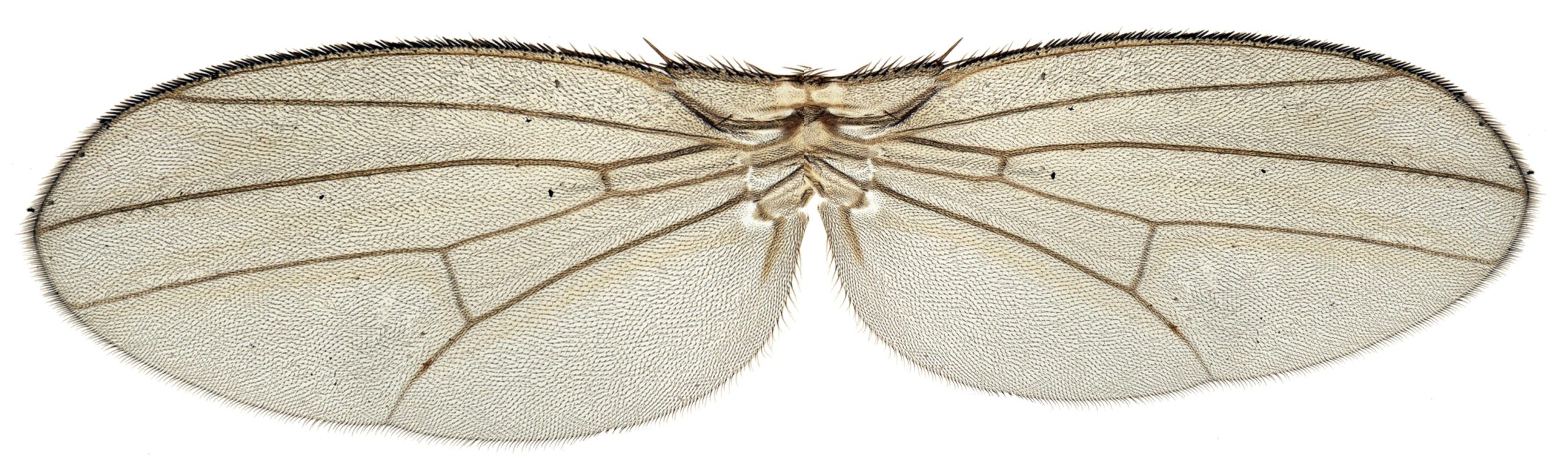
Two published studies from independent research groups show that Dilp8 is an essential part of normal insect development, slowing growth rate and allowing sufficient time for tissues to form the correct body size, proportions and symmetry.
Two independent groups of researchers have identified a hormone that is responsible for keeping the growth and development of insects on track. The results, which are reported in the journal Science, suggest that Dilp8 provides an important signal to slow body growth and delay insect development. This braking effect is an essential part of normal development since it allows sufficient time for tissues to form and the correct body size, proportions and symmetry to be achieved.
“The important question about the control of animal size is knowing when to stop,” said EMBO Member Maria Dominguez, lead author of one of the papers and Professor at the Institute of Neurosciences in Alicante, Spain. “To achieve the required precision in the control of growth, organs within the body of an insect must be capable of sensing their own size and communicating their dimensions to other organs in the body and to the endocrine system.” She added: “Our work with Drosophila suggests that growing organs and tissues produce a secreted peptide known as Dilp8. This hormone coordinates the growth rate of different organs in the body and is capable of delaying important developmental steps such as metamorphosis. In healthy flies, this additional time is essential to ensure that functional tissues are established and for organs to reach normal size. It also ensures that organs maintain perfect bilateral symmetry.”
Dominguez and collaborators examined tumours in the eye discs of Drosophila, parts of the insect body that go on to generate fully formed eyes in mature adult flies. Developing flies often adjust growth and the timing of metamorphosis to compensate for the disturbance induced by tumours or injury. The researchers wanted to investigate if a shared molecular signal was responsible for these observations. “Our work identifies Dilp8 as a signal that communicates the growth status of tissues as well as local responses to recovery from injury and cancer,” said Dominguez.
EMBO Member Pierre Léopold and collaborators from the Institute of Biology Valrose at the University of Nice, France, identified the same protein using a different experimental approach. “We used a genome-wide RNA interference approach to look for Drosophila gene candidates that might be involved in coupling growth with the timing of development. Out of 11,000 genes that we tested in our genetic screen, only one was able, upon silencing, to rescue the delay in development induced by conditions that perturb tissue growth. This candidate gene corresponded to dilp8, which is exactly same gene identified by Dominguez and collaborators.”
The expression of the dilp8 gene reduces tissue growth, which suggests that in addition to its role in preventing the hormonal induction of metamorphosis, dilp8 could act by slowing the growth of healthy tissues to stay synchronized with slow-growing tissue.
Until now, little information at the molecular level has been available about how organ growth is monitored and coordinated with the timing of development in insects and other complex organisms. Dilp8 appears to be part of the molecular machinery that helps tissues to grow and develop at the right pace.
References:
“Imaginal Discs Secrete Insulin-Like Peptide 8 to Mediate Plasticity of Growth and Maturation” by Andres Garelli, Alisson M. Gontijo, Veronica Miguela, Esther Caparros and Maria Dominguez, 4 May 2012, Science.
DOI: 10.1126/science.1216735
“Secreted Peptide Dilp8 Coordinates Drosophila Tissue Growth with Developmental Timing” by Julien Colombani, Ditte S. Andersen and Pierre Léopold, 4 May 2012, Science.
DOI: 10.1126/science.1216689
Never miss a breakthrough: Join the SciTechDaily newsletter.
Follow us on Google and Google News.