
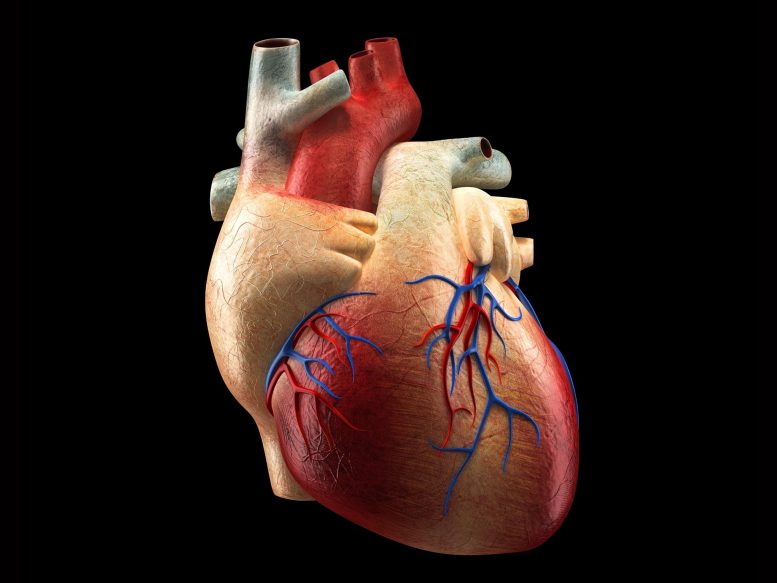
A new study by scientists at Imperial College London, the University of Birmingham, and the University of Würzburg in Germany examined Popeye domain containing proteins and their role in stress response. While studying mice, the researchers found Popdc proteins have an important function in regulating the heart’s rhythm by increasing its rhythm in times of mental or physical stress.
A family of proteins named after Popeye play an essential role in allowing the heart to respond to stress, according to a study published today in the Journal of Clinical Investigation. The finding could help scientists develop new treatments for abnormal heart rhythms.
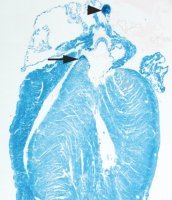
Popeye domain containing proteins (Popdc for short) were discovered 10 years ago and named because they are found in abundance in muscles, but until now their function has been unclear. The new study reveals that they help the heart to increase its rhythm in response to the hormone adrenaline, which is released in times of mental or physical stress.
Scientists at Imperial College London, the University of Birmingham, and the University of Würzburg in Germany studied mice that were deficient in Popdc proteins.
In healthy people and mice, the heart’s natural pacemaker responds to adrenaline by making the heart beat faster in order to deliver more oxygen around the body. But in the mice that lacked Popdc, the heart rate slowed when they were put in stressful situations.
Many elderly people’s heart rates slow down in a similar way in response to stress. These people may be diagnosed with a condition called sick sinus syndrome, which normally means they need to have an artificial pacemaker fitted. The researchers anticipate that the findings might lead to new treatments for this and other heart rhythm disorders that can be triggered by stress, such as arrhythmias, atrial fibrillation and sudden cardiac death.
Professor Thomas Brand, from the National Heart and Lung Institute at Imperial College London, who led the study, said: “Many elderly people have problems with the natural pacemaker in their heart that can be triggered by stress, but we still know little about the exact mechanics of the heart’s response. These findings show that in mice, Popdc proteins have an important function in regulating the heart’s rhythm and it is reasonable to deduce that the same is true in humans. Mice with mutations in the genes for these proteins have the same abnormal stress responses as some elderly people do.
“Studying these mice further will give us more clues about what goes wrong in the heart’s pacemaker, and might help us develop new drugs for heart rhythm disorders. We also plan to look at the Popdc genes in people with sick sinus syndrome, to see whether mutations there might be connected to the condition.”
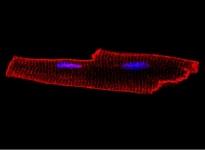
Popdc is located in the outer membrane of the heart’s specialized pacemaker cells. The researchers found that Popdc interacts with a signalling molecule triggered by adrenaline, known as cAMP, and that this changes the electrical properties of the cell membrane. They think that this might be the mechanism by which adrenaline influences the heart’s rhythm.
“During exercise, the heartbeat can increase by three times over its resting rate, enabling the muscles to work harder,” Professor Brand said. “This is mainly brought about by adrenaline, but how adrenaline acts on the heart’s cells is not fully understood. This study helps us understand the mechanism by which the heart adapts to stress.”
Reference: “Popeye domain containing proteins are essential for stress-mediated modulation of cardiac pacemaking in mice” by Alexander Froese, Stephanie S. Breher, Christoph Waldeyer, Roland F.R. Schindler, Viacheslav O. Nikolaev, Susanne Rinné, Erhard Wischmeyer, Jan Schlueter, Jan Becher, Subreena Simrick, Franz Vauti, Juliane Kuhtz, Patrick Meister, Sonja Kreissl, Angela Torlopp, Sonja K. Liebig, Sandra Laakmann, Thomas D. Müller, Joachim Neumann, Juliane Stieber, Andreas Ludwig, Sebastian K. Maier, Niels Decher, Hans-Henning Arnold, Paulus Kirchhof, Larissa Fabritz and Thomas Brand, 22 February 2012, Journal of Clinical Investigation.
DOI: 10.1172/JCI59410
The research was funded by Deutsche Forschungsgemeinschaft, the Interdisciplinary Center for Clinical Research, and Fondation Leducq.
Never miss a breakthrough: Join the SciTechDaily newsletter.
Follow us on Google and Google News.