
Close Menu
    Facebook X (Twitter) Instagram
    SciTechDaily
    • Biology
    • Chemistry
    • Earth
    • Health
    • Physics
    • Science
    • Space
    • Technology
    Facebook X (Twitter) Pinterest YouTube RSS
    SciTechDaily
    Home»Biology»Young Blood Reverses Some of the Effects of Age-Related Cognitive Decline
    Biology

    Young Blood Reverses Some of the Effects of Age-Related Cognitive Decline

    By SciTechDailyOctober 22, 2012No Comments2 Mins Read
    Facebook Twitter Pinterest Telegram LinkedIn WhatsApp Email Reddit
    Share
    Facebook Twitter LinkedIn Pinterest Telegram Email Reddit
    mouse-effect-circulation-young-blood
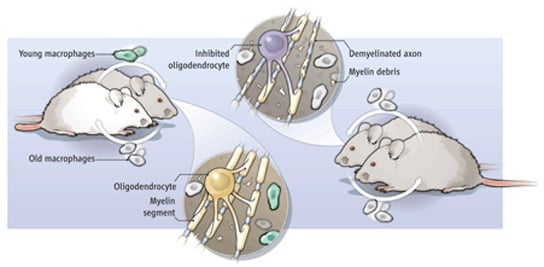
    Effects of young blood circulating in old mice.

    It seems that the blood of the young can help the old. A new study shows that when the blood of young mice is injected into the old, some of the effects of age-related cognitive decline are reversed.

    The scientists presented their findings at the Society for Neuroscience Conference in New Orleans, Louisiana. The blood has a huge effect on brain cells, but scientists were unsure how if the effects extended beyond cell regeneration. The team tested for changes in cognition by linking the circulatory system of young and old mice, analyzing the blood of each conjoined mouse once the blood had fully mixed.

    Tissue from the hippocampus of old mice given young blood showed changes in the expression of 200 to 300 genes, especially in those that involved synaptic plasticity, which is linked to learning and memory. There were also changes in proteins involved in nerve growth.

    The strength and number of neuronal connections were also boosted. The team gave 12 old mice shots of intravenous blood plasma from either young or old mice over the course of one month. This allowed them to exclude any effect produced by blood cells.

    The old mice which had received young blood plasma performed much better in standard memory tasks than those who received old plasma. Fear conditioning tests were performed to determine which brain areas were involved in the reversal of cognitive decline. Mice with young blood were better at remembering fear associated with tasks that activated the hippocampus, implying that young blood has a specific effect upon this area.

    However, the researchers haven’t determined yet what it is about young blood that old blood doesn’t have. The team is currently examining hormones and lipids for rejuvenation capabilities. While it’s plausible that there are similar mechanisms operating in humans, there’s no direct evidence to support such a claim.

    Reference: “The ageing systemic milieu negatively regulates neurogenesis and cognitive function” by Saul A. Villeda, Jian Luo, Kira I. Mosher, Bende Zou, Markus Britschgi, Gregor Bieri, Trisha M. Stan, Nina Fainberg, Zhaoqing Ding, Alexander Eggel, Kurt M. Lucin, Eva Czirr, Jeong-Soo Park, Sebastien Couillard-Després, Ludwig Aigner, Ge Li, Elaine R. Peskind, Jeffrey A. Kaye, Joseph F. Quinn, Douglas R. Galasko, Xinmin S. Xie, Thomas A. Rando and Tony Wyss-Coray, 31 August 2011, Nature.
    DOI: 10.1038/nature10357

    Never miss a breakthrough: Join the SciTechDaily newsletter.
    Follow us on Google and Google News.

    Blood Brain Brain Activity Cognition Neuroscience Rejuvenation
    Share. Facebook Twitter Pinterest LinkedIn Email Reddit

    Related Articles

    Canadian Man in Vegetative State Communicates That He’s Not in Pain

    Magnesium Supplements Could Improve Memory and Cognitive Ability

    Scientists Discover Link Between TBI and PTSD

    Researchers Use FDDNP–PET Scanning to Predict Cognitive Decline

    Neuroscientists Create Model to Study Burst Suppression and Brain States

    Researchers Record Detailed Live Images Inside the Brain of a Living Mouse

    Synchronized Brain Oscillations Crucial for Short-Term Memory

    Researchers Use fMRI to Study How Humor Activates Kids’ Brain Regions

    Neuroscientists Study Cortical Areas Specialized in Processing Visual Inputs in Mice

    Leave A Reply Cancel Reply

    • Facebook
    • Twitter
    • Pinterest
    • YouTube

    Don't Miss a Discovery

    Subscribe for the Latest in Science & Tech!

    Trending News

    Largest-Ever Study Finds Medicinal Cannabis Ineffective for Anxiety, Depression, PTSD

    250-Million-Year-Old Egg Solves One of Evolution’s Biggest Mysteries

    Living With Roommates Might Be Changing Your Gut Microbiome Without You Knowing

    Century-Old Cleaning Chemical Linked to 500% Increased Risk of Parkinson’s Disease

    What if Your Memories Never Happened? Physicists Take a New Look at the Boltzmann Brain Paradox

    One of the Universe’s Largest Stars May Be Getting Ready To Explode

    Scientists Discover Enzyme That Could Supercharge Ozempic-Like Weight Loss Drugs

    Popular Sweetener Linked to DNA Damage – “It’s Something You Should Not Be Eating”

    Follow SciTechDaily
    • Facebook
    • Twitter
    • YouTube
    • Pinterest
    • Newsletter
    • RSS
    SciTech News
    • Biology News
    • Chemistry News
    • Earth News
    • Health News
    • Physics News
    • Science News
    • Space News
    • Technology News
    Recent Posts
    • Scientists Prove There Are Just Six Degrees of Separation in a Social Network
    • Bee Bacteria Could Fix a Major Flaw in Plant-Based Milk
    • Scientists Discover a Surprising Way To Make Bread Healthier and More Nutritious
    • Natural Compounds Boost Bone Implant Success While Killing Bacteria and Cancer Cells
    • After 60 Years, Scientists Uncover Unexpected Brain Effects of Popular Diabetes Drug Metformin
    Copyright © 1998 - 2026 SciTechDaily. All Rights Reserved.
    • Science News
    • About
    • Contact
    • Editorial Board
    • Privacy Policy
    • Terms of Use

    Type above and press Enter to search. Press Esc to cancel.