
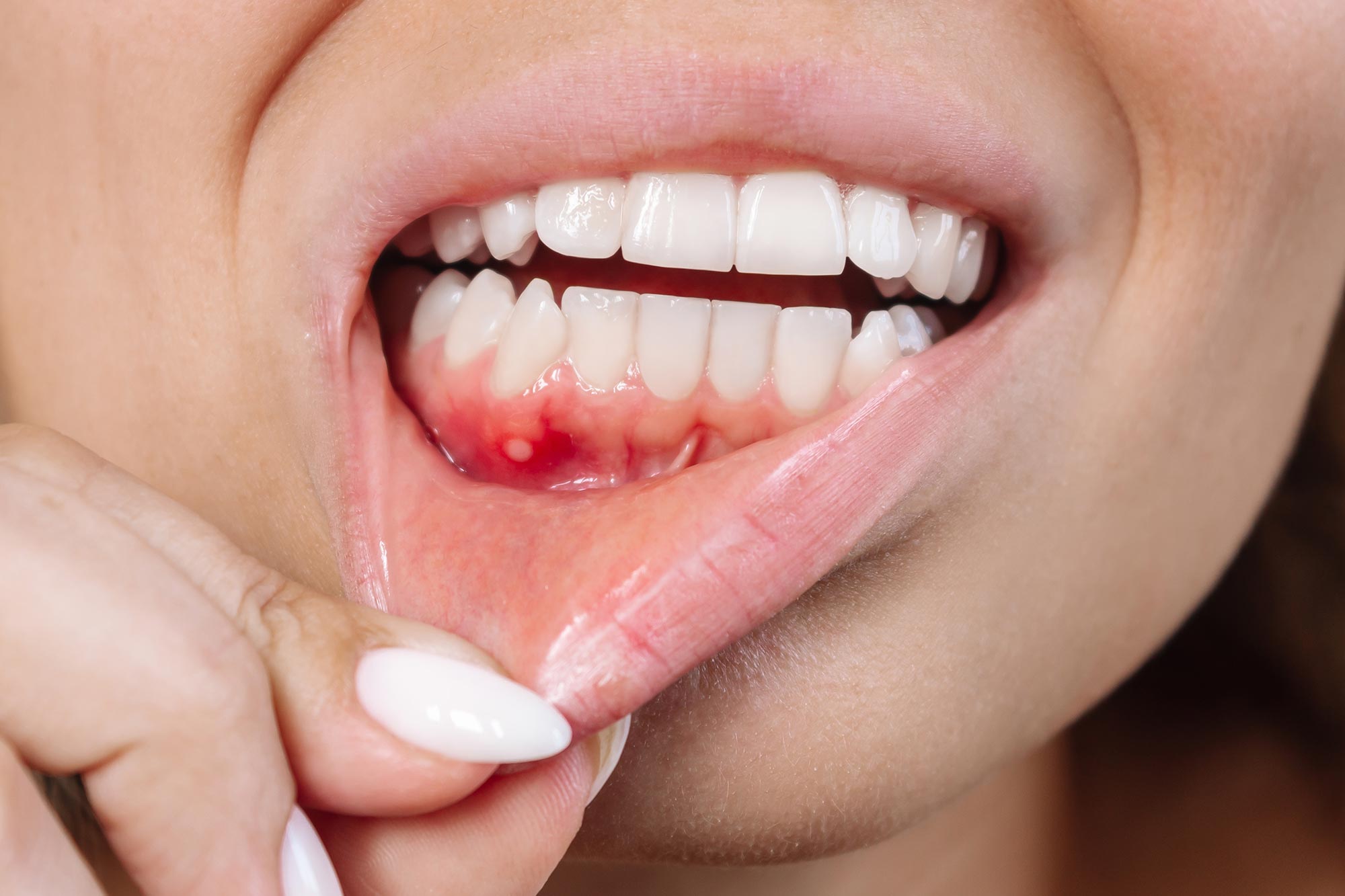
A study suggests that combining the two compounds with conventional treatment could reduce the need for antibiotics.
For people with severe periodontitis, controlling the disease can require more than the standard removal of bacterial buildup beneath the gums. A study involving 109 patients found that adding omega-3 and low-dose acetylsalicylic acid (ASA) to conventional treatment produced results remarkably close to those achieved with antibiotics.
The findings were published in the Journal of Periodontology and point to a possible option for selected patients that could reduce reliance on antibiotics, an important consideration as bacterial resistance continues to raise global concern.
The FAPESP-supported study tracked patients with advanced periodontitis for one year. The chronic inflammatory condition develops when bacteria accumulate beneath the gums and damage tissues that hold the teeth in place. Without treatment, it can result in loose teeth, loss of supporting bone, and eventually tooth loss.
“Patients with severe disease have very deep pockets, which act as reservoirs for bacteria associated with the disease. It’s a very challenging condition to treat,” says dental surgeon Nídia Cristina Castro dos Santos, the first author of the study and a professor and researcher at Albert Einstein Israelite Hospital.
The research involved Albert Einstein Israelite Hospital, Guarulhos University (UNG), the University of Taubaté (UNITAU), and the Ribeirão Preto School of Dentistry at USP (FORP-USP) in Brazil, along with Harvard University in the United States.
Four treatments reveal a close match
To compare different approaches, the researchers randomly divided participants into four groups. Everyone received subgingival instrumentation – commonly called scaling – the standard treatment used to clean beneath the gums in periodontitis. What differed was the additional therapy each group received.
One group was given placebo capsules corresponding to the antibiotics, omega-3, and ASA treatments. A second received metronidazole and amoxicillin, an antibiotic combination supported by strong scientific evidence for severe periodontitis, three times daily for 14 days. Participants in the third group took three grams of omega-3 each day along with a daily aspirin dose for six months. The fourth group received both approaches, taking antibiotics for two weeks and omega-3 plus ASA for six months. Researchers assessed the participants again at three, six, and twelve months.
After one year, about 58% of patients receiving antibiotics had reached the researchers’ clinical target of no more than four remaining deep periodontal pockets. The result among those taking omega-3 and ASA was almost identical at 57.7%. Only 23.1% of participants treated with scaling and placebo met that target. Giving antibiotics together with the supplements did not produce additional benefits.
“The use of antibiotics isn’t considered the gold standard of treatment. Although metronidazole and amoxicillin yield good results in the most severe cases, their use should be evaluated on a case-by-case basis due to risks related to bacterial resistance and possible adverse effects,” says Castro dos Santos.
Inflammation control may explain the effect
The findings build on earlier work examining how omega-3 influences the inflammatory processes involved in periodontal disease. In a previous FAPESP-supported study published in Scientific Reports, researchers found that omega-3 supplementation reduced inflammation and bone loss from periodontal disease in rats, with particularly strong effects when combined with physical exercise. Although those experiments involved animals rather than people, they pointed to a possible role for the nutrient in controlling oral inflammation.
According to Castro, omega-3 works differently from traditional anti-inflammatory medications. Instead of simply blocking specific inflammatory pathways, it supports production of molecules involved in resolving inflammation naturally and repairing tissue. Low-dose ASA was included because it can increase formation of these mediators. The researchers proposed that combining the two might help the body regulate the persistent inflammation associated with periodontitis.
“We imagined that the combination of antibiotics and omega-3 would be most effective in controlling periodontitis in these patients. We also believed that the results for the group that used omega-3 with ASA would be slightly lower than those for the antibiotic group. The result was surprising because the two therapies performed very similarly, paving the way for it to become a treatment option for these patients,” says Castro.
Benefits persisted after treatment ended
The researchers also found that the improvements did not disappear when supplementation stopped. Six months after patients finished taking omega-3 and ASA, their results remained similar to those measured at the end of the treatment period. Castro said this persistence raises the possibility that changing the body’s inflammatory response can have longer-lasting effects, although researchers are still investigating the underlying mechanisms.
Dental surgeon Magda Feres, the study’s lead author and a full professor at the Harvard School of Dental Medicine and the Graduate Program in Dentistry at UNG, said the findings indicate that targeting inflammation could become an option for certain patients. “The combination of omega-3 and low-dose aspirin achieved clinical benefits comparable to those of the metronidazole and amoxicillin protocol, opening up a real alternative for those who can’t take antibiotics, especially patients with allergies or intolerance to these medications,” she says.
Feres also pointed to the broader concern surrounding antibiotic resistance, which is considered a major global public health threat. “Demonstrating that it’s possible to treat severe periodontitis by modulating the body’s own response is new and relevant information that helps preserve antibiotics for when they are truly indispensable,” says Feres.
Routine replacement needs more evidence
The findings do not mean dentists should immediately replace antibiotics with omega-3 and aspirin. Participants in the study did not have significant systemic or oral diseases, and additional research will be necessary to determine whether the results hold in other populations and which patients are most likely to benefit from each treatment strategy.
Researchers are now conducting microbiological analyses to examine how the different treatments alter the bacteria living in periodontal pockets. Preliminary findings indicate that disease-associated species decline while microorganisms linked with healthy gums become more abundant.
“It’s an important step forward, but not the end of the story. Therefore, the message is one of cautious optimism: we have a promising, scientifically plausible alternative to antibiotics in select cases. Routine replacement will require more evidence,” she concludes.
Reference: “Immunomodulators, associated or not with systemic antibiotics, to treat periodontitis: A 1-year multicenter, placebo-controlled, double-blind, randomized clinical trial” by Nidia C. Castro dos Santos, Rafael N. de Brito Silva, Fernanda S. Colombo, Ingrid Oliveira-Cardoso, Lina J. Súarez, Rodrigo Martins, Luciene C. de Figueiredo, Heitor Marques Honório, Ademir Melo Leite Filho, Flavia A. C. Furlaneto, Michel R. Messora, Monique Furukawa, José Roberto Cortelli, Emanuel Silva Rovai and Magda Feres, 12 May 2026, Journal of Periodontology.
DOI: 10.1002/jper.70081
This study was funded by the São Paulo State Research Foundation (FAPESP) (Grant# 2020/05874-2 awarded to MF and Grant# 2020/05875-9 awarded to NCCS) and the Coordenação de Aperfeiçoamento de Pessoal de Nível Superior – Brasil (CAPES) – Finance Code 001.
Never miss a breakthrough: Join the SciTechDaily newsletter.
Follow us on Google and Google News.
4 Comments
Good dentistry shown here
There’s a wide variety of supplemental/herbal/etc. alternatives to standard chemical or pharmaceutical treatments. Eg:
“Tea Tree Oil versus Chlorhexidine Mouthwash in Treatment of Gingivitis: A Pilot Randomized, Double Blinded Clinical Trial” —Eur J Dent. 2020 Mar 13;14(1):55–62
Long story short: It’s a mouthwash regimen, and it just works.
I find every time I go to the dentist I leave with more problems I actually feel the dentist on the opposite side of what’s getting treated why is everything a money scam you don’t go to dentist for a filling and leave having 4 fillings there’s not much left of teeth and I’m starting to panic now she wants root canels now 3 I just don’t want to go back to a dentist but I gotta save my teeth I’ve reflux acid issue I get that so why don’t they paint a protective coat over my teeth no they just keep re filling and wonder why I keep coming back
I hate when they leave your mouth open they put a rubber dam in your mouth it’s very uncomfortable find it’s very had to speak you can’t make a decent run-on sentence they ask you questions do they expect you to answer and all you can say is aeragh uggle goggle uaeauo ghagahagaga… do they expect to actually understand your answer…