
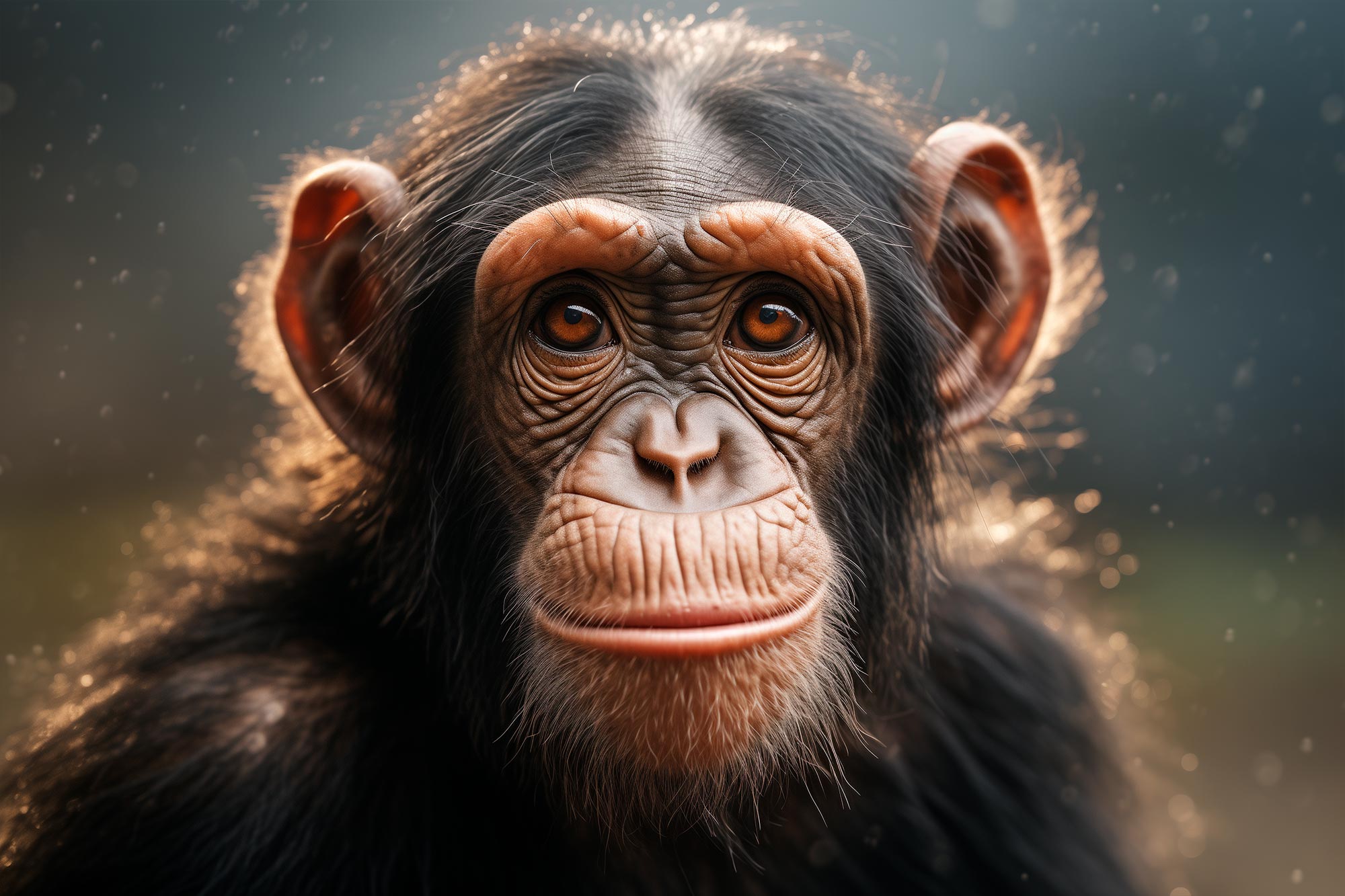
Study finds the longest lasting non-human social memories ever documented.
Apes recognize photos of groupmates they haven’t seen for more than 25 years and respond even more enthusiastically to pictures of their friends, a new study finds.
The work, which demonstrates the longest-lasting social memory ever documented outside of humans, and underscores how human culture evolved from the common ancestors we share with apes, our closest relatives, was published today in the journal Proceedings of the National Academy of Sciences.
“Chimpanzees and bonobos recognize individuals even though they haven’t seen them for multiple decades,” said senior author Christopher Krupenye, an assistant professor at Johns Hopkins University who studies animal cognition. “And then there’s this small but significant pattern of greater attention toward individuals with whom they had more positive relationships. It suggests that this is more than just familiarity, that they’re keeping track of aspects of the quality of these social relationships.”
Apes recognize photos of groupmates they haven’t seen for more than 25 years and respond even more enthusiastically to pictures of their friends, a new study finds. Credit: Johns Hopkins University
Adds lead author Laura Lewis, a biological anthropologist and comparative psychologist at University of California, Berkeley: “We tend to think about great apes as quite different from ourselves but we have really seen these animals as possessing cognitive mechanisms that are very similar to our own, including memory. And I think that is what’s so exciting about this study.”
Experiment Methodology
The research team was inspired to pursue the question of how long apes remember their peers because of their own experiences working with apes—the sense that the animals recognized them when they’d visit, even if they’d been away for a long while.
“You have the impression that they’re responding like they recognize you and that to them you’re really different from the average zoo guest,” Krupenye said. “They’re excited to see you again. So our goal with this study was to ask, empirically, if that’s the case: Do they really have a robust lasting memory for familiar social partners?”
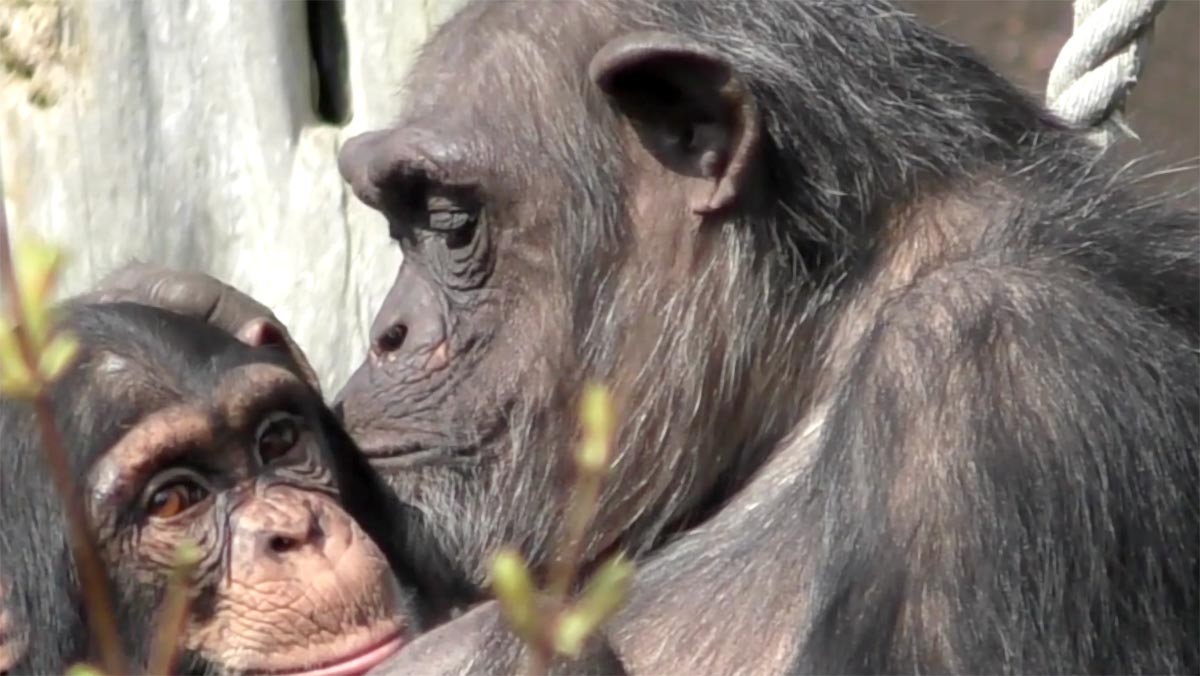
The team worked with chimpanzees and bonobos at Edinburgh Zoo in Scotland, Planckendael Zoo in Belgium, and Kumamoto Sanctuary in Japan. The researchers collected photographs of apes that had either left the zoos or died, individuals that participants hadn’t seen for at least nine months and in some cases for as long as 26 years. The researchers also collected information about the relationships each participant had with former groupmates—if there had been positive or negative interactions between them, etc.
The team invited apes to participate in the experiment by offering them juice, and while they sipped it, the apes where shown two side-by-side photographs—apes they’d once known and total strangers. Using a non-invasive eye-tracking device, the team measured where the apes looked and for how long, speculating they’d look longer at apes they recognized.
Findings and Implications
The apes looked significantly longer at former groupmates, no matter how long they’d been apart. And they looked longer still at their former friends, those they’d had more positive interactions with.
In the most extreme case during the experiment, bonobo Louise had not seen her sister Loretta nor nephew Erin for more than 26 years at the time of testing. She showed a strikingly robust looking bias toward both of them over eight trials.
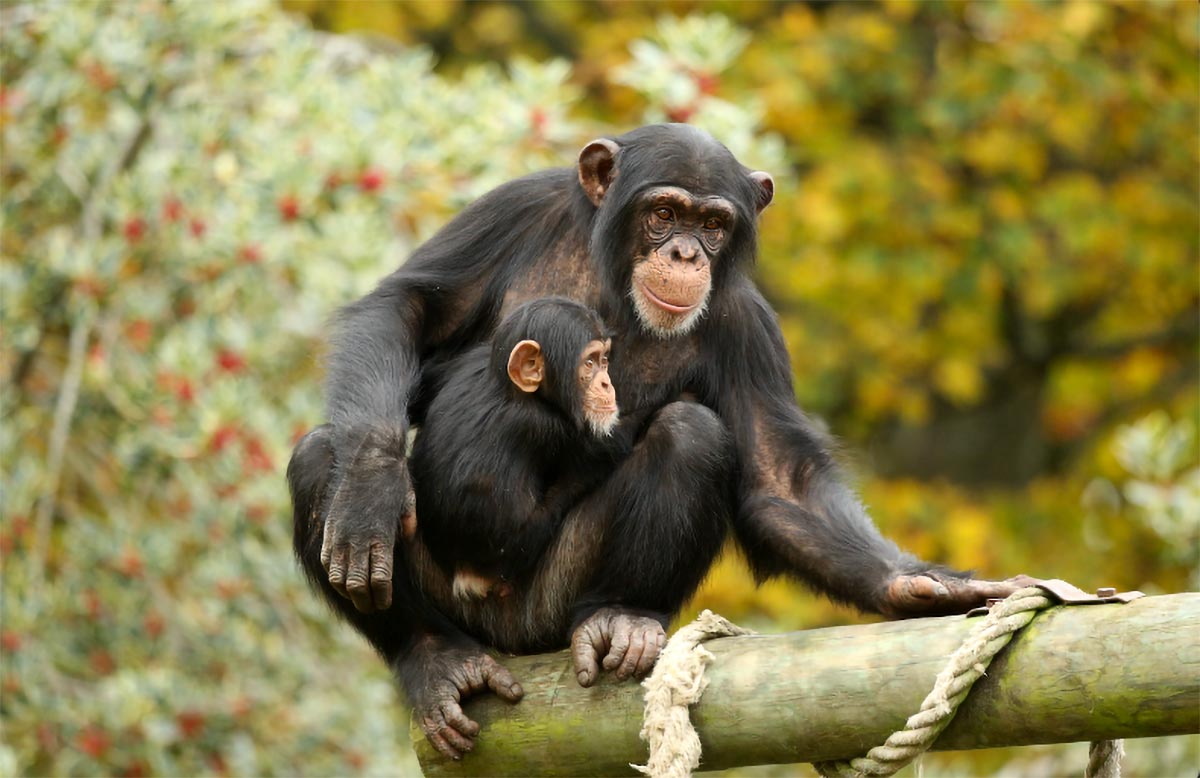
The results suggest great ape social memory could last beyond 26 years, the majority of their 40 to 60-year average lifespan, and could be comparable to that of humans, which begins to decline after 15 years but can persist as long as 48 years after separation. Such long lasting social memory in both humans and our closest relatives suggests that this kind of memory was likely already present millions of years ago in our common evolutionary ancestors. This memory likely forged a foundation for the evolution of human culture and enabled the emergence of uniquely-human forms of interaction such as intergroup trade where relationships are maintained over many years of separation, the authors said.
The idea that apes remember information about the quality of their relationships, years beyond any potential functionality, is another novel and human-like finding of the work, Krupenye said.
“This pattern of social relationships shaping long-term memory in chimpanzees and bonobos is similar to what we see in humans, that our own social relationships also seem to shape our long-term memory of individuals,” Lewis said.
Additional Insights and Future Research
The work also raises the questions of whether the apes are missing individuals they’re no longer with, especially their friends and family.
“The idea that they do remember others and therefore they may miss these individuals is really a powerful cognitive mechanism and something that’s been thought of as uniquely human,” Lewis said. “Our study doesn’t determine they are doing this, but it raises questions about the possibility that they may have the ability to do so.”
The team hopes the findings deepen people’s understanding of the great apes, all of which are endangered species, while shedding new light on how deeply they could be affected when poaching and deforestation separate them from their groupmates.
“This work clearly shows how fundamental and long lasting these relationships are. Disruption to those relationships is likely very damaging,” Krupenye said.
The team would next like to explore whether these long-lasting social memories are special to great apes or something experienced by other primates. They would also like to test how rich the memories of apes are, if, for instance, they possess lasting memories for experiences as well as individuals.
Reference: “Bonobos and chimpanzees remember familiar conspecifics for decades” by Laura S. Lewis, Erin G. Wessling, Fumihiro Kano, Jeroen M. G. Stevens, Josep Call and Christopher Krupenye, 18 December 2023, Proceedings of the National Academy of Sciences.
DOI: 10.1073/pnas.2304903120
The work was made possible by Templeton World Charity Foundation grant TWCF-20647 and CIFAR Azrieli Global Scholars program.
Authors include: Erin G. Wessling, a postdoctoral fellow at Harvard University and the University of Göttingen; Fumihiro Kano, a scientist at the Max Planck Institute of Animal Behavior; Jeroen M. G. Stevens of Odisee University in Belgium, and Josep Call of University of St Andrews.
Never miss a breakthrough: Join the SciTechDaily newsletter.
Follow us on Google and Google News.
1 Comment
I wonder if this research is applicable to canines.